
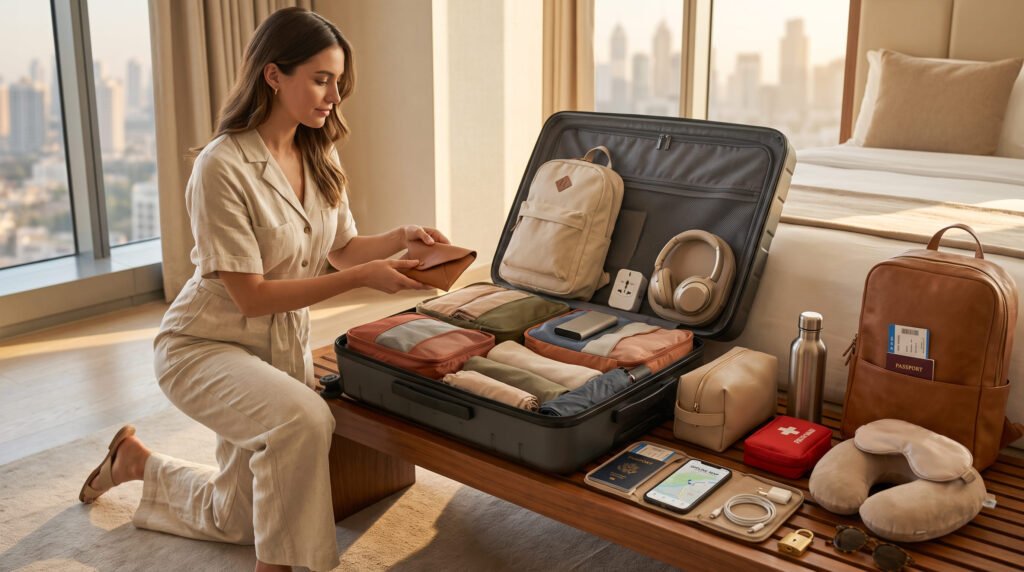
Traveling becomes much easier when you know exactly what to pack before leaving home. A well-planned travel essentials packing list helps you avoid forgotten documents, dead phone batteries, uncomfortable flights, and unnecessary luggage. Whether you’re taking a weekend getaway, international vacation, or first flight, these practical travel essentials can keep your journey organized and stress-free.
Why You Need a Travel Essentials Packing List
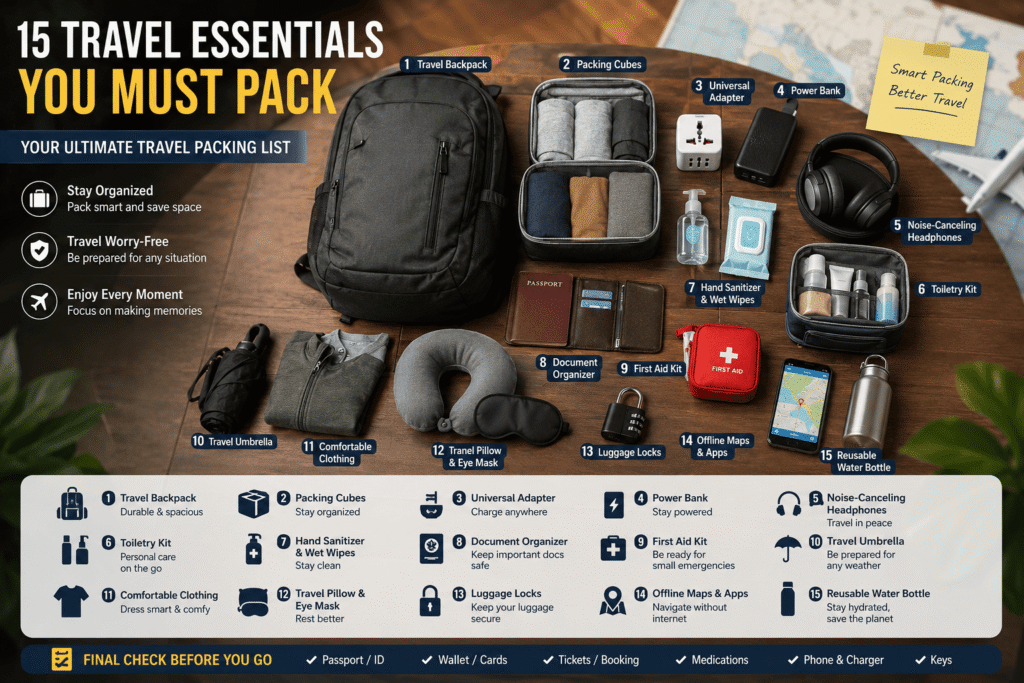
A reliable packing list saves time and prevents last-minute mistakes. Instead of filling your suitcase with things you probably won’t use, you can focus on essential travel items that make transportation, airport security, accommodation, and sightseeing easier. It also helps you separate your carry-on essentials from items that belong in checked luggage.
1. Lightweight Travel Backpack or Carry-On Bag
A durable travel backpack or lightweight carry-on bag should be at the top of your packing list. Choose one with comfortable straps, multiple compartments, a padded laptop section, and enough room for your daily necessities. A well-organized carry-on makes airport transfers and sightseeing much more convenient.
2. Packing Cubes for Better Organization
Packing cubes are one of the simplest ways to organize clothes and maximize suitcase space. Use separate cubes for tops, bottoms, underwear, sleepwear, or accessories. They can also make unpacking easier because you won’t have to search through your entire suitcase every time you need one item.
3. Universal Travel Adapter
A universal travel adapter is essential when traveling internationally because electrical outlets vary between countries. Look for a compact adapter that supports multiple plug types and includes USB or USB-C ports. Before your trip, check the destination’s outlet standard and voltage requirements to ensure your electronics can be used safely.
4. Portable Power Bank
Your smartphone often serves as your boarding pass, map, camera, translator, and communication device, so keeping it charged is crucial. A compact power bank can provide backup power during long flights, airport delays, road trips, and sightseeing days. Keep airline restrictions in mind and pack power banks according to the carrier’s current rules.
5. Noise-Canceling Headphones
Noise-canceling headphones can make crowded airports and long flights considerably more comfortable. They’re useful for listening to music, watching movies, working, or simply creating a quieter environment while traveling. Choose a lightweight pair with good battery life and, ideally, a wired option for entertainment systems that don’t support Bluetooth.
6. Travel-Size Toiletry Kit
A compact travel toiletry kit keeps personal-care products organized and easy to access. Include essentials such as toothbrush and toothpaste, facial cleanser, deodorant, moisturizer, shampoo, and other products you genuinely use. For flights, transfer liquids into appropriately sized containers and follow the latest airport security requirements for carry-on liquids.
7. Hand Sanitizer and Wet Wipes
Hand sanitizer and wet wipes are inexpensive but extremely useful travel must-haves. Airports, public transportation, airplane tray tables, and tourist attractions can involve many shared surfaces. Keeping a small hygiene kit in your carry-on lets you quickly clean your hands or wipe down surfaces whenever soap and water aren’t immediately available.
8. Travel Document Organizer
Your passport, identification, boarding passes, travel insurance details, hotel reservations, and other important documents should be easy to find. A travel document organizer keeps everything together instead of scattered between different pockets. Keep essential documents and digital backups accessible throughout your journey, especially when crossing international borders.
9. Compact First-Aid Kit
A small travel first-aid kit can be useful for minor problems such as small cuts, blisters, headaches, or everyday discomfort. You don’t need to carry a full medical cabinet; focus on basic supplies appropriate for your needs. If you’re traveling internationally, check destination-specific requirements for any medications you plan to bring.
10. Reusable Water Bottle
A reusable water bottle helps you stay hydrated while reducing the need to repeatedly purchase disposable bottles. Choose a leak-resistant, lightweight design that fits comfortably into your backpack. For air travel, remember that airport security rules generally affect how much liquid you can carry through screening, so plan accordingly.
11. Comfortable Travel Clothing
Comfort should be a major priority when selecting what to pack for a trip. Choose breathable layers that work well with changing temperatures and long periods of sitting. Neutral, versatile clothing can also reduce the number of pieces you need because individual items can be mixed and matched throughout your vacation.
12. Travel Pillow and Eye Mask
Long flights and overnight journeys can make quality sleep difficult, especially when you’re surrounded by bright screens, cabin lighting, and constant noise. A supportive travel pillow paired with an eye mask can make resting more comfortable. Choose compact versions that don’t take up too much valuable carry-on space.
13. Luggage Locks
A small luggage lock can add an extra layer of security when your suitcase is stored during transportation or at your accommodation. If you’re flying internationally, consider a TSA-approved luggage lock where appropriate. The goal isn’t to make luggage completely inaccessible, but to discourage casual tampering and accidental opening.
14. Offline Maps and Essential Travel Apps
Internet access isn’t always reliable when you’re traveling, particularly during flights, road trips, or visits to areas with limited connectivity. Download offline maps, reservation details, translation tools, transportation apps, and important travel information before leaving. Having essential information available offline can save you from unnecessary stress when your connection disappears.
15. Compact Travel Umbrella
Weather can change unexpectedly, so a small travel umbrella can be worth the little space it occupies. Choose a lightweight, wind-resistant model that fits inside your day bag. It’s especially useful when sightseeing because an unexpected shower doesn’t have to interrupt your plans or force you to purchase an overpriced umbrella.
What to Pack in Your Carry-On Bag
Your carry-on essentials should include anything valuable, important, fragile, or difficult to replace. Keep your passport, wallet, phone, charger, power bank, medications, headphones, travel documents, and other necessities within easy reach. Avoid placing irreplaceable items in checked baggage because delayed luggage can leave you without them.
What to Pack for International Travel
International trips require a little more preparation than domestic journeys. Along with your normal travel essentials packing list, check your passport validity, visa requirements, travel insurance, destination-specific electrical standards, and baggage restrictions. Keep copies of important documents digitally and offline so you can access them even when mobile data isn’t available.
How to Avoid Overpacking
The easiest way to avoid overpacking is to plan outfits before placing clothes inside your suitcase. Choose versatile pieces that can be worn in multiple combinations and consider the weather, trip length, and activities. Before closing your luggage, remove anything you’re packing “just in case” but probably won’t realistically use.
Common Travel Packing Mistakes to Avoid
One common mistake is packing everything into checked luggage while keeping nothing useful in the carry-on. Other problems include forgetting chargers, exceeding baggage limits, packing too many clothes, and ignoring destination weather. Review your travel packing list at least one day before departure instead of rushing through it minutes before leaving.
Final Pre-Trip Packing Check
Before heading to the airport, take a final look at your essentials rather than relying entirely on memory. Confirm that you have your passport or identification, wallet, phone, chargers, medications, travel documents, accommodation details, and appropriate clothing. A five-minute final check can prevent a surprisingly stressful start to your trip.
FAQs
1. What should be included in a travel essentials packing list?
A good list should include luggage, clothing, toiletries, travel documents, electronics, chargers, personal-care items, basic health supplies, and practical accessories.
2. What should I keep in my carry-on bag?
Keep important documents, valuables, electronics, medications, chargers, a power bank, headphones, and essential personal items in your carry-on.
3. What are the most important international travel essentials?
Passport, required visas, travel documents, payment methods, travel insurance information, appropriate adapters, medications, and destination-specific necessities are especially important.
4. How can I pack light for a trip?
Plan outfits in advance, choose versatile clothing, use packing cubes, limit duplicate items, and remove things you probably won’t use.
5. Should I use packing cubes when traveling?
Yes. Packing cubes help organize clothing, separate categories, save space, and make finding items inside your luggage much easier.
Conclusion
A smart travel essentials packing list isn’t about taking everything you own; it’s about choosing the items that genuinely make your journey easier. From a reliable travel backpack and packing cubes to important documents, electronics, toiletries, and comfortable clothing, the right essentials can reduce stress from departure to arrival. Plan early, pack intentionally, and always check your airline’s current baggage and security requirements before flying.