
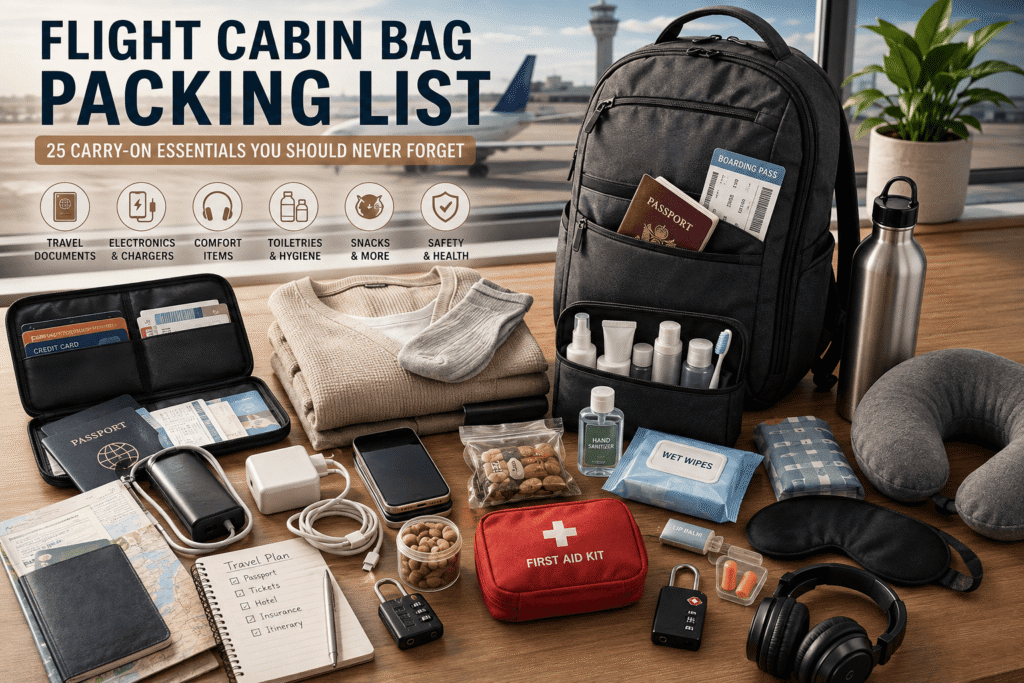
A well-packed cabin bag can make your flight smoother, more comfortable, and far less stressful. Whether you’re taking a short domestic flight, a long-haul journey, or your first international trip, knowing what belongs in your carry-on matters. This flight cabin bag packing list covers essential documents, electronics, comfort items, toiletries, snacks, health supplies, and practical extras worth keeping close throughout your journey.
Why a Smart Flight Cabin Bag Packing List Matters
Your cabin bag isn’t simply a smaller version of your suitcase. It should contain the belongings you’ll need during the flight, at the airport, and in case your checked luggage is delayed. A thoughtful carry-on packing list helps you prioritize valuable, essential, and difficult-to-replace items while avoiding unnecessary clutter.
Good cabin bag organization also makes airport security easier. When frequently needed items are stored in accessible compartments, you can find them quickly without unpacking everything. Before departure, always check your airline’s current cabin baggage size, weight, liquid, and restricted-item requirements.
What Should You Pack in Your Cabin Bag?
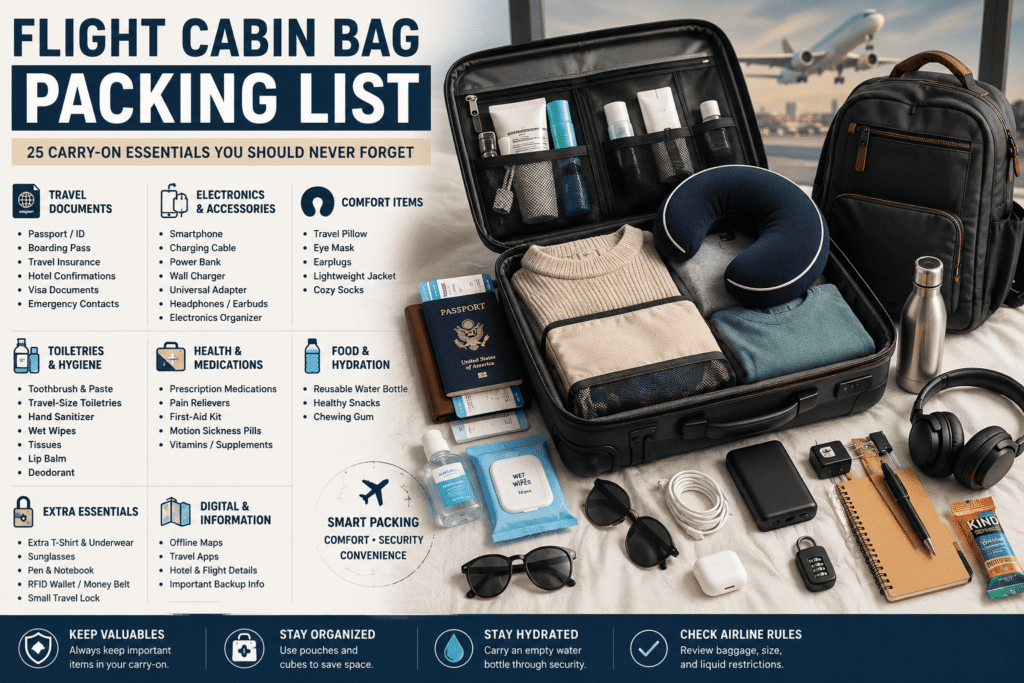
The best cabin bag essentials combine necessity, convenience, comfort, and preparedness. Your basic setup should include travel documents, money, electronics, medication, chargers, personal-care products, and a few items that make sitting on a plane more comfortable. You should also reserve some space for unexpected situations, such as delays or lost checked baggage.
Think of your carry-on as a small travel survival kit. If your checked suitcase disappeared for a day, the contents of your cabin bag should still allow you to manage the most important parts of your journey comfortably.
1. Passport, ID, and Travel Documents
Your passport, identification, boarding pass, visa documents, travel insurance information, and hotel confirmations should always remain in your carry-on. Keep everything together inside a travel document organizer so important papers don’t disappear into different pockets. For international flights, keep secure digital or offline copies of essential documents as a useful backup.
2. Smartphone and Charging Cable
Your smartphone is one of the most important flight travel essentials because it can serve as your boarding pass, camera, map, translator, entertainment device, and communication tool. Pack your charging cable in an easily accessible pocket rather than at the bottom of your bag. Download important travel information before leaving in case airport Wi-Fi or mobile service isn’t reliable.
3. Power Bank
A portable power bank can be extremely useful during long flights, airport delays, and connecting journeys. Choose a compact model suitable for your devices and keep it in your cabin baggage according to applicable airline and battery rules. Before flying, check your carrier’s latest requirements because restrictions can apply to spare lithium batteries and power banks.
4. Wall Charger and Travel Adapter
A wall charger is essential if you need to recharge your phone or other devices at the airport or destination. International travelers should also consider a universal travel adapter because electrical outlets differ between countries. A compact adapter with multiple charging ports can reduce the number of separate accessories you need to carry.
5. Noise-Canceling Headphones or Earbuds
Noise-canceling headphones can make crowded airports and long flights much more peaceful. They’re useful for music, movies, podcasts, work, or simply reducing background noise while you rest. If you’re traveling with wireless headphones, make sure they’re fully charged before departure and consider carrying a wired alternative when appropriate.
6. Travel Wallet and Payment Cards
Keep your wallet, primary payment card, backup payment method, and a small amount of local currency in your carry-on. A travel wallet can help organize cards, cash, identification, and other small documents. Avoid keeping every payment method in one place, particularly during international travel, so you have a backup if your main wallet is lost.
7. Essential Medications
Any essential medication should stay in your cabin bag rather than checked luggage. Keep medications properly labeled and bring the supplies you reasonably need for the journey. If you’re traveling internationally, check the destination’s rules for medications and carry any relevant documentation. Never rely on your checked suitcase for something you may need during the flight.
8. Basic First-Aid Supplies
A compact first-aid pouch can be helpful for minor travel problems. Depending on your personal needs, it may contain simple supplies such as bandages and blister protection. Keep the kit small rather than carrying an oversized medical collection. For prescription or specialized medication, follow the applicable travel and airline requirements.
9. Travel-Size Toiletries
A few basic toiletries can make a significant difference during long journeys. Consider carrying travel-size personal-care products such as toothpaste, facial cleanser, moisturizer, deodorant, or other essentials you regularly use. Pack liquids and gels according to the current airport security requirements at your departure location.
10. Hand Sanitizer and Wet Wipes
Hand sanitizer and wet wipes are inexpensive carry-on essentials that can be useful throughout a journey. Airports, airplane seats, tray tables, public transportation, and other shared spaces create plenty of opportunities to use them. Keep a small hygiene pouch in an outer compartment so you can reach it without opening your entire cabin bag.
11. Toothbrush and Toothpaste
A toothbrush and travel-size toothpaste are particularly useful during long-haul flights, overnight journeys, and airport layovers. Freshening up after several hours of travel can help you feel considerably more comfortable when you arrive. Keep these items together in a small toiletry pouch to prevent leaks from spreading through your carry-on.
12. Extra T-Shirt and Underwear
A clean change of basic clothing can be incredibly valuable when you’re traveling for many hours. Pack an extra T-shirt, underwear, and socks in a compact packing pouch. This is especially useful if your checked baggage is delayed or if you’re traveling through several airports before reaching your final destination.
13. Lightweight Jacket or Layer
Airplane cabins and airports can feel surprisingly cool, while your destination may have completely different weather. A lightweight sweater, cardigan, hoodie, or jacket gives you flexibility without taking up too much luggage space. Wearing your heavier layer during boarding can also help conserve valuable space inside a smaller cabin bag.
14. Travel Pillow
A compact travel pillow can make sleeping or resting on a plane more comfortable, particularly on long-haul flights. Choose a design that provides adequate neck support without becoming difficult to carry. Inflatable or compressible options can be especially practical when cabin space is limited.
15. Eye Mask
An eye mask is a simple but useful addition to your long flight essentials. It can block surrounding light when you’re trying to sleep during a daytime flight or when nearby passengers are using bright screens. Pairing an eye mask with headphones or earplugs can create a more relaxing personal environment.
16. Reusable Water Bottle
A reusable water bottle helps you stay hydrated during travel and reduces reliance on disposable bottles. For airport security, follow the applicable rules regarding liquids and bring an empty bottle through screening when permitted, then refill it afterward where suitable. Choose a leak-resistant bottle that fits comfortably inside your backpack.
17. Travel Snacks
Small snacks can be useful during delays, long layovers, or flights where meal timing doesn’t match your schedule. Depending on applicable security and destination restrictions, consider convenient options such as packaged snacks. If you’re traveling internationally, remember that food and agricultural products may be subject to destination-specific customs restrictions.
18. Offline Maps and Travel Information
Don’t assume you’ll always have an internet connection. Download offline maps, hotel addresses, reservation information, transportation details, translation resources, and other important travel information before leaving. Offline access becomes particularly useful after landing somewhere unfamiliar, during airport transfers, or when mobile data isn’t immediately available.
19. Pen and Small Notebook
A simple pen takes almost no space but can become surprisingly useful during international travel. You may need one for forms, notes, customs information, or recording important details. A tiny notebook can also hold emergency information, reservation details, or reminders without requiring you to unlock your phone.
20. Small Travel Lock
A compact luggage lock can provide an additional layer of security for compatible bags and personal belongings. If you choose one for air travel, understand how and where it can be used and consider an appropriate TSA-compatible lock for situations where applicable. A lock shouldn’t replace sensible luggage security, but it can discourage casual tampering.
21. Sunglasses
Sunglasses are easy to overlook when packing for a flight, particularly if you’re leaving home in cloudy weather. Keep them in a protective case inside your carry-on so they’re ready when you arrive at a sunny destination. They can be especially useful for beach vacations, road trips, sightseeing, and outdoor activities.
22. Small Electronics Organizer
Charging cables, earbuds, adapters, memory cards, and other tiny accessories can quickly turn your cabin bag into a tangled mess. A compact electronics organizer keeps everything together and makes it easier to find what you need. Use separate sections for cables and chargers instead of throwing every electronic accessory into one pocket.
23. Compact Personal Comfort Kit
A small comfort pouch can contain the items that make your flight feel more pleasant. Depending on your preferences, this could include tissues, lip balm, earplugs, hand wipes, moisturizer, or other personal necessities. Keeping these items together prevents them from getting scattered throughout your carry-on during the journey.
24. Important Backup Information
Before leaving, save emergency contacts, accommodation details, flight information, travel insurance information, and other important details somewhere accessible. A secure digital copy can be useful, while a small printed backup may help if your phone battery dies. This is particularly valuable for international travelers navigating unfamiliar airports and destinations.
25. A Small Amount of Empty Space
One of the smartest cabin baggage packing tips is to avoid filling every available inch. Leaving a little room makes your bag easier to organize and gives you flexibility if you purchase a small item during your journey. An overstuffed cabin bag can also become difficult to close, carry, or fit into the appropriate storage space.
Cabin Bag Essentials: What Should Stay With You?
Certain items should remain in your cabin bag because they are valuable, essential, or difficult to replace. These include your passport, identification, money, medications, electronics, travel documents, and other important personal belongings. If an item would cause serious problems if your checked luggage disappeared, it’s generally worth considering whether it belongs in your carry-on.
What Not to Pack in Your Cabin Bag
Avoid placing prohibited or restricted items in your carry-on, and don’t assume that an item permitted at home will automatically be permitted through airport security. Rules can vary by country, airport, airline, and item category. Always check the latest official guidance before packing liquids, sharp objects, batteries, food, sporting equipment, or unusual travel gear.
How to Organize Your Cabin Bag
Start by placing heavier items toward the bottom or closest to your back when using a backpack. Put documents, electronics, toiletries, and frequently needed items in separate compartments or small pouches. Keep anything you may need during the flight near the top, while rarely accessed items can go into less convenient sections.
Carry-On Packing Tips for First-Time Flyers
First-time flyers often make the mistake of packing too much into their cabin bag. Instead, focus on essentials you’ll actually use during transportation. Keep your passport and boarding pass accessible, follow airport security instructions, know your airline’s baggage allowance, and arrive with enough time to handle check-in and security without rushing.
International Flight Cabin Bag Tips
International travel requires additional preparation because border controls, airline policies, and destination regulations can differ. Check passport validity, visa requirements, baggage rules, liquid restrictions, and medication requirements before departure. Keep your essential documents together and make sure your phone contains offline copies of important reservations and travel information.
Cabin Bag vs. Checked Luggage: What Goes Where?
Your carry-on should prioritize valuable, essential, fragile, and immediately useful belongings. Checked luggage is better suited for larger quantities of clothing, full-size toiletries where permitted, and items you won’t need during the flight. The exact rules vary, so always confirm your airline’s current baggage policy before deciding where an item belongs.
Common Cabin Bag Packing Mistakes
Overpacking is one of the biggest problems travelers face. Other common mistakes include forgetting chargers, placing medications in checked luggage, ignoring baggage weight limits, failing to prepare for delays, and packing liquids without checking security requirements. A quick review of your flight packing checklist the day before departure can prevent many avoidable problems.
Final Cabin Bag Checklist Before Leaving Home
Before heading to the airport, quickly check your passport, identification, wallet, phone, charger, power bank, medications, travel documents, headphones, toiletries, and essential clothing. Confirm your airline’s cabin baggage allowance and security requirements as well. Once everything is packed, keep your bag accessible rather than storing it somewhere difficult to reach.
FAQs
1. What should I pack in my cabin bag for a flight?
Pack travel documents, valuables, electronics, medications, chargers, basic toiletries, comfort items, a change of clothes, snacks, and other essentials you’ll need during the journey.
2. What are the most important carry-on essentials?
Your passport or ID, wallet, phone, medications, travel documents, charger, power bank, and essential personal items should receive the highest priority.
3. Can I put a power bank in my cabin bag?
Power banks are generally treated as spare lithium batteries and should be carried according to applicable airline and aviation rules, so check your carrier’s current requirements before flying.
4. What should I pack for a long-haul flight?
Long-flight essentials can include headphones, a travel pillow, eye mask, comfortable layers, toiletries, snacks, a water bottle, entertainment, chargers, and any required medication.
5. What should I not put in my cabin bag?
Avoid prohibited or restricted items and always verify current airport and airline rules for liquids, sharp objects, batteries, food, and other regulated belongings before packing.
Conclusion
The best flight cabin bag packing list isn’t about carrying the most things; it’s about carrying the right things. Prioritize documents, valuables, electronics, medications, personal-care products, comfort items, and a few practical backups. Organize everything into accessible compartments, leave a little spare space, and check your airline’s latest baggage and security rules before departure. A thoughtfully prepared carry-on can turn a stressful flight into a much smoother travel experience.