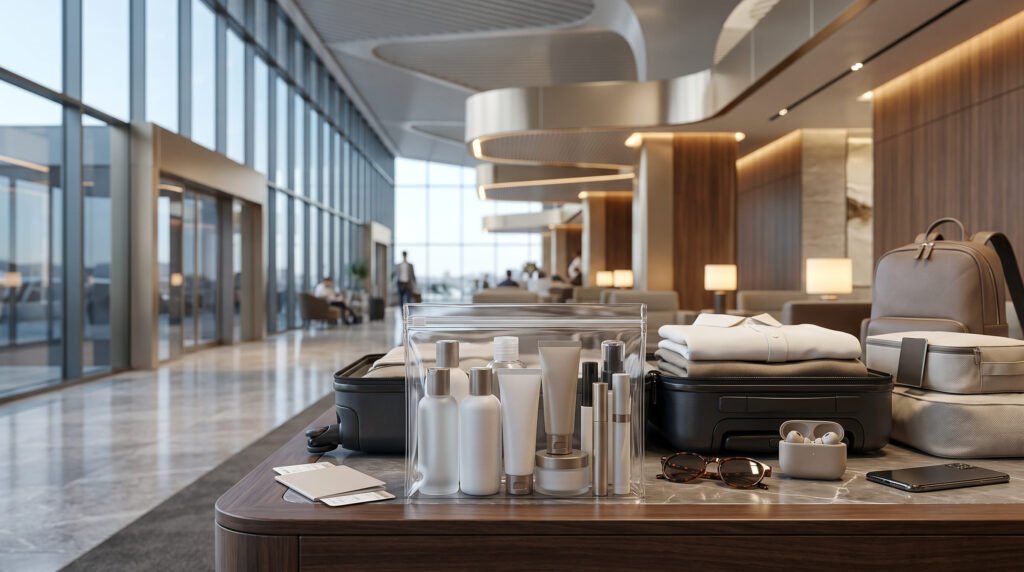
The TSA liquids rule is one of the easiest parts of carry-on packing to misunderstand. A full-size shampoo bottle with only a little product left inside can still cause a problem, while items such as toothpaste, mascara, sunscreen, gels, creams, and spreadable foods can also fall under the liquids restrictions.
For most passengers going through a U.S. TSA security checkpoint, the basic rule is straightforward: each liquid, gel, aerosol, cream, or paste container must generally be 3.4 ounces (100 ml) or smaller, and these items must fit in one quart-size clear bag, with one such bag allowed per passenger.
But the details matter. Medications and certain baby-related items can receive different treatment, CT-equipped checkpoints may change how you present your bag, and TSA PreCheck affects the screening process without creating a larger liquid allowance.
This guide explains what the TSA 3-1-1 liquids rule actually means, which everyday toiletries count, what exceptions exist, how to pack efficiently, and which mistakes are most likely to slow you down at security.
What Is the TSA 3-1-1 Liquids Rule?
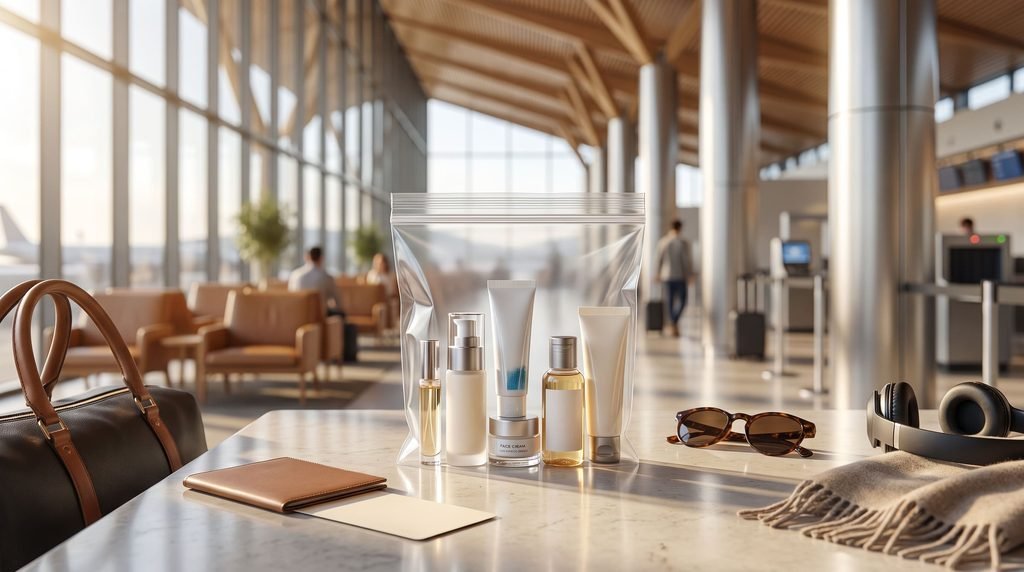
The TSA 3-1-1 rule is the standard framework for bringing liquids, gels, aerosols, creams, and pastes through a U.S. airport security checkpoint in your carry-on.
The three numbers are easy to remember:
- 3.4 ounces (100 ml): maximum container capacity for most liquids
- 1 quart: one quart-size, clear, resealable bag
- 1 bag: one liquids bag per passenger
TSA’s current travel checklist states that liquids, gels, and aerosols in carry-on luggage must follow these requirements.
The Important Detail: Container Size Matters
The limit applies to the capacity of the container, not simply how much product remains inside it.
For example, a 6-ounce shampoo bottle containing only 2 ounces of shampoo is still a 6-ounce container. It does not become a compliant 3.4-ounce container because it is partially empty.
For carry-on travel, transfer the amount you need into an appropriately sized travel container instead.
What Counts as a Liquid for TSA?
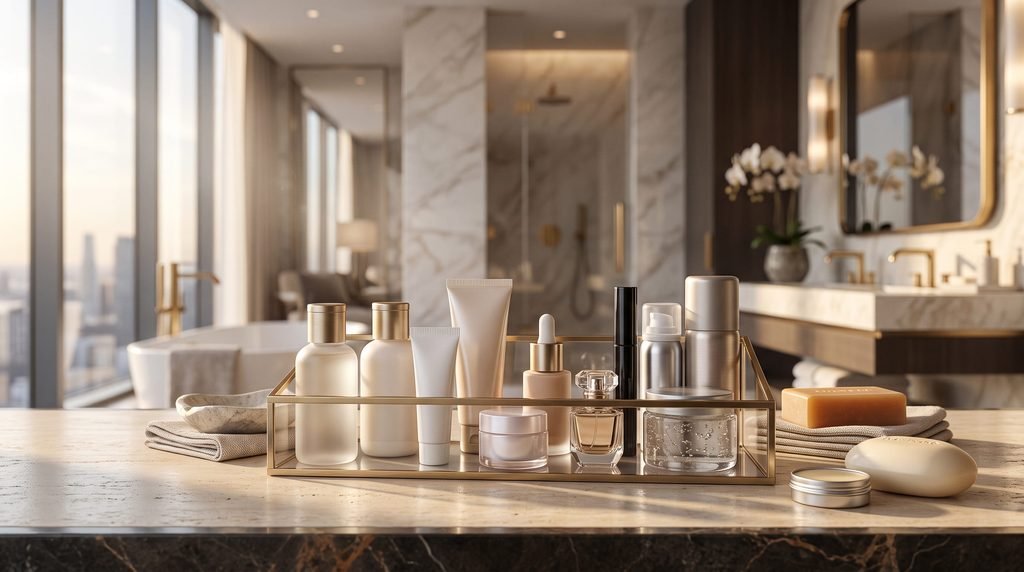
The TSA liquids rule is broader than ordinary beverages.
For security purposes, you should think beyond products that literally pour. TSA’s categories also cover many gels, creams, pastes, and aerosols.
Common examples include:
| Item | Carry-On Guidance |
|---|---|
| Shampoo | 3.4 oz / 100 ml or less |
| Conditioner | 3.4 oz / 100 ml or less |
| Toothpaste | 3.4 oz / 100 ml or less |
| Sunscreen | 3.4 oz / 100 ml or less |
| Liquid foundation | 3.4 oz / 100 ml or less |
| Mascara | 3.4 oz / 100 ml or less |
| Hair gel | 3.4 oz / 100 ml or less |
| Liquid soap | 3.4 oz / 100 ml or less |
| Perfume | 3.4 oz / 100 ml or less |
| Shaving cream | 3.4 oz / 100 ml or less |
| Hummus | 3.4 oz / 100 ml or less |
| Peanut butter | 3.4 oz / 100 ml or less |
TSA’s item-by-item guidance specifically lists products such as toothpaste, shampoo, conditioner, mascara, foundation, hair gel, creamy spreads, and hummus under the 3.4-ounce/100-ml carry-on restriction.
Think “Liquid-Like,” Not Just “Liquid”
A useful packing rule is:
If a product can be poured, squeezed, spread, sprayed, pumped, or has a gel/cream/paste consistency, check whether the 3-1-1 rule applies.
That simple approach catches many products travelers forget.
What Toiletries Can You Bring in a Carry-On?
Most everyday toiletries are permitted in a carry-on as long as they comply with the applicable size requirements.
Hair Care
These commonly include:
- Shampoo
- Conditioner
- Hair gel
- Hair spray
- Styling cream
- Liquid hair products
TSA lists shampoo, conditioner, hair gel, and hair spray as carry-on items subject to the 3.4-ounce/100-ml limit.
Skincare
Common examples include:
- Facial cleanser
- Moisturizer
- Sunscreen
- Serum
- Liquid toner
- Creams
- Gel treatments
A simple way to save space is to take only the amount needed for the trip rather than packing full-size containers.
Makeup
Many travelers overlook makeup when preparing their liquids bag.
Depending on the product, you may need to account for:
- Mascara
- Liquid foundation
- Concealer
- Lip gloss
- Liquid makeup
- Cream-based cosmetics
TSA’s current item list specifically classifies mascara, concealer, and foundation as carry-on items subject to the 3.4-ounce/100-ml limitation.
Solid makeup products can be easier to pack because they do not occupy space in your liquids bag.
What Does Not Usually Need to Go in the Liquids Bag?
Not every toiletry belongs in the 3-1-1 bag.
For example, TSA lists bar soap, lipstick, chapstick, makeup wipes, toothbrushes, and empty water bottles as permitted carry-on items without the same liquid-container restriction.
That makes solid alternatives useful for minimalist packing.
Consider Solid Alternatives
Instead of carrying several liquid products, you might choose:
- Bar soap instead of liquid body wash
- Solid shampoo instead of bottled shampoo
- Solid conditioner instead of liquid conditioner
- Makeup wipes instead of liquid cleanser for certain trips
- Stick cosmetics instead of liquid formulas
The goal isn’t to eliminate liquids completely. It is to reserve limited liquids-bag space for products you genuinely need.
Can You Bring Food Through TSA?
Yes, but food can become confusing when it has a liquid, gel, or spreadable consistency.
Solid foods are generally treated differently from liquid or gel foods. TSA’s current guidance, for example, permits solid cheese while creamy cheese is subject to the 3.4-ounce/100-ml restriction. Similar treatment applies to products such as hummus, peanut butter, sauces, yogurt, and liquid chocolate.
Common Examples
Generally easier to carry in a carry-on:
- Solid cheese
- Crackers
- Cookies
- Nuts
- Snack bars
- Solid chocolate
- Dry snacks
Check the 3-1-1 rule for:
- Peanut butter
- Hummus
- Yogurt
- Sauces
- Salsa
- Salad dressing
- Liquid chocolate
- Creamy dips
TSA’s item-by-item database is the best place to check an unusual food before traveling.
Can Medication Be Larger Than 3.4 Ounces?
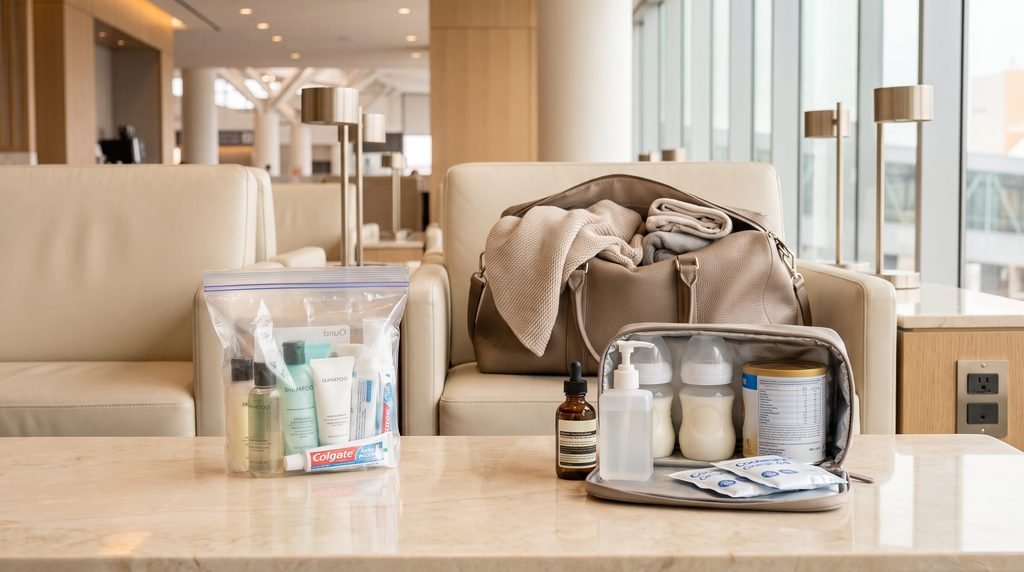
Medically necessary liquids can be allowed in quantities greater than 3.4 ounces or 100 ml.
TSA states that medically necessary liquids, medications, and creams can exceed the normal 3.4-ounce limit when carried in a carry-on. Travelers should declare these items to the TSA officer at the beginning of the screening process because they may receive additional screening.
Liquid medication does not have to be placed in the standard quart-size liquids bag when it qualifies for the medical exception.
Practical Tip
Keep medically necessary liquids easily accessible and tell the TSA officer about them rather than assuming the normal liquids procedure applies.
TSA also recommends checking its current item-specific guidance because certain products, including some contact lens solutions, can require additional screening.
What About Breast Milk, Formula, and Baby Food?
Traveling with infants or young children can involve liquids that don’t fit neatly into the ordinary 3-1-1 system.
TSA’s current guidance allows special treatment for items such as:
- Breast milk
- Infant formula
- Toddler drinks
- Baby food
- Puree pouches
- Ice packs and cooling accessories needed for these items
These items can be brought through the checkpoint with additional screening procedures when applicable. TSA’s item guidance specifically notes that cooling accessories are also permitted for these purposes.
Because screening requirements can be more involved, keep these supplies organized and tell the officer what you are carrying.
Does TSA PreCheck Change the Liquids Rule?
TSA PreCheck does not give you a larger liquid allowance.
The important difference is the screening process.
TSA documentation states that eligible PreCheck passengers generally do not need to remove their 3-1-1 liquids bag during standard PreCheck screening.
That does not mean you can bring a full-size shampoo bottle simply because you are enrolled in PreCheck.
PreCheck vs. Liquid Limits
Think of it this way:
TSA PreCheck = different screening procedure
3-1-1 rule = carry-on liquid restrictions
They are related to the same checkpoint but serve different purposes.
Do CT Scanners Change the TSA Liquids Rule?
Some TSA checkpoints use computed tomography (CT) technology that changes how carry-on items are screened.
TSA documentation explains that when a CT unit is in use, travelers can leave electronics and travel-size liquids inside their carry-on luggage during screening.
However, this should not be interpreted as a universal removal of the liquids rule.
A checkpoint’s screening technology can affect whether you need to remove the bag, while the underlying liquid restrictions still matter.
Because procedures can vary between checkpoints, follow the instructions displayed at the specific security lane you are using.
How to Pack Carry-On Liquids Without the Stress
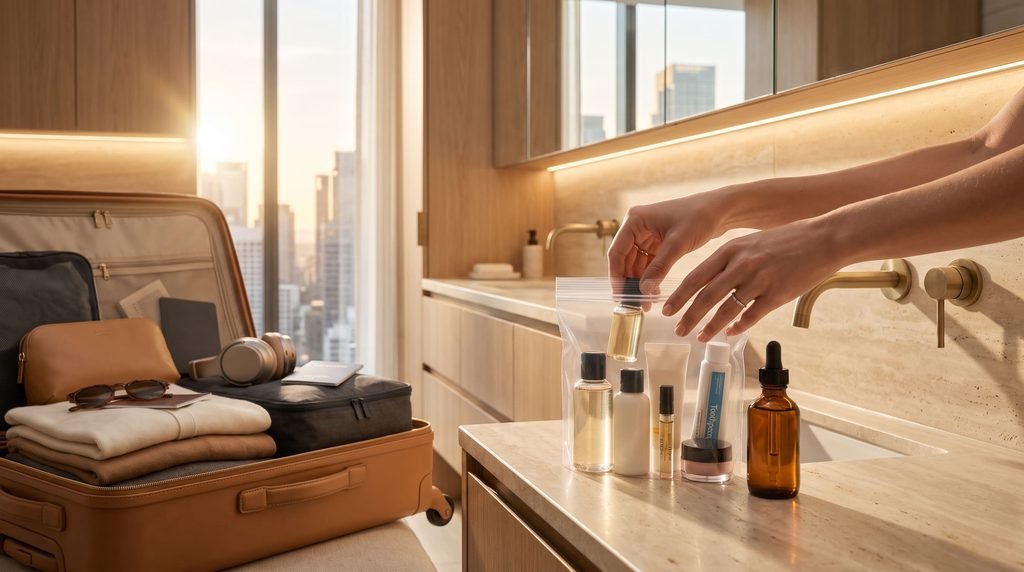
The easiest way to follow the TSA liquids rule is to organize your toiletries before you reach the airport.
1. Make a Liquid Inventory
Put all your toiletries on a counter and identify anything that is:
- Liquid
- Gel
- Cream
- Paste
- Aerosol
- Spreadable
This immediately reveals how much space you need.
2. Check Every Container
Look at the container rather than guessing how much product remains.
If a container is larger than 3.4 ounces/100 ml, move the required amount into a compliant travel container or place the full-size product in checked baggage.
3. Replace Unnecessary Liquids
Ask whether you can use a solid alternative.
For a short trip, a solid shampoo bar, bar soap, or solid cosmetic can save valuable space.
4. Keep Your Liquids Together
TSA’s own packing guidance recommends placing the 3-1-1 bag in an accessible part of the carry-on for screening.
This is particularly helpful if you are using a standard screening lane where you may need to remove the bag.
5. Don’t Pack Based on “Almost Empty”
A nearly empty oversized container is still oversized.
Transfer the product or choose a smaller container rather than relying on the amount remaining.
Common TSA Liquids Mistakes to Avoid
Packing a 6-Ounce Bottle With Only 2 Ounces Inside
The container is still larger than the standard 3.4-ounce limit.
Forgetting Toothpaste
Toothpaste is treated as a paste and falls under the liquids restrictions.
Leaving Mascara Loose in Your Toiletry Bag
Mascara is among the cosmetics TSA identifies as subject to the 3.4-ounce/100-ml restriction.
Assuming “Solid-Looking” Food Is Always Solid
Spreadable foods such as peanut butter and hummus are treated differently from genuinely solid foods.
Assuming PreCheck Eliminates Liquid Restrictions
PreCheck can change the screening procedure, but it does not turn full-size liquids into permitted carry-on items.
Forgetting About Exceptions
Medical liquids and certain infant-related supplies have special rules. Don’t automatically apply the ordinary 3-1-1 limit to every item.
A Simple TSA Carry-On Liquids Checklist
Before leaving for the airport, check:
- Every ordinary liquid container is 3.4 oz / 100 ml or smaller
- Liquids, gels, aerosols, creams, and pastes are organized together
- Your liquids fit into one quart-size clear bag
- You have only one standard liquids bag
- Oversized nonessential liquids are in checked baggage
- Medical liquids are clearly separated and ready to declare
- Baby/child liquids are organized separately when applicable
- The liquids bag is easy to access
- You have checked unusual items in TSA’s official database
TSA notes that its “What Can I Bring?” database can be used to check individual items, and that final screening decisions remain with TSA officers at the checkpoint.
FAQs
1. How much liquid can you bring on a plane in a carry-on?
For ordinary liquids, gels, aerosols, creams, and pastes, each container must generally be 3.4 ounces (100 ml) or smaller and fit within one quart-size clear bag, with one bag permitted per passenger.
2. Does toothpaste count as a liquid for TSA?
Yes. TSA classifies toothpaste under the liquids-rule restrictions, so a carry-on toothpaste container generally needs to be 3.4 ounces (100 ml) or smaller.
3. Can I bring medication larger than 3.4 ounces in my carry-on?
Yes, medically necessary liquids can qualify for an exception to the standard limit. You should declare them to the TSA officer at the checkpoint so they can receive the required screening.
4. Does TSA PreCheck let me bring larger liquids?
No. TSA PreCheck changes aspects of the screening process, including allowing eligible travelers to leave their 3-1-1 liquids bag in their carry-on during standard PreCheck screening, but it does not create a larger ordinary liquid allowance.
5. Can I bring an empty water bottle through TSA?
Yes. TSA lists empty water bottles as permitted in both carry-on and checked baggage. You can pack an empty bottle and fill it after passing through security.
Conclusion
The TSA liquids rule becomes much easier once you separate the basic rule from the exceptions.
For ordinary carry-on liquids, remember 3.4 ounces/100 ml per container, one quart-size clear bag, and one bag per passenger. Then look beyond obvious liquids: toothpaste, mascara, gels, creams, aerosols, and spreadable foods can also fall under the rule.
For medical liquids, infant supplies, and unusual items, use the applicable TSA exception or check the official What Can I Bring? database before your trip. And remember that TSA PreCheck or a CT-equipped checkpoint can change the screening process without necessarily changing the underlying liquid restrictions.
A few minutes of preparation—especially right-sizing containers and keeping your liquids accessible—can make the security checkpoint considerably simpler.
1 comment