
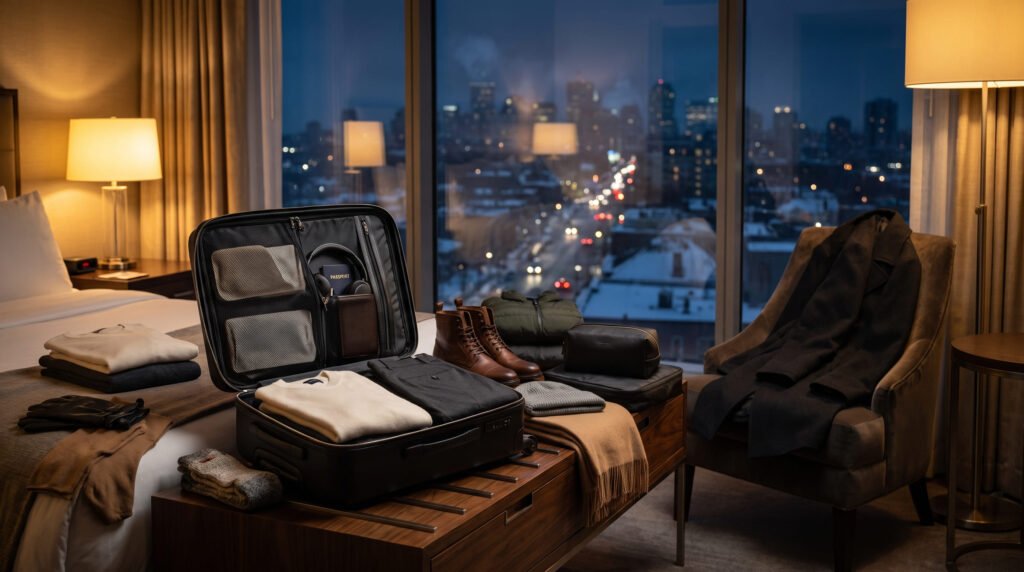
Packing for cold weather with only a carry-on can feel like a battle between staying warm and keeping your luggage manageable. Bulky coats, sweaters, boots, thermal layers, and winter accessories can quickly consume valuable space.
The solution is not to pack more efficiently by squeezing everything into a smaller bag. It is to build a cold weather carry-on packing list around versatile layers, compact insulation, practical footwear, and pieces that can be worn more than once.
This guide explains what to pack for a winter trip, how much clothing you actually need, how to handle bulky layers, how to choose between down and synthetic insulation, and how to keep your one-bag setup practical for different cold-weather conditions.
How to Build a Cold-Weather Carry-On
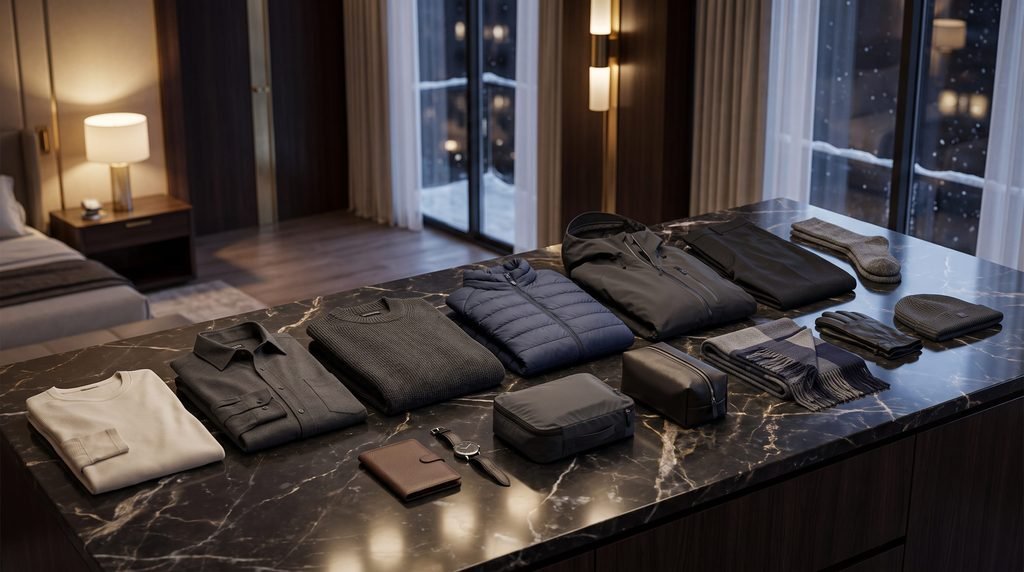
Before putting anything into your bag, think about the conditions you are actually traveling into. “Winter” can mean a cool European city, freezing temperatures, heavy snow, or cold rain and strong wind.
Start With the Weather
Look at the expected temperature range and precipitation for your destination. Then consider what you will actually be doing.
A city break with heated museums, restaurants, and public transportation requires a different system from a ski trip or extended outdoor adventure.
For most ordinary winter city travel, a versatile layering system is more useful than several heavy garments.
Think in Layers, Not Outfits
A good winter travel wardrobe should work as a system:
- Base layer: manages moisture and provides light warmth.
- Mid-layer: adds insulation when temperatures drop.
- Insulating layer: provides substantial warmth without unnecessary bulk.
- Outer shell: protects against wind and precipitation when required.
The advantage is flexibility. You can remove a layer indoors or combine several layers outdoors without carrying multiple complete outfits.
Separate Weight From Volume
Winter packing has two different problems: bulk and weight.
A large fleece may occupy considerable space but weigh relatively little. Heavy boots, dense sweaters, and multiple pairs of trousers can create a much bigger weight problem.
Before packing, consider both measurements rather than assuming that a compressed bag is automatically a lightweight bag.
Cold Weather Carry-On Packing List
The ideal list changes with destination and activity, but the following provides a practical starting point for a typical winter city trip.
Base Layers
Pack one or two versatile thermal tops depending on the trip length and expected temperatures.
Merino wool is popular for travel because it can provide warmth while managing moisture and odor. Synthetic performance fabrics can also work well, particularly when quick drying is important.
For bottoms, thermal leggings or long underwear can be added when temperatures are genuinely cold rather than simply cool.
Mid-Layers
A lightweight fleece, merino sweater, or similar insulating layer can provide useful warmth without requiring a very thick jumper.
Choose pieces that work with your other clothing rather than packing several different sweaters.
A neutral mid-layer is particularly useful because it can work with multiple trousers and outer layers.
Packable Insulated Jacket
A lightweight insulated jacket can be one of the most valuable pieces in a winter carry-on.
Down often provides excellent warmth for its weight and can compress efficiently in luggage. Synthetic insulation is another option and can be preferable in damp conditions.
For ordinary city travel, a compact insulated jacket can often replace the need for several bulky sweaters.
Waterproof or Windproof Shell
If your destination is rainy, snowy, or windy, a shell layer can make the rest of your clothing more effective.
A shell does not necessarily need to be heavily insulated. Its primary job is to help block wind and precipitation while allowing you to adjust the layers underneath.
Pants and Bottom Layers
For a typical winter city trip, two or three pairs of versatile trousers can be enough, particularly if they coordinate with the rest of the wardrobe.
Choose fabrics that are comfortable for long walking days and practical for travel.
If you are visiting a destination with heavy snow or planning outdoor winter activities, activity-specific trousers or snow pants may be necessary.
Socks and Underwear
Pack enough underwear for the trip while avoiding the temptation to bring a separate pair of socks for every possible outfit.
Wool or synthetic performance socks can be useful in colder conditions. Bring at least one pair suitable for your warmest planned activity, particularly if you expect snow or long periods outdoors.
Winter Accessories
Small accessories can provide a surprising amount of warmth without taking much room.
Consider:
- Warm hat or beanie
- Gloves
- Scarf or neck gaiter
- Wool or thermal socks
- Sunglasses
- Compact umbrella where appropriate
- Hand warmers if permitted for your journey
Choose accessories according to the actual weather rather than automatically packing every winter item.
Shoes and Boots
Footwear is one of the hardest parts of winter one-bag travel because shoes are relatively bulky and heavy.
For a city trip, one versatile pair of comfortable, weather-appropriate shoes may be enough.
If snow, ice, or prolonged wet conditions are expected, waterproof or water-resistant boots may be more practical. Wear the largest pair during transit whenever comfortable and permitted.
Complete Winter One-Bag Checklist
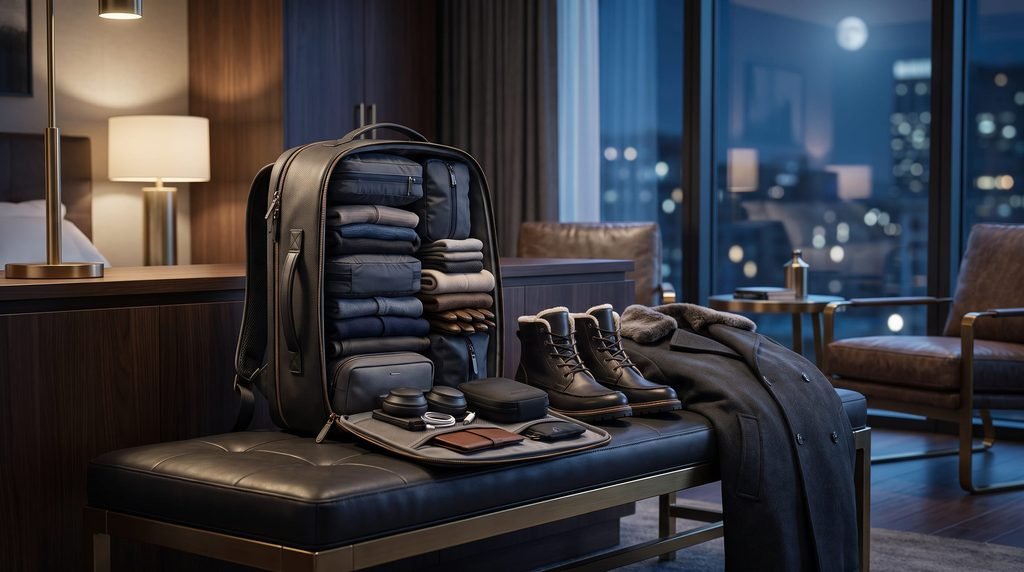
A practical cold-weather carry-on can be organized into five categories.
Clothing
- 1–2 thermal/base-layer tops
- 2–4 everyday tops
- 1–2 sweaters or mid-layers
- 1 insulated jacket
- 1 weather-resistant shell if needed
- 2–3 pairs of trousers
- Underwear
- Socks
- Sleepwear
- Hat
- Gloves
- Scarf or neck warmer
Toiletries
Keep toiletries compact and choose travel-sized quantities where possible.
Include your normal essentials such as toothbrush, toothpaste, skincare, hair products, deodorant, and any regularly required personal items. Follow the liquid restrictions applicable to your departure airport and airline.
Electronics
A minimalist winter setup might include:
- Phone
- Charging cable
- Compact charger
- Power bank where permitted
- Universal travel adapter when required
- Headphones
- E-reader or tablet if useful
Avoid packing electronics simply because you own them. Every extra device adds weight and another item to manage.
Travel Documents
Keep essential documents accessible rather than buried beneath clothing.
Depending on your trip, this may include:
- Passport
- Visa or entry documentation where required
- Boarding information
- Accommodation details
- Travel insurance information
- Driving documents if renting a vehicle
Always verify current entry requirements before departure because immigration and airline requirements can change.
Personal-Item Essentials
Your personal item can function as a second layer of organization rather than becoming another oversized bag.
Useful items can include:
- Wallet
- Phone
- Passport
- Medications
- Small toiletry essentials
- Water bottle
- Headphones
- Reading material
- Important documents
- A lightweight layer
How Many Clothes Do You Need for a Winter Trip?
The answer depends on the weather, access to laundry, planned activities, and whether you need specialized clothing.
For a 3–4 Day Trip
A compact capsule can usually cover a short city trip without excessive duplication.
Focus on:
- A couple of tops
- One or two warm layers
- Two bottoms
- Underwear and socks
- One primary outer layer
- One practical pair of shoes
For a 5–7 Day Trip
Instead of doubling the wardrobe, increase versatility.
A few interchangeable tops and bottoms can create several combinations. If laundry is available, there is even less reason to pack a separate outfit for every day.
For an 8–14 Day Trip
Longer travel does not necessarily require twice as many clothes.
A better strategy is to maintain a small capsule wardrobe and plan a laundry stop. This keeps the carry-on manageable while allowing the same core layers to work throughout the trip.
How to Pack Bulky Winter Clothes in a Carry-On
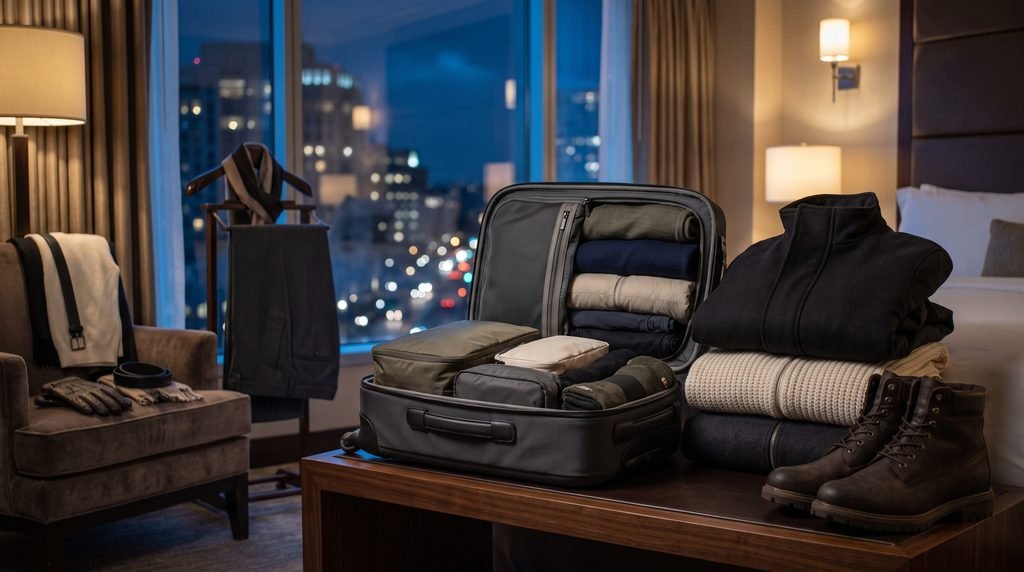
Bulky winter clothing is usually the biggest obstacle to one-bag travel.
Wear the Bulkiest Items
If practical, wear your heaviest shoes, larger jacket, and thickest layer during transit.
You can remove the jacket once you are comfortable on the plane or inside the terminal.
However, wearing multiple heavy layers solely to bypass baggage limits may be uncomfortable and inconvenient. The goal is to travel comfortably, not simply transfer the luggage burden onto your body.
Use Packing Cubes Strategically
Packing cubes can help organize clothing, but compression should be used selectively.
Compress soft garments that tolerate compression well, but avoid assuming every item should be squeezed as tightly as possible.
Over-compressing clothing can make the bag difficult to organize and may add unnecessary weight through bulky compression systems.
Don’t Pack What You Can Wear
A winter carry-on works best when clothing serves multiple purposes.
A warm sweater can work for the airport, sightseeing, dinner, and indoor lounging. A neutral insulated jacket can become the primary outer layer throughout the trip.
This is more efficient than packing separate clothing for every setting.
Down vs. Synthetic Insulation for Travel
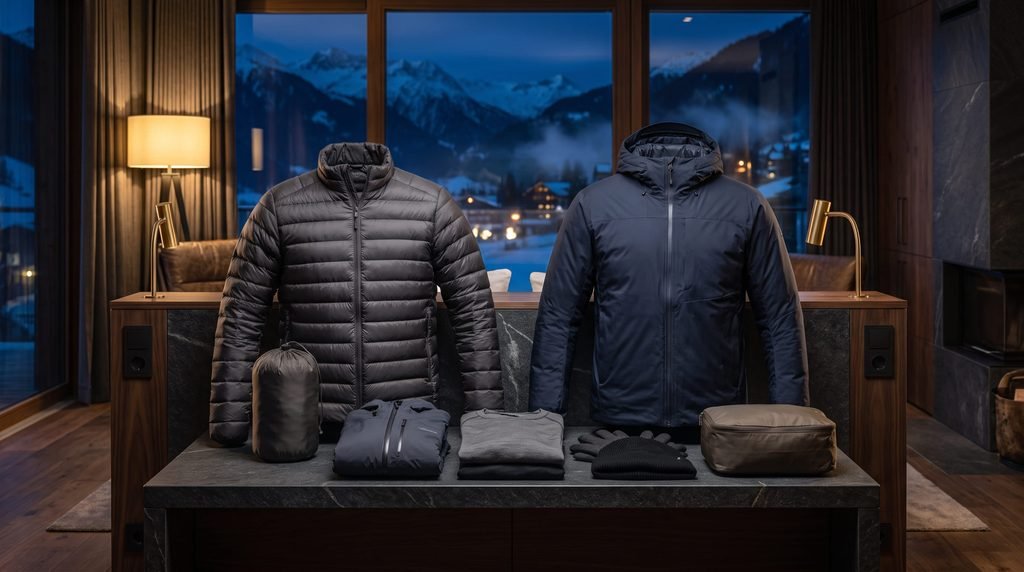
The choice between down and synthetic insulation depends heavily on the conditions.
| Feature | Down | Synthetic |
| Warmth-to-weight | Excellent | Very good |
| Packability | Usually excellent | Varies |
| Damp conditions | Less ideal when wet | Generally more forgiving |
| Drying | Can take longer | Usually dries more readily |
| Travel use | Excellent for compact warmth | Useful for variable weather |
When Down Makes Sense
Down is particularly attractive when you need substantial warmth without adding much weight or volume.
It can be an excellent option for cold, relatively dry conditions where packability matters.
When Synthetic Is Better
Synthetic insulation can make sense for wetter environments or trips where exposure to damp weather is likely.
The best choice depends on your destination rather than on a universal “better” material.
How to Choose Winter Travel Shoes
Shoes should be selected according to surface conditions and activities, not simply the calendar season.
For Cold City Travel
Look for comfortable footwear that provides sufficient insulation and traction for long days of walking.
You may not need a heavy snow boot if your destination is cold but mostly dry and urban.
For Snow and Ice
Prioritize traction, weather protection, and warmth.
A shoe that looks winter-ready but has poor grip can be a poor choice for icy streets.
For Outdoor Activities
If skiing, snowshoeing, hiking, or another specialized activity is part of the itinerary, use footwear designed for that activity rather than trying to make an ordinary travel shoe perform every role.
How to Keep Your Carry-On Within Weight Limits
Carry-on dimensions and weight restrictions vary by airline, route, fare, and ticket type. Always check the current allowance for the airline actually operating your flight before packing.
Weigh the Bag Before Leaving
A small luggage scale can reveal a problem before you reach the airport.
Pay particular attention to:
- Shoes
- Toiletries
- Electronics
- Chargers
- Heavy sweaters
- Cameras
- Water bottles
- Dense winter accessories
These items can add up quickly.
Reduce Duplicate Items
The easiest way to lower weight is often to remove something rather than find a more complicated packing technique.
Ask of every item:
Does it provide a function that another item does not?
If the answer is no, it may not deserve space in the bag.
Choose Lightweight Gear
Your bag itself contributes to the total weight.
A lightweight carry-on or travel backpack can leave more of the weight allowance available for clothing and equipment.
How to Pack Wet Winter Gear
Wet clothing and footwear can become a major problem during the return journey.
Wet Boots
Allow footwear to dry as much as conditions permit before packing.
Never assume that placing wet boots directly beside clean clothing is harmless. Moisture can spread and create unpleasant odors or dampen other items.
Damp Gloves and Shells
Keep damp accessories separate from dry clothing using a waterproof pouch or dedicated wet bag.
If you have access to a drying area, allow items to dry fully before closing the bag.
Snow Pants and Technical Gear
If your trip involves snow sports or outdoor activities, separate wet technical clothing from your everyday travel wardrobe.
A dedicated waterproof storage solution can make the journey home considerably easier.
Winter Carry-On Mistakes to Avoid
Packing for Every Possible Temperature
You do not need five versions of winter clothing because the forecast might change slightly.
Build a flexible layering system instead.
Bringing Too Many Heavy Sweaters
Thick sweaters quickly consume carry-on space. One or two versatile insulating layers can often provide more flexibility.
Packing Multiple Pairs of Bulky Shoes
Footwear is one of the fastest ways to lose both space and weight.
Choose carefully and wear the largest practical pair during transit.
Ignoring Rain and Wind
Cold air is only part of the equation. Wind and precipitation can dramatically affect comfort.
Consider the full weather picture before choosing your outer layer.
Treating a Ski Trip Like a City Break
A normal winter packing list may be completely inadequate for skiing or prolonged outdoor exposure.
Specialized activities require specialized equipment.
Forgetting Indoor Heat
Many winter destinations have strongly heated hotels, restaurants, trains, and museums.
Your wardrobe should therefore be adjustable. A system that only works outdoors can become uncomfortable indoors.
Who Is This Cold Weather Carry-On Packing List Best For?
First-Time Winter Travelers
The layering system helps simplify the process when you are unsure how much cold-weather clothing is actually necessary.
One-Bag Travelers
Travelers committed to carry-on-only packing will benefit most from versatile garments, compact insulation, and careful footwear selection.
City Travelers
This approach works particularly well for travelers who spend much of their trip moving between streets and heated indoor spaces.
Minimalist Travelers
The system suits anyone who prefers fewer, more versatile possessions rather than a different outfit for every day.
Ski and Outdoor Travelers
The principles still apply, but specialized winter equipment may require additional luggage or activity-specific arrangements.
FAQs
1. How do you pack a carry-on for cold weather?
Build around a layering system rather than packing several complete winter outfits. Use versatile base layers, compact insulation, a suitable outer shell, practical footwear, and accessories matched to the destination’s actual weather.
2. How many clothes should I pack for a week in winter?
For a one-week trip, a compact capsule of interchangeable tops, two or three bottoms, underwear, socks, and a small number of warm layers is usually more practical than seven separate outfits. Laundry access can reduce the amount further.
3. How do you pack bulky winter clothes in a carry-on?
Wear your bulkiest practical items during transit, choose packable insulation, use packing cubes for organization, and avoid bringing unnecessary duplicates. Remember that compression reduces volume but does not reduce weight.
4. Is down or synthetic insulation better for winter travel?
Neither is universally better. Down generally offers excellent warmth relative to weight and packs efficiently, while synthetic insulation can be more forgiving in damp conditions. Choose according to the destination and expected weather.
5. Do I need winter boots for a cold-weather trip?
Not necessarily. For a cold but mostly dry city, comfortable weather-appropriate shoes may be enough. Snow, ice, prolonged rain, and outdoor activities can make insulated or waterproof boots much more useful.
Conclusion
A successful cold weather carry-on packing list is less about squeezing an entire winter wardrobe into a small bag and more about choosing a system that works across changing conditions. Start with the destination’s weather, build around interchangeable layers, limit duplicate clothing, and give special attention to footwear and outerwear.
For most winter city trips, a compact combination of base layers, versatile mid-layers, one insulating jacket, appropriate weather protection, and practical shoes can provide considerably more flexibility than a suitcase filled with bulky garments.
Before leaving, check your airline’s current baggage allowance, weigh the finished bag, and remove anything that does not have a clear purpose. The result should be a carry-on that keeps you warm without making every part of the journey feel like a luggage-management exercise.
1 comment