
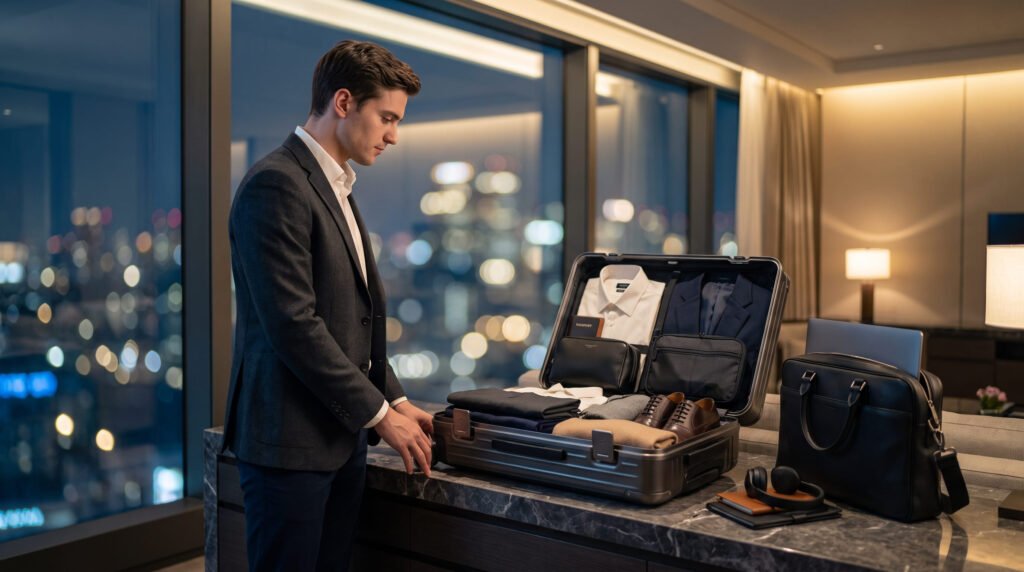
A business travel carry-on packing list should do more than tell you to pack a few shirts, toiletries, and a laptop. The real challenge is creating a compact travel system that works for meetings, flights, dinners, changing weather, and unexpected schedule changes—without turning your carry-on into an overstuffed suitcase.
For most short business trips, the goal is not to pack one complete outfit for every possible situation. It is to build a small, coordinated wardrobe, keep essential work equipment accessible, reduce duplicate items, and make every piece earn its space.
This guide breaks down exactly how to approach a business trip packing list for carry-on only travel, including clothing, shoes, technology, toiletries, personal-item essentials, wrinkle prevention, trip-length adjustments, international considerations, and airport-day organization.
Quick Business Travel Carry-On Packing List
For a typical 3–5 day business trip, start with this core system and adjust it according to your itinerary, dress code, destination, and weather.
Clothing
- 2–4 professional tops or shirts
- 1–2 pairs of trousers, chinos, skirts, or equivalent bottoms
- 1 versatile blazer, jacket, cardigan, or professional layer
- 1–2 casual or travel tops if needed
- 4–5 sets of underwear
- 4–5 pairs of socks
- Sleepwear
- Lightweight workout clothing if you will actually use it
- Weather-appropriate outer layer when necessary
Shoes
- 1 comfortable professional pair
- 1 optional second pair when the itinerary genuinely requires it
- Minimal socks or shoe accessories
- Optional compact shoe bag
Technology
- Laptop or tablet
- Phone
- Required charging cables
- Wall charger
- Compact power bank if useful
- Headphones or earbuds
- Travel adapter for international trips
- Presentation or work accessories you genuinely need
Toiletries
- Toothbrush and toothpaste
- Deodorant
- Skincare essentials
- Hair-care essentials
- Shaving or grooming items
- Prescription or essential medication
- Minimal cosmetics or personal-care products
- Travel-size versions of liquids where appropriate
Documents & Essentials
- Passport or government-issued identification
- Boarding information
- Wallet and payment cards
- Business documents
- Hotel information
- Travel insurance details where applicable
- Emergency contact information
- Keys
The exact quantity should always follow the actual itinerary. A two-day client meeting and a five-day conference do not require the same packing list.
How Much Should You Pack for a Business Trip?
The best way to determine how much to pack is to work backward from your schedule.
Before opening your suitcase, write down:
- Number of travel days
- Number of formal meetings
- Number of business-casual days
- Evening plans
- Expected weather
- Exercise or personal activities
- Laundry access
- Required work equipment
- Any special event or dress requirement
Then build your wardrobe around those requirements.
For a 2–3 Day Business Trip
A compact setup can often include:
- 2 professional tops
- 1–2 bottoms
- 1 professional layer
- 1 primary pair of shoes
- Underwear and socks for each day
- Sleepwear
- Compact toiletries
- Essential technology
If one outfit can transition from travel to an informal dinner, you have already eliminated unnecessary bulk.
For a 4–5 Day Business Trip
Add selectively rather than doubling the entire wardrobe.
A practical approach is:
- 3–4 tops
- 2 bottoms
- 1 versatile professional layer
- 1–2 pairs of shoes depending on the dress code
- 4–5 sets of underwear and socks
- Sleepwear
- Essential technology and toiletries
If the trip extends beyond five days, consider laundry before automatically adding another complete set of clothing.
Build Your Business Travel Capsule Wardrobe
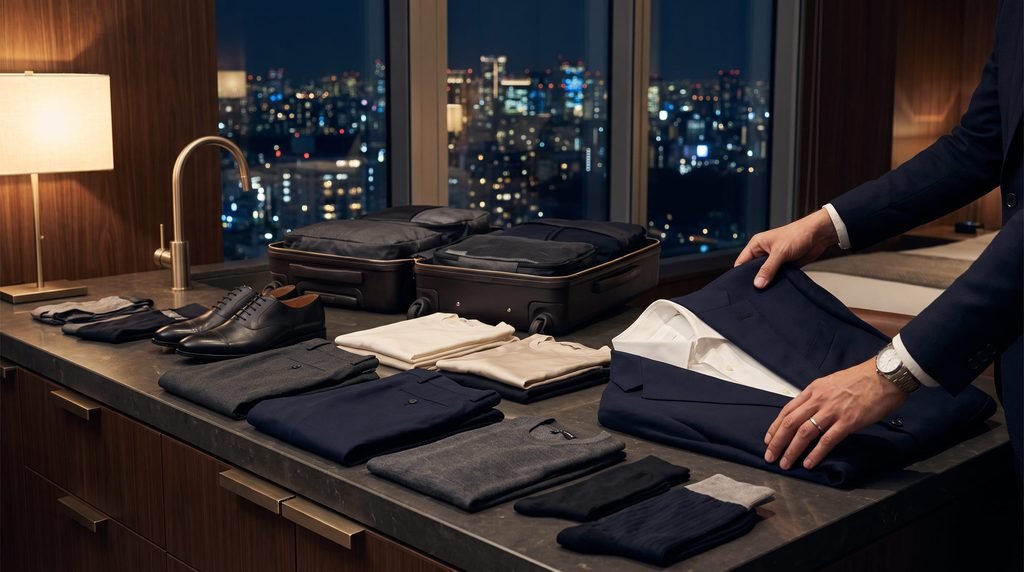
A successful business travel capsule wardrobe is built around coordination.
Instead of choosing five completely separate outfits, choose pieces that can be mixed into multiple combinations.
Start With Your Bottoms
Bottoms often take more space than lightweight tops, so limit them first.
Choose neutral, professional colors that work with several tops. Depending on your workplace, that might mean:
- Black
- Navy
- Charcoal
- Grey
- Beige
- Dark brown
The goal is not to create a fashionable capsule for its own sake. It is to reduce the number of items you need while preserving enough variation for your schedule.
Add Versatile Tops
Choose tops that work with at least two bottoms.
For example:
- One shirt for formal meetings
- One shirt that works for meetings and dinner
- One additional top for rotation
- One optional casual-professional piece
If every top only works with one pair of trousers, your suitcase will grow quickly.
Pack One Reliable Professional Layer
A blazer, structured cardigan, lightweight jacket, or another appropriate layer can transform a simple outfit.
It can also help manage changing temperatures between:
- Airports
- Aircraft cabins
- Hotels
- Offices
- Restaurants
Choose something that works with most of your wardrobe rather than a highly specialized piece.
Think in Outfit Combinations
Before packing, physically create your combinations.
For example:
Top A + Bottom A + Professional Layer
Top B + Bottom A
Top C + Bottom B + Professional Layer
Top A + Bottom B
This gives you multiple looks without packing a separate outfit for every day.
Choose Business Travel Shoes Carefully
Shoes are one of the easiest ways to waste carry-on space.
For many short trips, one comfortable professional pair may be enough.
Choose shoes that are:
- Appropriate for your meetings
- Comfortable enough for airport walking
- Compatible with multiple outfits
- Suitable for your destination
- Easy to wear through travel days
Bring a second pair only when it serves a clear purpose.
For example, a second pair can make sense when:
- Your formal meetings require different footwear
- You have a separate evening event
- You need athletic shoes for a planned activity
- Weather makes your primary shoes impractical
Avoid packing multiple pairs simply because you might want different options.
Wear the Bulkiest Shoes
When practical, wear the larger or heavier pair during transit and pack the lighter pair.
This preserves valuable carry-on capacity for clothing and work equipment.
What Should Go in Your Personal Item?
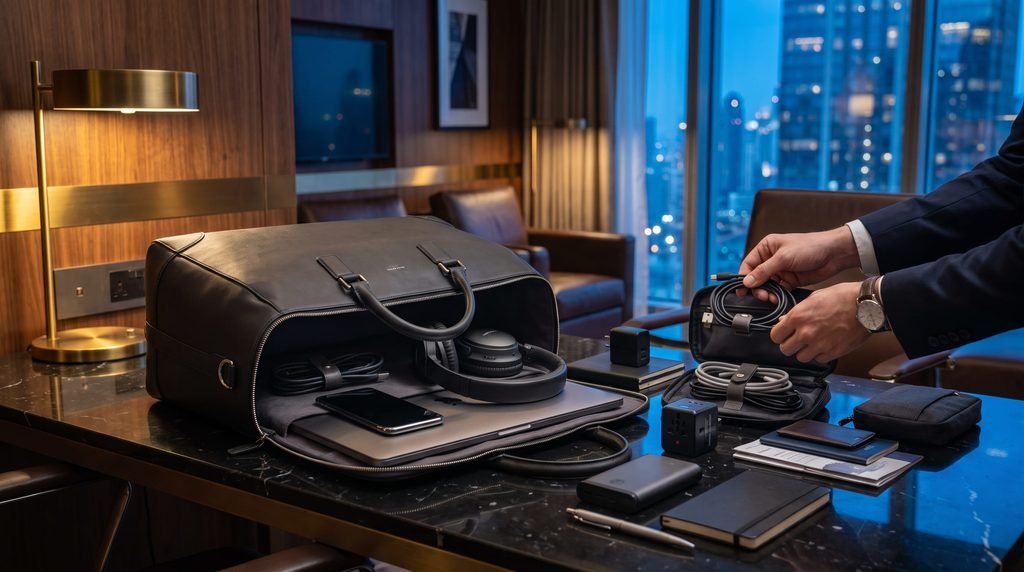
Your personal item should not simply become a second suitcase.
Use it for things that need to remain accessible during the journey or would cause serious problems if your carry-on were temporarily unavailable.
A useful personal-item setup can include:
Work Essentials
- Laptop
- Tablet if genuinely required
- Work documents
- Notebook
- Pen
- Presentation materials
Travel Essentials
- Passport or identification
- Wallet
- Phone
- Headphones
- Charging cable
- Essential medication
- Small hygiene items
- Water bottle where appropriate
Gate-Check Essentials
If an airline takes your carry-on at the gate, you want critical items already separated.
Keep particularly important work equipment, travel documents, medication, and spare batteries with you rather than burying them inside the main suitcase.
This is especially important because aviation rules can require spare lithium batteries and power banks to remain in the cabin.
Business Travel Tech Essentials
Technology can quietly become the heaviest category in a business carry-on.
Before packing each device, ask:
Will I actually use this on this trip?
Your basic setup might include:
- Laptop
- Phone
- Charger
- One appropriate charging cable
- Headphones
- Compact power bank
- Travel adapter for international travel
- Presentation accessory if required
Avoid packing duplicate chargers, unused cables, old adapters, spare peripherals, and devices that you are unlikely to touch.
Create a Small Tech Kit
Keep your cables and small accessories together in a compact organizer.
A good business travel tech kit should make it possible to find:
- Laptop charger
- Phone cable
- Earbuds
- Adapter
- Power bank
- Small accessories
without unpacking your entire carry-on.
Build a Minimal Business Travel Toiletry Kit
Toiletries become inefficient when travelers pack full-size products for a short trip.
Instead, create a dedicated travel toiletry kit that stays ready between trips.
Consider:
- Toothbrush
- Toothpaste
- Deodorant
- Face cleanser
- Moisturizer
- Sunscreen
- Shaving supplies
- Hair products
- Basic grooming tools
- Essential medication
- Minimal cosmetics or personal-care products
Use smaller containers when appropriate and remove products you will not use.
Choose Multi-Use Products
A product that serves more than one purpose can reduce both weight and clutter.
For example, depending on your personal routine, one grooming product may replace several specialized products.
The objective is not to own the smallest possible toiletry collection. It is to avoid transporting a bathroom cabinet for a three-day meeting.
How to Pack Business Clothes Without Wrinkles
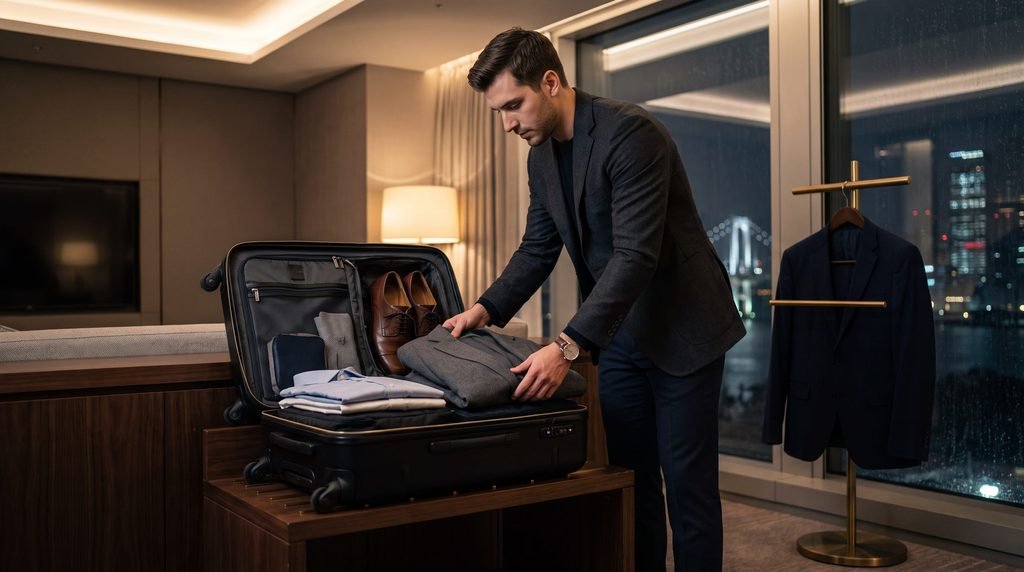
Wrinkles are particularly frustrating when you need to walk directly from the airport into a professional setting.
The best strategy starts before the clothes enter the suitcase.
1. Choose Travel-Friendly Fabrics
Where appropriate, prioritize fabrics that tolerate folding and movement well.
2. Do Not Overpack the Bag
An overfilled suitcase compresses clothing and makes creasing worse.
3. Fold Delicate Pieces Carefully
Avoid aggressive compression for structured garments.
4. Use Packing Cubes Strategically
Packing cubes can keep categories organized, but do not compress formal clothing excessively simply to save a few centimeters.
5. Unpack Soon After Arrival
Hang professional clothing when you reach the hotel.
A bathroom’s humidity after a shower can sometimes help minor creases relax, although a suitable garment steamer or hotel pressing service may be preferable for more significant wrinkles.
6. Wear the Most Structured Layer
When appropriate, wearing a blazer or structured outer layer during travel can prevent it from being crushed inside your luggage.
How to Organize a Business Travel Carry-On
Think of your carry-on as a system with zones rather than one large compartment.
Zone 1: Clothing
Use packing cubes or organized sections for:
- Tops
- Bottoms
- Underwear
- Sleepwear
Zone 2: Shoes
Keep shoes together and protect clothing from the soles.
Zone 3: Toiletries
Keep your toiletry kit accessible so it can be removed easily when required.
Zone 4: Work Equipment
Keep technology protected and organized.
Zone 5: Emergency/Backup Items
Reserve a small amount of space for useful extras rather than filling every available centimeter.
A little empty capacity is valuable. It gives you room to repack after a long day and reduces the temptation to force everything into the bag.
Pack According to Your Business Dress Code
There is no universal business travel wardrobe.
Traditional Corporate Travel
Prioritize:
- Structured professional clothing
- Conservative colors
- Formal shoes
- Professional outerwear
- Minimal casual pieces
Business Casual
You can generally use more interchangeable pieces.
Think:
- Chinos or tailored trousers
- Polished shirts or tops
- Smart knitwear
- Versatile shoes
- One professional layer
Conference Travel
Conference trips often require more walking and more repeated social interaction.
Prioritize:
- Comfortable professional shoes
- Multiple interchangeable tops
- A reliable outer layer
- Portable technology
- A small notebook
- A bag that works comfortably throughout a long day
Client-Facing Travel
When your appearance matters more, build the packing list around the specific meetings rather than relying on generic business-casual pieces.
Check the expected dress code before departure.
Adjust Your Packing for the Weather
Your packing list should respond to the destination rather than the calendar alone.
Warm Destinations
Prioritize:
- Breathable professional clothing
- Lightweight layers
- Comfortable shoes
- Sun protection
- Minimal outerwear
Avoid bringing heavy pieces that you are unlikely to wear.
Cold Destinations
Layering is generally more efficient than packing several bulky sweaters.
A useful system can include:
- Base layer
- Professional shirt or top
- Warm mid-layer
- Coat or jacket
- Appropriate footwear
Wear the bulkiest outer layer during transit whenever practical.
Rainy Destinations
Consider:
- Water-resistant outerwear
- Weather-appropriate footwear
- Compact umbrella where useful
- Protective bag for electronics
Do not let weather accessories take over the entire suitcase. Choose compact versions that serve a clear purpose.
What to Pack for an International Business Trip
International business travel adds another layer of planning.
Before packing, confirm:
- Passport validity requirements
- Visa or entry requirements
- Business-visitor restrictions where applicable
- Airline baggage rules
- Destination weather
- Power-plug compatibility
- Connectivity options
- Currency and payment needs
- Local business etiquette
- Any documentation required for your work
For international trips, keep your passport and other essential travel documents accessible rather than packed deep inside your luggage.
A universal packing list cannot replace destination-specific research.
Business Travel Carry-On Packing for a Conference
A conference requires a slightly different strategy from a simple client meeting.
Your packing list may need:
- Comfortable professional shoes
- Several interchangeable tops
- One polished layer
- Laptop or tablet
- Charger
- Phone
- Headphones
- Notebook
- Pens
- Presentation materials if required
- Business cards if relevant to your industry
- Small day bag or conference-appropriate personal item
The biggest mistake is packing a completely different outfit for every day.
Instead, create a small professional capsule and change the combinations.
What to Do If Your Carry-On Is Gate-Checked
This is one of the most important reasons to separate your luggage intelligently.
Before boarding, make sure the following remain with you:
- Passport or identification
- Phone
- Wallet
- Laptop
- Essential medication
- Important work documents
- Valuable items
- Spare lithium batteries
- Power bank
If your carry-on is taken at the gate, you should still have everything necessary to travel, work, and reach your hotel safely.
For battery-related items, always follow the applicable aviation and airline rules.
How to Handle Airport Security
The easiest airport experience usually begins with how you pack.
Keep potentially screenable items organized and accessible rather than buried under clothing.
For U.S. security screening, TSA guidance currently states that carry-on liquids, gels, and aerosols generally fall under the 3-1-1 framework, while screening procedures can vary by checkpoint and traveler program. Check current TSA guidance before departure rather than assuming every airport uses identical procedures.
Your packing system should therefore make it easy to access:
- Liquids bag
- Large electronics when applicable
- Travel documents
- Other items that may require separate screening
Business Travel Carry-On Packing Mistakes to Avoid
Packing One Outfit Per Day
This creates unnecessary duplication.
Build combinations instead.
Bringing Too Many Shoes
Shoes consume valuable space and rarely provide enough benefit to justify multiple pairs.
Packing Full-Size Toiletries
Short trips rarely require full bottles of every grooming product.
Taking Every Electronic Device
Pack according to the work you actually need to perform.
Ignoring the Dress Code
A generic “business” wardrobe can be completely wrong for a formal client meeting or an informal creative workplace.
Filling Every Inch of the Carry-On
A completely full bag is harder to organize, harder to close, and harder to repack.
Forgetting the Personal Item
The personal item should be part of your packing strategy from the beginning.
Checking Airline Rules Too Late
Carry-on dimensions and restrictions can vary between airlines and routes. Confirm the rules for your actual flight before departure.
Packing for Imaginary Situations
“Maybe I will need this” is one of the fastest ways to overpack.
Pack for realistic possibilities, not every hypothetical event.
A Simple 15-Minute Business Travel Packing Method
If you are packing shortly before departure, use this sequence.
Step 1: Read Your Itinerary
Identify every meeting, dinner, event, and travel day.
Step 2: Choose Your Travel Outfit
Wear pieces that are comfortable and work with your destination.
Step 3: Select Two Bottoms
Choose the most versatile options suitable for the dress code.
Step 4: Select Three or Four Tops
Make sure each works with more than one bottom where possible.
Step 5: Add One Professional Layer
Choose the piece that gives your wardrobe the most flexibility.
Step 6: Choose Your Shoes
Start with one pair. Add another only when necessary.
Step 7: Build the Toiletry Kit
Remove anything that is not essential.
Step 8: Build the Tech Kit
Take only the devices and cables required for the trip.
Step 9: Prepare the Personal Item
Put documents, valuables, essential work equipment, medication, and other critical items where they remain accessible.
Step 10: Check the Airline
Confirm your actual flight’s baggage requirements before leaving for the airport.
This approach is faster and more reliable than repeatedly adding items until the suitcase is full.
A Practical 3-Day Business Trip Example
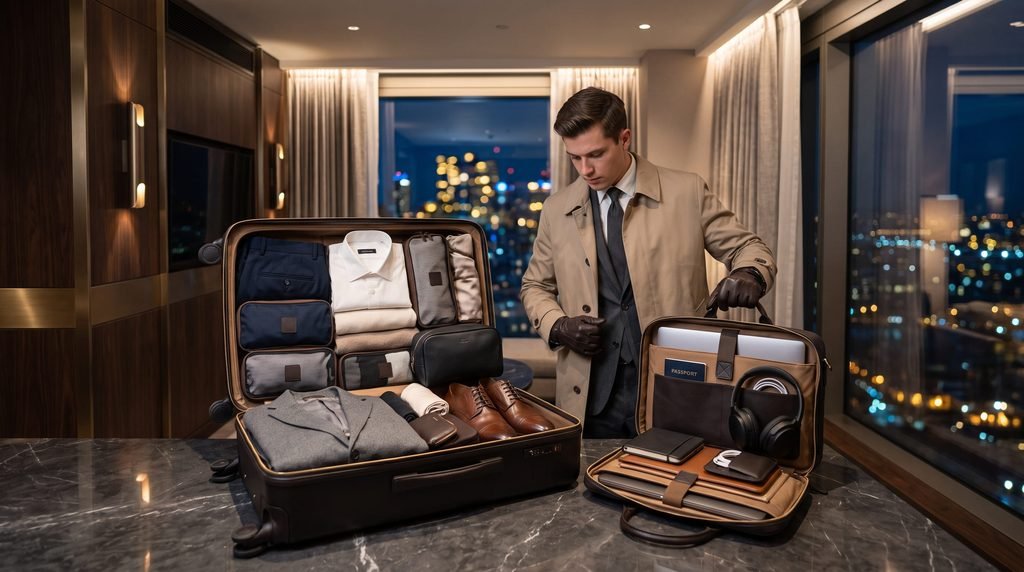
For a straightforward three-day professional trip, a compact system could look like:
Wear during travel:
- Comfortable professional trousers or equivalent
- Versatile shirt or top
- Professional layer
- Main business shoes
Pack:
- 2 additional tops
- 1 additional bottom
- Underwear and socks
- Sleepwear
- Minimal toiletries
- Laptop
- Charger
- Phone accessories
- Essential documents
The exact list changes if the trip includes a formal dinner, exercise, extreme weather, or a different professional dress code.
The important principle is that the wardrobe should support the itinerary rather than the other way around.
A Practical 5-Day Business Trip Example
For five days, increase variety without creating five complete outfits.
A flexible setup might include:
- 3–4 professional tops
- 2 bottoms
- 1 professional layer
- 1–2 pairs of shoes
- 5 sets of underwear
- 5 pairs of socks
- Sleepwear
- Compact toiletries
- Work technology
- Weather-appropriate layer
If the schedule allows laundry, you may be able to reduce clothing further.
If every day includes formal client meetings, however, the appropriate wardrobe may require additional professional pieces.
How to Make Your Business Travel Packing List More Sustainable
Packing efficiently can also reduce unnecessary consumption.
Instead of buying travel-specific versions of everything, consider:
- Reusable travel containers
- Durable clothing
- Multi-use accessories
- Repairable luggage
- Reusable water bottles where appropriate
- Long-lasting packing organizers
- Clothing that works for both travel and everyday life
The best travel wardrobe is often the one you can use repeatedly rather than a collection of items purchased specifically for one trip.
Final Business Travel Carry-On Checklist
Before closing your bag, check each category.
Documents
- Passport or ID
- Boarding information
- Hotel details
- Required business documents
- Payment cards
- Emergency information
Clothing
- Professional tops
- Bottoms
- Professional layer
- Underwear
- Socks
- Sleepwear
- Weather layer
- Activity clothing if genuinely needed
Shoes
- Primary professional shoes
- Optional second pair
Technology
- Laptop/tablet
- Phone
- Chargers
- Cables
- Headphones
- Power bank if needed
- Travel adapter if required
Toiletries
- Toothbrush
- Toothpaste
- Deodorant
- Skincare
- Grooming products
- Essential medication
- Other personal essentials
Before Leaving Home
- Check airline baggage rules
- Check destination weather
- Confirm meeting dress codes
- Check passport/entry requirements for international travel
- Charge devices
- Download important travel documents
- Confirm hotel and transportation arrangements
- Remove unnecessary items from the bag
FAQs
1. What should I pack for a 3-day business trip?
For a typical three-day business trip, start with two or three versatile professional tops, one or two bottoms, one professional layer, one reliable pair of shoes, underwear and socks, sleepwear, minimal toiletries, and essential work technology. Adjust the quantities for your dress code, weather, and schedule.
2. How do you pack for a business trip using only a carry-on?
Build the trip around interchangeable clothing rather than separate outfits for every day. Limit shoes, use compact toiletries, organize technology in one place, and use your personal item for documents and essential equipment that needs to remain accessible.
3. How many pairs of shoes should I bring on a business trip?
One versatile professional pair is often enough for a short trip if it works for both your meetings and travel. Add a second pair only when the itinerary, dress code, weather, or planned activities create a genuine need.
4. How do I keep business clothes from getting wrinkled in a carry-on?
Choose fabrics that travel well, avoid overfilling the suitcase, fold structured clothing carefully, and unpack professional pieces soon after arriving. Hanging garments in the hotel can help minor creases relax, while more significant wrinkles may require steaming or pressing.
5. What should I keep in my personal item during business travel?
Keep your passport or ID, phone, wallet, essential medication, laptop or other critical work equipment, important documents, and other valuables in the personal item when practical. Spare lithium batteries and power banks should remain with you in the cabin according to applicable aviation rules.
Conclusion
A successful business travel carry-on packing list is not about seeing how little you can fit into a suitcase. It is about creating a compact system that supports the trip you are actually taking.
Start with the itinerary, determine the dress code, build a coordinated capsule wardrobe, limit shoes, simplify toiletries, organize your technology, and keep critical work and travel essentials accessible in your personal item.
For a three- to five-day trip, thoughtful combinations can usually provide more flexibility than simply packing more clothing. The result is a lighter, easier-to-manage carry-on that leaves you prepared for meetings, travel days, dinners, weather changes, and the occasional unexpected change of plan.
1 comment