
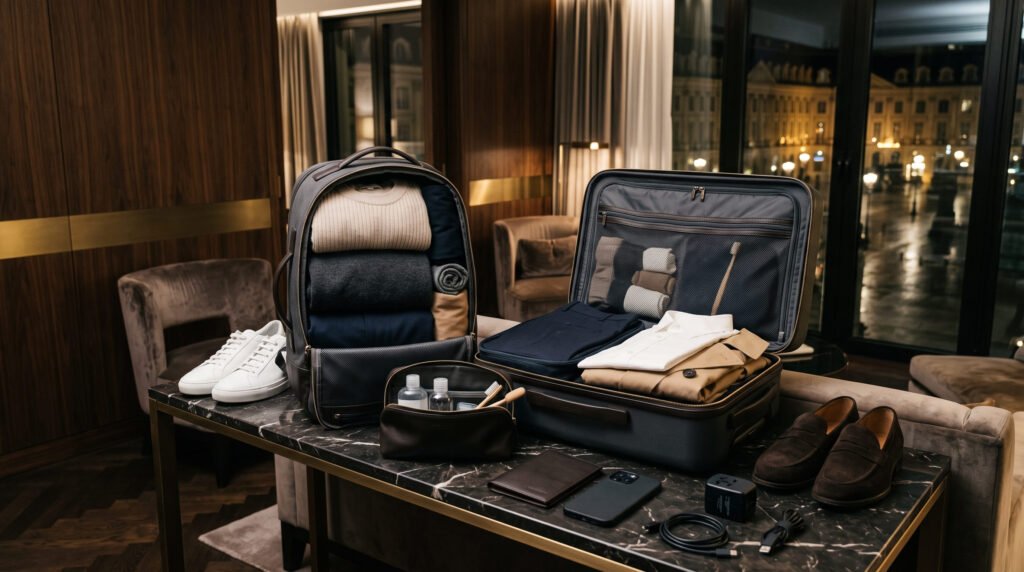
Packing for Europe in a carry-on is less about bringing fewer things and more about bringing the right things. A successful one-bag setup needs to handle long walking days, changing weather, train stations, hotel rooms, airport security, and airline baggage restrictions without becoming unnecessarily heavy.
The best approach is to build a compact travel capsule that works across multiple outfits, use layers instead of packing for every possible temperature, limit shoes and bulky toiletries, and plan for laundry. Your ideal packing list will also change depending on whether you are spending five days in one city, two weeks across several countries, or traveling through Europe in winter.
This Europe carry-on packing list gives you a practical starting point, then shows how to adjust it for trip length, season, destination, transportation, and airline rules.
The Ultimate Europe Carry-On Packing List
For a typical 7–14 day European trip with access to laundry, a compact capsule can usually cover the essentials without filling a large suitcase.
Clothing
A versatile starting point for many travelers is:
- 4–5 everyday tops
- 2–3 pairs of trousers, jeans, skirts, or shorts depending on season
- 1 lightweight sweater, cardigan, or mid-layer
- 1 weather-resistant outer layer
- 7–10 pairs of underwear
- 5–7 pairs of socks
- 1 sleep outfit
- 1 slightly smarter outfit if you expect dinners or evenings out
- 1–2 bras or other personal underlayers as appropriate
- 1 lightweight base layer for colder trips
- Swimwear if your itinerary includes beaches, pools, or spas
You do not need a separate outfit for every day. Choose pieces that coordinate with each other so the same trousers can work with several tops and your outer layer can be worn repeatedly.
Shoes
For many city-focused European trips, two pairs are enough:
- One comfortable pair of walking shoes or sneakers
- One optional second pair suited to your itinerary
Wear the heavier pair during travel and pack the lighter pair.
If your trip includes hiking, beaches, formal events, or winter conditions, your footwear needs may change. Do not add specialized shoes simply because they might be useful; add them when your itinerary genuinely requires them.
Toiletries
Keep toiletries compact and concentrate on products you actually use:
- Toothbrush
- Toothpaste
- Deodorant
- Face cleanser
- Moisturizer
- Sunscreen
- Hairbrush or comb
- Razor
- Minimal makeup, if used
- Basic skincare
- Personal medication
- Small laundry detergent or laundry sheets
- Any essential personal-care products
Solid versions can be useful when available because they reduce the amount of liquid you need to organize.
Electronics
A streamlined Europe travel tech kit can include:
- Smartphone
- Phone charging cable
- Compact wall charger
- Appropriate travel adapter
- Power bank
- Headphones or earbuds
- Smartwatch charger if needed
- Camera and accessories only if you will actually use them
- Laptop or tablet only when necessary
Avoid packing duplicate charging equipment. A multi-port charger can often replace several individual plugs.
Documents and Travel Essentials
Keep essential documents and valuables accessible rather than buried inside your main clothing compartment:
- Passport
- Wallet
- Payment cards
- Travel insurance information
- Flight and accommodation details
- Required visas or entry documents
- Prescription medication
- Emergency contacts
- Copies or secure digital backups of important documents
- Reusable water bottle
- Sunglasses
- Small day bag or crossbody if useful
Your exact document requirements depend on your nationality, itinerary, and countries visited, so verify entry requirements before departure.
How Much Should You Pack for Europe?
Trip length does not need to determine the number of outfits you bring.
A better approach is to pack according to laundry frequency, weather, and activities.
3–5 Days
For a short city break, you can usually work with:
- 2–3 tops
- 2 bottoms
- 1 layer
- 1 outer layer if needed
- 4–5 pairs of underwear
- 3–4 pairs of socks
- 1–2 pairs of shoes
- Compact toiletries
You may not need laundry at all.
7–10 Days
This is an ideal range for a compact carry-on capsule.
Consider:
- 4–5 tops
- 2–3 bottoms
- 1–2 layers
- 1 weatherproof outer layer
- 7–10 underwear
- 5–7 socks
- 1–2 pairs of shoes
- Essential toiletries
- Compact electronics
One laundry session can keep the wardrobe manageable.
10–14 Days
Do not automatically double your clothing.
Instead, use essentially the same capsule and plan one or two laundry opportunities.
This is where quick-drying fabrics, interchangeable colors, and repeatable outfits become especially valuable.
2–3 Weeks
For longer trips, the smartest strategy is usually more laundry, not more luggage.
Keep the core wardrobe compact and increase only the items that genuinely support your itinerary, such as an additional layer for variable weather or specialized clothing for outdoor activities.
How to Build a Europe Capsule Wardrobe
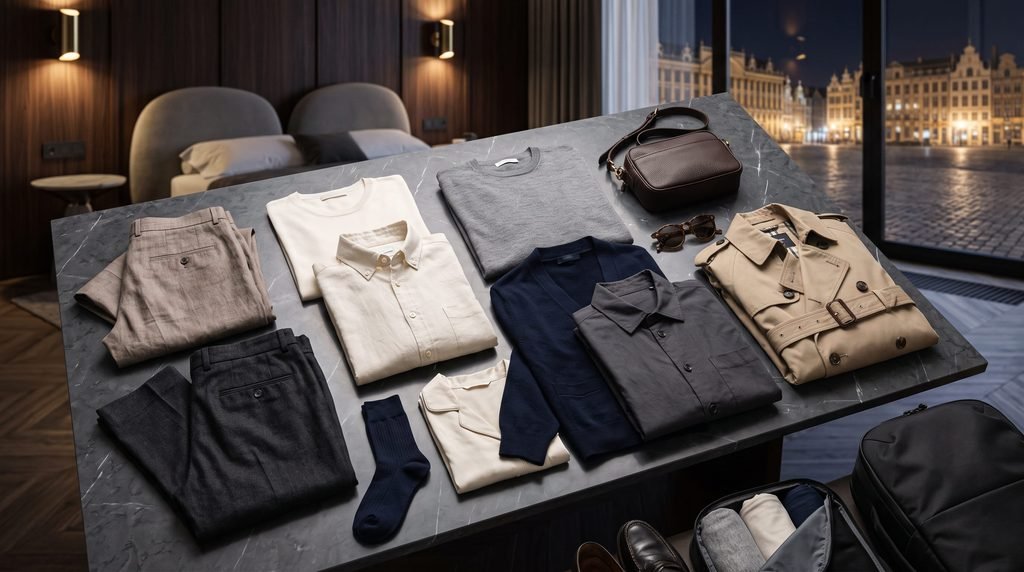
A successful Europe capsule wardrobe should allow several combinations from a relatively small number of pieces.
Choose a Simple Color Foundation
Start with two or three coordinating neutral colors and add one or two accent colors.
For example:
- Black
- Navy
- Cream
- Olive
- Burgundy
The specific palette does not matter as much as compatibility.
If nearly every top works with nearly every bottom, you can create more outfits without packing more clothes.
Prioritize Layers
Layering is more useful than packing separate wardrobes for different temperatures.
A practical system might be:
Base: breathable T-shirt or lightweight long-sleeve
Middle: sweater, cardigan, fleece, or overshirt
Outer: lightweight rain shell, trench, or insulated jacket depending on season
You can then adjust your clothing throughout the day rather than carrying several bulky alternatives.
Choose Fabrics Carefully
For frequent travel, look for fabrics that:
- Dry reasonably quickly
- Resist excessive wrinkling
- Feel comfortable during long walking days
- Can be washed easily
- Work across multiple outfits
You do not need every garment to be technical travel clothing. A balanced capsule can combine ordinary clothes with a few practical travel-oriented pieces.
How to Pack for Europe’s Changing Weather
Europe is not one climate. A single itinerary can combine warm Mediterranean cities, cool northern capitals, rainy coastal areas, or mountainous destinations.
Spring
Expect variable conditions.
A useful spring capsule can include:
- Lightweight tops
- Long trousers
- A sweater or cardigan
- A light rain-resistant jacket
- Comfortable closed shoes
- Compact umbrella if appropriate
The key is flexibility rather than excessive warmth.
Summer
For warmer destinations, emphasize:
- Breathable tops
- Lightweight trousers or shorts
- Comfortable walking shoes
- Sandals if genuinely useful
- Sunglasses
- Sun protection
- Light outer layer for cooler evenings
Northern Europe and high-altitude areas can still be cool, so check your actual destinations rather than assuming the entire continent will be hot.
Fall
Fall is particularly well suited to layering.
Consider:
- Long-sleeve tops
- Lightweight trousers
- Sweater
- Light jacket or rain shell
- Comfortable closed shoes
- Compact weather protection
The advantage of a capsule is that you can add or remove layers throughout the day.
Winter
Winter packing requires more careful decisions because cold-weather clothing is bulky.
Prioritize:
- Warm base layers
- Insulating mid-layer
- Weather-resistant outerwear
- Warm socks
- Gloves
- Hat
- Scarf
- Weather-appropriate footwear
Wear your largest coat and heaviest shoes during transit whenever practical.
For genuinely cold or snowy destinations, do not force a minimalist packing philosophy at the expense of safety and comfort.
Multi-Climate Trips
If your itinerary combines very different climates, identify the coldest and warmest realistic conditions rather than packing for every theoretical possibility.
A lightweight layering system is usually more efficient than several bulky garments.
What Shoes Should You Pack for Europe?
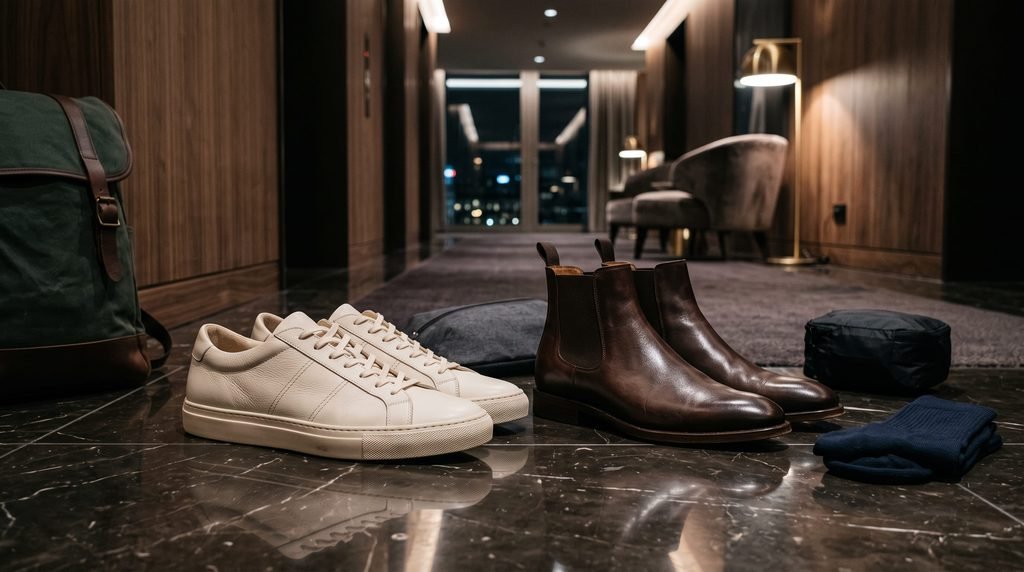
Shoes can consume a surprising amount of carry-on space, so they deserve special attention.
For a typical city-focused trip, start with one excellent walking pair.
Look for:
- Comfortable cushioning
- Secure fit
- Good traction
- Breathability appropriate to the season
- A style that works with several outfits
European city travel can involve long days on pavement, stairs, public transportation, and uneven historic streets. Your most fashionable shoes are not automatically your best travel shoes.
When Should You Bring a Second Pair?
Bring another pair when it serves a specific purpose.
Examples include:
- Dressier dinners
- Beach destinations
- Hiking
- Winter snow
- Hotel or spa use
Avoid bringing multiple versions of essentially the same shoe.
Toiletries and Liquids for a Europe Carry-On
Airport security rules make toiletries one of the easiest places to overpack.
For departures from EU airports, liquids, aerosols, gels, creams, and similar items generally need to follow the applicable security limits, including containers of no more than 100 ml and a transparent resealable bag with a maximum capacity of one litre. Medicines and baby food have specific exemptions.
However, airport procedures can change, so check the airport you are actually departing from rather than assuming every European airport operates identically.
A Better Toiletry Strategy
Instead of taking full-size products:
- Decant essential liquids into suitable travel containers.
- Use solid alternatives where practical.
- Remove products you can easily buy at your destination.
- Keep medication separate and accessible.
- Avoid packing duplicate cosmetics or skincare products.
Your toiletry kit should support your routine, not recreate your bathroom.
Electronics, Chargers and Travel Tech
A one-bag electronics setup should be deliberately limited.
Core Tech
For most travelers:
- Phone
- Charging cable
- Compact charger
- Travel adapter
- Power bank
- Headphones
Add a camera, laptop, tablet, or other equipment only when it serves a clear purpose.
Think About Charging Locations
You may charge at:
- Airports
- Hotels
- Cafés
- Trains
- Workspaces
A compact multi-port charger can reduce cable and plug clutter.
Keep your most important electronics and charging equipment in your personal-access area rather than checking them into luggage.
Backpack vs Rolling Carry-On for Europe
There is no universally best bag for Europe. Your transportation style matters.
| Bag Type | Best For | Main Advantage | Potential Drawback |
| Underseat bag | Very short trips | Minimal size | Limited capacity |
| Travel backpack | Multi-city trips | Easy on stairs and platforms | Can become heavy |
| Rolling carry-on | Longer city stays | Easier to move on smooth surfaces | Less convenient on stairs/cobblestones |
| Hybrid | Mixed itineraries | Flexible | Can be heavier |
Choose a Backpack If You:
- Change cities frequently
- Use trains and buses often
- Expect stairs
- Walk between stations and hotels
- Prefer keeping both hands free
Choose a Roller If You:
- Stay longer in each destination
- Pack heavier items
- Spend most of your time in cities
- Prefer not carrying weight on your back
- Expect mostly smooth walking surfaces
For a multi-country itinerary, transportation should influence your luggage decision just as much as clothing capacity.
Europe Airline Carry-On Rules
One of the biggest mistakes is assuming that a U.S.-style carry-on allowance automatically applies throughout Europe.
It does not.
Airlines set their own baggage dimensions, allowances, fare conditions, and weight restrictions.
For example, easyJet currently allows all passengers one small under-seat cabin bag measuring up to 45 × 36 × 20 cm, including handles and wheels. A larger cabin bag measuring up to 56 × 45 × 25 cm can be available depending on the fare, membership, or whether it is purchased.
Ryanair currently lists a small personal bag measuring 40 × 30 × 20 cm as included with its fares, while additional cabin baggage depends on the fare or purchased allowance.
The important lesson is not to memorize these dimensions. Check the allowance attached to your actual booking before you pack.
Check These Five Things
Before departure, verify:
- Maximum dimensions
- Maximum weight
- Number of permitted bags
- Whether the bag must fit under the seat or in an overhead locker
- Whether your fare includes the larger cabin bag
A bag that works perfectly on one airline may exceed the allowance on another.
How to Pack One Bag for a Multi-Country Europe Trip
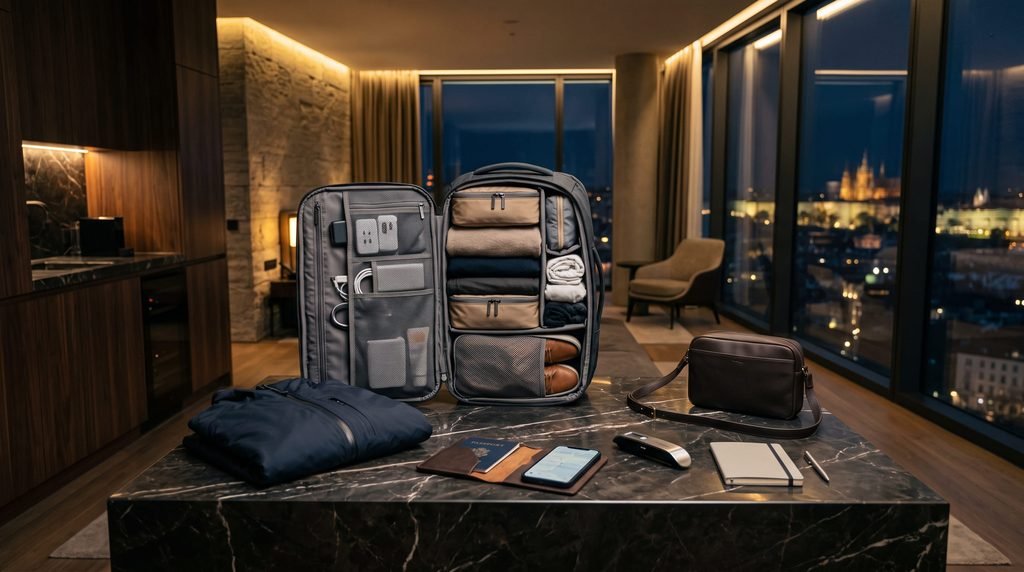
Multi-country travel rewards compact organization.
Instead of packing according to destination, pack according to function.
For example:
Packing cube 1: tops and lighter layers
Packing cube 2: bottoms and bulkier clothing
Small pouch: underwear and socks
Toiletry bag: personal care
Tech pouch: chargers and electronics
Shoes: packed around the edges or in a dedicated compartment
Keep the items you will need during transit near the top.
That way, changing trains or checking into a hotel does not require unpacking the entire bag.
Keep One Transit Outfit Ready
Your travel-day clothing should ideally be:
- Comfortable
- Layerable
- Suitable for temperature changes
- Easy to wear repeatedly
Wear the bulkiest legitimate items during transit when practical.
Laundry: The Secret to Packing Less
Laundry is what makes one-bag travel work beyond a short weekend.
You do not need enough clothing for every day if you are willing to wash a small amount during the trip.
A Simple Laundry Strategy
For a 10–14 day trip, plan a laundry session around the middle of the journey.
Wash the items that need it most:
- Underwear
- Socks
- T-shirts
- Lightweight base layers
Quick-drying fabrics are useful because they reduce drying time.
You can use a hotel laundry service, laundromat, or appropriate hand-washing method depending on your accommodation and itinerary.
The goal is not to make laundry your vacation activity. It is simply to replace the need for an unnecessarily large wardrobe.
What Not to Pack for Europe
A lighter bag often comes from knowing what to leave at home.
Avoid packing:
- An outfit for every day
- Multiple heavy jackets
- Three or four pairs of shoes
- Full-size toiletries
- Large towels unless specifically needed
- Excessive “just in case” clothing
- Bulky books you could replace with an e-reader
- Duplicate electronics
- Specialized gear with no planned use
- Clothes that only work with one other item
Before adding anything, ask:
Will I use this enough to justify the space it occupies?
If the answer is no, leave it behind.
Common Europe Packing Mistakes
1. Packing for Every Possible Weather Condition
Checking the forecast and climate for your actual destinations is more useful than packing every seasonal layer you own.
2. Bringing Too Many Shoes
Shoes are heavy and inefficient to pack. Start with one versatile walking pair and add another only when your itinerary requires it.
3. Ignoring Airline-Specific Measurements
A bag can look like a normal carry-on and still exceed a particular airline’s allowance.
4. Packing Too Many Outfits
You are traveling, not relocating. A coordinated capsule can create many combinations from relatively few pieces.
5. Forgetting Laundry
A planned wash can eliminate the need for several additional outfits.
6. Packing Bulky Items Instead of Wearing Them
If an item is genuinely necessary and comfortable to wear during transit, wearing it can preserve valuable luggage space.
7. Treating Every Destination the Same
Paris in summer, the Swiss Alps in winter, and the Greek islands in shoulder season require different adjustments.
How to Pack Your Europe Carry-On Efficiently
Once you have selected everything, organize the bag by frequency of use.
Bottom of the Bag
Place:
- Less frequently used clothing
- Extra layers
- Spare footwear
Middle
Use packing cubes or organized compartments for your primary wardrobe.
Top
Keep:
- Light jacket
- Toiletry kit
- Transit essentials
- Water bottle
- Small electronics
- Anything needed during the journey
Easily Accessible
Keep your passport, wallet, medication, phone, and other critical items where you can reach them quickly.
Before leaving home, fully close the bag and test it.
If it is difficult to zip, awkward to carry, or far heavier than expected, remove something.
Your Final Europe Carry-On Checklist
Clothing
- 4–5 versatile tops
- 2–3 bottoms
- 1–2 layers
- Weather-appropriate outer layer
- Underwear
- Socks
- Sleepwear
- Optional dressier outfit
- Seasonal essentials
Shoes
- Comfortable walking shoes
- Optional second pair
- Shoes genuinely suited to the itinerary
Toiletries
- Toothbrush
- Toothpaste
- Deodorant
- Skincare
- Sunscreen
- Hair essentials
- Personal medication
- Laundry supplies
- Liquids organized for security
Electronics
- Phone
- Charger
- Charging cable
- Travel adapter
- Power bank
- Headphones
- Optional camera/laptop/tablet
Documents
- Passport
- Required visas/entry documents
- Travel insurance information
- Accommodation details
- Transport reservations
- Payment cards
- Emergency information
Before Leaving
- Check every airline’s baggage allowance
- Check airport security requirements
- Check the weather for every destination
- Confirm your first laundry opportunity
- Weigh your bag if a weight limit applies
- Confirm important documents are accessible
- Remove anything you packed only “just in case”
FAQS
1. What should I pack for Europe in a carry-on?
Start with a coordinated clothing capsule, comfortable walking shoes, compact toiletries, essential electronics, travel documents, and weather-appropriate layers. For most 7–14 day trips, prioritize versatile clothing and laundry rather than packing a separate outfit for every day.
2. How many outfits should I pack for a two-week Europe trip?
You generally do not need 14 complete outfits. A compact capsule of roughly four to five tops, two to three bottoms, appropriate layers, underwear, socks, and one or two pairs of shoes can work well when you plan to do laundry during the trip.
3. Is a backpack or suitcase better for traveling around Europe?
A backpack is often convenient for multi-city itineraries involving trains, stairs, and frequent hotel changes. A rolling carry-on can be more comfortable when you are staying longer in cities and mostly traveling across smooth surfaces. The best choice depends on your transportation and how much you need to carry.
4. How many pairs of shoes should I bring to Europe?
For many city trips, two pairs are enough: one comfortable walking pair and one optional pair for a specific need. Bring specialized footwear only when your itinerary actually includes activities such as hiking, beaches, snow, or formal events.
5. Do European airlines have the same carry-on size limits?
No. European airlines can have significantly different baggage dimensions, weight restrictions, and fare-based allowances. For example, current easyJet and Ryanair allowances differ, so you should check the baggage policy attached to each flight in your itinerary before packing.
Conclusion
The best Europe carry-on packing list is not the one with the fewest items. It is the one that gives you enough flexibility without making every airport, train station, staircase, and hotel transfer harder than necessary.
Build around a coordinated capsule wardrobe, keep footwear under control, layer for changing weather, minimize toiletries and electronics, and use laundry to extend the same compact wardrobe across a longer trip. Most importantly, check the baggage allowance for every airline on your itinerary before choosing your final bag.
With that system, a week or two in Europe can fit comfortably into a thoughtfully organized carry-on without sacrificing comfort, practicality, or personal style.