

A ski holiday calls for more than beautiful winter outfits. You need warm layers, weather-resistant outerwear, comfortable footwear, reliable accessories, and practical essentials that can handle freezing temperatures, snowy slopes, and cozy evenings in the mountains. The challenge is fitting everything into your luggage without sacrificing personal style.
This shttps://wandercarry.com/?p=612&preview=trueki trip packing list aesthetic and essentials guide brings together everything you need for a stylish, comfortable, and well-organized winter getaway. From coordinated ski outfits and neutral après-ski looks to protective equipment, toiletries, and travel-day essentials, you will find a practical checklist that works for a weekend on the slopes or a longer mountain escape.
The key is to build a cohesive winter wardrobe around versatile layers, a considered color palette, and pieces that perform as well as they look. With the right preparation, you can enjoy a polished alpine aesthetic without overpacking.
The Quick Answer: What to Pack for a Ski Trip
A complete ski trip packing list should include insulated ski outerwear, thermal base layers, fleece or wool mid-layers, waterproof gloves, warm socks, snow-ready boots, suitable ski equipment, toiletries, travel documents, and comfortable après-ski clothing.
For an aesthetic winter wardrobe, choose two or three coordinating colors, such as ivory, chocolate brown, charcoal, burgundy, or black. Add one statement piece, such as a cream puffer jacket, a burgundy ski suit, or a pair of stylish snow boots.
The essential rule: prioritize warmth, moisture management, waterproof protection, and comfortable movement before adding decorative accessories or extra outfits.
Ski Trip Packing List at a Glance
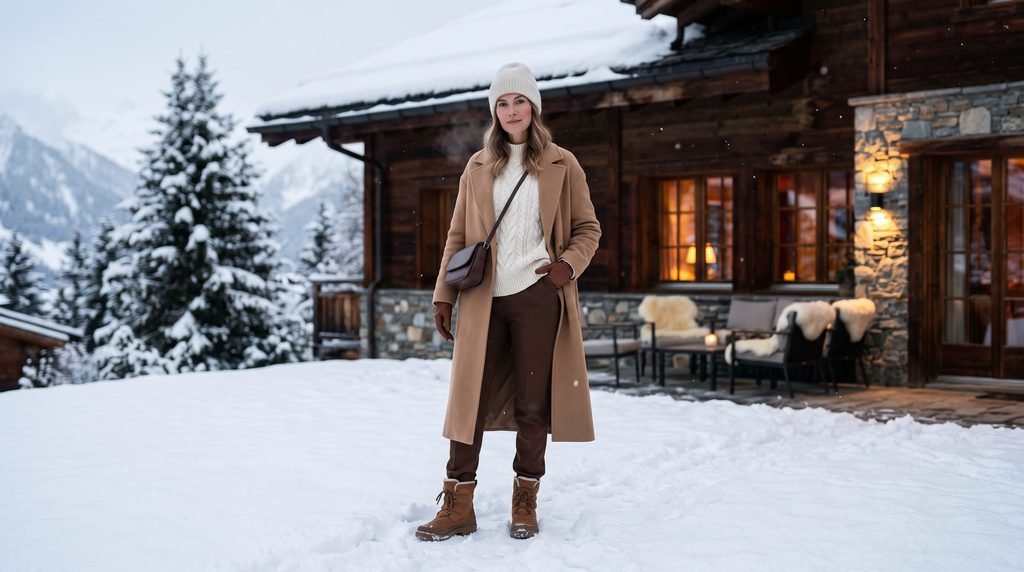
Use this checklist as your starting point and adjust the quantities according to your destination, trip length, planned activities, and access to laundry.
| Category | Essential items |
| Ski clothing | Waterproof ski jacket, ski pants or bibs, thermal base layers, fleece or wool mid-layers |
| Winter accessories | Waterproof gloves or mittens, neck gaiter, warm beanie, ski goggles, sunglasses |
| Footwear | Snow boots, ski or snowboard boots if bringing your own, warm socks |
| Safety equipment | Properly fitted helmet, sunscreen, SPF lip balm, resort-specific safety essentials |
| Après-ski outfits | Sweaters, jeans or trousers, insulated boots, comfortable evening clothes |
| Toiletries | Moisturizer, cleanser, sunscreen, lip balm, personal care products |
| Electronics | Phone, chargers, power bank, camera, adapters if needed |
| Travel essentials | Identification, booking confirmations, insurance documents, payment cards |
| Luggage organization | Packing cubes, laundry bag, waterproof pouch, small day bag |
If you are renting skis, a snowboard, or boots at the resort, you may not need to transport those bulky items. Confirm what your rental package includes before leaving home.
1. Build an Aesthetic Ski Trip Wardrobe
The easiest way to create a stylish ski wardrobe is to select a consistent color palette before packing. A coordinated collection of clothing looks intentional in photographs, makes mixing and matching easier, and reduces the number of pieces you need.
Choose a winter color palette
<PRIVATE_PERSON>neutral tones, rich winter shades, and restrained contrasts all work beautifully in alpine settings. Choose a palette that complements your existing wardrobe rather than purchasing an entirely new set of clothes for one trip.
- Ivory and cream: clean, soft, and timeless against snowy landscapes.
- Chocolate brown and camel: warm, understated, and sophisticated.
- Black and charcoal: versatile, practical, and easy to coordinate.
- Burgundy and deep red: rich accent colors that stand out against snow.
- Navy and white: classic, sporty, and easy to style.
- Sage and muted olive: subtle alternatives to traditional winter neutrals.
A simple combination might include a cream ski jacket, black ski pants, a chocolate-brown knit sweater, and dark snow boots. For a more expressive look, choose a burgundy outer layer with neutral accessories.
Your palette does not need to be entirely neutral. The goal is to make the pieces work together while retaining enough contrast to create interesting outfits.
The key pieces for a polished ski aesthetic
Focus on a few well-chosen items rather than packing multiple versions of the same outfit.
- A flattering, insulated ski jacket or ski suit.
- Waterproof ski pants or bib pants.
- Fitted thermal tops and leggings.
- One or two warm mid-layers.
- A coordinated beanie and neck warmer.
- Waterproof gloves that suit your activities.
- Snow boots with dependable traction.
- A soft knit sweater for après-ski.
- A comfortable puffer or wool-blend coat for suitable off-slope conditions.
- Minimal jewelry and practical sunglasses for town outfits.
Remember that a fashionable coat or sweater is not automatically suitable for skiing. Use technical outerwear on the slopes and reserve delicate knits, fashion coats, and decorative accessories for dry, lower-intensity activities.
2. Ski Clothing Essentials: What to Wear on the Slopes

Ski clothing needs to protect you from cold air, wind, snow, and perspiration. A layering system is usually more adaptable than relying on one extremely thick garment.
Base layers
Base layers sit next to your skin and help manage moisture while providing warmth.
Pack:
- Two or three thermal tops for a short ski trip.
- Two or three pairs of thermal leggings.
- Moisture-managing underwear.
- A comfortable sports bra, if needed.
Merino wool is valued for warmth, odor management, and comfort across changing temperatures. Synthetic fabrics can dry quickly and are often practical for active days. Both can work well; choose garments that fit comfortably beneath your ski clothing without restricting movement.
Avoid ordinary cotton thermals for demanding days on the slopes. Cotton absorbs moisture and dries slowly, which can leave you feeling cold.
Mid-layers
Mid-layers provide additional insulation between your base layer and outerwear.
Useful choices include:
- A lightweight fleece jacket.
- A merino wool sweater.
- A breathable insulated vest.
- A thin synthetic insulated jacket.
For most outfits, one or two versatile mid-layers are enough. Choose thickness based on your jacket’s fit and the expected weather. Your complete outfit should allow you to bend, lift your arms, and move freely.
Outer layers
Your outer layer should protect you from wind and precipitation while allowing moisture to escape.
Pack:
- One weather-appropriate ski jacket.
- One pair of waterproof ski pants or bibs.
Look for features such as adjustable cuffs, a protective hood where appropriate, ventilation zippers, secure pockets, and a snow skirt if useful for your activities. Waterproofing and breathability are particularly important when you spend hours outdoors.
A stylish silhouette is a bonus, but the jacket should accommodate your layers without pulling tightly at the shoulders or restricting movement.
Ski socks
Bring two or three pairs of ski-specific socks for a short trip, adjusting for duration and laundry access.
Choose socks designed to fit inside ski boots without bunching. Merino blends and synthetic performance fabrics are common options.
Avoid wearing multiple thick pairs inside a tight ski boot. Excess bulk can create pressure points and may compromise comfort and circulation. Dry feet and correctly fitted boots are more useful than simply adding more fabric.
3. The Complete Ski Trip Clothing Checklist
Use this checklist to prepare your clothing before packing everything into your suitcase.
On-slope clothing
- Insulated ski jacket.
- Waterproof ski pants or bibs.
- Thermal base-layer tops.
- Thermal leggings.
- Fleece or other insulating mid-layer.
- Ski-specific socks.
- Waterproof insulated gloves or mittens.
- Neck gaiter or suitable face covering.
- Helmet-compatible beanie for off-slope use.
- Ski goggles.
- UV-protective sunglasses.
- Properly fitted ski helmet, if not renting one.
- Snow-ready footwear for walking around the resort.
Après-ski clothing
- Two comfortable sweaters or knit tops.
- One pair of jeans or casual trousers.
- One additional pair of comfortable bottoms.
- One or two casual tops.
- Comfortable evening outfit, if needed.
- Warm coat for town and restaurant visits.
- Snow boots or insulated winter boots.
- Sleepwear.
- Underwear and everyday socks.
- Comfortable indoor footwear.
- Swimwear, if your accommodation has a pool, sauna, or hot tub.
Travel-day outfit
Wear your bulkiest comfortable items during travel when practical. A warm sweater, everyday trousers, and substantial shoes can save suitcase space.
However, do not wear every heavy item simply to avoid packing it. You should remain comfortable in airport terminals, on public transportation, and during transfers to your accommodation.
4. Ski Trip Outfit Ideas for a Chic Winter Aesthetic
A ski wardrobe should transition smoothly from active mornings to relaxed afternoons and dinners in the village. These outfit formulas help you create different looks from a small collection of coordinated pieces.
<PRIVATE_PERSON>cream and brown ski outfit
<PRIVATE_PERSON>cream waterproof ski jacket, black ski pants, a matching cream neck warmer, insulated gloves, and dark goggles create a clean alpine look. Finish with a neutral beanie for walking around the resort after skiing.
<PRIVATE_PERSON>monochrome black ski outfit
<PRIVATE_PERSON>black ski jacket, black ski pants, dark gloves, and black goggles create a streamlined, understated appearance. Add a contrasting white or gray neck gaiter for visual interest.
<PRIVATE_PERSON>burgundy statement ski outfit
<PRIVATE_PERSON>a burgundy ski jacket with black ski pants, dark gloves, and coordinating goggles creates a rich winter palette without requiring additional statement pieces.
Après-ski outfit formulas
Après-ski style is about comfortable layers, warm textures, and footwear suited to snowy paths.
| Occasion | Outfit formula |
| Coffee in the ski village | Knit sweater, relaxed trousers, insulated boots, beanie |
| Lunch at a mountain restaurant | Thermal top, warm sweater, weather-appropriate trousers, practical boots |
| Evening by the fireplace | Cashmere or wool-blend knit, dark trousers, cozy socks |
| Resort shopping | Puffer jacket, straight-leg jeans, snow boots, crossbody bag |
| Casual winter dinner | Fine-knit sweater, tailored trousers, warm coat, weather-suitable footwear |
| Scenic snow walk | Insulated coat, thermal layers, gloves, neck gaiter, grippy boots |
These are styling formulas rather than rigid rules. For outdoor activities, prioritize insulation and traction; for indoor dining, remove unnecessary layers to avoid overheating.
How to make ski outfits look coordinated
- Repeat two or three colors across different outfits.
- Combine contrasting textures, such as smooth technical fabric and soft knitwear.
- Choose accessories that complement your jacket rather than buying a matching set for every look.
- Keep bags compact and easy to carry.
- Choose practical footwear that suits actual snow and ice conditions.
- Use one statement piece per outfit to avoid unnecessary bulk.
A coordinated wardrobe can look polished in photographs while remaining practical for a full day in the mountains.
5. Ski Accessories You Should Never Forget
Small accessories can make a significant difference to warmth, comfort, and convenience.
Essential accessories
Ski goggles: Choose goggles that fit your helmet comfortably and suit the expected visibility conditions. Different lens tints and light-transmission ratings work better in different weather, so consider whether you are likely to encounter bright sunshine, flat light, or changing conditions.
Waterproof gloves or mittens: Gloves offer dexterity, while mittens often provide greater warmth. Select insulated, weather-resistant options appropriate for your activity and conditions.
Neck gaiter: A soft, breathable gaiter protects the neck and can help shield the lower face from wind. Make sure it does not interfere with comfortable breathing or helmet fit.
Sunglasses: UV protection is essential in bright mountain environments. Snow reflects sunlight, increasing exposure to ultraviolet radiation.
Warm beanie: Keep a beanie for village walks, travel, and après-ski. A thin helmet-compatible liner may also be useful if permitted by the helmet manufacturer.
Hand warmers: Disposable or reusable hand warmers can be helpful in very cold conditions. Follow the manufacturer’s instructions and avoid placing them directly against bare skin for prolonged periods.
Helmet: A correctly fitted helmet designed for skiing or snowboarding is an important safety item. If renting, check that it fits properly and is suitable for your activity.
Optional accessories
- A compact backpack for water, snacks, and extra layers.
- A small waterproof pouch for valuables.
- A microfiber cloth for goggles and camera lenses.
- A reusable water bottle.
- A small dry bag for damp accessories.
- A lightweight packable tote for shopping or extra layers.
Avoid carrying loose decorative accessories on the slopes if they could interfere with equipment, movement, or safety.
6. Ski Equipment: What to Bring and What to Rent
You do not need to own every piece of ski equipment to enjoy a winter holiday. Renting can simplify travel, particularly when you are flying or skiing for the first time.
| Equipment | Bring your own when | Consider renting when |
| Skis or snowboard | You already own suitable equipment and can transport it conveniently | You are a beginner or want to avoid bulky luggage |
| Boots | You have properly fitted boots that you prefer using | You are new to skiing or want to minimize luggage |
| Helmet | You own a correctly fitted, appropriate helmet | The rental shop provides a suitable, well-fitting helmet |
| Poles | You prefer your own equipment and have space | They are included with your rental package |
| Goggles | You want your preferred fit and lens conditions | You have access to suitable rental options, if offered |
| Ski clothing | You have appropriate technical layers | You need to explore clothing rental availability before your trip |
Rental packages vary by resort, provider, and equipment category. Confirm what is included before booking, especially for helmets, poles, and boots.
Essential ski equipment checklist
- Skis or snowboard, if bringing your own.
- Correctly fitted ski or snowboard boots.
- Poles, if skiing and bringing your own.
- Helmet.
- Goggles.
- Appropriate gloves.
- Ski jacket and pants.
- Lift pass or reservation details.
- Lessons or equipment-rental confirmations, if applicable.
For off-piste skiing, glacier travel, or other activities beyond ordinary marked resort runs, additional equipment and training may be required. Follow local mountain-safety guidance and the advice of qualified professionals.
7. Toiletries and Skincare for Cold Mountain Weather
Cold temperatures, wind, indoor heating, and strong mountain sunlight can leave skin feeling dry and uncomfortable. A compact skincare routine is usually sufficient.
Skincare essentials
- Broad-spectrum sunscreen, ideally SPF 30 or higher.
- SPF lip balm.
- Gentle facial cleanser.
- Moisturizer.
- Hand cream.
- Body lotion.
- Makeup remover, if needed.
- Basic makeup, if desired.
- Hairbrush or comb.
- Hair ties.
- Shampoo and conditioner, if not supplied.
- Deodorant.
- Toothbrush and toothpaste.
- Personal medications and prescriptions.
- Any necessary contact lenses or eye-care products.
Why sunscreen matters on a ski trip
Mountain conditions can increase sun exposure, even when the air feels cold or the sky is cloudy. Snow also reflects ultraviolet radiation, so uncovered skin may receive exposure from multiple directions.
Apply broad-spectrum sunscreen to exposed skin and reapply according to its label, particularly after sweating, wiping your face, or spending extended periods outdoors. Protect your lips as well.
Keep skincare simple
Choose a gentle cleanser, a moisturizer suited to your skin, and reliable sun protection. You generally do not need a large collection of skincare products for a short winter holiday.
Rich creams can be comfortable in cold weather, but avoid assuming that thicker products automatically provide better protection. Select products that work for your skin and apply them as directed.
8. Electronics and Travel Essentials
A well-organized ski trip packing list includes more than clothing. Keep important travel items accessible rather than buried beneath winter layers.
Travel documents
- Passport or other required identification.
- Visa or entry documents, where applicable.
- Flight and accommodation confirmations.
- Ski-pass and lesson confirmations.
- Travel insurance documents.
- Payment cards and a suitable amount of local currency.
- Emergency contacts.
- Copies of essential documents stored securely.
Check entry requirements and document validity for your destination before departure. Travel insurance should be reviewed carefully to determine whether skiing, snowboarding, medical evacuation, and other planned activities are covered.
Electronics
- Smartphone.
- Phone charger.
- Power bank.
- Camera or action camera, if desired.
- Spare camera batteries or memory cards.
- Charging cables.
- Travel adapter, if needed.
- Headphones.
- Downloaded maps, tickets, and reservations.
Cold weather can reduce battery performance. Keep your phone and spare batteries warm when practical, and use an inside pocket rather than leaving electronics exposed to freezing conditions.
A few practical extras
- A reusable water bottle.
- Compact snacks for transfers or breaks.
- Tissues.
- A small first-aid kit.
- Blister-care supplies.
- Motion-sickness remedies, if needed.
- A waterproof pouch for documents and electronics.
Pack medications in their original packaging when practical and follow any applicable travel rules. Check airline restrictions for batteries and other regulated items before flying.
9. Choosing the Right Luggage for a Ski Trip
Ski holidays often require more volume than ordinary city breaks because insulated clothing and footwear occupy considerable space.
The best luggage setup depends on how long you are staying, whether you are flying, and whether you are transporting your own equipment.
| Luggage option | Best for | Main consideration |
| Large checked suitcase | Longer trips and bulky winter clothing | Check airline weight and size limits |
| Medium checked suitcase | Shorter trips with rented ski equipment | Bulky boots and jackets can use space quickly |
| Carry-on suitcase | Minimalist trips with compact clothing | May not accommodate all winter layers and footwear |
| Ski or snowboard bag | Travelers bringing their own equipment | Check airline sports-equipment policies |
| Personal-item backpack | Documents, electronics, medication, and valuables | Keep it organized and within permitted dimensions |
| Waterproof daypack | Carrying layers and essentials around the resort | Choose a comfortable, weather-appropriate design |
Should you pack ski clothes in a carry-on?
You can pack many ski essentials in a carry-on, but whether everything fits depends on the bag’s dimensions, your clothing sizes, and your equipment needs.
For a minimalist trip, prioritize base layers, essential accessories, one versatile mid-layer, and compact toiletries. Wear your bulkiest practical clothing during travel and rent large equipment at the destination.
For longer trips, or when bringing bulky snow boots and multiple technical layers, checked luggage may be more comfortable.
Always check your airline’s current baggage allowance, cabin-bag dimensions, and sports-equipment rules. Do not assume every airline permits the same number of bags or the same weight.
10. How to Pack a Ski Trip Suitcase Without Overpacking
Winter clothing is bulky, so an organized packing strategy makes a noticeable difference. The goal is to bring enough clean layers for comfort without filling your suitcase with outfits you will rarely wear.
Step 1: Plan outfits before packing
Choose outfits for each activity: skiing, village walks, restaurant visits, travel days, and downtime at your accommodation.
Build several looks around the same trousers, sweaters, and accessories instead of packing a separate outfit for every day.
Step 2: Wear bulky items during travel
If comfortable, wear your heavier everyday shoes, warm sweater, and winter trousers on your travel day. Keep your ski jacket accessible if you will need it immediately after arrival.
Do not wear ski boots on a flight simply to save luggage space. Travel in comfortable footwear and transport your equipment according to airline requirements.
Step 3: Use packing cubes
Separate your belongings by function rather than mixing everything together.
- One cube for thermal tops and leggings.
- One cube for casual clothing and sleepwear.
- One pouch for underwear and socks.
- One toiletry bag for skincare and personal care.
- One waterproof bag for damp clothing.
- One accessible compartment for travel documents and electronics.
Packing cubes make it easier to find what you need without unpacking your entire suitcase.
Step 4: Compress soft clothing carefully
Compression bags can reduce the volume of some soft garments, but they do not reduce the actual weight of your luggage. Avoid compressing delicate knitwear excessively or crushing items that need to retain their shape.
Keep essential base layers and gloves easy to reach, particularly if you will be traveling through cold weather before checking into your accommodation.
Step 5: Keep wet and dry items separate
Snow-covered gloves, damp socks, and wet outerwear should not be packed alongside clean clothing without protection.
Bring a waterproof pouch or reusable wet bag for damp accessories. Allow wet gear to dry thoroughly when possible to reduce odors and help protect your other belongings.
11. How Much Should You Pack for Different Ski Trip Lengths?
The right quantity depends on the availability of laundry facilities, the intensity of your activities, and how often you want to change your après-ski outfits.
The following guide is a practical starting point rather than a rigid rule.
| Item | 3-day weekend | 5-day trip | 7-day trip |
| Thermal tops | 2 | 3 | 3–4 |
| Thermal leggings | 2 | 2–3 | 3 |
| Ski socks | 2–3 pairs | 3–4 pairs | 4–5 pairs |
| Mid-layers | 1–2 | 2 | 2–3 |
| Ski jackets | 1 | 1 | 1 |
| Ski pants | 1 | 1 | 1–2 |
| Casual sweaters | 1–2 | 2 | 2–3 |
| Everyday trousers | 1 | 2 | 2 |
| Après-ski footwear | 1 pair | 1 pair | 1 pair |
| Sleepwear | 1 set | 1–2 sets | 2 sets |
| Underwear | 3–4 sets | 5 sets | 7 sets |
These quantities assume you can reuse suitable outerwear and everyday pieces. Adjust the list for heavy sweating, wet weather, personal comfort, laundry access, and additional activities.
You may need fewer casual outfits if your accommodation has laundry facilities. Conversely, a trip that combines skiing with city sightseeing or formal dinners may require more variety.
A useful packing principle: bring enough clean base layers and socks for your activities, but reuse suitable outerwear and versatile casual pieces.
12. What to Pack for Different Ski Destinations
Not every ski destination has the same conditions. Your packing list should reflect the expected weather, altitude, travel arrangements, and activities.
European ski resorts
For destinations in the Alps or other European mountain regions, pack insulated ski clothing, weather-resistant boots, thermal layers, and versatile outfits for village restaurants and accommodation.
If your trip includes train journeys or multiple destinations, choose luggage you can comfortably move across stations, snowy paths, and hotel entrances.
Ski trips in the United States and Canada
Conditions can vary substantially between resorts and throughout the season. Bring technical layers suitable for the forecast and confirm whether your accommodation and resort offer convenient access to equipment rental.
For long transfers or road trips, keep warm clothing, water, snacks, and necessary medication accessible rather than buried in the trunk.
Spring skiing
Spring conditions may bring warmer afternoons, strong sunlight, and colder mornings.
Consider:
- Breathable base layers.
- A removable mid-layer.
- Weather-appropriate outerwear.
- UV-protective goggles and sunglasses.
- Sunscreen and SPF lip balm.
- Lightweight clothing for warmer village afternoons.
Do not assume spring skiing is consistently warm. Mountain weather can change quickly, and higher elevations may remain cold.
Very cold or windy conditions
For colder destinations, prioritize effective layering, insulated gloves or mittens, warm socks, and protective outerwear.
Check the forecast before departure and during your stay. Follow resort guidance about wind chill, extreme cold, visibility, and whether outdoor activities should be postponed.
13. Common Ski Trip Packing Mistakes to Avoid
A carefully selected packing list is more useful than a suitcase filled with unnecessary extras.
Packing fashion layers instead of technical layers: Stylish sweaters and coats cannot replace proper ski outerwear. Make sure your clothing is suitable for snow, wind, and active movement.
Bringing cotton socks for skiing: Ordinary cotton socks can retain moisture and contribute to cold, uncomfortable feet. Choose suitable ski socks that fit your boots correctly.
Packing too many bulky outfits: Repeatedly wearing the same ski jacket and trousers is normal. Save suitcase space by varying your base layers and casual styling instead.
Forgetting eye protection: Snow glare can be intense. Pack suitable goggles for skiing and UV-protective sunglasses for appropriate off-slope activities.
Ignoring footwear traction: Fashion boots with smooth soles may be unsuitable for icy paths. Choose footwear designed for winter conditions and use additional traction aids where appropriate.
Buying accessories before checking your equipment: Your helmet, goggles, and other accessories should fit and work together. Confirm compatibility before purchasing additional items.
Overlooking insurance coverage: Not all travel insurance policies automatically cover skiing, snowboarding, or off-piste activities. Read the policy wording carefully.
Packing without checking baggage rules: Ski equipment, batteries, liquids, and oversized luggage may be subject to specific airline or security requirements. Verify the current rules for your itinerary.
Forgetting laundry and drying arrangements: Wet gear can take time to dry, especially in humid accommodation. Check whether your lodging has drying facilities and pack an extra pair of suitable socks.
14. A Simple Pre-Departure Ski Trip Checklist
Complete this final check before leaving for the airport or beginning your drive.
Clothing and equipment
- Ski jacket and pants packed.
- Thermal layers and ski socks packed.
- Gloves, goggles, and neck gaiter packed.
- Helmet packed or rental confirmed.
- Snow boots packed.
- Après-ski outfits coordinated.
- Equipment rental and ski lessons confirmed, if applicable.
Health and personal care
- Sunscreen and SPF lip balm packed.
- Moisturizer and personal toiletries packed.
- Required medication packed.
- Travel first-aid and blister-care essentials packed.
Travel arrangements
- Identification and required entry documents checked.
- Accommodation and transportation confirmed.
- Travel insurance reviewed.
- Airline baggage allowance checked.
- Weather forecast reviewed.
- Phone, charger, and power bank packed.
- Important confirmations available offline.
A final review helps prevent the small omissions that can become inconvenient once you arrive at a mountain resort.
Frequently Asked Questions
1. What should I pack for a ski trip to look aesthetic?
Choose a coordinated palette such as ivory, black, chocolate brown, or burgundy. Pack a flattering technical ski jacket, matching ski pants, thermal layers, a knit sweater, waterproof gloves, a beanie, goggles, and practical snow boots. Focus on versatile pieces that combine style with warmth and weather protection.
2. How many outfits do I need for a 5-day ski trip?
For five days, start with three thermal tops, two or three thermal leggings, three or four pairs of ski socks, two mid-layers, one ski jacket, and one pair of ski pants. Add two casual sweaters, two everyday bottoms, underwear, sleepwear, and one pair of winter boots. Adjust for laundry access and additional activities.
3. Can I wear regular winter clothes for skiing?
Regular winter clothing is suitable for some resort activities, but it may not provide enough waterproofing, breathability, or freedom of movement for skiing. Wear technical base layers, insulating mid-layers, and suitable ski outerwear on the slopes. Reserve fashion coats and ordinary jeans for appropriate off-slope settings.
4. What should I wear on a ski trip if I do not want to overpack?
Choose one versatile ski outfit, several interchangeable thermal layers, one or two mid-layers, a coordinated set of winter accessories, and a small collection of casual pieces. Wear bulky everyday clothing during travel when comfortable, rent bulky ski equipment if practical, and reuse suitable outerwear throughout the trip.
5. What should I not pack for a ski trip?
Avoid unnecessary duplicate jackets, excessive bulky sweaters, ordinary cotton socks for skiing, unsuitable footwear, and delicate clothing that cannot handle your planned activities. Do not pack equipment without checking rental options or airline restrictions. Prioritize properly fitted gear, warm layers, weather protection, and essential travel documents.
Conclusion
A successful ski trip packing list combines aesthetic winter outfits with practical mountain essentials. Build your wardrobe around coordinated colors, comfortable layers, waterproof outerwear, suitable footwear, and versatile après-ski pieces. Then add the accessories, toiletries, electronics, and documents you need for your itinerary.
Before packing, check the forecast, confirm your equipment arrangements, and review your airline’s baggage rules. With a thoughtful checklist and a little planning, you can enjoy a stylish winter escape without carrying more than you need.
1 comment