
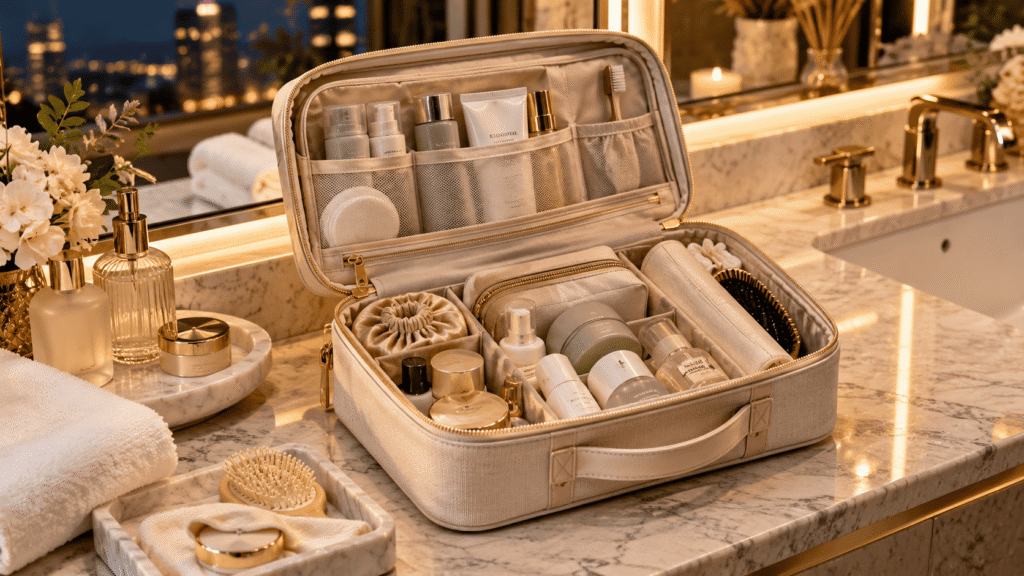
Aesthetic toiletry bag organization hacks make it easier to keep skincare, makeup, hair products, and personal care essentials neat, accessible, and travel-ready. Instead of digging through tangled cables, leaking bottles, or loosely packed cosmetics, you can create a streamlined setup that looks beautiful and works efficiently in a hotel bathroom, airport lounge, or shared accommodation.
The secret is to combine thoughtful storage, coordinated travel containers, smart product selection, and a simple organization system. You do not need an expensive designer toiletry bag or dozens of matching accessories. With a few practical adjustments, you can create a polished, space-saving arrangement that protects your products and makes your daily routine easier wherever you go.
Quick Answer: The Best Aesthetic Toiletry Bag Organization Hacks
The easiest way to organize an aesthetic toiletry bag is to group products by purpose, transfer suitable essentials into travel-sized containers, separate liquids from dry items, and use a bag with compartments that match your routine.
Use these quick tips to create a tidy travel setup:
- Choose a toiletry bag with practical compartments and a wipeable lining.
- Coordinate your storage accessories in two or three complementary colors.
- Use leak-resistant travel bottles for compatible liquid products.
- Store skincare, makeup, haircare, and oral-care items in separate sections.
- Keep cotton pads, hair ties, and other small accessories in mini pouches.
- Place frequently used products in easy-to-reach compartments.
- Pack liquids in a separate clear bag when required by airport security.
- Remove duplicate products and full-size packaging you will not need.
- Add a small waterproof pouch for damp or potentially messy items.
- Check every container for leaks before placing it inside your luggage.
The goal is simple: every product should have a designated place, and every compartment should serve a clear purpose.
1. Choose a Toiletry Bag That Looks Beautiful and Works Efficiently

Your toiletry bag is the foundation of your entire organization system. A beautiful exterior matters, but the interior layout determines how easily you can find products, prevent spills, and repack after getting ready.
Select the Right Shape and Structure
Different toiletry bag styles suit different travel routines.
| Toiletry bag style | Best for | Main advantage |
|---|---|---|
| Structured rectangular bag | Skincare and daily essentials | Keeps products upright and easy to arrange |
| Hanging toiletry bag | Small hotel bathrooms | Provides access to multiple compartments |
| Compact zip pouch | Minimalist and one-bag travel | Uses less luggage space |
| Transparent cosmetic pouch | Makeup and small accessories | Makes contents easy to identify |
| Multi-compartment organizer | Longer trips and larger routines | Separates different product categories |
| Waterproof-lined pouch | Liquids and potentially messy products | Makes cleanup easier after a spill |
For a polished, versatile setup, choose a medium-sized structured bag with a wide opening, internal pockets, and a light-colored or neutral exterior. Beige, taupe, ivory, muted sage, dusty rose, and charcoal can create a coordinated appearance without making the bag difficult to maintain.
Practical tip: Do not choose a bag that is significantly larger than your actual toiletries collection. Extra room often encourages unnecessary packing, while a bag that is too small forces products into awkward positions.
Look for Features That Improve Everyday Use
Prioritize these details when choosing a toiletry organizer:
- A wide opening that allows you to see the contents.
- Separate sections for liquids and dry products.
- Elastic loops or pockets for narrow bottles.
- A wipeable interior lining.
- A secure zipper that does not catch on fabric.
- A hanging hook if you frequently use compact bathrooms.
- Enough depth to accommodate your tallest travel bottle.
An attractive bag becomes genuinely useful when its design supports the way you get ready.
2. Create a Coordinated Color Palette

One of the easiest aesthetic toiletry bag organization hacks is to establish a consistent color palette before purchasing accessories or transferring products.
A coordinated palette makes your setup look intentional, even when the items themselves are inexpensive.
Three Color Palettes to Try
Soft neutral: Ivory, beige, taupe, and warm brown create a calm, understated look that pairs well with most luggage.
Fresh and minimal: White, pale gray, and muted sage offer a clean appearance suitable for skincare-focused routines.
Modern luxury: Charcoal, black, champagne, and brushed metallic accents create a more dramatic, sophisticated arrangement.
You do not need every item to match exactly. Instead, use one primary color for your main toiletry bag, a second color for smaller pouches, and a complementary accent for bottles or labels.
Make Organization Look Intentional
Use matching containers for products that have similar purposes, such as shampoo, conditioner, and body wash. Keep makeup brushes together in one pouch and small accessories in another.
However, avoid transferring every product simply for aesthetic reasons. Original packaging may be safer for products that require special dispensing, opaque storage, or protection from air and moisture.
The best approach: Coordinate the accessories while keeping product safety, labeling, and usability as the priorities.
3. Use Travel-Sized Bottles for a Minimalist Setup
Refillable travel bottles can make your toiletry bag lighter, less cluttered, and easier to arrange. They are particularly useful for shampoo, conditioner, body wash, and compatible liquid skincare products.
How to Choose the Right Containers
Look for containers with secure closures, clear product identification, and materials compatible with their contents.
| Container type | Suitable use | Organization benefit |
|---|---|---|
| Silicone squeeze bottle | Shampoo, conditioner, body wash | Flexible and easy to dispense |
| Small screw-top bottle | Compatible liquid skincare | Compact and simple to label |
| Airless pump container | Suitable creams and lotions | Helps control dispensing |
| Small cosmetic jar | Compatible creams and balms | Convenient for thicker products |
| Solid product tin | Suitable solid shampoo or soap | Reduces the need for liquid containers |
Not every product should be transferred into a generic bottle. Follow the manufacturer’s storage guidance, particularly for active skincare, sunscreen, medications, and products that may degrade when exposed to air or light.
Label Every Refillable Bottle
A row of identical containers may look elegant, but it becomes inconvenient if you cannot distinguish shampoo from conditioner.
Use small waterproof labels or discreet, legible markings. Include the product name and, where useful, the original product’s concentration or usage instructions.
For longer trips, you can also label the front of each bottle rather than relying on color alone.
Prevent Leaks Before They Happen
- Fill containers only to the recommended level.
- Secure the cap and check the seal.
- Store bottles upright when the bag design allows it.
- Place liquids inside a waterproof pouch as an additional safeguard.
- Test refillable containers before departure, especially if they are new.
- Keep the original packaging or product instructions when necessary.
Avoid relying on plastic wrap alone to prevent leakage. A well-designed closure and a separate waterproof layer provide a more dependable system.
4. Organize Your Toiletries by Category

A visually appealing toiletry bag becomes much easier to use when every item belongs to a defined category. Rather than placing products wherever they fit, create a consistent system that you can repeat for every trip.
The Four-Pouch Organization System
For most travelers, four categories provide enough separation without creating unnecessary bulk.
1. Skincare pouch
Store your cleanser, moisturizer, sunscreen, and other essential skincare products together. Keep any products requiring special storage in their recommended packaging.
2. Makeup pouch
Group your daily makeup, compact mirror, and makeup brushes in one section. Place brushes in a protective sleeve to prevent their bristles from touching liquids or loose powders.
3. Oral-care pouch
Keep your toothbrush, toothpaste, floss, and any other daily oral-care essentials together. A ventilated toothbrush cover can protect the brush head while allowing it to dry between uses.
4. Haircare and personal-care pouch
Use this section for hair ties, clips, a compact comb, deodorant, and other small grooming essentials.
If your bag has enough internal compartments, you may not need four separate pouches. The purpose is to separate categories, not to accumulate more accessories.
Where Should Each Item Go?
Arrange items according to how frequently you use them.
- Top or front compartment: Daily essentials you need first.
- Side pockets: Small bottles and narrow products.
- Main compartment: Larger containers and less frequently used items.
- Separate waterproof section: Products that could leak or create a mess.
- Small accessory pouch: Hair ties, cotton swabs, and other loose items.
Keep heavier or sturdier products near the base of the bag when practical. This can help maintain a more stable arrangement and prevent delicate packaging from being crushed.
5. Use Mini Pouches for Small Items
Small accessories are often responsible for making an otherwise organized toiletry bag look messy. Hair ties disappear between bottles, cotton pads collect loose powder, and tiny clips become difficult to find.
Mini pouches solve this problem by giving small items a designated home.
What to Store in Mini Pouches
| Mini pouch | Items to include |
|---|---|
| Hair accessories | Hair ties, clips, pins, and small scrunchies |
| Cotton essentials | Cotton pads and swabs in a clean, dry container |
| Nail care | Nail file, clippers, and small grooming tools |
| First-aid essentials | Appropriate bandages and individually packaged supplies |
| Jewelry | Small accessories that should be kept separate from toiletries |
| Reusable cleaning items | A clean, dry cloth or reusable makeup-removal pads |
Choose slim pouches that fit inside the main bag without wasting space. Mesh is useful when you want to identify contents quickly, while opaque fabric offers a cleaner appearance and more privacy.
Keep clean and used items separate. A damp makeup-removal pad, for example, should not be returned to a pouch containing clean cotton pads.
6. Pack Skincare Without Overpacking
Skincare can occupy a surprising amount of space, especially if your routine includes multiple serums, toners, moisturizers, masks, and treatments.
The most effective solution is to preserve the essential steps of your routine while removing products that serve overlapping purposes.
Build a Travel Skincare Capsule
For a typical short trip, consider these categories:
- Cleanser
- Moisturizer
- Sunscreen
- One essential treatment product, if needed
- Lip balm
- Makeup remover, if you wear makeup
This is a framework, not a requirement to eliminate products that are important to your skin or recommended by a healthcare professional.
Use the Routine Test
Before packing a skincare product, ask three questions:
- Will I realistically use it during this trip?
- Does it serve a distinct purpose?
- Can I pack it safely in a smaller, suitable container?
If the answer to the first two questions is no, leave it at home. If the product is essential but cannot safely be transferred, keep it in its original packaging and allocate space accordingly.
Avoid decanting prescription products or items with specific stability requirements unless the packaging and storage guidance explicitly permit it.
Keep Sunscreen Practical, Not Optional by Accident
Sunscreen is easy to overlook when trying to create a minimalist arrangement. If you need sun protection at your destination, pack enough of a suitable product for your expected use.
Do not sacrifice necessary protection just to achieve a smaller bag or a more coordinated color scheme.
7. Make Your Makeup Section Compact and Easy to Access
A makeup pouch should reflect your actual routine rather than every product you own.
For many travelers, a small selection of multipurpose cosmetics is easier to manage than a full makeup collection.
Create a Travel Makeup Kit
A compact kit might include:
- Foundation or tinted moisturizer
- Concealer
- Powder, if needed
- Blush or a multipurpose cheek product
- Mascara
- One or two lip products
- A small brush or sponge
- Compact mirror, if necessary
Adjust the list to your personal preferences, the climate, and the occasions planned for your trip.
Protect Brushes and Prevent Mess
Store makeup brushes in a washable brush holder or sleeve. Keep loose powders tightly closed and place products with fragile packaging where they are less likely to be crushed.
If you carry liquid foundation, concealer, or other potentially messy cosmetics, store them inside a small protective pouch.
For a particularly polished look, use a compact makeup pouch that opens fully and allows you to see the contents at a glance. A wide-opening design is often more useful than a narrow pouch that hides products at the bottom.
8. Separate Wet Items From Dry Toiletries
One of the most practical aesthetic toiletry bag organization hacks is to plan for moisture rather than assuming everything will remain dry.
Wet toothbrushes, damp washcloths, and leaking containers can affect nearby products and make the interior of your bag unpleasant to use.
Create a Wet-and-Dry System
Use separate storage for:
- Clean, dry toiletries
- Products that may leak
- Items that are damp after use
- Reusable cleaning cloths
- Used cotton pads or makeup-removal accessories
A waterproof or water-resistant pouch can help contain moisture, but it does not replace proper drying. Ventilated toothbrush covers and breathable storage are preferable when an item needs airflow.
Before packing a used toiletry bag after a hotel stay, wipe the lining and allow it to dry fully whenever possible.
Prevent Odors During Longer Trips
Moisture trapped in a closed bag can encourage unpleasant odors. Do not leave damp cloths, sponges, or toothbrushes sealed in an airtight pouch for extended periods.
If you need to leave before an item has dried, store it separately and unpack it to dry as soon as practical.
9. Maximize Space in a Small Toiletry Bag

A small toiletry bag can be surprisingly effective when its contents are selected and arranged carefully.
Use the Smallest Practical Containers
Choose container sizes based on the amount you expect to use, rather than automatically selecting the smallest bottle available. A container that is too small may require refilling during the trip, while an oversized one wastes valuable space.
For a weekend, you may need only a small quantity of shampoo or moisturizer. A longer trip may justify larger travel containers, depending on access to laundry facilities, toiletries at your accommodation, and your daily routine.
Remove Unnecessary Packaging
Where safe and appropriate, remove bulky outer cartons and unnecessary packaging before packing. Keep essential product labels and instructions available, especially for products that could be confused with one another.
Do not remove packaging when it is necessary for product protection, safe dispensing, identification, or compliance with applicable rules.
Use Vertical Space Strategically
Place tall bottles in compartments designed for them. Fit smaller containers into side pockets and keep flat items, such as compact palettes or folded washcloths, against the sides of the bag.
Avoid stacking so many products that you have to unpack everything to reach one item.
Follow the One-In, One-Out Rule
If you add an extra product, consider removing another item that serves a similar purpose. This simple habit prevents your toiletry bag from gradually becoming heavier and more cluttered.
For one-bag travelers, this is especially useful because toiletries must compete for space with clothing, electronics, and other travel essentials.
10. Follow Airport Security Rules for Toiletries
An attractive toiletry organizer should also be practical at airport security. Before flying, check the current requirements for your departure airport, connecting airports, and destination.
For flights departing from or connecting through US airports, the Transportation Security Administration (TSA) generally applies its 3-1-1 rule to carry-on liquids, gels, aerosols, creams, and pastes:
- Containers must generally hold no more than 3.4 ounces (100 milliliters) each.
- Containers should fit in one quart-sized, clear bag.
- One such bag is generally allowed per passenger under the standard rule.
Exceptions and additional screening requirements may apply. Security procedures can also differ in other countries and airports.
Keep Security-Sensitive Items Accessible
If your airport requires a separate clear liquids bag, place the relevant products together before reaching the checkpoint. Do not bury that pouch underneath your entire skincare and makeup collection.
Remember that the restriction generally concerns the container’s capacity, not how much liquid remains inside it. A half-empty bottle larger than the permitted capacity may still be rejected.
What About Solid Toiletries?
Solid shampoo bars, bar soap, and other genuinely solid alternatives may reduce the number of liquids you need to carry. However, not every product that appears solid is exempt from liquid restrictions. Check the relevant airport’s guidance for unusual products.
Pack medications and medically necessary liquids according to the applicable rules, and keep them identifiable for screening.
Important: Airport security requirements can change. Check official TSA guidance and the rules of your specific airports before departure rather than relying on an old packing checklist.
11. Adapt Your Toiletry Bag to Different Trips
Your ideal toiletry arrangement depends on trip length, accommodation, climate, and access to supplies. A system designed for a weekend city break may not be suitable for a two-week trip involving outdoor activities.
| Trip type | Suggested organization | What to prioritize |
|---|---|---|
| Weekend getaway | One compact bag with a few categories | Daily skincare, oral care, and essential grooming |
| One-bag travel | Lightweight pouch with minimal containers | Low bulk, secure closures, and multipurpose products |
| Business trip | Structured bag with separate grooming sections | Quick access and a polished, reliable routine |
| Beach holiday | Waterproof pouch plus a dry essentials section | Sunscreen, after-sun care, and moisture management |
| Long international trip | Multi-compartment organizer | Refill planning, product compatibility, and easy repacking |
| Family vacation | Separate labeled pouches for each person | Clear identification and fewer mix-ups |
For Weekend Trips
Pack only the products you need for the expected number of days. A compact pouch with a few travel-sized containers will usually be easier to manage than a large organizer.
For One-Bag Travel
Prioritize lightweight packaging, solid alternatives where appropriate, and a compact system that fits neatly beside your other luggage essentials. Avoid duplicating products across multiple pouches.
For Business Travel
Choose a structured bag that opens easily on a hotel vanity. Group morning and evening essentials logically so you can get ready without unpacking the entire bag.
For Beach and Warm-Weather Trips
Protect sunscreen and other temperature-sensitive products according to their labels. Use a separate pouch for damp items, and never assume that a waterproof bag will protect cosmetics from excessive heat.
For Family Travel
Give each person a clearly identified pouch or section. Separate children’s products from adult skincare when doing so reduces confusion, and keep medicines in appropriate, clearly labeled packaging.
12. Common Toiletry Bag Organization Mistakes to Avoid
Even a beautiful toiletry bag can become inconvenient if the organization system prioritizes appearance over practical use.
Packing Too Many Products
A large collection of skincare and makeup can make a compact bag difficult to close. Select products based on your routine, trip duration, and destination rather than packing every available option.
Buying Too Many Matching Accessories
A coordinated set of pouches may look appealing, but too many containers add bulk and create more items to unpack. Start with the bag you own and add only the accessories that solve a genuine problem.
Using Unlabeled Bottles
Identical bottles can make it difficult to distinguish similar products. Label them clearly and ensure that any instructions or warnings remain accessible.
Ignoring Product Compatibility
Not every cream, serum, or liquid should be transferred into silicone or plastic containers. Check the product manufacturer’s recommendations before decanting.
Putting Everything in One Large Compartment
A single compartment may be sufficient for a minimalist kit, but it can become frustrating when small accessories are buried beneath larger products. Use internal pockets or a small number of pouches to create clear categories.
Forgetting the Return Journey
Used products, damp accessories, and partially empty bottles may require a different arrangement on the way home. Leave a little flexibility in the bag and carry a separate pouch for used items when necessary.
Packing Without Testing the Setup
Before leaving, place every item inside the bag, close it, and check whether you can access the essentials easily. A five-minute trial can reveal awkward bottle heights, difficult zippers, and unnecessary accessories before they become travel inconveniences.
13. Aesthetic Toiletry Bag Packing Checklist
Use this checklist before your next trip to create an organized, coordinated, and practical toiletry kit.
Toiletry Bag and Storage
- Main toiletry bag with secure closures
- Small pouch for makeup or accessories
- Waterproof pouch for liquids or potentially wet items
- Labels for refillable containers
- Clear liquids bag if required by your airport
Skincare and Personal Care
- Cleanser
- Moisturizer
- Sunscreen, as appropriate for your destination
- Essential treatment products
- Deodorant
- Lip balm
- Makeup remover, if needed
Haircare and Oral Care
- Shampoo and conditioner, if needed
- Comb or compact brush
- Hair ties and clips
- Toothbrush and toothpaste
- Floss
- Suitable toothbrush cover
Makeup and Small Accessories
- Essential makeup products
- Makeup brush sleeve
- Cotton pads or swabs in clean storage
- Nail file or compact grooming tools
- Any necessary personal-care items
Final Checks
- Remove unnecessary or duplicate products.
- Check the condition and capacity of each container.
- Confirm that refillable bottles are properly sealed.
- Separate wet items from dry essentials.
- Review current airport liquid restrictions.
- Make sure the bag closes without forcing the zipper.
- Keep essential items accessible during the journey.
Adjust this checklist to your personal routine, destination, and trip length. You do not need every item listed for every journey.
Frequently Asked Questions
1. How do I make my toiletry bag look aesthetic?
Choose a cohesive color palette, use a few coordinated pouches, and arrange products by category. Refillable bottles with clear labels can create a uniform appearance, while a structured bag and tidy compartments make the setup easier to use.
2. What is the best way to organize a small travel toiletry bag?
Pack only essential products, use suitable travel-sized containers, and assign specific compartments to skincare, makeup, oral care, and small accessories. Place frequently used items near the opening and keep potentially leaky products in a protective pouch.
3. Are refillable toiletry bottles better than original packaging?
Refillable bottles can reduce bulk and help create a coordinated setup, but they are not suitable for every product. Keep products in their original packaging when necessary for stability, dispensing, identification, or manufacturer instructions.
4. How do I prevent toiletries from leaking in my luggage?
Use containers with reliable closures, check them before departure, and place liquids inside a separate waterproof pouch. Keep products upright where possible, follow the recommended fill level, and avoid packing damaged or poorly sealed bottles.
5. How do I organize toiletries for a carry-on flight?
Separate liquids, gels, aerosols, creams, and pastes according to the applicable airport security rules. For standard TSA screening in the United States, most carry-on liquids must be in containers of 3.4 ounces (100 milliliters) or less and fit in one quart-sized clear bag. Check current rules and any applicable exceptions before flying.
Conclusion
The best aesthetic toiletry bag organization hacks combine visual simplicity with practical storage. A coordinated color palette, thoughtfully selected travel containers, category-based compartments, and a reliable system for separating wet and dry items can transform a cluttered collection of toiletries into an efficient travel kit.
Start with the bag you already own, remove products you will not use, and organize the remaining essentials around your daily routine. Add matching pouches or refillable bottles only when they improve convenience, reduce unnecessary bulk, or protect your belongings.
A beautifully organized toiletry bag should do more than look good in a photograph. It should make getting ready easier, keep your essentials accessible, and help you pack and unpack with less effort throughout your journey.
1 comment