
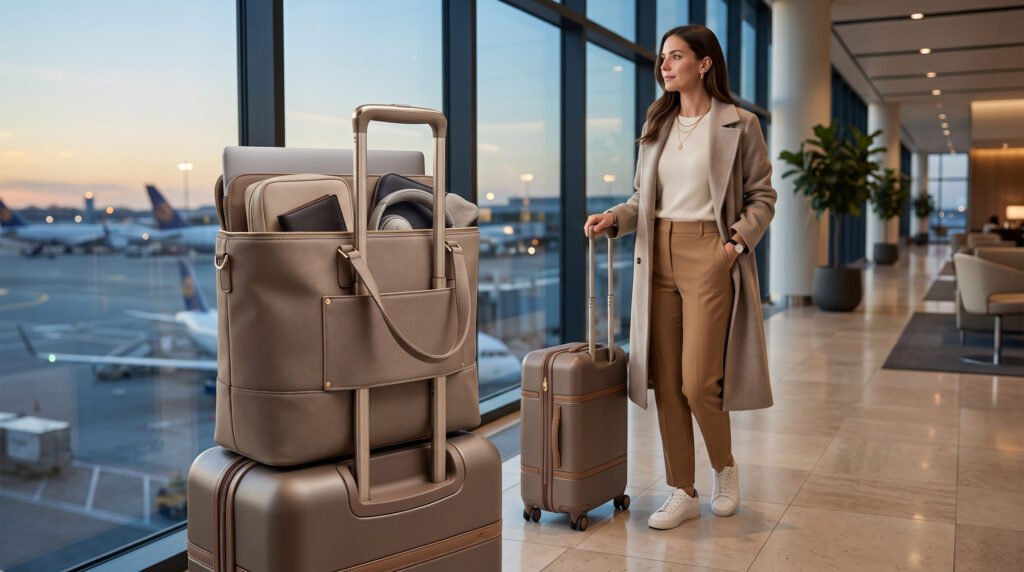
Travel tote bags with trolley sleeves make airport journeys easier by allowing you to slide your tote over the handle of a rolling suitcase instead of carrying it on your shoulder. They offer a practical way to keep travel essentials, electronics, documents, and personal items within reach while moving through terminals, boarding flights, or checking into a hotel.
The best option depends on how you travel. A business traveler may need a padded laptop compartment and professional styling, while a frequent flyer may prioritize lightweight construction, secure pockets, and compatibility with a carry-on suitcase. Choosing the right combination of size, organization, comfort, and durability can make the difference between a convenient personal bag and an awkward extra piece of luggage.
This guide explains what to look for in travel tote bags with trolley sleeves, how to choose the right size, which features matter most, and how to pack a tote efficiently for different types of trips.
Quick Answer: What to Look for in a Travel Tote With a Trolley Sleeve
A good travel tote with a trolley sleeve should fit securely over your suitcase handle, hold your essential belongings without becoming excessively heavy, and remain comfortable to carry when separated from your luggage.
Use this quick checklist when comparing options.
- Secure trolley sleeve: A wide, reinforced panel that fits your suitcase handle and keeps the tote stable.
- Suitable dimensions: A shape that works with your suitcase and your airline’s current cabin-baggage rules.
- Lightweight construction: Durable materials without unnecessary weight.
- Organized interior: Separate spaces for electronics, documents, chargers, toiletries, and small essentials.
- Comfortable handles: Reinforced shoulder straps or handles that are easy to carry through an airport.
- Secure closure: A zippered main compartment to help protect your belongings.
- Practical pockets: Easy-access storage for a phone, passport, boarding pass, and water bottle.
- Easy maintenance: Water-resistant fabric or a wipe-clean lining for everyday travel use.
For most travelers, a medium-sized, zip-top tote with a reinforced trolley sleeve, a luggage-compatible back panel, and a dedicated laptop compartment offers a versatile balance of convenience and organization.
What Are Travel Tote Bags With Trolley Sleeves?
A travel tote with a trolley sleeve is a carry bag designed with a fabric panel, opening, or strap on its back that slides over the extended handle of a rolling suitcase. This feature allows the tote to rest on top of your luggage, reducing the need to carry it continuously on your shoulder.
Unlike an ordinary everyday tote, a travel-focused design often includes additional features such as a zippered closure, padded electronics storage, luggage-compatible dimensions, water-resistant fabric, and multiple organizational pockets.
How a Trolley Sleeve Works
The sleeve usually sits on the back panel of the tote. You slide the extended suitcase handle through the sleeve, allowing the tote to rest against the suitcase while you pull it.
Some designs use a simple fabric pass-through, while others feature a zippered panel that doubles as a pocket or a wider luggage strap that accommodates different handle configurations.
The most important consideration is stability. A sleeve that fits securely around your suitcase handle helps prevent the tote from shifting sideways, slipping down, or becoming difficult to manage when you turn a corner.
Travel Tote vs. Regular Tote Bag
| Feature | Travel tote with trolley sleeve | Regular tote bag |
| Luggage compatibility | Designed to slide over suitcase handles | Usually not included |
| Organization | Often includes travel-specific pockets | Varies by design |
| Main closure | Frequently zippered | May be open-top |
| Laptop protection | Available in selected models | Often limited |
| Airport convenience | Excellent for rolling luggage | Depends on carrying style |
| Versatility | Travel, work, and commuting | Everyday errands and casual use |
A regular tote can work for short journeys, but a dedicated travel tote is generally more convenient when you regularly move between airport terminals, train stations, hotels, and business meetings.
Key Features to Consider Before Buying
Not every tote with a luggage sleeve is equally practical. The strongest options combine a reliable attachment system with comfortable carrying, useful storage, and a construction that holds up to frequent travel.
1. A Secure and Well-Designed Trolley Sleeve
The trolley sleeve is the defining feature, so inspect its construction carefully.
Look for a sleeve that is wide enough to accommodate your suitcase handle without excessive looseness. Reinforced stitching is particularly useful because the panel experiences repeated friction and pulling during travel.
Consider these details:
- Width: Check that the opening accommodates the handle assembly on your suitcase.
- Depth: A deeper sleeve or properly positioned panel can improve stability.
- Reinforcement: Strong stitching helps reduce wear around stress points.
- Placement: The sleeve should position the tote close to the suitcase without obstructing its handle.
- Additional function: Some panels double as zippered storage pockets when the bag is not attached to luggage.
Before buying, compare the sleeve’s usable dimensions with the actual handle assembly of your suitcase. Two bags described as having universal trolley sleeves may fit differently.
2. The Right Size and Capacity
A tote should have enough room for your travel essentials without becoming so large that it is difficult to carry or manage alongside your suitcase.
A compact design may be suitable for a passport, phone, tablet, headphones, and a few personal items. A larger tote can accommodate a laptop, charger, cardigan, cosmetics pouch, snacks, and documents.
However, capacity alone does not determine suitability. A large, unstructured bag can become heavy and difficult to organize, while a smaller tote with well-designed compartments may be more practical.
| Tote size | Typical use | What to consider |
| Compact | Essentials and short outings | Limited space for larger electronics |
| Medium | Daily flights, work, and weekend trips | Balanced capacity and portability |
| Large | Work equipment and additional personal items | Weight, bulk, and airline restrictions |
| Structured laptop tote | Business travel and commuting | Padding, device dimensions, and organization |
These are general use categories rather than standardized size classifications. Always check the manufacturer’s measurements, including the bag’s depth when fully packed.
3. Durable, Travel-Friendly Materials
The material influences the tote’s weight, appearance, cleaning requirements, and resistance to everyday wear.
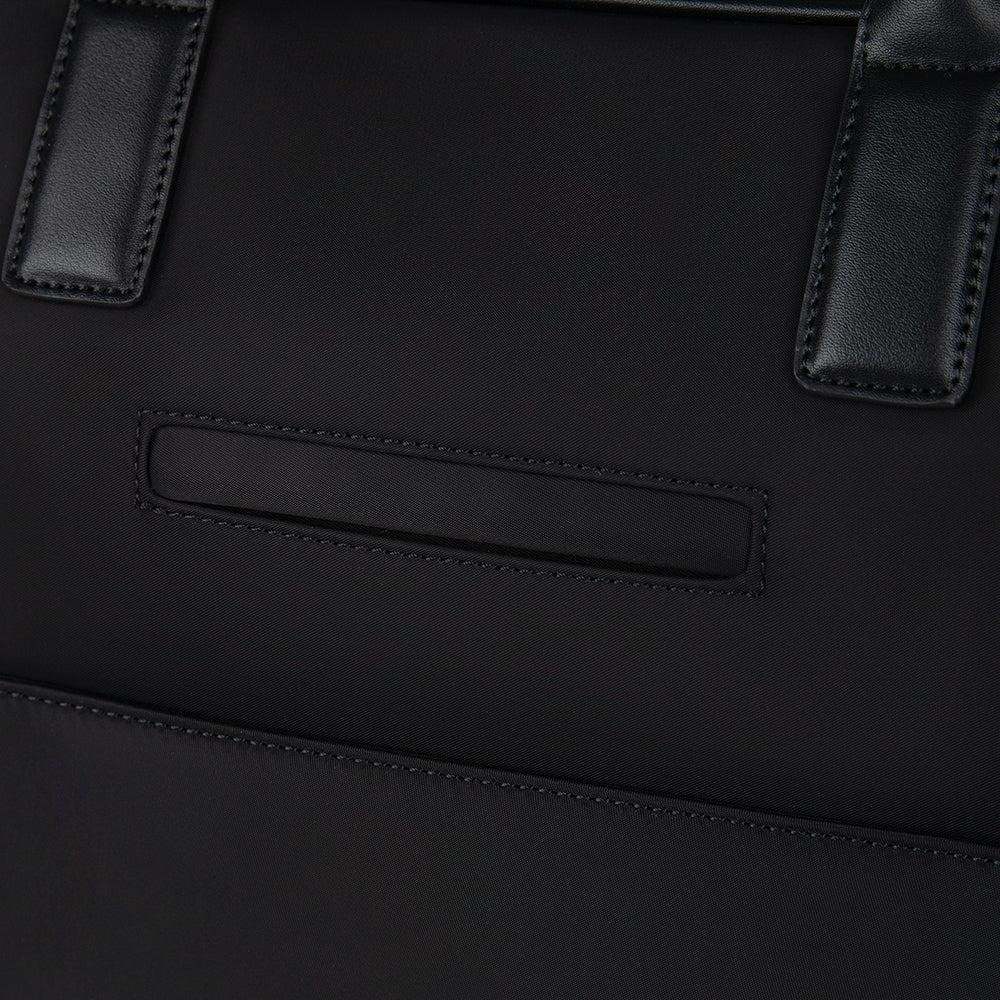
Nylon
Lightweight, flexible, and generally easy to maintain. Nylon is a strong choice for frequent flyers who prioritize practicality over a rigid silhouette. Higher-quality versions may offer better abrasion resistance and water repellency.
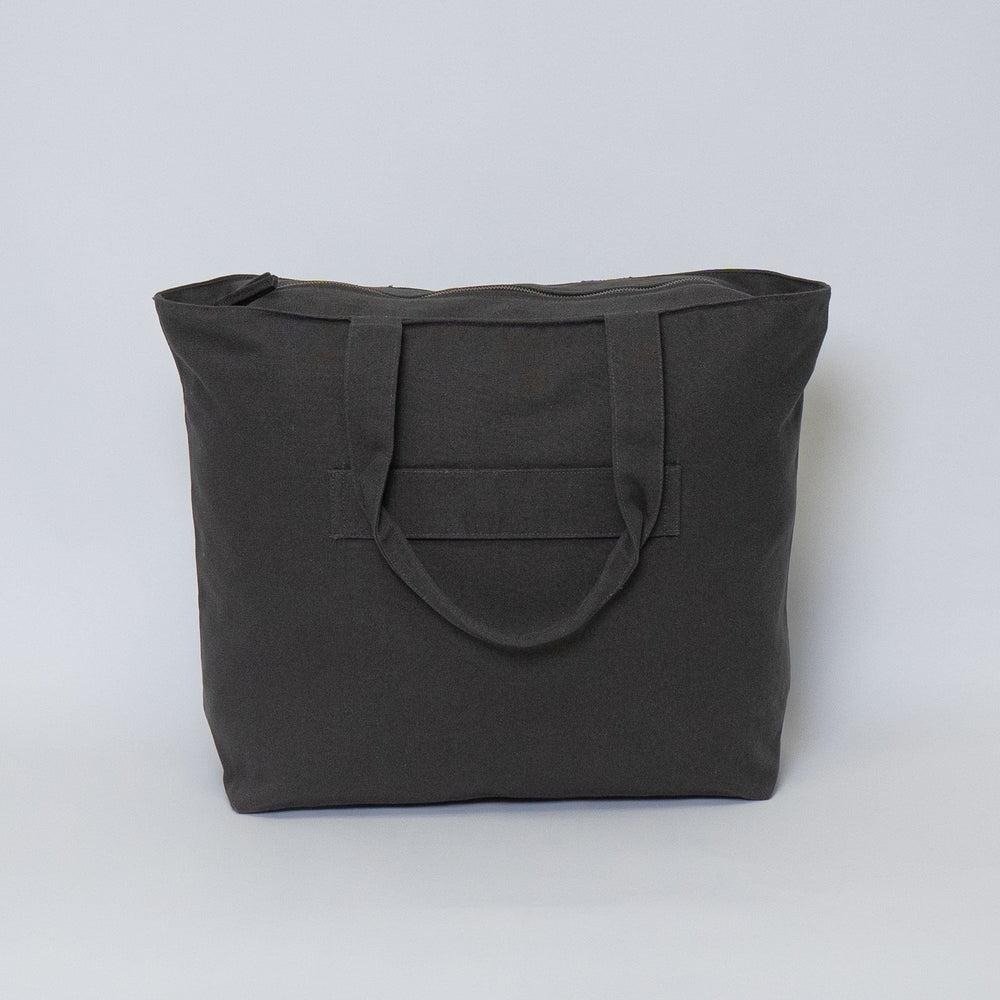
Polyester
Often affordable and available in many colors and finishes. It can be a practical option for occasional travel, although durability varies with fabric quality, construction, and coating.
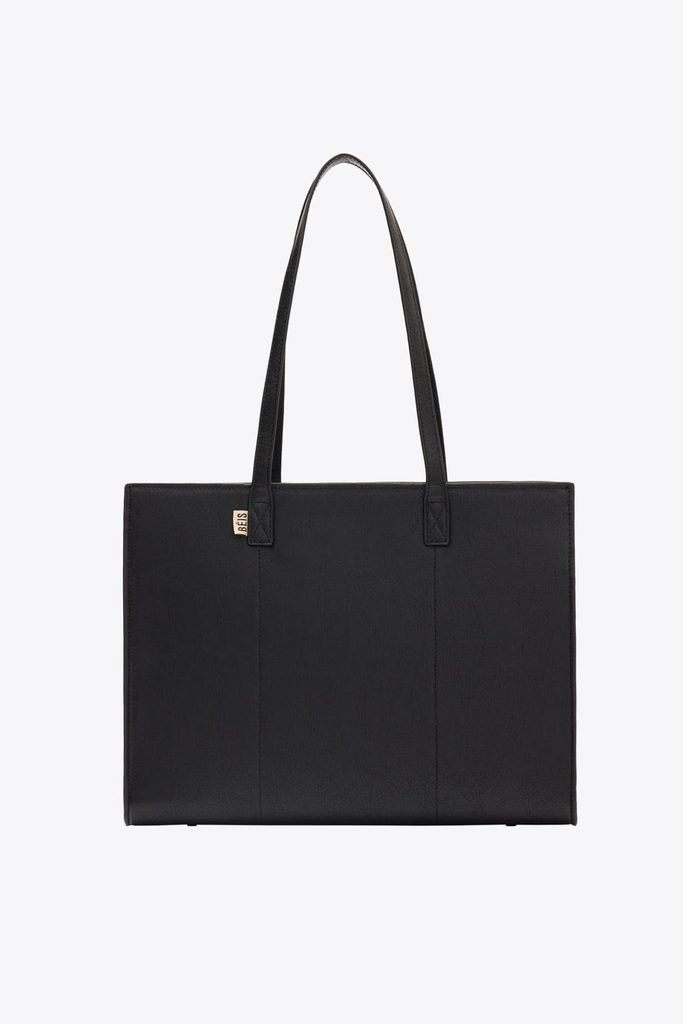
Vegan leather or coated synthetic materials
Suitable for travelers who want a polished business or city-travel aesthetic. These materials can be easy to wipe clean, but their resistance to cracking, peeling, and heat varies.

Canvas
Offers a casual, understated look and can be durable when well constructed. However, heavier canvas designs may add unnecessary weight, and untreated fabric can absorb moisture or develop stains.
For frequent air travel, lightweight nylon is often a sensible starting point. If professional appearance is a priority, a structured synthetic tote may be preferable. Regardless of material, inspect the zipper, seams, handle attachments, and trolley sleeve rather than relying on appearance alone.
4. Laptop Protection and Electronics Storage
Many travelers use their tote as a mobile workstation. If you carry a laptop, tablet, camera, or other electronics, interior organization becomes especially important.
Look for:
- A padded laptop compartment that matches your device’s dimensions.
- A separate tablet sleeve or document pocket.
- Small pockets for chargers, cables, adapters, and earbuds.
- A zippered section for valuable accessories.
- Enough space to remove your laptop without unpacking the entire tote.
Measure your laptop before purchasing. A tote marketed for a particular laptop size may have a compartment with different internal measurements from the laptop’s advertised screen size.
If you travel with several electronics, use a slim tech pouch to keep charging accessories together. This prevents cables from tangling with personal belongings and makes security screening easier.
5. Comfortable Handles and Shoulder Straps
The trolley sleeve reduces carrying effort while your suitcase is rolling, but you still need to carry the tote when climbing stairs, boarding transport, or leaving your suitcase behind.
Check that the handles provide enough clearance to fit comfortably over a coat or jacket. Reinforced attachment points are valuable when carrying a laptop and other heavy items.
A detachable shoulder strap can add flexibility, although it is not essential. If the tote is likely to become heavy, consider how the bag distributes its weight and whether its straps remain comfortable against your shoulder.
How to Choose a Travel Tote for Your Travel Style
The most suitable bag depends on what you carry, how frequently you travel, and whether you need the tote to serve another purpose after arriving.
For Business Travel
Choose a structured tote with a clean silhouette, a secure zip closure, a padded laptop compartment, and separate spaces for documents and charging accessories.
Neutral colors such as black, charcoal, navy, and taupe pair easily with professional clothing. A trolley sleeve keeps the bag attached to your carry-on suitcase as you move between the airport, hotel, and meeting venue.
For overnight business trips, look for enough room for a compact toiletry pouch, a change of clothing, and work essentials without forcing the zipper closed.
For Weekend Trips
A medium-sized tote often provides sufficient space for personal items, a lightweight layer, toiletries, a book, and electronics.
Choose a flexible design with a wide opening and internal pockets. If you are using a single carry-on suitcase for clothing, your tote can hold items that you want accessible during transit.
For more efficient organization, combine your tote with a small packing cube or pouch rather than filling the main compartment with loose items.
For Families and Parents
Family travel often involves frequent access to snacks, wipes, tissues, chargers, entertainment, and other essentials.
A family-friendly tote should have:
- Multiple easy-to-reach pockets.
- A secure main zipper.
- A wipe-clean lining.
- Space for a small change of clothing or compact activity kit.
- A trolley sleeve that stays secure when the suitcase changes direction.
Avoid packing the bag so heavily that it becomes difficult to lift when separated from the suitcase. Distribute heavier items into your main luggage whenever possible.
For Minimalist and One-Bag Travelers
For one-bag travel, the tote should complement your main bag rather than duplicate everything it already carries.
A slim, lightweight design works well for documents, electronics, a water bottle, a compact layer, and essentials needed during transit. If you are using a single backpack as your primary luggage, a tote may be unnecessary unless you need a separate work bag or an accessible personal-item bag.
Review your full packing list before choosing a tote. The goal is to improve organization and convenience, not introduce another bulky bag that you have to manage.
How to Pack a Travel Tote Efficiently
A well-organized tote makes it easier to find important items without unpacking everything at the airport or on the plane.
The most effective approach is to assign each section a purpose.
Build a Simple Packing System
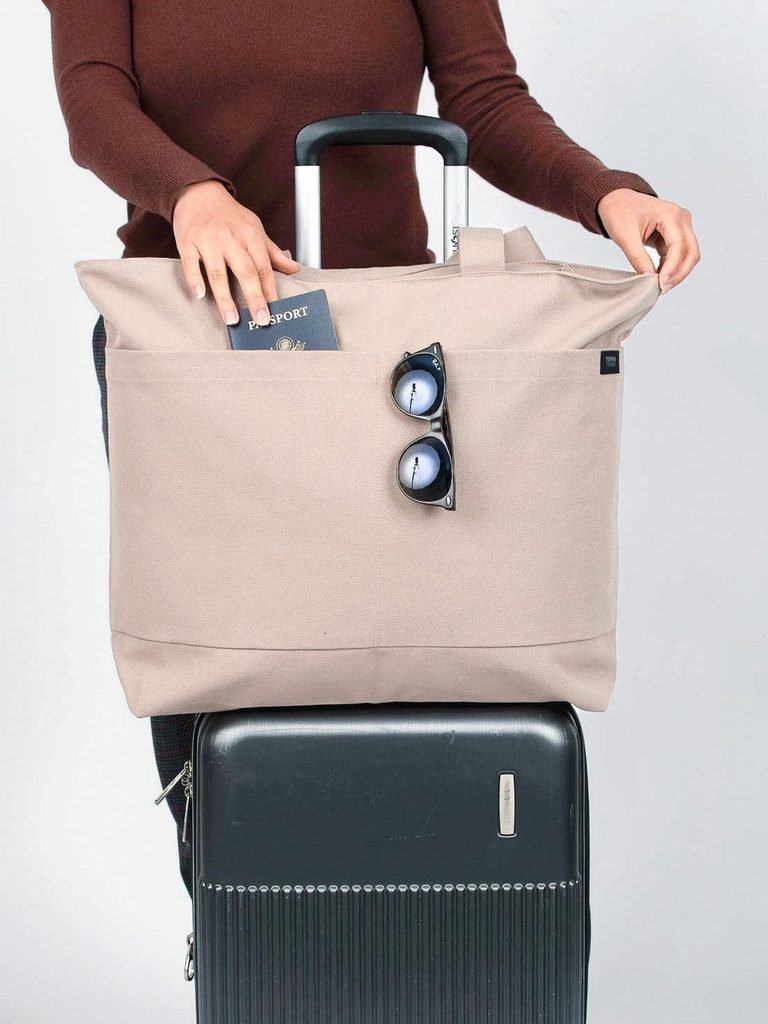
1. Keep travel documents accessible
Place your passport, identification, boarding pass, and travel wallet in a secure pocket that you can reach quickly.
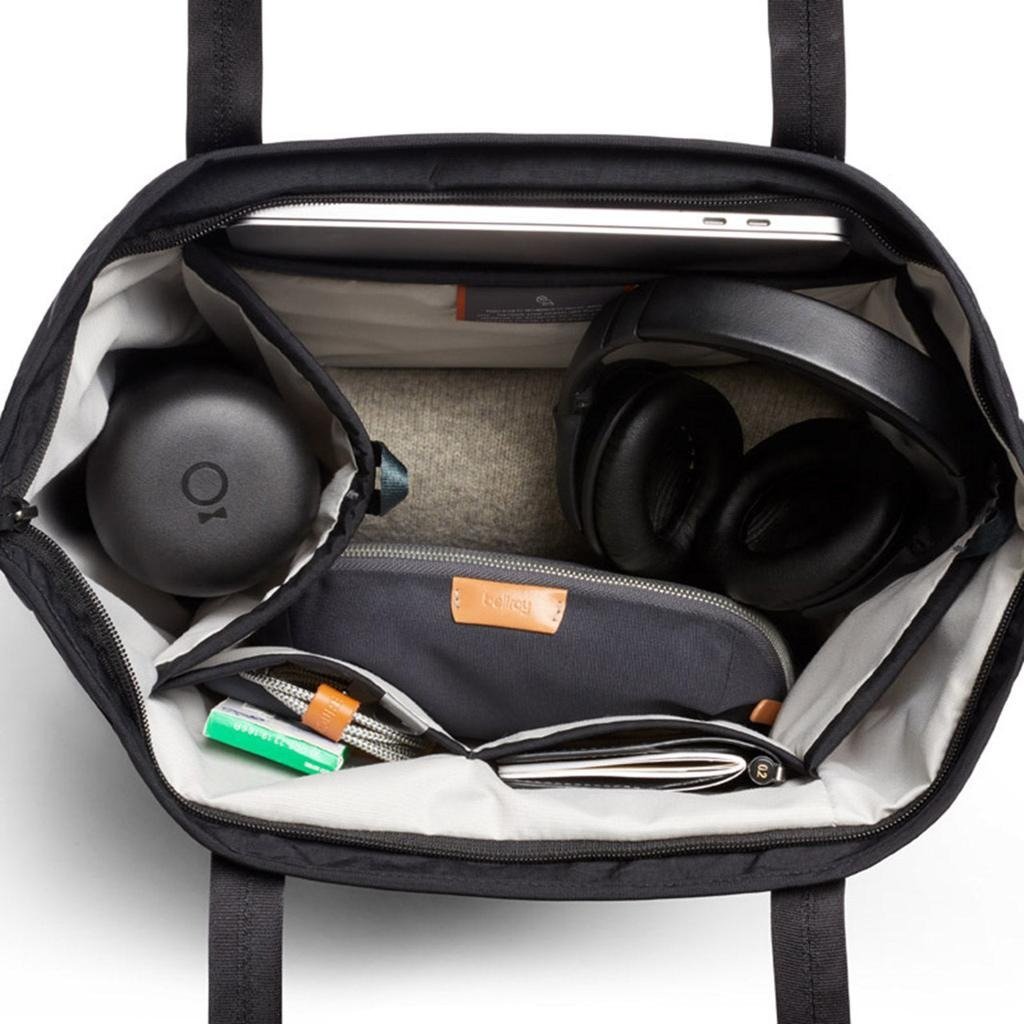
2. Create an electronics section
Store your laptop or tablet in its designated compartment. Keep chargers, cables, and headphones in a separate pouch.
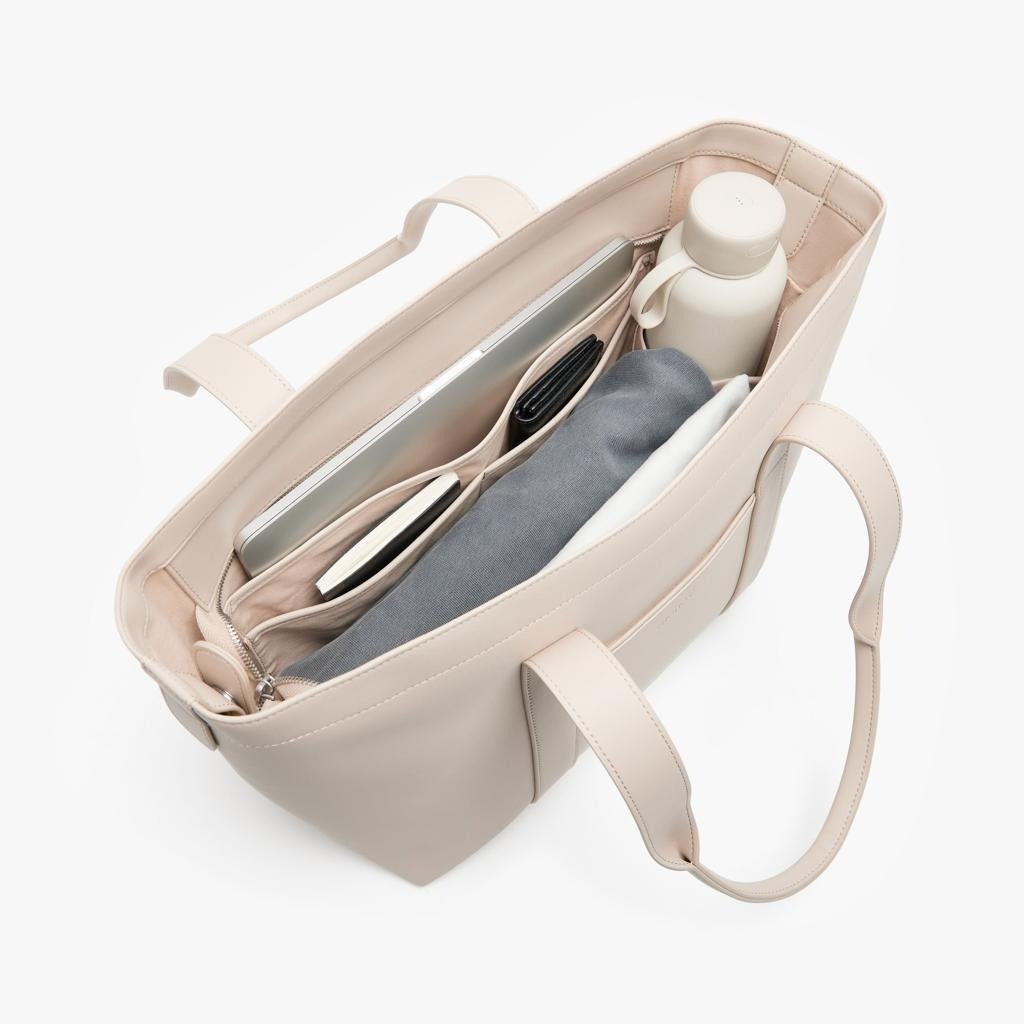
3. Separate personal essentials
Use a small pouch for lip balm, tissues, hand cream, medication, and other personal items. Pack liquids in accordance with applicable security requirements.

4. Reserve a quick-access area
Keep a snack, sunglasses, a compact scarf, or other frequently used items in an accessible pocket without blocking the main compartment.
Travel Tote Packing Checklist
Use this checklist to prepare your tote before leaving for the airport.
- Passport, identification, and travel documents.
- Phone and charging cable.
- Power bank, if needed.
- Laptop or tablet, if required.
- Headphones or earbuds.
- Wallet and essential payment cards.
- Medication and personal care items.
- Reusable water bottle, empty before security if required.
- Lightweight layer or compact scarf.
- Tissues, hand sanitizer, and other everyday essentials.
- Small pouch for cables and loose accessories.
Adjust the list according to your destination and travel duration. For a short flight, you may need only a few essentials. For a long-haul journey, additional comfort items can be useful, provided the tote remains manageable.
Are Travel Tote Bags With Trolley Sleeves Allowed on Flights?
Travel totes with trolley sleeves can generally be used on flights, but whether a particular tote qualifies as a personal item or carry-on depends on the airline, fare, route, and applicable baggage policy.
A trolley sleeve does not automatically make a bag airline-compliant.
Personal Item vs. Carry-On Bag
A personal item is generally intended to fit beneath the seat in front of you, while a standard carry-on bag is usually stored in the overhead compartment. Airlines set their own permitted dimensions and allowances.
| Consideration | What to check |
| Personal-item dimensions | Whether the packed tote fits the airline’s permitted measurements |
| Carry-on allowance | Whether your ticket includes a larger cabin bag |
| Combined baggage | Whether the airline counts the tote and suitcase separately |
| Weight limit | Whether a cabin-baggage weight restriction applies |
| Bag shape | Whether the tote remains within the allowed dimensions when full |
| Boarding conditions | Whether gate staff may require a bag to be checked |
Before departure, check the baggage policy for every airline on your itinerary, especially when connecting between carriers or traveling on a restrictive basic-economy fare.
TSA and Airport Security Considerations
In the United States, the Transportation Security Administration (TSA) screens carry-on belongings under its current security procedures. A trolley sleeve does not change the screening requirements for the items inside your tote.
Electronics, liquids, gels, aerosols, and other items must comply with the applicable screening rules. Some items may need to be removed from the bag, depending on the screening lane, equipment, and current instructions.
For smoother screening:
- Keep your laptop accessible if removal is required.
- Follow current liquid restrictions and any applicable exceptions.
- Store cables and small accessories in an organized pouch.
- Avoid filling every pocket with loose items.
- Follow the instructions of airport security personnel.
Security procedures and airline baggage rules can change, so verify the latest official guidance before traveling.
Common Mistakes to Avoid When Buying a Travel Tote
Even an attractive tote can become frustrating when its design does not match your travel habits.
Choosing a Sleeve That Does Not Fit Your Suitcase
Not all suitcase handles have the same spacing or shape. A narrow sleeve may fail to fit over a wider handle assembly, while an oversized sleeve may allow the tote to shift around.
Compare the tote’s sleeve dimensions with your luggage before buying.
Buying More Capacity Than You Need
A large tote encourages unnecessary packing and can become uncomfortable when lifted. Select a capacity that fits your actual essentials instead of choosing the largest available option.
Remember that a bag that feels light when empty may become heavy when filled with a laptop, water bottle, electronics, and personal items.
Ignoring the Main Zipper
An open-top tote may look elegant, but it offers less protection against items falling out during movement. A secure zipper is particularly useful when the tote rests on a rolling suitcase or travels through crowded public spaces.
Overlooking the Empty Weight
A heavy bag consumes part of your permitted baggage weight before you pack anything. Compare the empty weight of shortlisted totes, particularly if you frequently travel with weight-restricted cabin luggage.
Assuming Water-Resistant Means Waterproof
Water-resistant fabric may help protect belongings from light splashes, but it does not guarantee protection during heavy rain or prolonged exposure to moisture. Use a separate protective sleeve for valuable electronics when needed.
Neglecting Security and Personal Belongings
Keep passports, payment cards, phones, and other valuables in secure, accessible compartments. When the tote is attached to your suitcase, check that it remains stable and that important pockets are not easily exposed.
How to Maintain Your Travel Tote
Regular maintenance can help extend the useful life of a travel bag.
- Clean the exterior: Follow the manufacturer’s care instructions for the specific material.
- Inspect the trolley sleeve: Check its seams and edges for fraying or loose stitching.
- Protect the zipper: Remove trapped dirt and avoid forcing the zipper around an overfilled compartment.
- Dry the bag properly: Allow damp fabric to dry fully before storing it.
- Check the handles: Examine attachment points for signs of wear, especially after carrying heavier loads.
- Store it carefully: Empty all pockets and keep the tote in a dry place away from excessive heat.
If you use your tote frequently, inspect the trolley sleeve periodically. It is a high-use feature that can experience repeated friction against the suitcase handle.
FAQs
1. What is the best travel tote bag with a trolley sleeve?
The best travel tote bag with a trolley sleeve has a secure luggage pass-through, lightweight construction, comfortable handles, a zippered main compartment, and enough organization for your travel essentials. Business travelers may prefer padded laptop storage, while leisure travelers may prioritize versatility and easy cleaning.
2. Can a travel tote with a trolley sleeve count as a personal item?
Yes, if its packed dimensions meet the airline’s personal-item requirements and your fare permits one. A trolley sleeve does not guarantee personal-item eligibility, so check the current baggage allowance and measurement rules for your airline.
3. Do trolley sleeves fit all suitcase handles?
No. Sleeve width, depth, placement, and suitcase handle spacing vary by design. Check the manufacturer’s dimensions and compare them with your suitcase before purchasing to reduce the risk of a loose or incompatible fit.
4. Are travel totes with trolley sleeves suitable for laptops?
Many are suitable for laptops, particularly models with dedicated padded compartments. Check the internal dimensions, padding, closure, and available space for accessories. A separate protective laptop sleeve can provide additional protection when the tote does not have adequate built-in padding.
5. Are travel totes with trolley sleeves better than backpacks?
Neither option is universally better. A tote offers quick access, a polished appearance, and convenient attachment to rolling luggage. A backpack generally distributes weight more evenly across both shoulders and can be more comfortable when walking long distances. Choose according to your luggage setup, packing needs, and typical travel itinerary.
Conclusion
Travel tote bags with trolley sleeves are a practical choice for travelers who want convenient access to their essentials without carrying an additional bag continuously on their shoulder. The right design combines a secure luggage sleeve, useful interior organization, comfortable handles, durable materials, and dimensions suited to your travel requirements.
Before choosing a tote, consider your suitcase handle, the devices and personal items you carry, your preferred travel style, and the baggage restrictions that apply to your flights. Prioritize functional design over unnecessary compartments or excessive capacity.
A thoughtfully selected travel tote can complement your carry-on luggage, simplify airport organization, and transition easily from travel days to work, sightseeing, and everyday use.
1 comment