
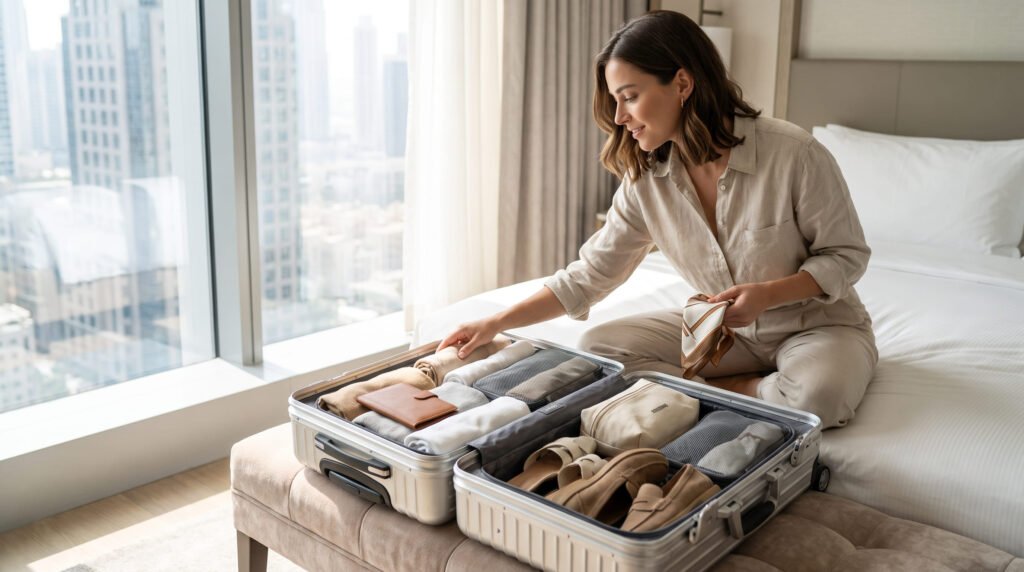
Packing for a trip sounds simple until your suitcase is completely full, the zipper barely closes, and you still have three things sitting on the bed. Overpacking can mean heavier luggage, unnecessary baggage fees, wasted time, and carrying items you never actually use.
The good news is that you don’t need a bigger suitcase to solve the problem. You need a smarter packing system. The right travel packing hacks can help you fit more useful items into less space while keeping your luggage organized and easy to manage.
Whether you’re preparing for a weekend getaway, a seven-day vacation, an international adventure, or a carry-on-only trip, these practical packing strategies will help you save luggage space, reduce unnecessary weight, and stop overpacking without sacrificing the essentials.
Why Do Travelers Overpack?
Overpacking usually starts before the suitcase even comes out. Travelers imagine every possible situation and begin adding clothes, shoes, toiletries, and accessories “just in case.”
The problem is that most of those backup items never leave the suitcase.
Common reasons people overpack include:
- Packing for every possible weather condition
- Taking too many outfit choices
- Carrying duplicate toiletries
- Bringing more shoes than necessary
- Packing full-size products
- Ignoring what can be purchased at the destination
- Failing to check the actual weather forecast
- Packing without a specific plan
Instead of asking, “What might I need?”, ask, “What will I realistically use?”
That small change in thinking is one of the most effective ways to prevent an overpacked bag.
1. Plan Your Outfits Before Packing Anything
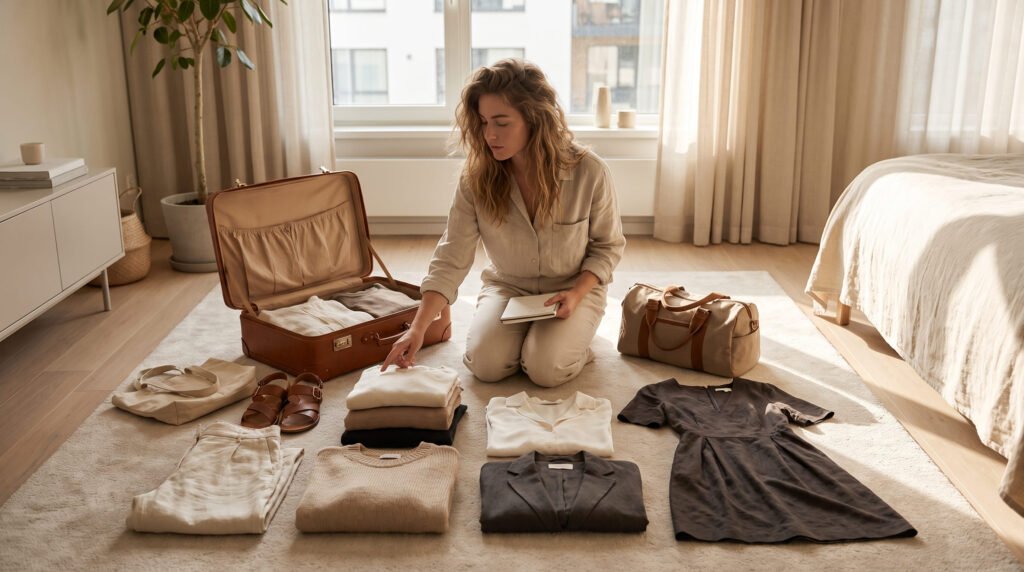
One of the best packing hacks for travel is to plan complete outfits before putting anything into your suitcase.
Don’t start by grabbing individual shirts, pants, dresses, and jackets. Build outfits first.
For example, one neutral pair of trousers might work with three different tops. A lightweight jacket could work with several outfits. A versatile dress could be worn during the day and styled differently for dinner.
Lay everything out on your bed and create combinations based on your actual itinerary.
This immediately exposes duplicate pieces and “maybe I’ll wear this” items that would otherwise take up valuable luggage space.
Simple outfit formula
For many trips, start with:
- 1 versatile bottom for every 2–3 tops
- 1 lightweight outer layer
- 1 comfortable travel outfit
- 1 sleepwear set
- Enough underwear for the trip, plus a small backup
- Shoes that work with multiple outfits
The exact amount should depend on trip length, destination, activities, and laundry access.
2. Use the 3-2-1 Packing Rule
A simple packing formula can make decision-making much easier.
For a short casual trip, try a variation of the 3-2-1 rule:
- 3 tops
- 2 bottoms
- 1 versatile outer layer
Then add underwear, sleepwear, toiletries, and footwear according to your itinerary.
This isn’t a strict universal formula. A winter vacation, business trip, or beach holiday will require different pieces.
The important idea is to create a small interchangeable wardrobe rather than packing one separate outfit for every day.
3. Roll the Right Clothes Instead of Folding Everything
Rolling clothes remains one of the most useful space-saving techniques for casual travel clothing.
T-shirts, pajamas, workout clothes, leggings, soft trousers, and casual tops generally respond well to rolling.
A compact roll can help reduce awkward gaps between garments and makes individual pieces easier to locate.
However, don’t assume rolling is automatically better for every fabric. Delicate or structured garments may need careful folding or hanging instead.
Best approach
Use a combination:
Roll: casual, soft garments
Fold: structured or wrinkle-prone pieces
Protect: delicate clothing with a lightweight layer or garment bag when appropriate
The goal isn’t to follow one packing method blindly. It’s to use the method that works best for each item.
4. Build a Capsule Travel Wardrobe
A capsule wardrobe can dramatically reduce overpacking.
Instead of taking ten unrelated outfits, choose a small group of pieces that work together.
Stick with a coordinated color palette such as:
- Black
- White
- Beige
- Navy
- Gray
- Denim
Then add one or two accent colors if you want more variety.
When most of your clothing works together, you can create more outfits without carrying more clothes.
This is especially useful for carry-on packing, where every item has to justify its space.
5. Choose Multi-Purpose Clothing
Every item doesn’t need to perform only one job.
Look for clothing that can transition between different situations.
For example:
- A lightweight button-down can work as a shirt or an outer layer.
- Neutral sneakers can work for sightseeing and casual dinners.
- A simple dress can work during the day and at night.
- Lightweight trousers can work for travel and sightseeing.
- A scarf can provide warmth, style, or extra coverage.
The more functions one item provides, the fewer items you need overall.
6. Follow the “One Week Doesn’t Mean Seven Outfits” Rule
A common mistake is packing one completely different outfit for every day.
For a seven-day trip, that could quickly become seven tops, seven bottoms, multiple shoes, several layers, and backup outfits.
Instead, build a rotating wardrobe.
A few versatile tops combined with two or three bottoms can create significantly more combinations than their numbers suggest.
If laundry is available, you can reduce the quantity even further.
Think in combinations, not calendar days.
7. Limit Yourself to Two Main Pairs of Shoes
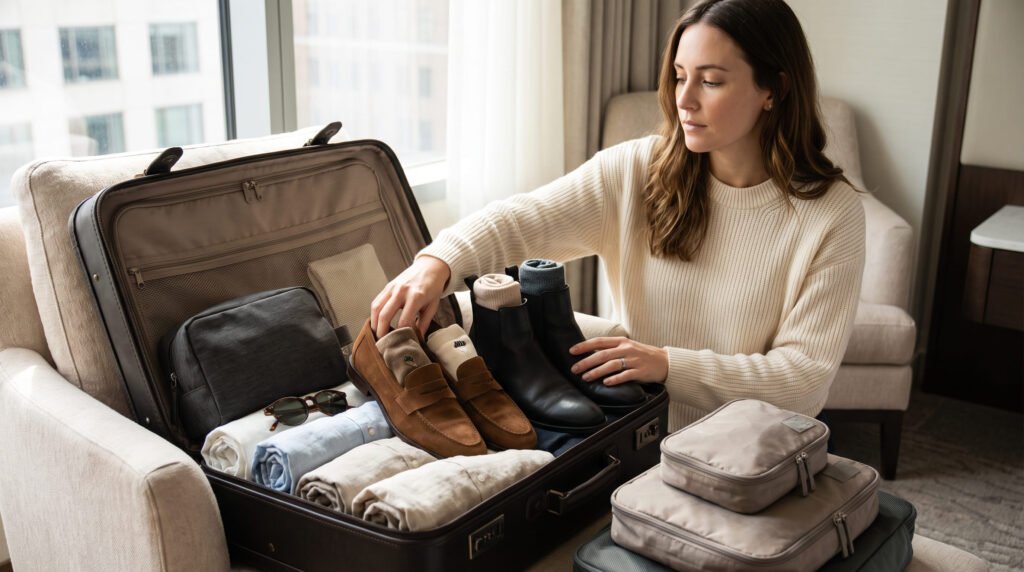
Shoes are among the biggest space-consuming items in luggage.
They also tend to be heavier than clothing.
For many casual trips, two carefully selected pairs can be enough:
Pair 1: comfortable walking shoes
Pair 2: versatile alternative for dinners, activities, or different weather
Wear the heavier pair during travel whenever practical.
If your trip requires specialized footwear—such as hiking boots, formal shoes, or water shoes—build your packing strategy around that requirement instead of adding multiple unnecessary alternatives.
8. Fill the Empty Space Inside Your Shoes
Don’t let the inside of your shoes become wasted luggage space.
You can place small, clean items inside them, such as:
- Socks
- Belts
- Small accessories
- Charging cables
- Compact travel items
Use a shoe bag or other protective covering so the soles don’t touch your clothing.
Then place the shoes around the edges of your suitcase instead of leaving them randomly in the middle.
This simple technique makes better use of awkward spaces.
9. Use Packing Cubes to Create Sections
Packing cubes aren’t magic space-saving devices, but they’re excellent for organizing luggage and controlling how much you pack.
Instead of throwing everything into one large suitcase compartment, divide your belongings into categories.
For example:
- Cube 1: tops
- Cube 2: bottoms
- Cube 3: underwear and socks
- Cube 4: sleepwear or workout clothes
- Small pouch: accessories
The biggest benefit is organization. You can quickly find what you need without unpacking your entire suitcase.
Packing cubes can also discourage overpacking because each category has a physical limit. Once the cube is full, you have to decide whether another item is genuinely necessary.
10. Try Compression Cubes for Bulky Clothing
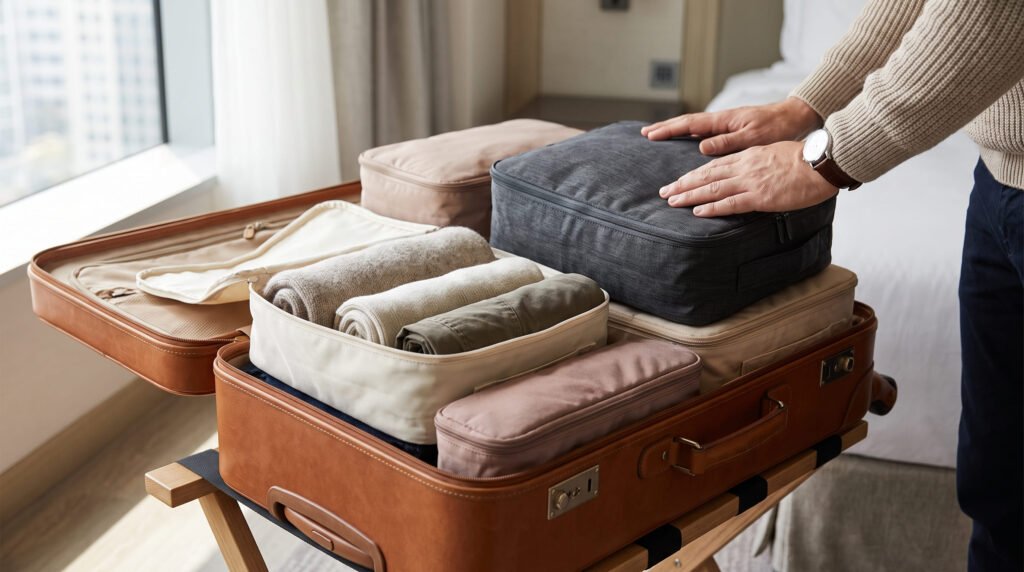
If you’re traveling with sweaters, hoodies, jackets, or other bulky garments, compression packing cubes can help reduce their volume.
They’re particularly useful for:
- Cold-weather trips
- Winter clothing
- Family travel
- Longer vacations
- Bulky knitwear
But remember one important distinction:
Compression reduces volume, not weight.
If your suitcase already meets the airline’s weight limit, compressing your clothes won’t make the bag lighter. It simply creates more physical space.
That extra space shouldn’t become an excuse to add another pile of unnecessary clothes.
11. Downsize Your Toiletries
Toiletries can quietly consume a surprising amount of luggage space.
You rarely need full-size bottles for a short vacation.
Instead, consider transferring appropriate products into smaller travel containers and taking only the amount you’ll realistically use.
Prioritize:
- Shampoo
- Conditioner
- Face cleanser
- Moisturizer
- Sunscreen
- Toothpaste
- Essential skincare
- Necessary personal-care products
Before packing something, ask:
“Will I use enough of this to justify carrying it?”
For basic products, also consider whether your accommodation or destination makes them easily available.
Don’t sacrifice essential personal items simply to save a few grams, but avoid carrying large quantities of products you can easily replace.
12. Keep Toiletries Together in One Bag
Don’t scatter toiletries throughout your suitcase.
Put them together in a dedicated waterproof pouch or toiletry organizer.
This has three advantages:
- It keeps your clothing organized.
- It makes airport screening easier when required.
- It helps prevent leaks from spreading throughout your luggage.
For liquids, secure bottle caps properly and consider placing leak-prone containers inside a sealed bag.
Organization isn’t just about aesthetics—it can prevent a small spill from becoming a ruined suitcase.
13. Wear Your Bulkiest Items While Traveling
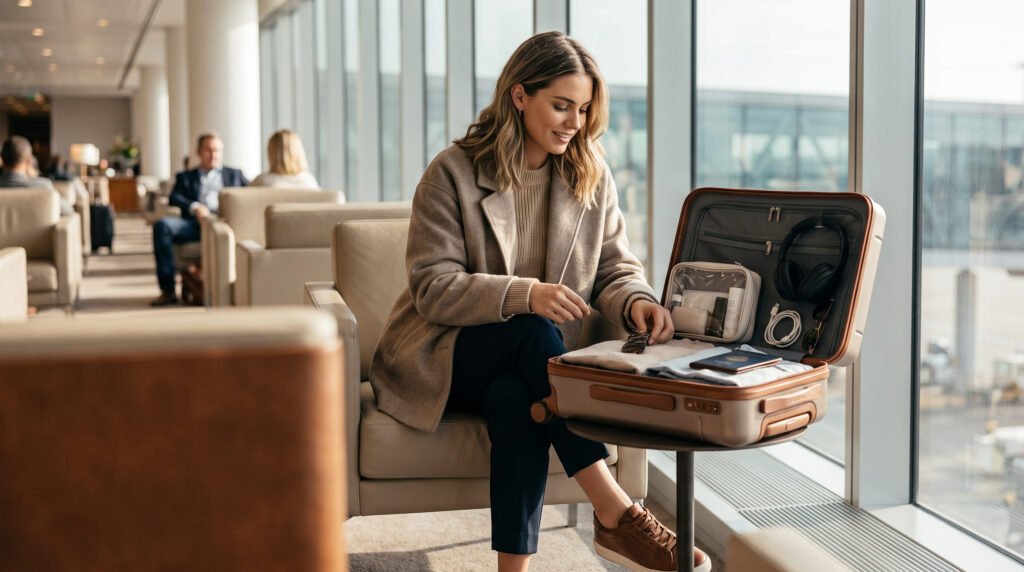
One of the easiest ways to create suitcase space is to wear rather than pack bulky clothing.
If your destination requires a heavy jacket, boots, sweatshirt, or thick trousers, consider wearing the largest practical pieces during transit.
For example:
Instead of packing:
Heavy jacket + bulky shoes + thick sweater
Wear:
Heavy jacket + sweater + largest comfortable shoes
Once you arrive, you can remove layers if necessary.
Don’t wear uncomfortable clothing solely to reduce luggage weight. Your airport outfit should still be practical for walking, security checks, temperature changes, and long journeys.
14. Use Every Awkward Space in Your Suitcase
Efficient packing isn’t only about fitting large items.
It’s about using the small spaces between them.
Look for gaps:
- Around shoes
- Along suitcase edges
- Between rolled clothes
- Inside bags
- Under suitcase straps
- Inside accessory compartments
Small items such as socks, belts, underwear, charging cables, and accessories can fill these spaces.
Think of your suitcase as a three-dimensional puzzle.
Instead of stacking everything flat, use the available depth, corners, and internal compartments intelligently.
15. Pack Heavy Items Close to the Wheels
This is more about balance and handling than saving space.
Place heavier items toward the bottom of a rolling suitcase, near the wheel side.
Then put lighter clothing toward the top.
This can make the suitcase easier to maneuver and reduce the awkward shifting of contents.
Good candidates for the bottom section include:
- Shoes
- Toiletry bags
- Small electronics
- Heavier accessories
- Dense clothing
Keep delicate or easily crushed items protected from heavier objects.
16. Separate Weight Reduction From Space Reduction
This is one of the most important luggage-packing concepts.
A suitcase can have plenty of space and still be too heavy.
For example, a few heavy books may occupy relatively little volume but add significant weight.
Meanwhile, a large sweater can consume considerable space without being especially heavy.
Before closing your suitcase, ask two separate questions:
Volume check
“Do I have enough physical space?”
Weight check
“Am I within my baggage allowance?”
These are different problems and require different solutions.
To reduce weight, focus on:
- Shoes
- Books
- Duplicate electronics
- Full-size toiletries
- Heavy accessories
- Unnecessary packaging
To reduce volume, focus on:
- Bulky clothing
- Jackets
- Sweaters
- Extra footwear
- Poorly organized garments
This distinction can prevent a lot of last-minute airport stress.
17. Use a Digital Packing List
A packing list doesn’t need to be complicated.
A simple note on your phone can help prevent both forgetting essentials and packing unnecessary extras.
Divide it into categories:
Documents
- Passport
- Tickets or booking details
- Identification
- Travel insurance information
Clothing
- Tops
- Bottoms
- Underwear
- Sleepwear
- Outer layer
Technology
- Phone charger
- Power bank
- Necessary adapters
- Headphones
Personal care
- Toiletries
- Medication or essential personal items
- Skincare
Destination-specific
- Swimwear
- Rain layer
- Warm clothing
- Hiking gear
- Formal clothing
Once an item is checked off, don’t keep adding random extras unless your itinerary genuinely requires them.
18. Pack According to Your Actual Itinerary
Your itinerary should determine your suitcase—not the other way around.
If your trip involves:
Mostly sightseeing: prioritize comfortable walking clothes and shoes.
A beach vacation: prioritize swimwear, lightweight clothing, and sun protection.
A business trip: prioritize interchangeable professional pieces.
A winter trip: focus on layers rather than many separate outfits.
A hiking trip: prioritize technical clothing and appropriate footwear.
Look at your actual activities before packing.
If you have three casual sightseeing days and one nice dinner, you don’t need four completely different wardrobes.
19. Build a Mini Laundry Strategy
Laundry is one of the most underrated ways to avoid overpacking.
For longer trips, you don’t necessarily need enough clothing to wear something completely different every day.
Instead, plan to:
- Rewear appropriate outer layers
- Wash small items when necessary
- Use hotel or accommodation laundry facilities
- Carry a few quick-drying garments
- Pack clothing that works across multiple outfits
A seven-day trip doesn’t automatically require seven complete outfits.
A little laundry planning can turn a bulky suitcase into a much more manageable one.
20. Use the “One More Look” Test Before Closing Your Bag
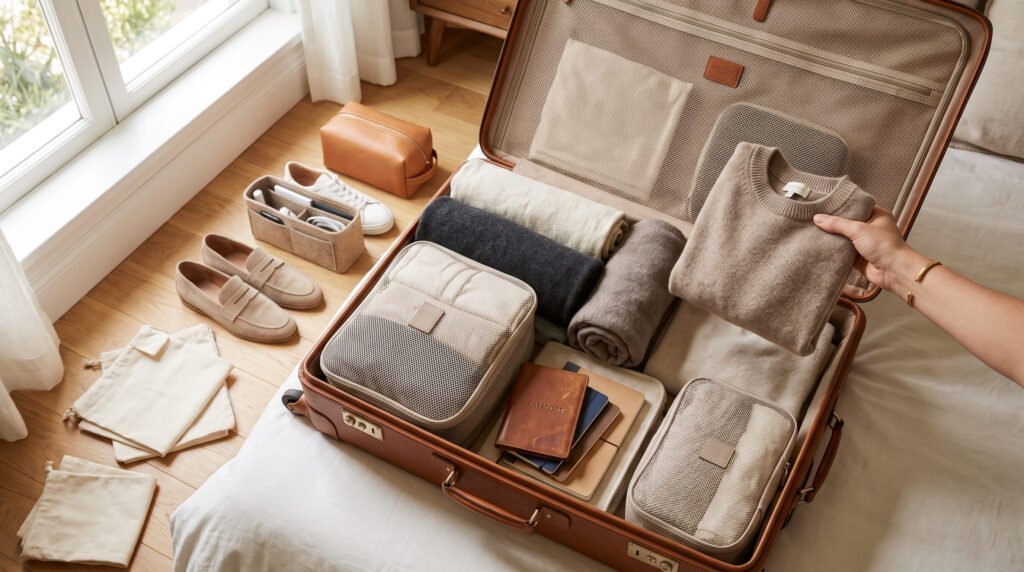
You’ve packed everything.
The suitcase is full.
Now stop.
Take out the contents and ask:
“What can I remove without affecting my trip?”
Look specifically for:
- Duplicate shirts
- Extra shoes
- Backup outfits
- “Just in case” clothing
- Unused accessories
- Full-size products
- Items that work for only one occasion
Most travelers don’t notice how much unnecessary stuff they’ve added until they perform this final review.
If an item has no clear purpose, it’s a candidate for removal.
21. Create a Dedicated Carry-On Essentials Zone
Your carry-on shouldn’t simply be a smaller version of your checked suitcase.
It should contain the items you’d want access to during the journey or need if your checked luggage is delayed.
Keep your most important essentials easy to reach, including:
- Passport and travel documents
- Phone and charger
- Power bank
- Headphones
- Wallet
- Essential personal items
- Necessary medication
- One basic change of clothes
- Important valuables
Keep these items organized in a dedicated compartment or small travel pouch.
The goal is simple: don’t make your entire carry-on messy just because you need one small item during the flight.
22. Pack an Emergency Outfit in Your Carry-On
One of the smartest international travel packing hacks is to keep a basic emergency outfit in your personal bag.
This becomes particularly useful if your checked luggage is delayed.
A simple backup could include:
- One lightweight top
- One pair of underwear
- One pair of socks
- Basic sleepwear if needed
- Essential toiletries
Choose compact items that don’t take much room.
You don’t need a complete second wardrobe. You simply want enough essentials to stay comfortable until your luggage is available again.
23. Leave Some Space for the Return Journey
Never pack your suitcase completely full when leaving home.
Your return trip may include:
- Souvenirs
- Gifts
- Local products
- Extra clothing
- Purchases from your destination
Leaving approximately 10–15% of your available space empty gives you a little flexibility.
You can also pack a lightweight foldable bag for items that need to be separated later, provided it complies with your airline’s baggage rules.
This is particularly useful when traveling to destinations where you expect to shop.
24. Remove Packaging Before You Travel
Boxes, cardboard packaging, product cartons, and unnecessary wrappers consume space without adding much value.
If an item is already safe and suitable for travel without its original packaging, consider removing bulky packaging before packing it.
This can apply to:
- New clothing
- Toiletries
- Small accessories
- Snacks
- Travel products
However, don’t remove packaging when it provides necessary protection, contains important instructions, or is required for a product or purchase.
The objective is to eliminate dead weight and dead space, not useful protection.
25. Take a Photo of Your Finished Suitcase
Here’s a simple travel habit that many people overlook.
Before closing your suitcase, take a quick photo of its contents.
This gives you a visual reference when repacking later.
It can help you remember:
- Where specific items were placed
- How everything was originally organized
- What belongs in each compartment
- Whether something is missing before your return journey
You can also photograph important valuables or unique belongings for your own records.
It’s a tiny step that can make repacking much easier during a busy trip.
The Best Carry-On Packing Strategy
If you’re trying to travel with only a carry-on, every item needs to earn its space.
Start with the essentials and build outward.
Step 1: Check your airline’s current baggage rules
Carry-on dimensions, weight limits, and personal-item allowances can vary by airline and fare type.
Don’t assume that a bag accepted on one airline will automatically meet another airline’s requirements.
Check the airline’s current official rules before your trip.
Step 2: Build your travel wardrobe
Choose pieces that can be mixed and matched.
Prioritize neutral colors, lightweight layers, and comfortable fabrics.
Step 3: Select footwear carefully
Shoes can quickly consume valuable carry-on capacity.
Choose the smallest number that realistically covers your itinerary.
Step 4: Organize small items
Use pouches or organizers for chargers, accessories, toiletries, and other small essentials.
Step 5: Perform a weight check
Even if everything fits, the bag may still exceed the airline’s weight allowance.
Check the weight before leaving home.
How to Pack for a 7-Day Trip Without Overpacking
A seven-day vacation doesn’t require seven completely separate outfits.
A flexible starting point could be:
- 4–5 versatile tops
- 2–3 bottoms
- 1 lightweight outer layer
- 1 comfortable travel outfit
- 1–2 pairs of shoes
- Underwear and socks
- 1 sleepwear set
- Essential toiletries
- Necessary electronics
Adjust these quantities according to the destination, weather, activities, and access to laundry.
For a beach trip, your list will look different from a winter city break.
The key is repeatable combinations rather than seven isolated outfits.
Common Packing Mistakes That Waste Luggage Space
Even experienced travelers can fall into a few predictable traps.
Packing “Just in Case” Clothes
One emergency outfit is reasonable.
Five backup outfits usually aren’t.
Only pack contingency clothing when there is a realistic reason you’ll need it.
Taking Too Many Shoes
Shoes are bulky, heavy, and difficult to compress.
Choose footwear based on your itinerary rather than packing a different pair for every outfit.
Packing Full-Size Toiletries
Large bottles can quickly add unnecessary weight.
Downsize products when practical and follow applicable liquid restrictions.
Ignoring the Weather Forecast
Packing for every possible weather condition often leads to a suitcase full of unused layers.
Check the forecast close to departure and pack according to realistic conditions while keeping necessary flexibility.
Packing Without an Itinerary
If you don’t know what you’ll actually do during the trip, it’s easy to pack too much.
Review your activities first.
Filling Every Available Space
An empty suitcase corner isn’t a problem.
Sometimes empty space is exactly what you need for flexibility, souvenirs, or last-minute changes.
The 10-Minute Pre-Departure Packing Check
Before leaving home, perform one final inspection.
- Check your passport and travel documents
- Confirm your airline baggage allowance
- Weigh your luggage
- Check the weather forecast
- Remove duplicate clothing
- Confirm essential toiletries
- Check chargers and adapters
- Keep valuables in your carry-on
- Keep essential personal items accessible
- Leave some room for the return trip
This final check can catch problems before you reach the airport.
FAQs
How can I avoid overpacking for a trip?
Plan outfits before packing, choose versatile clothing, limit shoes, downsize toiletries, and remove unnecessary “just in case” items before closing your suitcase.
Is rolling clothes better than folding?
Rolling can work well for soft casual clothing and helps organize small spaces. Structured or wrinkle-prone garments may be better folded. The best approach is to use both methods depending on the fabric.
How do I save space in a small suitcase?
Use versatile clothing, packing cubes, appropriate compression organizers, shoe interiors, and empty suitcase spaces. Avoid bulky duplicates and leave unnecessary packaging at home.
How many pairs of shoes should I pack for vacation?
For many casual trips, two versatile pairs are enough. The right number depends on your destination and activities. Specialized trips may require additional footwear.
Are packing cubes worth using?
Yes, especially if you want better organization and portion control. They don’t automatically reduce the weight of your luggage, but they can make packing, unpacking, and finding items much easier.
Do compression bags reduce luggage weight?
No. Compression bags reduce the physical volume of soft items, but the actual weight remains essentially the same. Always check your luggage weight separately.
How do I pack for a seven-day trip?
Build a small mix-and-match wardrobe instead of seven separate outfits. Start with several versatile tops, two or three bottoms, one outer layer, essential underwear, sleepwear, appropriate footwear, and toiletries.
Should I leave space in my suitcase?
Yes. Leaving some unused capacity gives you flexibility for souvenirs, purchases, and repacking. A suitcase doesn’t need to be completely full to be efficiently packed.
Final Thoughts
The best travel packing hacks aren’t about forcing an enormous amount of stuff into a tiny suitcase. They’re about becoming more selective about what deserves space.
Start by planning your outfits, choosing versatile pieces, limiting footwear, and reducing unnecessary toiletries. Then organize everything with packing cubes or simple compartments, use awkward spaces intelligently, and separate the problem of luggage volume from luggage weight.
Most importantly, don’t pack for every imaginary situation. Pack for the trip you’re actually taking.
A lighter, better-organized suitcase means less stress at the airport, easier movement during your trip, and more room for the things that genuinely matter.
Pack less. Pack smarter. Travel easier.