
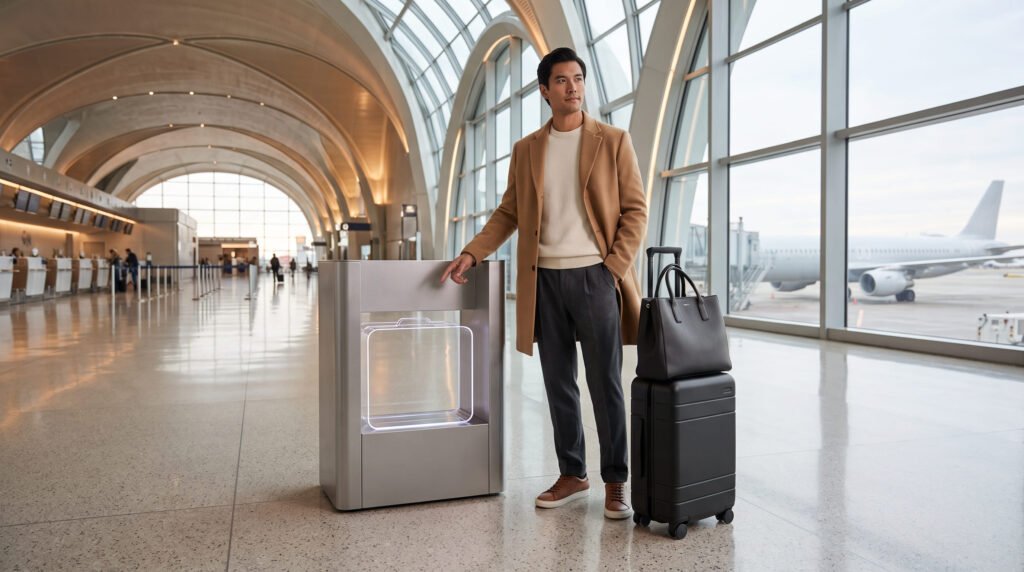
Carry-on size rules can seem simple until you discover that your suitcase is too large for the airline you are flying—or that your ticket does not actually include an overhead-bin bag.
The key is understanding three separate things: your bag’s exterior dimensions, your airline’s baggage allowance, and the rules attached to your specific fare and itinerary. Get all three right, and you are far less likely to face a last-minute gate check or unexpected baggage charge.
This guide explains what carry-on size rules really mean, how to measure your luggage correctly, how personal items differ from carry-ons, and how to choose a bag that gives you more flexibility across different trips.
What Are Carry-On Size Rules?
Carry-on size rules are the maximum dimensions and, in some cases, weight that an airline allows for luggage brought into the aircraft cabin.
A carry-on bag is usually stored in the overhead bin. A personal item is usually stored underneath the seat in front of you.
For many U.S. airlines, a commonly used carry-on limit is 22 × 14 × 9 inches, but this should be treated as a general reference point—not a universal rule. Airlines can set different allowances based on the carrier, route, aircraft, cabin, and fare type.
The most important rule is simple:
Always check your exact airline and fare before traveling.
A bag can fit the airline’s published dimensions and still create a problem if your particular ticket does not include an overhead-bin carry-on.
The Three Carry-On Rules You Need to Check
Before packing, check these three things separately.
1. Your Bag’s Exterior Dimensions
Measure the complete exterior of your luggage, including:
- Wheels
- Handles
- Corner guards
- Protruding pockets
- Any other fixed parts
Do not rely only on the size printed on the luggage label. A suitcase marketed as a “20-inch carry-on” may be taller once the wheels and handle housing are included.
2. Your Ticket’s Carry-On Allowance
Your airline may allow a certain size of carry-on bag, but your fare may not include it.
This is especially important when flying:
- Basic Economy
- Low-cost airlines
- Promotional fares
- Certain international itineraries
Always check what your specific ticket includes.
3. Your Airline’s Weight Limit
Many travelers focus only on dimensions, but some airlines also enforce a maximum carry-on weight.
This matters particularly on international flights, where a bag that fits the dimensions may still exceed the permitted weight.
What Is the Standard Carry-On Size?
For domestic travel in the United States, 22 × 14 × 9 inches is a widely used maximum dimension among several major airlines.
However, not every airline uses the same limit, and some allow larger or smaller bags. International airlines may also use different dimension and weight requirements.
If you frequently fly different airlines, it is often practical to choose a bag that sits slightly below the maximum dimensions used by the airlines you fly most often.
That gives you a margin for:
- Measurement differences
- Rigid luggage sizers
- Slightly overfilled pockets
- International connections
- Smaller aircraft
The safest bag is not necessarily the largest bag you can legally buy. It is the bag that comfortably fits the requirements of the flights you actually take.
Carry-On vs. Personal Item: What Is the Difference?
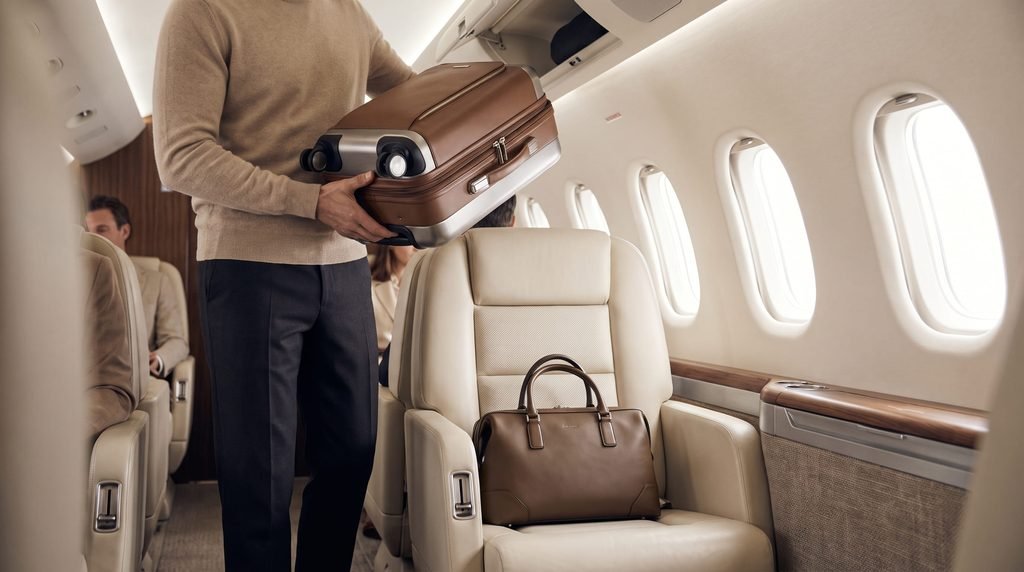
This is one of the most important distinctions in airline baggage rules.
A Carry-On Bag
A carry-on usually goes in the overhead bin.
Common examples include:
- Rolling suitcases
- Small travel backpacks
- Weekender bags
- Cabin duffels
A Personal Item
A personal item usually goes under the seat in front of you.
Common examples include:
- Small backpacks
- Laptop bags
- Handbags
- Compact totes
- Small crossbody bags
Personal-item size limits vary by airline and can be significantly smaller than carry-on limits.
The Best Way to Use Both Bags
If your fare includes both a carry-on and personal item, use the personal item for essentials you may need during your journey.
A practical personal-item packing list might include:
- Passport and travel documents
- Wallet
- Medication
- Phone charger
- Laptop or tablet
- Headphones
- Valuables
- A small change of clothes
This creates a useful backup plan if your larger carry-on must be gate-checked.
Do Wheels and Handles Count in Carry-On Size?
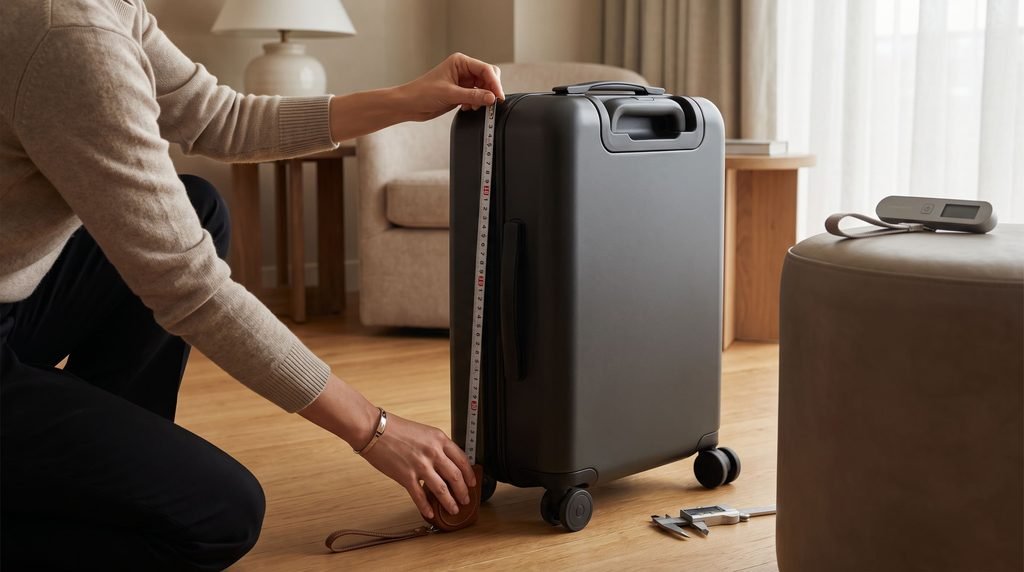
In general, you should assume that they do.
Measure your bag at its widest, tallest, and deepest exterior points. That means the measurement should include wheels, handles, and any permanently protruding parts.
How to Measure Your Carry-On Correctly
Place the suitcase upright on a flat floor.
Measure:
Height: From the ground to the highest fixed point with the telescopic handle fully retracted.
Width: Across the widest side of the suitcase.
Depth: From the front to the back at the deepest point.
Also check:
- External pockets
- Front compartments
- Expansion panels
- Overfilled areas
The airline’s concern is whether the complete bag fits its permitted space—not how much of the suitcase is empty or full.
Why Expandable Carry-Ons Can Cause Problems
An expandable suitcase can be useful when checked baggage is an option, but expansion creates an obvious issue for carry-on travel: your bag may no longer meet the depth limit.
Before flying, make sure:
- The expansion zipper is closed
- Front pockets are not overstuffed
- Nothing extends beyond the bag’s normal profile
If your suitcase only fits the airline’s limit when empty, it is probably too close to the limit for practical travel.
Can You Bring a Carry-On With Basic Economy?
Sometimes—but never assume.
Carry-on allowances can depend on:
- Airline
- Fare type
- Route
- Cabin
- Loyalty status
- Credit card benefits
Some Basic Economy tickets may include a standard carry-on, while others may restrict passengers to a personal item or apply different rules depending on the route.
The lesson is simple: check the baggage allowance attached to your actual booking, not only the airline’s general carry-on size limit.
What Happens If Your Carry-On Is Too Big?

If an airline decides your bag does not comply, you may be asked to:
- Place it in a luggage sizer
- Gate-check the bag
- Pay an applicable baggage fee
- Remove important items before surrendering the bag
The exact process and fee depend on the airline and fare.
If you are forced to gate-check your carry-on, immediately remove anything you cannot afford to lose access to, such as:
- Travel documents
- Medication
- Cash and valuables
- Electronics
- Lithium-battery-powered items that must remain in the cabin when required
- Essential chargers
Do not wait until the last minute to organize these items. Keep them in your personal item whenever possible.
Connecting Flights Can Change the Rules
A carry-on that works perfectly for your first flight may not meet the rules for your next one.
This is especially relevant when:
- Connecting to an international flight
- Flying with different airlines
- Traveling on a codeshare itinerary
- Changing aircraft types
- Moving from a domestic airline to a partner carrier
For multi-airline trips, check the baggage rules for the airline operating each flight. When requirements differ, packing to the stricter practical limit is often the safest strategy.
How to Choose a Carry-On That Works for More Airlines
If you are buying a new suitcase, do not choose it based only on the words “carry-on approved.”
Instead, check the published overall exterior dimensions.
Look for a Comfortable Size Margin
A bag that sits exactly at a published maximum gives you little room for:
- Manufacturer measurement differences
- Packed-out pockets
- Rigid luggage frames
- Airline sizers
A slightly smaller bag may offer greater versatility.
Choose Softside for Packing Flexibility
Softside luggage can offer some flexibility when packing, particularly with soft clothing.
However, flexibility is not permission to exceed the size limit. Your bag should still fit naturally into the airline’s sizer.
Be Careful With Hard-Shell Dimensions
Hard-shell luggage keeps its shape, which makes exterior dimensions especially important.
If a hard-shell suitcase is already close to an airline’s maximum limit, there is little flexibility when using a rigid sizer.
Think Carefully About Expansion
Expansion can be useful, but frequent carry-on travelers should be disciplined enough to keep the bag in its non-expanded configuration when flying.
Consider a Smaller Bag for Frequent Flyers
If you regularly fly different airlines, use regional aircraft, or take international connections, a slightly smaller carry-on can be more versatile than maximizing every inch of luggage space.
Carry-On Weight Limits Matter Too
A bag can meet the size requirement and still be too heavy.
This is more likely on airlines that specify strict cabin-baggage weight limits.
Before traveling internationally:
- Check the permitted weight
- Weigh your fully packed bag
- Include heavy electronics and toiletries
- Leave a small buffer rather than packing to the exact maximum
A compact luggage scale can be particularly useful for travelers who fly with multiple international carriers.
The Smartest Carry-On Packing Strategy
The goal is not to bring the largest bag possible. It is to create a system that works smoothly when plans change.
Pack Heavy Items Strategically
Place dense items close to the wheels of a rolling suitcase to improve balance.
Avoid Bulging Front Pockets
Bulging pockets can add depth and make an otherwise compliant bag appear oversized.
Keep Essentials in Your Personal Item
Your larger bag could be gate-checked because of its size, weight, or limited overhead-bin space.
Keep your most important items with you.
Check Your Fare Before You Pack
Do this before leaving home. Discovering your fare does not include a carry-on at the gate is one of the easiest ways to turn a cheap flight into an expensive one.
Carry-On Size Rules Checklist Before You Leave
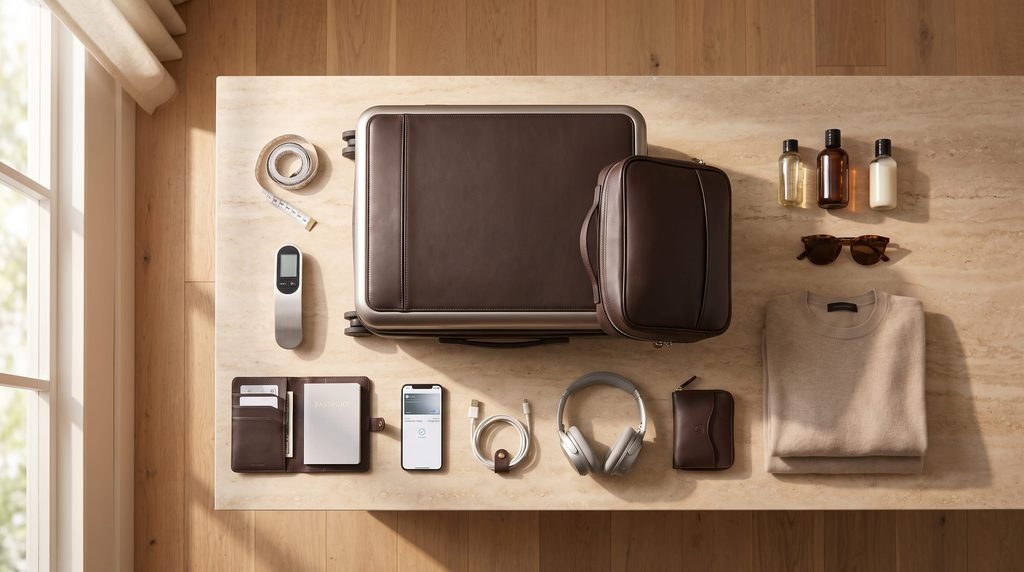
Use this quick checklist:
- Check your airline’s current carry-on dimensions
- Confirm what your specific fare includes
- Check for a carry-on weight limit
- Measure wheels, handles, and exterior pockets
- Close expansion zippers
- Weigh your fully packed bag if required
- Check every operating airline on a connecting itinerary
- Keep documents, medication, electronics, and valuables in your personal item
Common Carry-On Mistakes to Avoid
Buying a Bag Without Checking Exterior Dimensions
“Carry-on size” is a marketing category, not a universal airline standard.
Measuring Only the Main Suitcase Shell
Wheels and other exterior components can make the bag larger than expected.
Packing an Expanded Suitcase
Expansion can push the bag beyond the permitted depth.
Checking Only the Airline and Not the Fare
Your ticket class can determine whether you are entitled to bring an overhead-bin bag.
Assuming Domestic and International Rules Are the Same
International carriers may use different size and weight restrictions.
Ignoring the Personal Item Limit
A backpack that looks small can still exceed the airline’s under-seat allowance when overpacked.
FAQs
1. What is the standard carry-on size for most airlines?
A common reference size is 22 × 14 × 9 inches, including exterior features, but limits vary by airline. Always check the airline operating your specific flight.
2. Do wheels and handles count toward carry-on size?
You should assume that all exterior dimensions count. Measure the full suitcase, including wheels, fixed handles, pockets, and other protruding parts.
3. What is the difference between a personal item and a carry-on?
A carry-on is generally stored in the overhead bin, while a personal item is designed to fit underneath the seat. They usually have separate size limits.
4. Can Basic Economy passengers bring a carry-on bag?
It depends on the airline, route, and fare rules. Check the baggage allowance attached to your exact booking rather than relying on a general airline policy.
5. What should I do if my carry-on gets gate-checked?
Remove essential documents, medication, valuables, and other important items you need during the journey. Keep critical belongings in your personal item whenever possible.
Conclusion
Understanding carry-on size rules is less about memorizing one number and more about checking the right details before every trip.
Measure your bag by its full exterior dimensions, confirm your specific ticket’s baggage allowance, and check for weight restrictions—especially when flying internationally or on a multi-airline itinerary.
The most reliable travel strategy is to choose a bag with a little practical breathing room, avoid overpacking it, and keep your essentials in a personal item. A few minutes of preparation before you leave home can make boarding simpler and help you avoid an unnecessary baggage surprise.
1 comment