
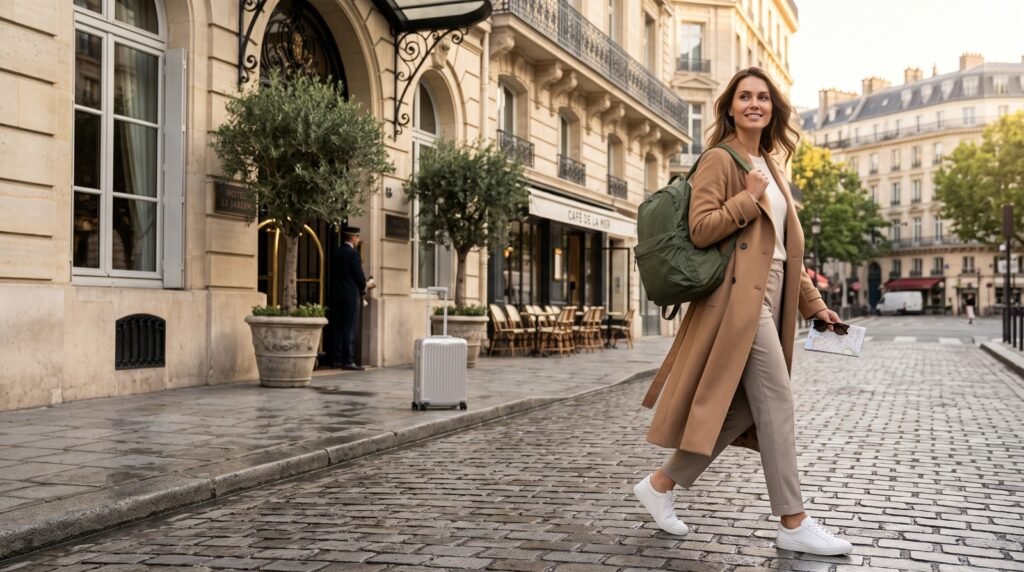
The best packable daypack for travel is the one that disappears inside your luggage when you do not need it, then feels genuinely useful when you do. It should be light, compact, durable enough for daily use, and large enough for your real travel essentials without becoming another bulky bag to manage.
For many travelers, that means a daypack in the 15- to 20-liter range. It offers enough space for a water bottle, light layer, sunglasses, wallet, portable charger, and a few extra essentials while remaining easy to pack inside a larger carry-on.
The right choice, however, depends on more than capacity. Folded size, shoulder-strap comfort, fabric strength, weather protection, organization, and your travel style all matter. This guide will help you choose a packable travel daypack that makes your trip easier rather than simply adding another item to your packing list.
What Is a Packable Daypack?
A packable daypack is a lightweight backpack designed to fold or compress into a much smaller size for storage inside another bag. Most are made without a rigid frame or heavily padded back panel, allowing the fabric to fold into its own pocket or a compact pouch.
Once you arrive at your destination, it becomes your everyday bag for exploring.
A packable daypack is especially useful for:
- City sightseeing
- Museum and shopping days
- Beach trips
- Day excursions
- Train travel
- Light hikes
- Grocery runs
- Flights where you want a flexible secondary bag
The key advantage is simple: you do not have to travel with a full-size backpack on your back all day. Your main luggage carries your trip, while the smaller daypack carries only what you need now.
Why a Packable Daypack Makes Travel Easier
A well-chosen packable backpack creates a more flexible travel system.
You can use a suitcase or larger carry-on to move between destinations, then leave that bag at your hotel and explore with a smaller, lighter backpack. This can make a crowded city, long walking day, or casual excursion feel far more comfortable.
It is particularly useful for travelers who prefer carry-on-only packing. A compact daypack can serve as a destination bag without permanently occupying valuable space inside the main travel backpack.
It Gives You a Useful Backup Bag
A packable daypack can also solve unexpected problems.
Perhaps you buy souvenirs, need an extra bag for groceries, take a spontaneous day trip, or want to separate damp clothing from the rest of your luggage. A lightweight foldable backpack gives you extra carrying capacity without requiring you to bring a second structured bag.
It Helps You Pack More Intentionally
A small daypack naturally limits how much you carry.
Instead of moving through a destination with your entire travel setup, you can take only the essentials: water, documents, a light jacket, sunscreen, phone, charger, and a few personal items. The result is a lighter, more practical daily load.
How to Choose the Best Packable Daypack for Travel
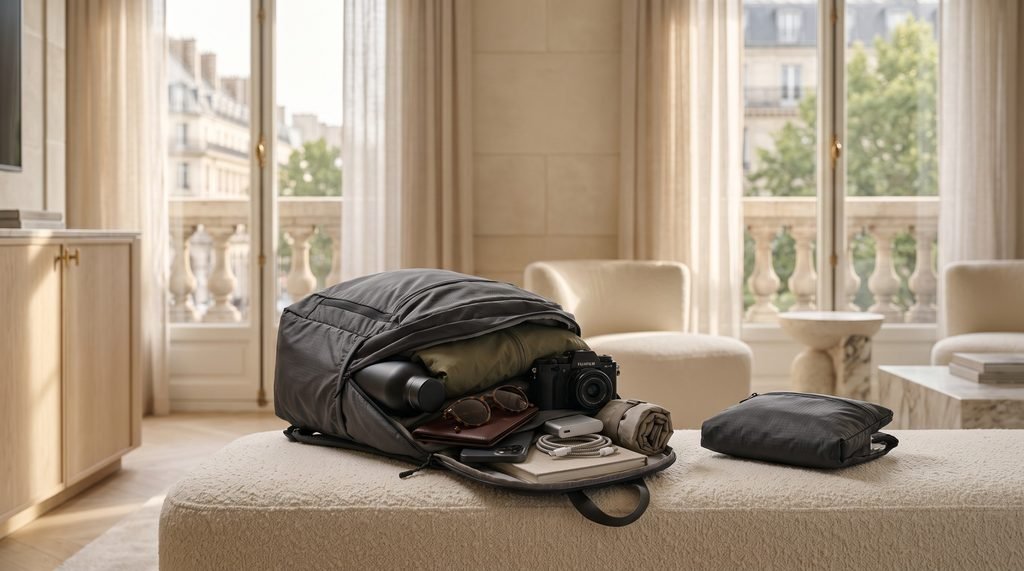
The best choice is not automatically the lightest or smallest model. A bag can pack beautifully and still be uncomfortable, poorly organized, or too fragile for the way you travel.
Consider these factors together.
1. Choose the Right Capacity
Capacity should be based on what you need during a normal day at your destination, not the length of your trip.
10 to 15 Liters: Best for Minimalist City Travel
This size works well if you carry only a few essentials.
It can usually handle:
- Water bottle
- Phone and charger
- Wallet and documents
- Sunglasses
- Light scarf or compact layer
- Small camera
A smaller pack creates a streamlined silhouette and is easier to use in crowded streets, public transport, and museums.
15 to 20 Liters: Best for Most Travelers
For many people, this is the most versatile range.
It gives you enough space for sightseeing essentials plus a light jacket, snacks, travel umbrella, or small purchases. If you want one packable daypack for several types of trips, this is often the most balanced option.
20 to 25 Liters: Best for Active Days and Extra Layers
A larger packable backpack is useful for:
- Day hikes
- Cooler-weather travel
- Beach days
- Family outings
- Camera equipment
- Extra clothing
The trade-off is that larger capacity can encourage overpacking. It may also reduce comfort if the bag has thin straps and no structure.
2. Look at Folded Size, Not Just Weight
A daypack that weighs very little is not automatically the most practical packable option.
Consider where you will store it inside your main luggage. A slightly heavier bag that folds into a neat, flat shape may be easier to pack than an ultralight model that stuffs into an awkward pouch.
Look for a design that:
- Folds without difficulty
- Does not take up a large amount of suitcase space
- Can be stored flat when necessary
- Is easy to repack after use
A good packable daypack should feel almost invisible inside your main luggage.
3. Prioritize Shoulder-Strap Comfort
This is where extremely lightweight bags can disappoint.
Thin webbing straps may be acceptable for an emergency backup bag, but they can become uncomfortable during a full day of sightseeing. If you plan to walk several miles, carry a water bottle, or regularly bring a jacket and camera, look for wider or lightly padded shoulder straps.
The best packable daypack for long days is not necessarily the one that folds into the smallest package. Comfort is often worth a few additional ounces.
4. Choose Durable Fabric
Ripstop nylon is a popular material for lightweight travel bags because it offers a strong balance of low weight and everyday durability. Reinforced stress points, quality stitching, and reliable zippers can matter more than an extremely low overall weight.
When comparing fabrics, consider:
- Ripstop construction
- Reinforced seams
- Fabric thickness
- Zipper quality
- Abrasion resistance
- Water resistance
A packable bag does not need to feel indestructible. It simply needs to match the kind of travel you actually do.
5. Understand Water-Resistant vs. Waterproof
These terms are not interchangeable.
A water-resistant pack can handle light rain or occasional splashes. A waterproof pack is designed to offer much stronger protection and usually uses more specialized construction.
For most city trips, a water-resistant daypack is enough. If you regularly travel in heavy rain, kayak, visit wet environments, or need to protect electronics, stronger weather protection may be worth the additional cost and weight.
Do not assume that a coated fabric alone makes the entire backpack waterproof. Seams and zippers matter too.
6. Decide How Much Organization You Need
Minimalist packable bags often have one large compartment and very few pockets. This keeps them light and easy to fold.
That can be ideal for some travelers.
However, if you carry electronics, documents, medication, keys, and small accessories, a little organization can make the bag easier to use. Look for features that solve a real problem rather than adding unnecessary complexity.
Useful features may include:
- A secure zippered pocket
- External water-bottle storage
- Small internal organization
- A key clip
- An easily accessible travel-document pocket
- A secure top closure
The goal is simple organization, not turning a lightweight daypack into a full travel office.
Best Packable Daypack by Travel Style
Instead of choosing one universal winner, match the backpack to how you travel.
Best for City Sightseeing
Choose a slim 12- to 18-liter daypack with comfortable straps and simple organization.
You do not need a large hiking-style bag for museums, cafés, public transport, and walking tours. A streamlined shape is usually more useful and visually versatile.
Best for Ultralight Travel
Choose the lightest bag that still feels durable enough for your intended use.
This is ideal for travelers who want a backup bag that remains packed most of the time. The focus should be low weight and a very small folded size.
Just remember that ultralight often means less padding and less structure.
Best for Day Hikes
Choose a larger pack with better straps and more stability.
If you plan to carry water, snacks, layers, sunscreen, and basic outdoor essentials, prioritize comfort over the smallest possible folded size. A sternum strap can also improve stability during active use.
Best for Beach Travel
Look for lightweight, quick-drying material with enough capacity for a towel, sunscreen, water, and a change of clothing.
An easy-to-clean design is especially useful when sand and damp clothing are involved.
Best for Flights
A packable daypack can work well as an under-seat bag, but capacity alone does not determine whether it qualifies as a personal item.
External dimensions matter. Airline limits vary by carrier, and a bag can become significantly larger when fully packed. Always check your specific airline’s current baggage rules before traveling.
Best for Family Travel
Choose slightly more capacity and stronger shoulder straps.
Parents or travelers carrying shared essentials may need room for snacks, water, tissues, sunscreen, and extra clothing. A larger pack is useful only if it remains comfortable when loaded.
Can a Packable Daypack Be Your Airline Personal Item?
Sometimes, yes.
The important question is not whether the backpack is marketed as a personal item. The question is whether its packed external dimensions comply with your airline’s current requirements.
A foldable bag can be especially useful because it is flexible and may compress when partially filled. However, flexibility should not be treated as permission to exceed the airline’s size limit.
Before flying:
- Check your airline’s official personal-item dimensions.
- Measure the bag when packed realistically.
- Do not rely only on empty-bag dimensions.
- Leave extra space rather than packing exactly to the limit.
- Check rules again if you are flying with a different airline.
If you use a packable daypack as your personal item, keep your in-flight essentials easy to reach so you do not need to open your main luggage repeatedly.
What to Pack Inside Your Travel Daypack
A daypack works best when it carries only the items you need for the day.
A practical setup might include:
- Water bottle
- Phone
- Portable charger
- Wallet
- Travel documents
- Sunglasses
- Sunscreen
- Light layer or rain shell
- Compact umbrella when needed
- Small camera
- Snacks
- Reusable tote for purchases
Avoid using the daypack as a second suitcase.
If the bag becomes overloaded, its lack of structure becomes more noticeable, the straps become less comfortable, and the lightweight fabric is placed under greater stress.
How to Pack a Packable Daypack Inside Your Main Luggage
There is no need to give the daypack a complicated packing system.
If you will use it immediately after arriving, place it near the top of your main bag. If it is a backup bag, fold it flat against an interior panel or tuck it into an empty corner.
The easiest approach is usually:
- Keep it empty
- Remove loose items from the pockets
- Fold or stuff it according to its intended design
- Store it where it can be reached without unpacking everything
If you want to use it during the flight as a personal item, move your essential in-flight belongings into it before boarding rather than repacking at the gate.
Common Mistakes to Avoid
Buying the Smallest Bag Possible
A tiny folded size is attractive, but a bag that is uncomfortable or too small will not serve you well.
Buy for your actual use.
Ignoring Strap Comfort
A packable backpack may feel fine for ten minutes and unpleasant after several hours. If you expect to walk extensively, prioritize better shoulder straps.
Confusing Capacity With Airline Compliance
A 20-liter backpack may fit as a personal item on one airline but not another. Always check dimensions.
Overpacking an Ultralight Bag
Lightweight fabric and thin straps have practical limits. Use the bag as intended rather than loading it with dense, heavy gear.
Expecting a Packable Daypack to Replace Every Backpack
A foldable bag is excellent for flexibility. It is not always the best choice for carrying a laptop, heavy camera equipment, hiking loads, or large quantities of daily gear.
Who Should Buy a Packable Daypack?
A packable daypack is a smart choice if you:
- Travel with a suitcase or larger backpack
- Prefer carrying less while sightseeing
- Need a flexible secondary bag
- Take frequent city breaks
- Want a lightweight day-hike option
- Practice carry-on-only travel
- Like having emergency carrying capacity
It may not be the best choice if you regularly need:
- Heavy laptop protection
- Strong back support
- Extensive internal organization
- A structured professional appearance
- Heavy outdoor gear capacity
In those situations, a lightweight structured daypack may be a better long-term investment.
How to Choose the Right Packable Daypack: A Quick Checklist
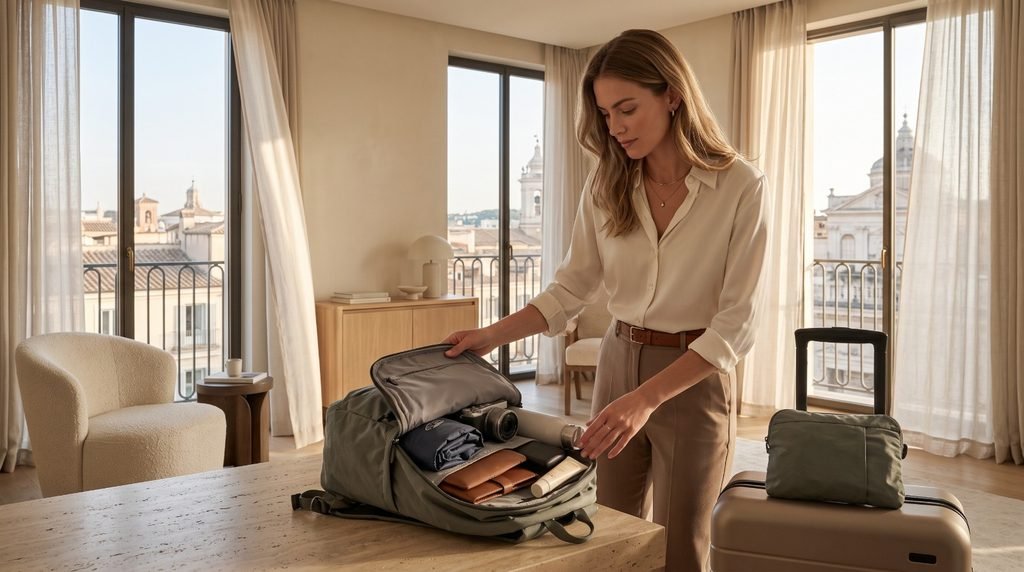
Before buying, ask yourself:
How much do I carry during a normal travel day?
Choose capacity based on that answer.
How long will I wear it?
Longer days require more comfortable straps.
Will I use it for flights?
Check airline dimensions, not just capacity.
Do I need weather protection?
Choose the right level of water resistance for your destinations.
How much organization do I actually use?
Avoid paying for pockets and features you do not need.
Will I carry a laptop or heavy equipment?
If yes, a more structured bag may be the better option.
The best packable daypack for travel is ultimately the one that feels useful after you unpack it. A tiny folded size is valuable, but it should never be the only reason you choose a bag.
FAQs
1. What size packable daypack is best for travel?
For most travelers, a 15- to 20-liter packable daypack offers the best balance of capacity and portability. It is large enough for daily sightseeing essentials without feeling oversized.
2. Are packable daypacks comfortable?
They can be, especially models with wider or lightly padded shoulder straps. Extremely lightweight designs with thin webbing straps are usually better for short or occasional use.
3. Can a packable daypack fit under an airplane seat?
It may, depending on the bag’s packed dimensions and your airline’s current personal-item rules. Always check the airline’s official size limits before flying.
4. Is a waterproof packable backpack necessary for travel?
Not for most trips. A water-resistant bag is usually enough for city travel and light rain. Waterproof construction is more useful for consistently wet or outdoor-focused activities.
5. Is a packable daypack good for carrying a laptop?
Most minimalist packable daypacks do not provide the protection needed for regular laptop travel. Choose a model with a properly padded sleeve or use a separate protective case.
Conclusion
The best packable daypack for travel should make your luggage system more flexible without creating another burden. For most people, a lightweight 15- to 20-liter backpack with durable fabric, comfortable straps, and practical organization offers the strongest balance.
Choose based on how you will actually use the bag after you arrive. A minimalist traveler may value the smallest possible folded size, while someone planning long sightseeing days will benefit from better comfort. If you fly with the bag as a personal item, check your airline’s dimensions before every trip.
The right packable daypack should earn its space in your luggage by becoming the bag you reach for when the day begins.
1 comment