
One bag travel shoes can make or break a minimalist packing strategy. Shoes are often among the bulkiest and heaviest things in a carry-on, yet they are also one of the hardest items to compromise on. The wrong pair can mean blisters, tired feet, poor traction, wet socks, or an awkward outfit. The right combination can let you walk all day, handle changing weather, and still have something suitable for dinner without filling half your bag.
The smartest approach is not to search for one magical shoe that does everything. Instead, choose footwear around your actual itinerary, terrain, climate, comfort needs, and luggage restrictions.
For many travelers, that means a versatile primary walking shoe plus a lighter secondary pair. But one pair can be enough for a simple trip, while specialized journeys may justify more. The goal is not to follow an arbitrary shoe count—it is to make every pair earn its space.
This guide explains how to choose one bag travel shoes, when to bring one or two pairs, which shoe types work best for different trips, how to pack them efficiently, and what mistakes to avoid.
How Many Shoes Should You Pack for One-Bag Travel?
For most ordinary city, leisure, or mixed trips, one or two pairs are enough.
The important distinction is between a useful packing rule and an absolute rule.
When One Pair Is Enough
A single pair can work well when:
- Your trip is mostly urban
- You have no formal events
- The weather is relatively predictable
- You will wear casual clothing
- Your main activities involve walking and sightseeing
- Your shoes are comfortable enough for all-day use
A lightweight, versatile sneaker or walking shoe can potentially cover the airport, sightseeing, restaurants, public transportation, and casual evenings.
The advantage is obvious: you save both space and weight.
When Two Pairs Make More Sense
Two pairs are the practical sweet spot for many one-bag travelers.
A useful combination is:
Primary pair: comfortable, durable, suitable for extensive walking.
Secondary pair: lighter, more compact, and different enough to serve another purpose.
For example, a walking sneaker paired with lightweight sandals may work beautifully for a warm-weather trip. A versatile sneaker paired with a minimalist loafer can make more sense for a city trip involving dressier evenings.
When You May Need Three Pairs
Three pairs can be justified when the itinerary genuinely requires different functions.
Examples include:
- Hiking plus city sightseeing plus formal events
- Ski or snow travel
- Beach activities combined with technical outdoor activities
- Business travel involving formal footwear
- Multi-sport trips
If you need three pairs, however, examine the itinerary carefully before packing. Can one pair perform two roles? Can you wear the bulkiest pair during transit? Can a lightweight alternative replace something heavier?
The principle is simple:
Pack for the trip you are taking—not every version of yourself you might become during the trip.
The Best One-Bag Travel Shoe Strategy
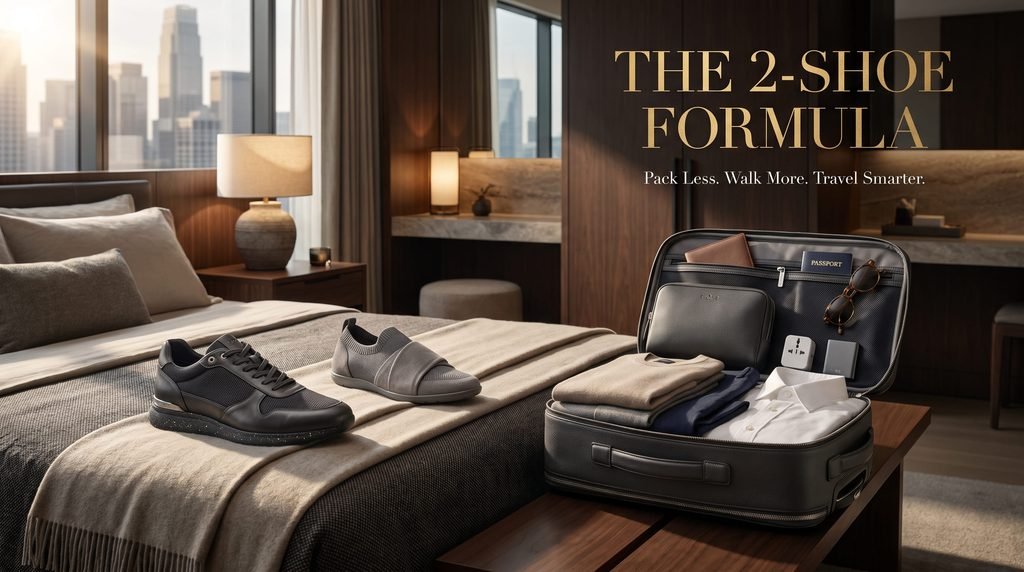
A successful footwear system starts by assigning each pair a job.
Your Primary Travel Shoe
Your primary shoe should handle the largest percentage of your trip.
Prioritize:
- Comfortable fit
- Adequate toe room
- Reliable traction
- Appropriate cushioning
- Reasonable weight
- Breathability or weather protection appropriate to the destination
- Styling that works with most of your wardrobe
This is usually the pair you wear while traveling because it is often the larger or heavier shoe.
Your Secondary Travel Shoe
The second pair should add capability rather than simply duplicate the first pair.
Good examples include:
- Sneakers + sandals
- Walking shoes + loafers
- Trail runners + lightweight casual shoes
- Sneakers + packable flats
- Boots + minimalist sneakers
If both pairs perform exactly the same job, one may not deserve space in your bag.
How to Choose Comfortable One Bag Travel Shoes
Comfort matters more than appearance when you expect to walk several hours a day.
1. Start With Fit
A good travel shoe should feel secure without squeezing your foot.
Look for:
- Enough room for your toes to move naturally
- A secure heel
- No painful pressure points
- Appropriate width
- Comfortable fit with the socks you actually plan to travel in
Do not assume that buying a larger size automatically solves foot swelling. Instead, choose the correct size and shape for your foot, then test the shoe extensively before departure.
2. Consider Cushioning and Support
There is no single ideal amount of cushioning for every traveler.
Some people prefer a softer, highly cushioned shoe, while others prefer a firmer and more responsive feel.
What matters is whether the shoe remains comfortable during the type of walking your itinerary requires.
3. Look at Traction
Traction becomes especially important when your trip includes:
- Wet pavement
- Uneven streets
- Cobblestones
- Trails
- Steep streets
- Gravel
- Outdoor excursions
A smooth casual sole may be perfectly adequate for ordinary dry city sidewalks but less suitable for slippery or uneven terrain.
4. Pay Attention to Weight
A shoe can be comfortable and still be a poor one-bag choice if it is excessively heavy.
Remember that footwear has a double cost:
physical weight + packing volume.
When comparing two equally suitable shoes, the lighter and more versatile option often has an advantage.
5. Match Breathability to the Climate
Hot and humid destinations generally favor breathable footwear.
Cold or consistently wet destinations may require greater protection.
There is a trade-off:
More ventilation can improve comfort in warm conditions.
More weather protection can be valuable in rain and cold.
Choose according to the forecast and expected conditions rather than automatically buying the most waterproof shoe available.
Best Travel Shoe Types Compared
Different footwear categories solve different problems.
| Shoe Type | Best For | Main Advantage | Main Limitation |
| Walking sneaker | City sightseeing | Comfort and versatility | Less suitable for formal settings |
| Trail runner | Mixed city + outdoor travel | Grip and cushioning | Sportier appearance |
| Lightweight sneaker | Casual trips | Easy to style and pack | Limited technical performance |
| Sandal | Hot-weather travel | Ventilation and low weight | Less protection |
| Loafer | Business and evenings | Polished appearance | Usually not ideal for long hikes |
| Flat | Dressier casual travel | Compact and versatile | Limited terrain capability |
| Hiking shoe | Outdoor-focused trips | Stability and traction | Heavier and bulkier |
| Boot | Cold or wet destinations | Protection and warmth | High packing cost |
The best choice is the one that matches your itinerary rather than the shoe category that sounds most impressive.
One Bag Travel Shoes for European City Trips
European city travel is a classic one-bag footwear challenge because a single day can involve airports, trains, museums, restaurants, sidewalks, stairs, and extensive walking.
For a city-focused itinerary, prioritize:
- All-day comfort
- Good traction
- Moderate weight
- Neutral styling
- Easy pairing with multiple outfits
A comfortable sneaker or versatile walking shoe can serve as the primary pair.
For the second pair, choose something noticeably lighter or dressier rather than packing another heavy walking shoe.
Cobblestones deserve special attention. A shoe that feels comfortable on a smooth treadmill may feel very different after hours on uneven historic streets.
One Bag Travel Shoes for Hot and Beach Destinations
Warm-weather trips often make a sneaker-and-sandal combination particularly practical.
Primary
Choose a breathable sneaker or lightweight walking shoe for:
- Airports
- City exploration
- Excursions
- Long walks
Secondary
A compact sandal can handle:
- Beaches
- Resorts
- Casual dinners
- Short walks
- Relaxing around accommodation
Avoid assuming that every sandal is suitable for extensive sightseeing. If you expect long-distance walking, choose one with a secure fit and a sole appropriate for the terrain.
One Bag Travel Shoes for Rainy Destinations
Rain creates a footwear dilemma because maximum waterproofing can come with additional weight, reduced ventilation, or slower drying.
Consider how much rain you are realistically expecting.
Occasional Rain
A versatile shoe with reasonable water resistance may be enough.
Frequent Heavy Rain
Prioritize weather protection and traction, particularly if you will be outdoors for long periods.
Mixed Weather
A versatile primary shoe plus a lightweight secondary option can provide flexibility.
Also remember that waterproofing is not a substitute for proper socks, drying, or sensible weather planning.
One Bag Travel Shoes for Hiking and Adventure Trips
If hiking is a major part of the trip, do not choose footwear solely for its packing efficiency.
Terrain determines the requirements.
A trail runner may work well for travelers combining moderate trails with urban exploration because it can provide more grip and outdoor capability without the bulk of a traditional hiking boot.
More demanding terrain may require more specialized footwear.
The key question is:
What is the most difficult terrain you will realistically encounter?
Choose for that requirement first, then look for a shoe that remains useful elsewhere.
One Bag Travel Shoes for Business and Dressier Trips
Business travel requires a different approach because footwear must work with professional clothing without becoming a dead weight in the bag.
Look for a shoe that can transition between:
- Airport
- Meetings
- Restaurants
- Walking
- Casual evenings
A refined sneaker, minimalist loafer, or similarly versatile option may reduce the need for a dedicated formal pair.
If a formal event genuinely requires specific footwear, build the rest of the shoe system around it rather than trying to squeeze three unrelated pairs into a small bag.
Should You Choose Waterproof or Breathable Travel Shoes?
There is no universal winner.
Think about weather frequency, not theoretical worst-case weather.
| Trip Conditions | Priority |
| Hot and dry | Breathability |
| Hot and humid | Ventilation |
| Frequent rain | Water resistance |
| Cold and wet | Protection + insulation |
| Mixed weather | Versatility |
| Hiking | Traction + terrain suitability |
For a mostly urban summer trip with only occasional rain, a breathable shoe may be more useful than a heavily waterproof design.
For consistently wet conditions, weather protection becomes more important.
How to Pack Shoes in a One-Bag Carry-On
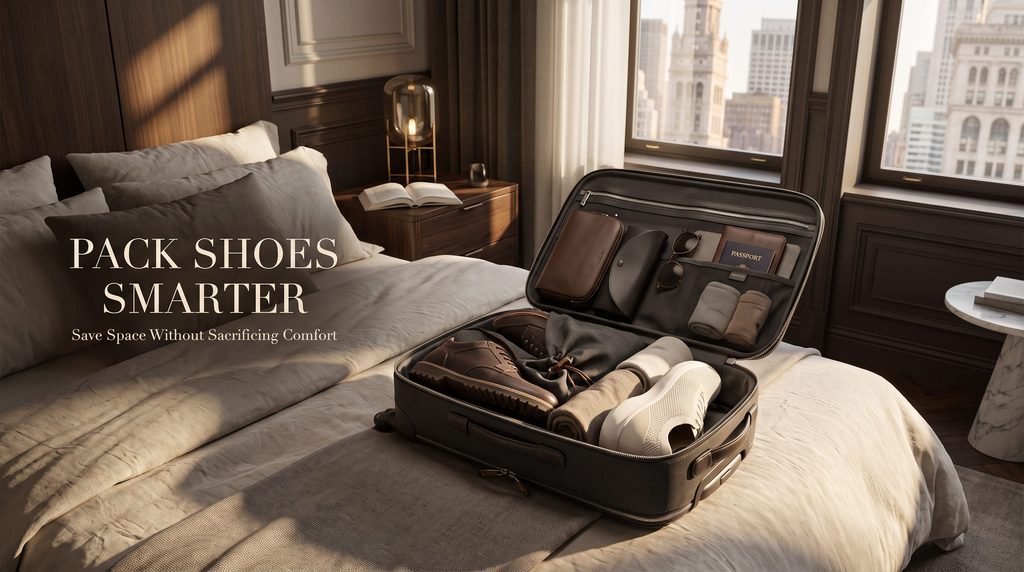
Once you’ve chosen your footwear, pack it strategically.
Wear the Bulkier Pair
If one pair is substantially larger or heavier, wearing it during transit can free valuable bag space.
But comfort comes first. Do not wear an uncomfortable hiking boot simply because it is difficult to pack.
Clean the Soles
Never put dirty footwear directly against clean clothes.
Brush away dirt and debris before packing.
Use a Shoe Bag
A lightweight shoe bag helps separate soles from clothing without adding much bulk.
Fill the Empty Space
Use the inside of shoes for small soft items such as:
- Socks
- Underwear
- Small accessories
This turns unused interior volume into useful storage.
Position Shoes Carefully
Place heavier footwear low and close to the bag’s structural base when practical, while keeping frequently needed items accessible.
And before departure, weigh the fully packed bag.
Carry-on limits are not universal. IATA notes that baggage allowances can vary by airline, cabin class, and aircraft, and airlines establish their own applicable requirements. Always check the operating airline’s current size and weight rules before leaving home.
How to Break In Travel Shoes Before Your Trip
One of the easiest ways to ruin the first days of a trip is to travel in shoes you have barely worn.
Do not wait until your vacation to discover that a shoe rubs your heel.
Instead:
- Wear the shoes around the house.
- Take increasingly longer walks.
- Wear the socks you plan to travel with.
- Test stairs and uneven surfaces.
- Identify pressure points.
- Make adjustments before departure.
Your goal is not simply to prove that you can stand in the shoes.
You want to know whether they remain comfortable after hours of actual movement.
How to Prevent Blisters and Foot Fatigue
Even excellent shoes can cause problems when combined with long walking days.
Useful habits include:
- Wear tested socks rather than brand-new ones.
- Keep feet reasonably dry.
- Address rubbing early.
- Avoid suddenly doubling your normal walking distance.
- Alternate shoes when appropriate.
- Give footwear time to air out overnight.
If you already know where your feet are prone to rubbing, prepare for those areas before the trip rather than waiting for a blister to appear.
How to Keep Travel Shoes Fresh
Shoes spend a lot of time trapped inside luggage, so basic maintenance matters.
After wearing them:
- Let them air out when possible.
- Remove insoles if the manufacturer’s care instructions allow it.
- Keep wet footwear away from clothing.
- Clean visible dirt before repacking.
- Allow damp shoes to dry naturally rather than sealing them immediately inside the bag.
For longer trips, rotating between two pairs can also give each pair more time to air out.
Common One-Bag Shoe Mistakes
Packing a Pair for Every Outfit
Your shoes should support your wardrobe—not dictate its size.
Build outfits around versatile clothing and repeat shoes.
Bringing Shoes You Never Actually Wear
Theoretical activities are dangerous packing traps.
If your itinerary does not include hiking, you probably do not need hiking footwear simply because you might spontaneously decide to hike.
Choosing Style Over Walking Comfort
A beautiful shoe that hurts after 30 minutes is not a good travel shoe.
Choosing Comfort With No Versatility
The opposite problem also exists. A highly technical shoe may be excellent for hiking but awkward with everything else you packed.
Taking Brand-New Shoes
Always test footwear before the trip.
Ignoring Airline Restrictions
Never assume that a particular carry-on allowance applies to every airline. IATA explicitly notes that baggage rules remain airline-specific.
Packing Heavy Shoes Without a Reason
Every shoe should have a clearly defined role.
If you cannot explain why you need a pair, reconsider packing it.
A Simple One-Bag Travel Shoe Checklist
Before closing your bag, ask:
- Will I walk several hours in these shoes?
- Do they fit properly?
- Have I tested them before the trip?
- Are they appropriate for my terrain?
- Are they suitable for my climate?
- Can they work with multiple outfits?
- Does my second pair perform a different job?
- Can I wear the bulkier pair during transit?
- Have I checked my airline’s current baggage rules?
- Does every pair genuinely earn its space?
If you can answer yes to these questions, your footwear system is probably doing its job.
Who Benefits Most From a One-Bag Shoe Strategy?
First-Time One-Bag Travelers
Start with two pairs if you’re uncertain. It gives you useful redundancy without encouraging excessive packing.
Minimalist Travelers
One versatile pair may be enough if your itinerary is straightforward.
City Travelers
Comfortable walking footwear should be the priority.
Outdoor Travelers
Choose footwear based on the most demanding terrain rather than the lightest possible option.
Business Travelers
Focus on shoes that transition between professional and casual settings.
Warm-Weather Travelers
A breathable primary shoe plus compact sandals can be highly efficient.
Long-Term Travelers
Two versatile pairs can provide useful rotation while reducing dependence on a single pair.
FAQS
1. How many shoes should I pack for one-bag travel?
For many trips, one or two pairs are enough. One pair can work for simple city or casual trips, while two provide more flexibility for different activities, weather, or dress requirements. Specialized trips may justify additional footwear.
2. What are the best shoes for one-bag travel?
The best one bag travel shoes are lightweight, comfortable, versatile, properly fitted, and appropriate for your destination. A good primary shoe should handle most of your walking, while a second pair—if needed—should add a genuinely different function.
3. Should I wear my heaviest shoes on the plane?
Usually, wearing the bulkier pair can save valuable space in your carry-on. However, comfort should come first. Also check your airline’s current baggage requirements because carry-on dimensions and weight limits vary by airline and itinerary.
4. Are sneakers good enough for European city travel?
For many urban trips, a comfortable sneaker can be an excellent choice. Look for a secure fit, sufficient cushioning, appropriate traction, and a style that works with your clothing. If your itinerary includes extensive hiking or severe weather, you may need more specialized footwear.
5. Should travel shoes be waterproof?
Not necessarily. Waterproof footwear is useful in consistently wet conditions, while breathable shoes can be more comfortable in hot or humid climates. Choose based on your destination’s expected conditions and the activities you have planned.
Conclusion
The best one bag travel shoes are not necessarily the most technical, fashionable, or expensive shoes you can buy. They are the shoes that solve the most problems while taking up the least useful space.
For many travelers, the winning system is simple: one dependable primary walking shoe and one lightweight secondary pair. But there is no need to follow that formula blindly. A straightforward city break may require only one pair, while a specialized adventure or formal itinerary may justify more.
Build your footwear around your real itinerary, test every pair before departure, prioritize fit and comfort, and make sure each shoe has a distinct purpose. Then pack the system—not the possibilities.
That is the real advantage of minimalist footwear: less luggage without sacrificing the ability to enjoy the trip.
1 comment