
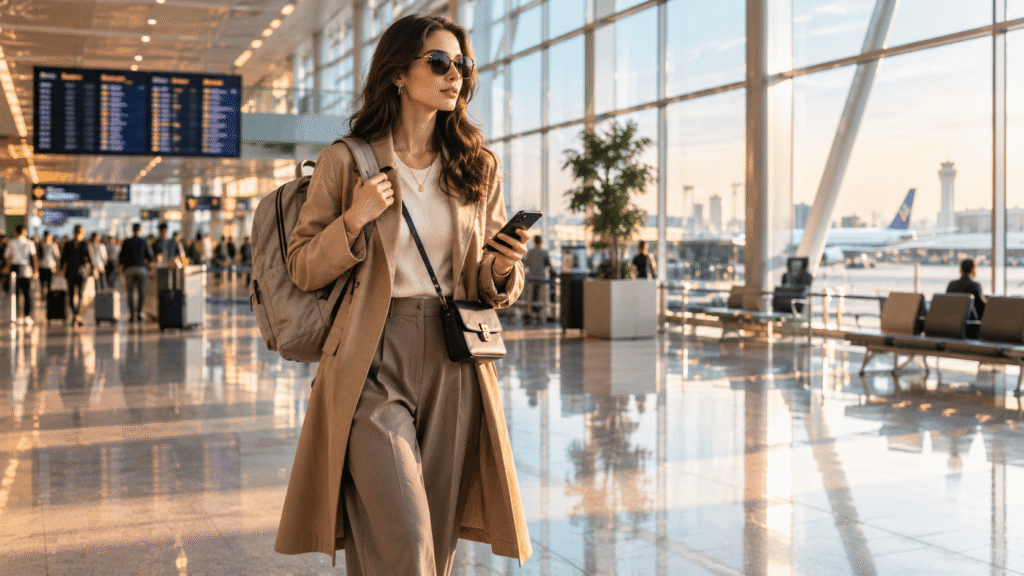
One-bag travel for women is not about owning less, wearing the same outfit every day, or squeezing yourentire life into the smallest backpack possible. Done well, it is a smarter way to travel: fewer things to carry, less time spent managing luggage, easier movement between destinations, and a packing system that works with your actual itinerary.
The challenge is knowing what deserves space.
A woman traveling for a long weekend may need a very different setup from someone spending two weeks moving between cities, changing climates, attending dinners, or mixing sightseeing with outdoor activities. The best one-bag strategy therefore starts with the trip—not the bag.
This guide explains how to choose the right luggage, build a versatile travel wardrobe, manage shoes and toiletries, use your personal item effectively, pack for different climates, plan laundry, control weight, and decide when one-bag travel makes sense.
What Is One-Bag Travel for Women?
One-bag travel means completing a trip with one primary piece of luggage instead of checking a suitcase or carrying multiple large bags.
For many travelers, that means:
- One carry-on-size backpack or rolling suitcase
- One personal item when the airline allows it
- A compact wardrobe that can be mixed and matched
- Minimal toiletries
- A limited number of shoes
- Laundry during longer trips
- Only the electronics and accessories you genuinely need
The goal is not to hit an arbitrary number of items. The goal is to create a compact system in which nearly everything serves more than one purpose.
Why Women May Need a More Thoughtful Packing Strategy
Generic minimalist packing advice can overlook practical needs such as cosmetics, skincare, menstrual products, hair tools, different footwear, undergarments, jewelry, or clothing suitable for both daytime sightseeing and evening plans.
That does not mean women need substantially more luggage. It means the available space needs to be allocated intentionally.
A good one-bag system prioritizes:
- Versatile clothing
- Comfortable footwear
- Appropriate personal-care products
- Weather protection
- Essential technology
- Items that are difficult or expensive to replace at the destination
Everything else deserves scrutiny.
Is One-Bag Travel Right for Your Trip?
Before buying a travel backpack or removing half your wardrobe, consider the itinerary.
One-bag travel tends to work especially well when you are:
- Visiting several cities
- Using trains or public transportation
- Walking frequently
- Traveling solo
- Staying in hotels or apartments with laundry access
- Taking a city break
- Traveling for one to three weeks with a repeatable wardrobe
- Comfortable wearing clothing more than once
- Trying to avoid checked-baggage fees and baggage claim
It becomes less convenient when your trip involves:
- Formal events requiring specialized outfits
- Extensive winter gear
- Bulky sports equipment
- Multiple pairs of specialized footwear
- Remote destinations with limited laundry
- Long stays in one location where luggage size is less important
- Traveling with young children and substantial shared equipment
There is no prize for making your luggage smaller when a slightly larger bag would make the trip significantly easier.
The right amount of luggage is the smallest setup that comfortably supports your itinerary.
How to Choose the Right One-Bag Luggage
The best bag depends on how you travel, not simply how many liters it holds.
Airline size and weight restrictions vary, so always check the current requirements for your specific airline, fare, and route before relying on a bag as carry-on luggage.
Travel Backpack
A travel backpack is particularly useful for multi-city trips, train travel, cobblestone streets, stairs, and destinations where you frequently move between accommodations.
Look for:
- Comfortable shoulder straps
- A supportive hip belt on larger packs
- Adjustable torso length when available
- A structured back panel
- Clamshell opening
- Easy-access compartments
- Lockable or secure zippers
- Water-resistant construction
- A manageable empty weight
The most important feature is fit.
A beautifully designed backpack is not useful if the harness sits incorrectly on your body or becomes uncomfortable when loaded.
Carry-On Roller
A compact rolling suitcase can be better for travelers who primarily move between airports, taxis, trains, hotels, and paved city streets.
Advantages include:
- Less weight carried directly on your back
- Easier organization
- Familiar suitcase-style packing
- Convenient access to clothing
The downside is that wheels become less useful on stairs, uneven pavement, sand, narrow streets, and crowded transit systems.
Duffel or Hybrid Bag
A soft-sided duffel can work well for short trips, but it becomes less appealing when you need to carry the bag for long distances.
A hybrid backpack-duffel can be a useful middle ground for travelers who want flexibility without committing to a traditional backpack.
What Size Should a One-Bag Travel Bag Be?
There is no universal ideal capacity.
For many travelers, a compact carry-on-sized bag is sufficient for a week or more when clothing is coordinated and laundry is planned. The important measurements are the bag’s external dimensions, weight, and your airline’s allowance, not just the advertised liter capacity.
A larger bag can also encourage overpacking.
Choose the smallest capacity that comfortably accommodates your normal travel system.
Build Your Travel Wardrobe Before You Start Packing
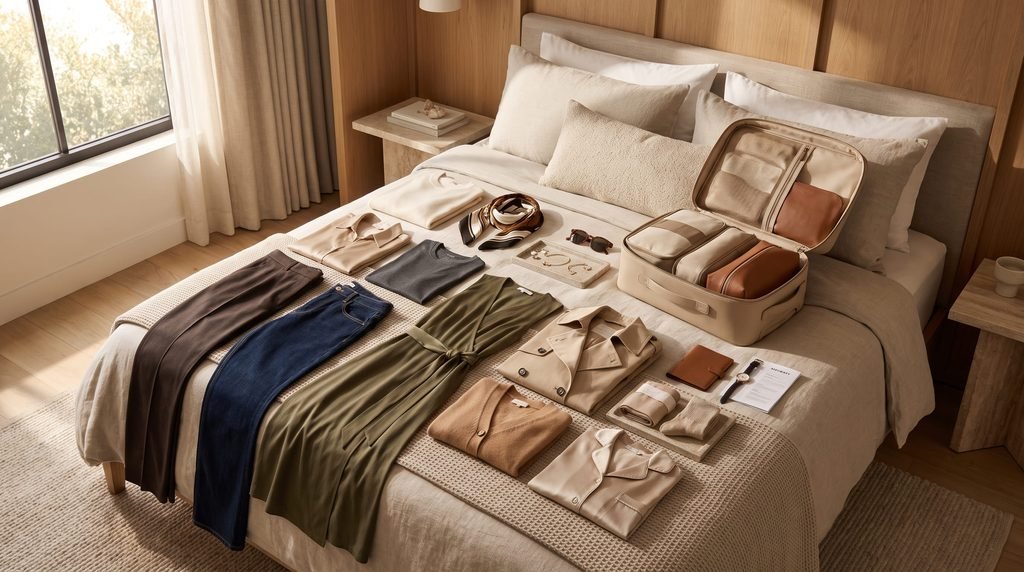
The biggest one-bag mistake is treating packing as a simple item-counting exercise.
Instead, create outfits.
A useful travel capsule usually has:
- A small group of coordinated tops
- Two or three versatile bottoms
- One outer layer appropriate to the forecast
- Underwear and socks
- Sleepwear
- One or two destination-appropriate nicer pieces
- Comfortable everyday footwear
- Optional activity-specific clothing
The exact numbers depend on the trip.
Use a Coordinated Color Palette
Choose a simple base palette and add one or two accent colors.
For example:
Base: black, cream, navy, brown, gray, or denim
Accent: burgundy, olive, rust, blue, or another color you enjoy wearing
The objective is simple: most tops should work with most bottoms.
This gives you outfit variety without requiring a large wardrobe.
Choose Fabrics Carefully
For travel, fabric performance can matter more than appearance alone.
Look for clothing that is:
- Comfortable for long days
- Easy to wash
- Relatively quick to dry
- Resistant to excessive wrinkling
- Appropriate for the destination
- Comfortable across multiple temperatures
Merino wool, technical fabrics, lightweight cotton blends, linen blends, and other travel-friendly materials can each work depending on climate and personal preference.
You do not need to buy an entirely new wardrobe for one-bag travel.
Use clothing you already know is comfortable.
How Many Clothes Should You Pack?
There is no magic number because a three-day trip, a two-week trip, and a month-long trip can use the same basic wardrobe if laundry is available.
A practical starting point for a one-week urban trip might look like:
- 4–5 everyday tops
- 2–3 bottoms
- 1 light layer
- 1 warmer or weather-specific layer if needed
- 1 sleep outfit
- 5–7 pairs of underwear
- 4–7 pairs of socks, depending on footwear
- 1 versatile nicer outfit or top
For two weeks, you do not necessarily need twice as many clothes.
Instead, add enough underwear and perhaps one or two additional clothing options while planning a laundry session.
The exact formula should change according to climate, activity level, laundry access, and personal comfort.
The Two-Shoe Rule: Start With Less
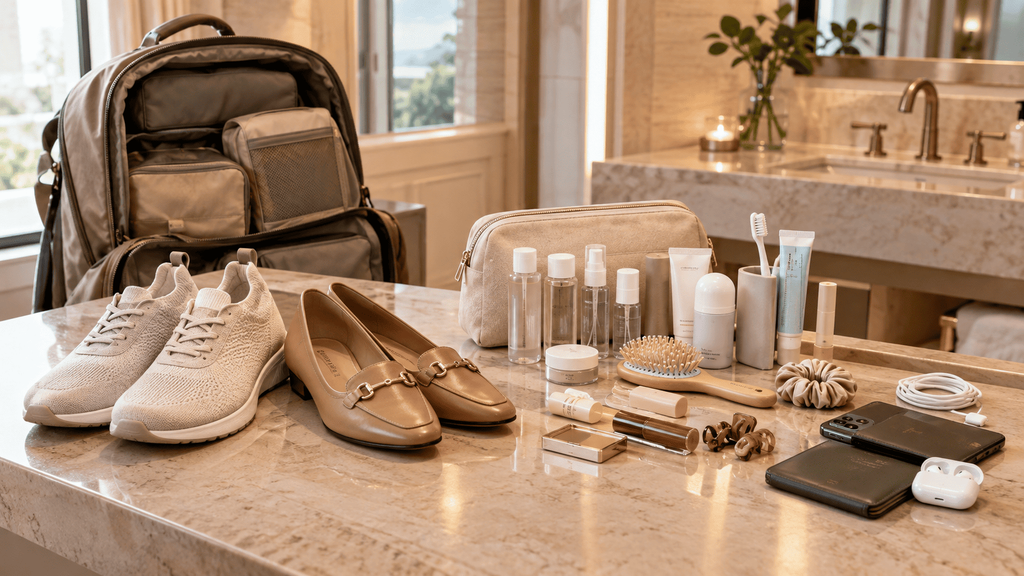
Shoes are among the most difficult items to pack efficiently because they are bulky and relatively heavy.
For many trips, two pairs are enough:
Pair one: comfortable everyday walking shoes
Pair two: sandals, flats, loafers, boots, or another activity-specific option
Wear the heavier pair during transit.
When You Actually Need a Third Pair
Bring another pair only when the itinerary genuinely requires it.
Examples include:
- Hiking
- Snow activities
- Formal events
- Specialized sports
- Beach activities where your normal shoes are unsuitable
If a third pair is necessary, consider whether another item can be removed to compensate.
Pack Shoes Strategically
Place shoes near the edges or base of the bag, preferably inside lightweight shoe bags or reusable pouches.
Fill the interior with small items such as socks when practical.
Never let an empty shoe become wasted packing space.
Create a Toiletry System Instead of Packing Your Bathroom
Toiletries can quietly consume a surprising amount of luggage space.
The solution is not necessarily to abandon your routine. It is to reduce duplication and rethink quantities.
Separate Toiletries Into Three Groups
Daily essentials
- Toothbrush
- Toothpaste
- Deodorant
- Skincare basics
- Hair essentials
- Any required medication
Optional beauty products
- Makeup
- Styling products
- Extra skincare
- Fragrance
Destination-provided items
Some accommodations provide basics such as shampoo or soap. Whether you use them depends on your preferences and the quality of the accommodation.
Use Smaller Containers
Instead of carrying full-size bottles, decant the amount you actually expect to use.
Solid versions can also reduce liquid volume where suitable, such as:
- Solid shampoo
- Bar soap
- Solid cleanser
- Powder cosmetics
- Solid deodorant
For flights departing from the United States, TSA’s standard carry-on liquids guidance generally limits individual liquid, gel, aerosol, cream, and paste containers to 3.4 ounces (100 mL) or less, with the items placed in a single quart-size bag. Travelers departing elsewhere should check the applicable airport security rules.
Don’t Forget Beauty Tools
If you regularly use:
- Curling irons
- Straighteners
- Hair dryers
- Large makeup brushes
- Multiple palettes
ask whether the destination accommodation already provides an alternative.
A compact tool may be worthwhile for some travelers, but unnecessary for others.
Makeup: Pack a Routine, Not a Collection
One-bag travel does not require abandoning makeup.
Instead, identify the products you actually use on an ordinary travel day.
A compact kit might include:
- Concealer or foundation
- Mascara
- Brow product
- Blush
- Lip color
- Small multi-use palette
- Compact brush or sponge
Multi-use products are especially helpful because one product can serve multiple purposes.
Avoid packing backup shades and rarely used products unless the trip specifically calls for them.
Menstrual Products and Personal-Care Essentials
Personal-care items should not be treated as unnecessary luxuries simply because you are packing light.
If you rely on specific menstrual products, skincare, medication, contact-lens supplies, or other personal necessities, pack enough for the realistic circumstances of the trip.
For difficult-to-replace essentials, it is often smarter to carry them with you rather than assume the destination will have your preferred brand or size.
The principle is simple:
Reduce optional items—not essential ones.
Use Your Personal Item as Part of the System
If your airline permits a personal item in addition to your main carry-on, use it strategically.
Your personal item should generally hold things you need during the journey or items you would not want separated from you.
Consider packing:
- Passport and travel documents
- Wallet
- Phone
- Chargers
- Headphones
- Medication
- Small electronics
- Glasses
- Important valuables
- Water bottle when permitted
- In-flight essentials
- A small snack
- A compact layer if useful
Avoid turning the personal item into a second full suitcase.
The goal is to divide the system logically, not sneak an oversized second bag onto the aircraft.
Wear Your Bulkiest Travel Items
Your travel-day outfit can make a noticeable difference to luggage space.
If appropriate for the weather and journey, wear:
- Your heaviest shoes
- Jacket or coat
- A sweater or cardigan
- Comfortable trousers
- Accessories that would otherwise consume space
Layering is particularly useful because you can adjust to changing temperatures without packing several bulky garments.
However, do not wear an uncomfortable outfit simply to save luggage space. A long airport day is not the place for a packing trick that makes you miserable.
Pack for the Weather, Not Your Imagination
Weather is one of the biggest reasons people overpack.
Check the forecast close to departure and consider the climate pattern rather than preparing for every theoretical possibility.
Hot and Humid Destinations
Prioritize:
- Breathable tops
- Lightweight bottoms
- Comfortable sandals or walking shoes
- Sun protection
- Quick-drying fabrics
- Minimal layering
Avoid bringing multiple heavy pieces that cannot be worn comfortably.
Mild Weather
This is often the easiest climate for one-bag travel.
Use:
- Lightweight tops
- One versatile outer layer
- Two or three bottoms
- Comfortable shoes
- A compact rain layer if the forecast suggests it
Cold Weather
Cold destinations are more difficult because outerwear and insulating layers take up space.
Use a layering system:
- Base layer
- Mid-layer
- Weather-resistant outer layer
Wear the bulkiest layers while traveling whenever practical.
If serious winter activities are involved, one-bag travel may require specialized equipment or a larger luggage strategy.
Rainy Destinations
Instead of packing several outfits for unpredictable weather, prioritize:
- Quick-drying clothing
- A compact rain jacket
- Weather-appropriate footwear
- A small packable umbrella where useful
Protect electronics and important documents from moisture.
How to Pack for a Multi-Climate Trip
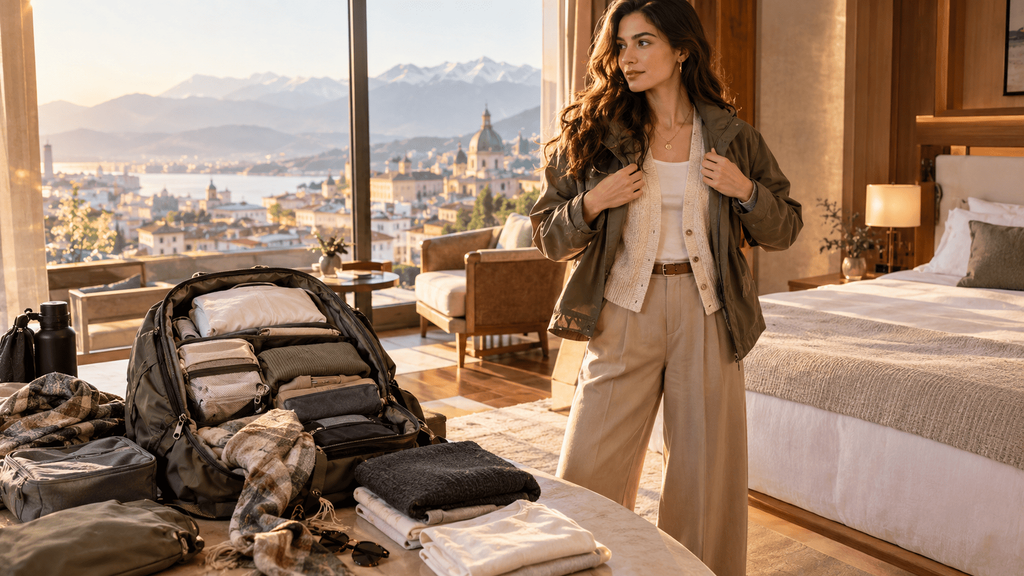
A trip that moves from a warm destination to a cool city can appear impossible to pack for until you think in layers.
Instead of carrying separate wardrobes, choose pieces that overlap.
For example:
Warm climate: lightweight top + trousers or skirt
Mild climate: same outfit + cardigan
Cold climate: base layer + cardigan + jacket
The objective is to build temperature combinations rather than separate outfits for every forecast.
If your itinerary includes genuinely extreme climates, however, do not sacrifice comfort merely to maintain a one-bag ideal.
Packing Cubes: Helpful, but Not Magic
Packing cubes can make a one-bag system easier to manage because they separate categories and prevent the entire bag from becoming disorganized.
A simple organization system could be:
Cube 1: tops
Cube 2: bottoms and dresses
Cube 3: underwear and socks
Pouch: toiletries
Bag: shoes
Small pouch: laundry
Compression cubes can create additional space, but they do not reduce weight.
That distinction matters.
If compression allows you to fit more clothing, it can actually encourage overpacking.
Manage Weight Before You Leave
A bag that fits perfectly can still be unpleasant to carry.
Before departure, load the bag completely and walk around with it.
Check:
- Shoulder comfort
- Hip-belt comfort
- Back pressure
- Weight distribution
- Ease of accessing essentials
- Whether you can lift it comfortably
- Whether it complies with your airline’s weight allowance
Put Heavy Items Close to Your Back
For backpacks, dense items are generally better positioned close to your body rather than hanging far away from your back.
Electronics, shoes, and other heavy objects should be distributed thoughtfully.
Do not place every heavy item at the bottom simply because it seems convenient.
Plan Laundry Into the Trip
Laundry is what makes one-bag travel practical for longer journeys.
You have several options:
Hotel or Accommodation Laundry
This is the easiest option when available, although cost and availability vary.
Sink Washing
For lightweight garments, hand washing can be enough.
A small amount of appropriate detergent or a travel laundry solution can help.
Wash clothing early enough that it has time to dry before you need it.
Laundromat
A local laundromat can be useful when you have accumulated several days of clothing.
This is particularly practical during longer city stays.
The Best Laundry Strategy
Do not wait until you have nothing clean left.
A simple routine is to wash a few small items whenever you have suitable time and drying conditions.
That keeps the wardrobe moving without turning laundry into a major travel task.
Pack a Small Laundry System
A lightweight laundry pouch can separate worn clothing from clean clothes.
You can also carry:
- A few detergent sheets or a small laundry product
- A compact drying solution if genuinely useful
- A reusable bag for dirty clothing
The system should remain small.
There is little value in carrying a full laundry kit that weighs more than the clothes it is meant to manage.
What About Electronics?
Electronics are another category where travelers frequently overpack.
Start with the question:
What do I actually need to use every day?
For many travelers, this may be:
- Smartphone
- Phone charger
- Charging cable
- Universal adapter when required
- Headphones
- Power bank when permitted
- Laptop or tablet, if genuinely needed
If you are not working during the trip, reconsider bringing a laptop simply because you own one.
For digital nomads or business travelers, the calculation changes.
In that case, the computer may be essential and the wardrobe should become even more streamlined.
Jewelry and Accessories
Accessories can transform a small wardrobe, but they can also become clutter.
Choose a few pieces that work with multiple outfits.
A compact jewelry pouch can prevent:
- Tangling
- Loss
- Scratching
- Unnecessary searching
Avoid bringing sentimental or irreplaceable jewelry when a simpler alternative can serve the same purpose.
How to Pack Valuables
Important valuables should stay with you rather than in checked luggage.
Think carefully about:
- Passport
- Cash
- Cards
- Electronics
- Jewelry
- Medication
- Important documents
Keep the items you need most frequently in easily accessible but secure compartments.
Avoid repeatedly opening your entire bag in crowded public spaces.
One-Bag Packing Formulas by Trip Length
Trip length changes your laundry schedule more than it changes your basic wardrobe.
2–4 Days
Prioritize:
- 2–3 tops
- 1–2 bottoms
- 1 layer
- Underwear and socks
- Sleepwear
- One main pair of shoes
- Optional second pair
- Minimal toiletries
For a short city break, a compact personal-item-sized setup may be possible.
5–7 Days
Use a small capsule:
- 4–5 tops
- 2–3 bottoms
- 1–2 layers
- Underwear and socks
- Sleepwear
- 2 pairs of shoes where useful
- Compact toiletries
8–14 Days
Do not automatically double the wardrobe.
Instead:
- Keep the core capsule
- Add a few additional pieces if needed
- Plan one or more laundry sessions
- Adapt layers to the climate
2–4 Weeks
A longer trip can still work with one bag if the itinerary supports frequent laundry.
At this point, the priority becomes durability, comfort, and easy washing rather than carrying enough clothing for the entire trip.
A Practical One-Bag Packing Checklist for Women
Clothing
- Tops
- Bottoms
- Dress or nicer outfit if required
- Underwear
- Socks
- Sleepwear
- Lightweight layer
- Weather-appropriate outerwear
- Activity-specific clothing when necessary
Shoes
- Comfortable walking shoes
- Second versatile pair
- Specialized footwear only if genuinely necessary
Toiletries
- Toothbrush
- Toothpaste
- Deodorant
- Skincare
- Hair essentials
- Makeup essentials
- Personal-care products
- Menstrual products
- Required medication
- Contact-lens supplies if applicable
Technology
- Phone
- Charger
- Charging cable
- Adapter
- Headphones
- Power bank where permitted
- Laptop/tablet only if needed
Travel Essentials
- Passport
- Wallet
- Travel documents
- Reusable water bottle
- Sunglasses
- Small laundry bag
- Packing cubes or organizers
- Weather protection
Before packing each item, ask:
Will I use this?
Then ask:
Can another item already in my bag do the same job?
If the answer to both questions is no, leave it behind.
Common One-Bag Travel Mistakes
Packing for Every Possible Occasion
If your itinerary includes sightseeing, casual dinners, and one nice evening, you do not need a separate wardrobe for every scenario.
Choose pieces that transition between settings.
Bringing Too Many Shoes
Shoes consume valuable volume and weight. Start with two and add another only when necessary.
Ignoring the Weather
Packing for every possible weather scenario usually creates unnecessary bulk.
Forgetting Laundry
Long trips become much easier when laundry is treated as part of the itinerary.
Choosing a Bag Before Understanding Your Travel Style
A huge backpack is not automatically better.
A roller may be more comfortable for some travelers, while a backpack may be much easier for others.
Compressing Everything and Ignoring Weight
A compression cube can create space, but it cannot make a heavy bag lighter.
Packing Full-Size Toiletries
Decant what you realistically need and use solid alternatives where they make sense.
Sacrificing Essentials to Reach a Minimalist Goal
One-bag travel should make your trip easier, not create unnecessary discomfort.
Do not remove essential medication, personal-care items, or weather protection just to achieve an impressive-looking packing list.
How to Make One-Bag Travel More Comfortable
Minimalism works best when it is designed around your habits.
If you dislike rewearing clothes, build in more laundry flexibility.
If you wear makeup every day, create a smaller version of your normal routine instead of eliminating it.
If you walk for hours, prioritize footwear over a third outfit.
If you work while traveling, protect space and weight for your technology.
If you frequently move between cities, prioritize portability over maximum capacity.
The best one-bag system is personal.
One-Bag Travel for Solo Women
Solo travelers often benefit from lighter luggage because they have no travel companion available to share the burden of moving bags.
A manageable bag can make:
- Train transfers easier
- Stairs less stressful
- Hotel changes quicker
- Public transportation more practical
- Walking between destinations easier
Keep important documents, money, electronics, and other valuables secure and accessible.
Research destination-specific safety guidance before departure rather than relying on generic assumptions.
One-Bag Travel for Business Trips
Business travel requires a different approach because clothing may need to look polished.
Prioritize:
- Wrinkle-resistant clothing
- Coordinated neutral pieces
- One professional outfit
- Comfortable smart shoes
- Compact toiletries
- Minimal duplicate accessories
A blazer or structured layer can often serve multiple roles when styled with different tops and bottoms.
If you need formal attire every day, one-bag travel may still be possible, but the wardrobe strategy must be built around the dress code rather than casual sightseeing.
One-Bag Travel for Couples
Couples can benefit from one-bag packing, but avoid assuming that everything should be shared.
Instead, consider sharing only items that make practical sense, such as:
- Certain chargers
- Some toiletries
- First-aid basics
- Laundry supplies
Each traveler should still have personal essentials and enough clothing for their own comfort.
When You Should Bring More Than One Bag
One-bag travel is a tool, not a rule.
A second bag or checked suitcase may be the better choice when:
- You need specialist equipment
- You are traveling in extreme winter conditions
- You need several formal outfits
- You are relocating rather than vacationing
- You have young children and substantial gear
- Laundry access is extremely limited
- The trip requires several pairs of specialized shoes
- The extra luggage substantially improves comfort
The smartest traveler is not necessarily the one with the smallest bag.
It is the one who chooses luggage based on the journey.
A Simple One-Bag Packing Workflow
Instead of throwing items into your luggage the night before departure, use this sequence.
Step 1: Review the Itinerary
Write down:
- Destinations
- Number of nights
- Weather
- Activities
- Dress requirements
- Laundry opportunities
- Transportation
Step 2: Build Outfits
Create complete outfits before packing individual pieces.
Step 3: Remove Duplicates
Look for items serving the same function.
Step 4: Choose Shoes
Start with two pairs and add more only when necessary.
Step 5: Reduce Toiletries
Decant liquids and remove products you will not realistically use.
Step 6: Organize the Bag
Group similar items together.
Step 7: Weigh It
Check your airline’s current requirements.
Step 8: Test It
Carry the fully packed bag around your home.
Step 9: Remove One More Thing
If the bag still feels crowded, identify the least useful item.
Step 10: Stop Packing
Once the essentials are covered, resist the urge to keep adding “just in case” items.
The Real Goal of One-Bag Travel
The best one-bag travel setup is not the one with the fewest possessions.
It is the one that lets you move through your trip without constantly thinking about your luggage.
You should have enough clothing to feel comfortable, enough personal-care products to maintain your routine, appropriate footwear for your plans, and the essentials you genuinely depend on.
Everything beyond that should justify its space.
Once you build a wardrobe around coordination, use laundry strategically, control toiletries, and choose luggage around your actual itinerary, traveling with one bag becomes far less about sacrifice and much more about freedom.
Frequently Asked Questions
1. How many clothes should a woman pack for one-bag travel?
There is no universal number. For a typical week-long trip, a compact capsule of roughly four to five tops, two to three bottoms, a layer, underwear, socks, and sleepwear is a practical starting point. Longer trips can use the same foundation with laundry rather than requiring a completely larger wardrobe.
2. Can a woman travel for two weeks with only one bag?
Yes. Two weeks does not automatically require twice as many clothes. A coordinated capsule wardrobe, sensible footwear, compact toiletries, and one or more laundry sessions can make two-week one-bag travel practical for many itineraries.
3. What size bag is best for one-bag travel?
The best size depends on your airline, route, trip type, body fit, and packing habits. Rather than choosing based only on liters, check the bag’s external dimensions and weight against your airline’s current carry-on allowance.
4. How many pairs of shoes should I bring for one-bag travel?
Two versatile pairs are enough for many trips: a comfortable everyday walking pair and a second pair suited to your activities or evenings. Add specialized footwear only when your itinerary genuinely requires it.
5. Is one-bag travel actually better than using a suitcase?
It depends on the trip. One-bag travel can make multi-city journeys, public transportation, and frequent hotel changes easier, while a suitcase may be more comfortable for travelers who stay in one place or need bulky or specialized clothing and equipment.
Conclusion
One-bag travel for women works best when it is built around versatility rather than deprivation. Start with your itinerary, choose luggage that fits your body and transportation style, create outfits instead of collecting individual pieces, limit shoes, simplify toiletries, and use laundry to extend a small wardrobe.
Most importantly, do not treat minimalism as a competition. If one additional layer, pair of shoes, or personal-care item makes the journey substantially more comfortable, it may be worth the space.
The goal is simple: carry less without compromising the trip you actually want to have.
1 comment