
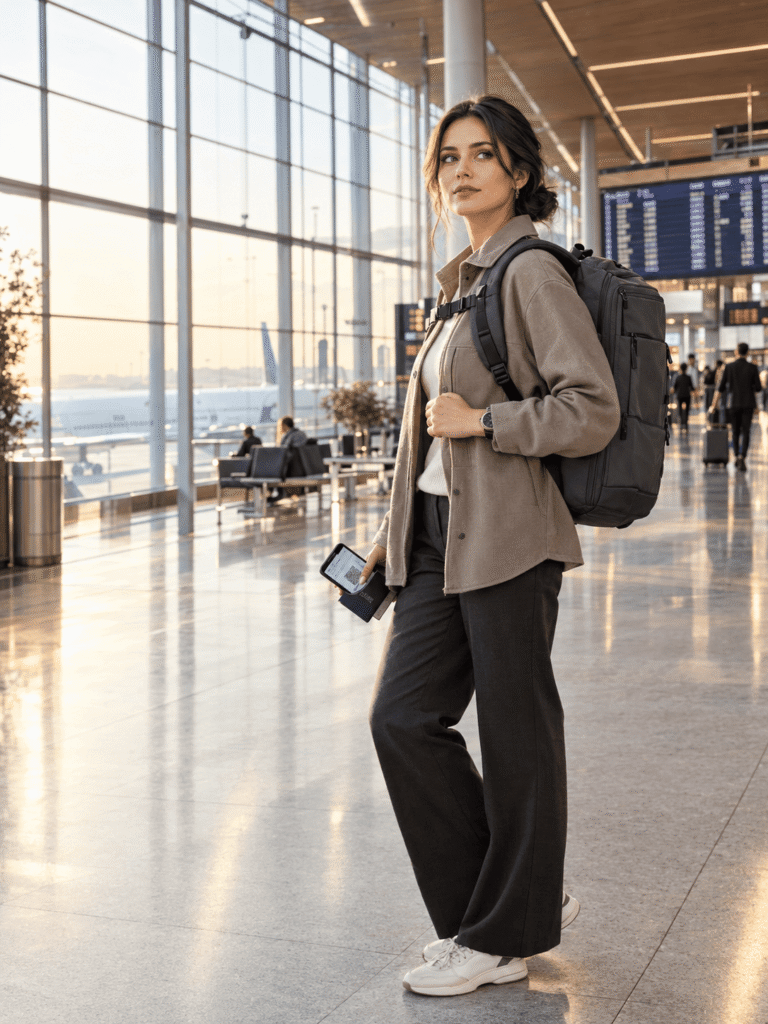
Traveling with one backpack sounds simple until you try to fit clothing, shoes, toiletries, electronics, and everything else you actually need into a single bag. The challenge isn’t finding a backpack with the biggest capacity. It’s finding one that fits your body, your airline’s baggage rules, your packing style, and the way you move once you arrive.
The best travel backpacks for one bag travel balance capacity, carry comfort, organization, durability, and airline-friendly dimensions. For some travelers, that may mean a compact 26–30L pack that works as a personal item. For others, a structured 35–40L travel pack makes more sense for longer trips.
The important point is that there is no universally perfect size. A two-week summer trip can require less space than a three-day winter trip, and a traveler who does laundry can often carry significantly less than someone bringing multiple pairs of shoes or specialized equipment.
This guide explains how to choose the right one-bag backpack, which capacity makes sense for different travelers, which features actually matter, and how to avoid buying a bag that looks perfect on paper but becomes frustrating in real travel.
What Makes a Good One-Bag Travel Backpack?
A one-bag backpack needs to perform several jobs simultaneously.
It needs enough space for your essentials without encouraging unnecessary packing. It should be comfortable when loaded, easy to access in airports and hotels, protective enough for electronics, and appropriately sized for the airlines you actually use.
The strongest travel backpacks usually have several characteristics:
- A suitcase-style or wide panel opening
- Comfortable shoulder straps
- A useful sternum strap
- A supportive back panel
- Good weight distribution
- Dedicated laptop protection
- Internal organization without excessive pockets
- Durable, reasonably weather-resistant materials
- Lockable or secure zippers
- Exterior handles for lifting
- Dimensions appropriate for your airline
- Enough structure to protect your belongings without making the bag unnecessarily heavy
The goal is not to find the backpack with the longest feature list. It is to find one where the features solve problems you actually encounter while traveling.
The Best Backpack Size for One Bag Travel
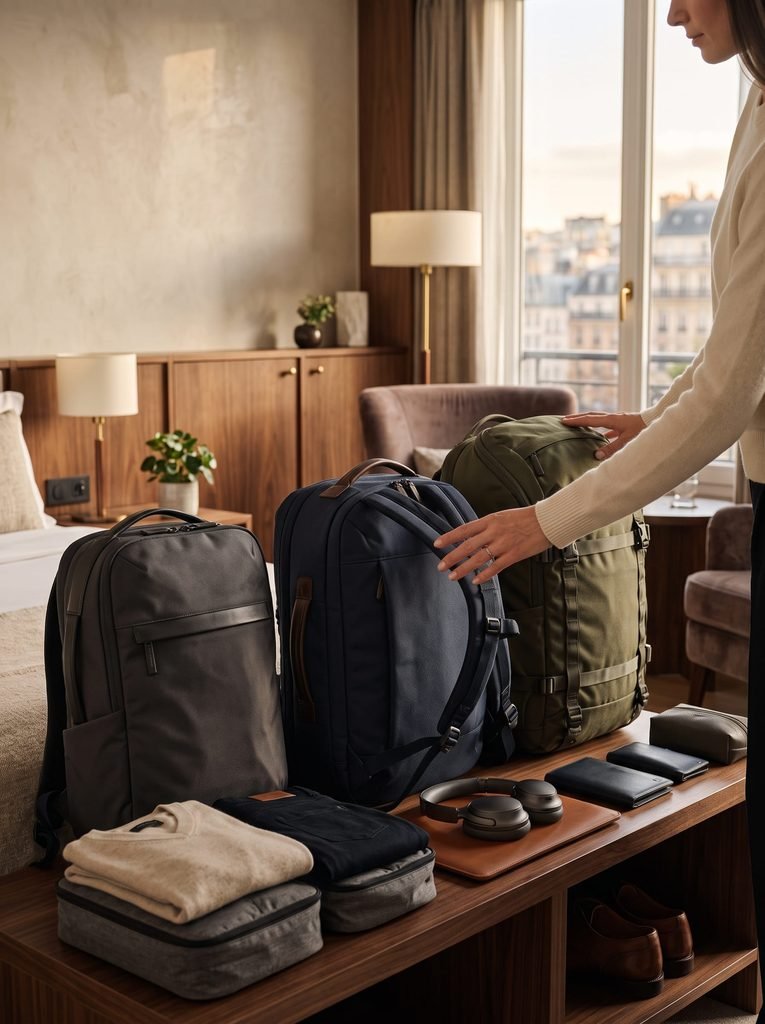
Capacity is usually the first specification shoppers notice, but liters should not be your only measurement.
For one-bag travel, a useful starting framework is:
| Backpack Size | Best For | Main Advantage | Main Limitation |
| 20–26L | Minimalists, personal-item travelers, short trips | Small and easy to carry | Requires disciplined packing |
| 27–32L | Weekend trips and light one-bag travel | Excellent balance of size and portability | Less forgiving with bulky clothing |
| 33–36L | Most versatile travelers | Strong combination of capacity and carry-on practicality | Can become heavy when completely packed |
| 37–40L | Extended trips and travelers carrying more gear | More packing freedom | Greater risk of exceeding airline limits |
| 41–45L | Maximum-capacity one-bag travelers | Excellent internal volume | More difficult to keep airline-friendly |
These are planning ranges rather than universal rules.
A 35L backpack can be dramatically more useful than a poorly designed 40L backpack if its dimensions, opening, harness, and internal layout suit your travel style better.
Is 30L Enough for One-Bag Travel?
For many travelers, yes.
A 30L backpack works especially well for:
- Warm-weather trips
- Minimalist travelers
- Business weekends
- Short city breaks
- Travelers who do laundry
- Travelers who use a separate lightweight jacket rather than packing bulky outerwear
- People who prioritize mobility over maximum capacity
The limitation is that 30L leaves less room for mistakes. You have to think about every item.
Is 35L the Sweet Spot?
For many one-bag travelers, 33–36L is an excellent middle ground.
It provides more flexibility than a 25–30L pack without immediately pushing you toward the maximum dimensions of larger carry-on bags.
A well-designed 35L backpack can accommodate a compact wardrobe, toiletries, electronics, chargers, and a pair of shoes while remaining manageable enough for walking through airports and cities.
When Does 40L Make Sense?
A 40L backpack makes sense when you need additional capacity rather than simply wanting more space.
Consider it if you regularly:
- Travel for longer periods
- Carry work equipment
- Pack for multiple climates
- Carry larger shoes
- Travel during cooler seasons
- Need additional room for specialty gear
- Prefer not to pack as tightly
The trade-off is that a 40L bag can become heavy quickly, and its external dimensions may be more difficult to keep within the limits of stricter airlines.
Do You Need 45L?
Usually only if you have a specific reason.
A 45L backpack can be useful for travelers who prioritize maximum carry-on capacity, but larger volume can encourage overpacking. It can also put you closer to the dimensional limits imposed by airlines.
If your objective is genuinely minimalist one-bag travel, buying the largest possible carry-on is often the wrong strategy.
Capacity Isn’t the Same as Airline Compliance
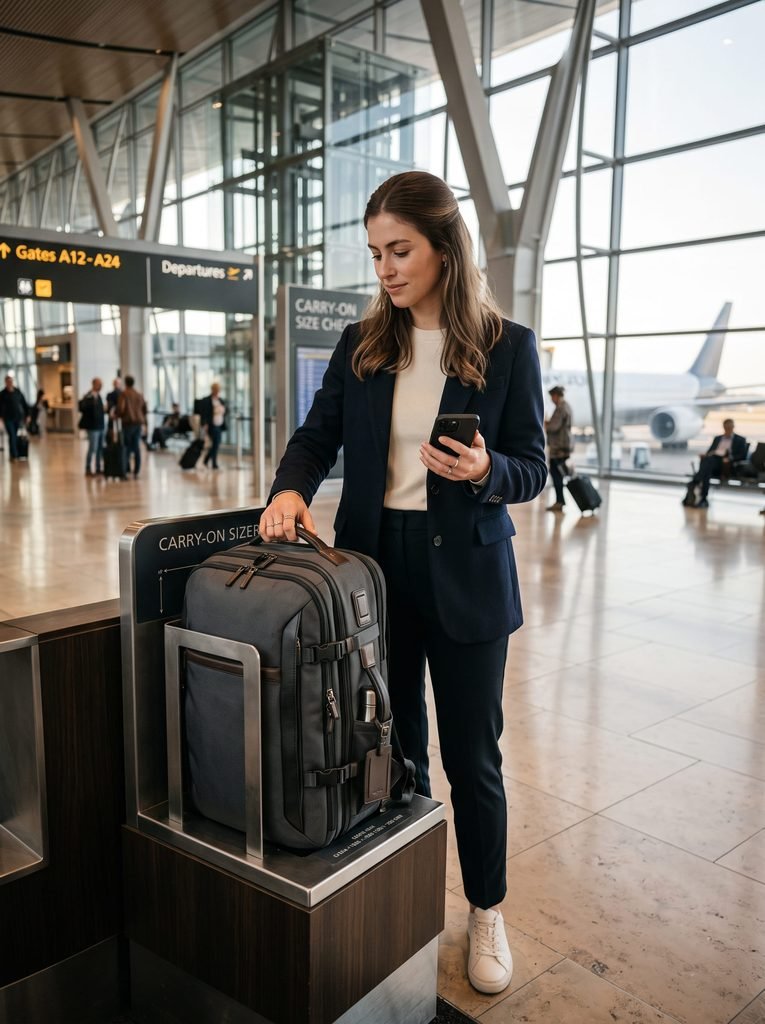
One of the biggest mistakes in travel-backpack shopping is assuming that a backpack’s advertised liter capacity determines whether it can be carried onboard.
It doesn’t.
Airlines generally care about external dimensions, not the number printed on the backpack’s product page.
For example, American Airlines currently states that its standard carry-on must not exceed 22 × 14 × 9 inches (56 × 36 × 23 cm), while its personal item must fit under the seat and should not exceed 18 × 14 × 8 inches (45 × 35 × 20 cm).
That distinction matters because two backpacks with similar capacities can have very different shapes.
Carry-On vs Personal Item
Think of these as two different one-bag strategies.
Personal-item strategy:
You travel with a smaller backpack designed to fit beneath the seat.
Carry-on strategy:
You use a larger backpack intended for the overhead compartment.
The personal-item approach offers an important advantage: you can avoid relying on overhead-bin availability and may be able to travel with a smaller bag.
The downside is obvious—you have significantly less room.
Always check the allowance attached to your specific ticket, because baggage rules can vary by airline, fare type, route, and operating conditions.
The 7 Features That Matter Most
A backpack can have dozens of pockets and technical specifications, but only a handful consistently affect the travel experience.
1. Clamshell or Wide-Opening Design
For one-bag travel, access matters.
A clamshell backpack opens similarly to a suitcase, allowing you to see most of the main compartment at once.
This makes it easier to:
- Pack efficiently
- Use packing cubes
- Find clothing
- Reorganize at hotels
- Prepare for security screening
- Separate clean and worn clothing
A top-loading hiking-style backpack can work, but it is generally less convenient when your belongings are organized like luggage.
2. Comfortable Shoulder Straps
Shoulder straps become increasingly important as the backpack gets heavier.
Look for straps with:
- Adequate padding
- A shape that follows your shoulders
- Useful adjustment points
- A sternum strap
- Enough width to distribute pressure comfortably
Do not judge comfort from photographs alone.
A beautifully designed backpack can feel completely wrong if the harness doesn’t match your body.
3. Torso Fit
Torso length is one of the most overlooked factors when buying a travel backpack.
Your torso measurement is different from your overall height. A properly fitted backpack should place the load in a comfortable position and allow the shoulder straps and hip belt—if included—to work together.
If a manufacturer offers adjustable harness sizing or a torso-length guide, use it.
This is particularly important for travelers with shorter or longer torsos because a backpack designed around a narrow fit range may feel uncomfortable even when its capacity is ideal.
4. Hip Belt
A hip belt isn’t necessary for everyone.
It becomes much more valuable when:
- The backpack is heavily loaded
- You walk long distances
- Your trip involves frequent transfers
- You carry heavier electronics
- You travel for extended periods
For short urban trips with a lightly packed 25–30L backpack, shoulder straps may be sufficient.
For a heavily loaded 40L pack, a functional hip belt can make a noticeable difference.
5. Laptop Protection
If you travel with a laptop, don’t treat the laptop compartment as a decorative feature.
Look for a compartment that:
- Is padded
- Keeps the computer separated from other items
- Doesn’t sit directly against an impact-prone base
- Is easy to access when required
- Fits your actual device dimensions
A dedicated sleeve can also make airport security and hotel organization easier.
6. Weight of the Empty Backpack
A backpack’s advertised capacity tells only part of the story.
If the empty bag is already heavy, you have less usable weight available for clothing, electronics, toiletries, and everything else.
This becomes particularly important when traveling on airlines with weight restrictions.
Don’t automatically choose the lightest backpack, though. A slightly heavier pack may provide substantially better support, protection, or durability.
The better question is:
What are you getting for the additional weight?
7. Materials and Zippers
Travel backpacks are exposed to considerably more abuse than many everyday bags.
They get:
- Dropped
- Dragged
- Stuffed into overhead compartments
- Placed on airport floors
- Exposed to rain
- Opened and closed repeatedly
Durable nylon, polyester, technical fabrics, and reinforced construction can all work well. Rather than focusing exclusively on fabric marketing, examine the entire construction:
- Stitching
- Zipper quality
- Stress points
- Handle attachment
- Strap construction
- Base reinforcement
- Water resistance
A waterproof backpack is not necessary for every traveler. Basic weather resistance may be enough for normal city travel.
Best Travel Backpacks for Different One-Bag Travelers
Rather than declaring one backpack the universal winner, match the design to your travel priorities.
Best for Most Urban Travelers: Aer Travel Pack 4
The Aer Travel Pack 4 is a strong choice for travelers who want a polished urban travel backpack with substantial organization.
Its appeal is particularly obvious for:
- Business travel
- City breaks
- Digital work
- Travelers carrying a laptop
- People who prefer a structured backpack
Its main consideration is weight and overall structure. If you are pursuing an ultralight packing system, a more minimalist backpack may make more sense.
Best for: business travelers, urban travelers, organized packers.
Think twice if: your priority is the lightest possible setup.
Best for Maximum Packing Flexibility: Peak Design Travel Backpack 45L
A larger travel backpack such as the Peak Design Travel Backpack 45L is appealing when you want substantial capacity while retaining a luggage-style opening.
Its expandable and compressible approach can be useful for travelers who need flexibility between trips.
The important caveat is that maximum capacity doesn’t automatically mean maximum airline compatibility. When a large pack is expanded or heavily loaded, its external dimensions matter.
Best for: travelers carrying more equipment, longer trips, photographers and gear-heavy travelers.
Think twice if: you primarily fly strict budget carriers or want a compact personal item.
Best for Comfort on Longer Trips: Tortuga Travel Backpack Pro
For travelers who prioritize carrying comfort, a backpack with a more substantial harness and hip-belt system can be worth the additional structure.
The Tortuga Travel Backpack Pro is particularly suited to travelers who expect to walk with a fully loaded bag rather than simply carrying it between taxis and hotel rooms.
Best for: extended travel, heavier packing, travelers who value load distribution.
Think twice if: your priority is an ultra-light everyday backpack.
Best for Minimalists: EVERGOODS CTB26
A compact backpack around the mid-20-liter range is an excellent choice for disciplined one-bag travelers.
A smaller pack encourages:
- Fewer clothing items
- Less duplication
- Compact toiletries
- More frequent laundry
- More deliberate packing
The trade-off is that there is little room for bulky items.
Best for: minimalists, digital nomads with compact setups, short trips, personal-item travelers.
Think twice if: you travel in cold weather or carry lots of equipment.
Best for Adventure-City Travel: Cotopaxi Allpa 35L
A 35L travel backpack can be a strong middle ground for travelers combining city exploration with more active trips.
The appeal of this category is organization and accessibility without moving all the way into a large expedition-style pack.
Best for: adventure travelers, flexible itineraries, travelers who dislike traditional suitcase-style luggage.
Think twice if: your only goal is the lowest possible bag weight.
Best for Flexible Capacity: Expandable Travel Backpacks
Expandable backpacks deserve special attention because they address a common problem: travelers don’t always need the same amount of space.
A compressed configuration can work for stricter travel, while expansion provides extra capacity when airline restrictions are more generous.
The important rule is simple:
Only expand when the resulting dimensions still comply with your airline’s rules.
Best for Lightweight Short Trips: Bellroy Lite Travel Backpack
A lightweight travel backpack can make excellent sense for travelers who prioritize mobility and don’t need a rigid frame.
It can work especially well for:
- Weekend trips
- Warm-weather travel
- Short business trips
- Travelers who dislike bulky luggage
The compromise is generally less structure and load support than a heavier travel pack.
How to Choose the Right Backpack for Your Travel Style
| Traveler | Recommended Capacity | What to Prioritize |
| Weekend traveler | 20–30L | Low weight and quick access |
| Minimalist | 25–30L | Organization and compact design |
| Business traveler | 28–35L | Laptop protection and professional organization |
| Typical one-bag traveler | 30–36L | Balance of capacity and portability |
| Long-trip traveler | 35–40L | Harness comfort and efficient packing |
| Cold-weather traveler | 35–45L | Volume and compression |
| Digital nomad | 30–40L | Laptop protection and electronics organization |
| Adventure traveler | 30–40L | Durability and carrying comfort |
| Strict budget-airline traveler | 20–30L | Exact dimensions and weight |
These are starting points rather than rules. Your clothing, climate, equipment, airline, and tolerance for laundry can shift the ideal size considerably.
How Many Days Can You Travel With One Backpack?
The number of days is less important than your packing system.
A 30L backpack can potentially work for a surprisingly long trip if you:
- Pack versatile clothing
- Repeat outfits
- Do laundry
- Limit footwear
- Avoid duplicate toiletries
- Keep electronics compact
- Use layers instead of bulky clothing
Meanwhile, a three-day winter trip can consume more space than a two-week summer vacation.
A Better Rule Than “One Liter Per Day”
Don’t calculate backpack size according to the number of travel days.
Instead, calculate it according to:
Climate + clothing volume + footwear + electronics + toiletries + laundry frequency + specialty equipment.
That gives you a much more realistic answer.
A Practical One-Bag Packing System
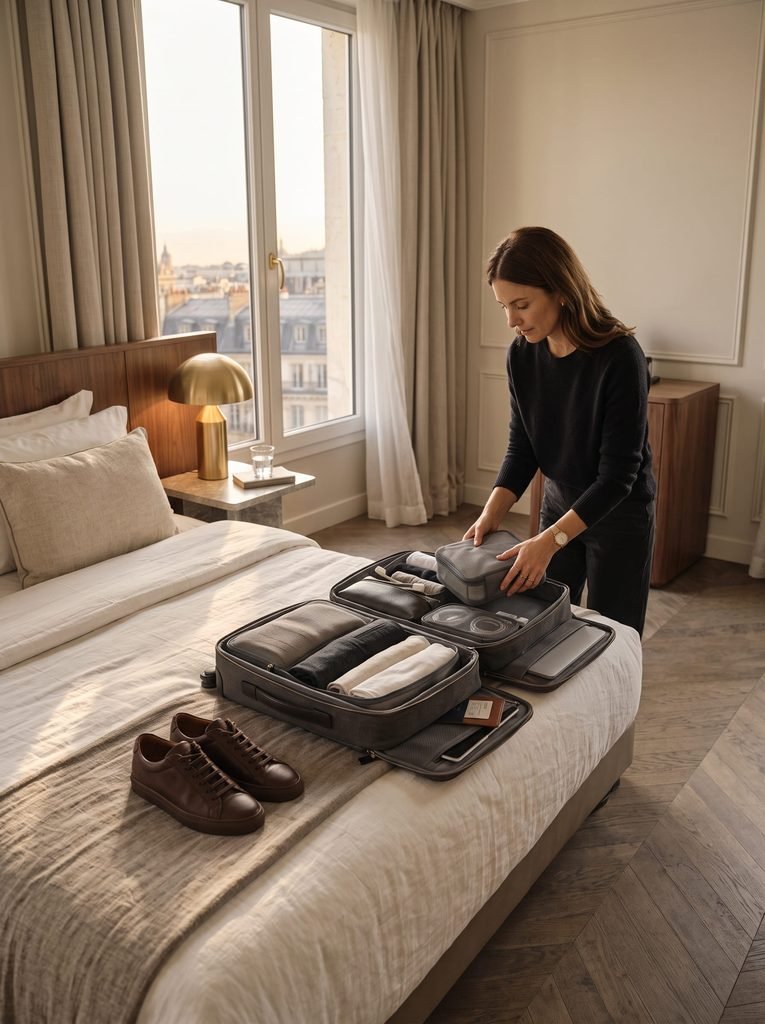
Once you choose your backpack, the next challenge is keeping it manageable.
Clothing
Build around interchangeable pieces.
A compact travel wardrobe might include:
- Several versatile tops
- A small number of bottoms
- Underwear and socks
- One insulating layer
- One weather layer when necessary
- Sleepwear
- Comfortable walking shoes
The exact quantities should reflect climate and laundry access rather than a universal checklist.
Shoes
Shoes are among the biggest space consumers.
For most trips, one pair of versatile walking shoes plus one compact secondary pair is easier to manage than carrying multiple specialized options.
Toiletries
Keep the kit small and practical.
Travel-size containers and solid alternatives can reduce both weight and volume.
If you’re flying, always check the current liquid restrictions applicable to your departure airport and airline.
Electronics
Ask whether you genuinely need every device.
A compact setup might include:
- Laptop or tablet
- Phone
- Charger
- Universal adapter when needed
- Compact power bank
- One or two essential cables
Avoid carrying duplicate chargers whenever one setup can serve multiple devices.
Packing Cubes
Packing cubes don’t magically create more capacity, but they can make the available space much easier to manage.
Use them to create categories rather than simply stuffing clothes into separate bags.
For example:
- Everyday clothing
- Underwear/socks
- Sleepwear
- Electronics
- Toiletries
Should You Choose a Backpack or Suitcase?
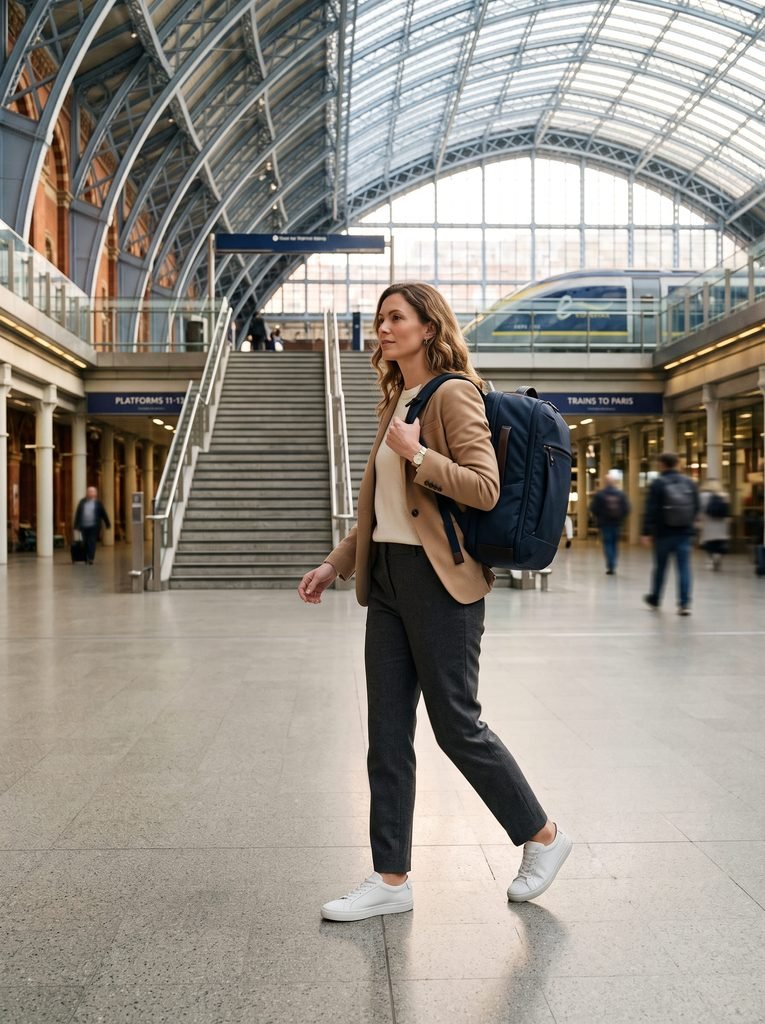
One-bag travel does not automatically mean backpack travel.
Backpack
Best for:
- Public transportation
- Stairs
- Cobblestones
- Frequent hotel changes
- Travelers who value hands-free movement
Downside: Your shoulders and back carry the load.
Rolling Carry-On
Best for:
- Business trips
- Smooth city streets
- Airport-to-hotel travel
- Travelers carrying heavier loads
Downside: Wheels and handles add weight, and rough streets can make rolling luggage frustrating.
Duffel
Best for:
- Very minimalist packing
- Flexible storage
- Short trips
Downside: Carry comfort and organization are usually less refined than a dedicated travel backpack.
For travelers moving frequently between trains, buses, airports, and uneven streets, a well-fitted backpack remains one of the most versatile choices.
Common One-Bag Backpack Buying Mistakes
Buying the Biggest Bag You Can Find
More space often becomes more stuff.
A 45L backpack filled to capacity can be significantly less pleasant than a 32L backpack packed intentionally.
Ignoring External Dimensions
A bag can have an appealing capacity while exceeding your airline’s dimensional allowance.
Always compare the manufacturer’s dimensions with the current rules for your actual ticket.
Choosing Features Instead of Fit
A backpack can have premium materials, clever pockets, and impressive marketing but still be uncomfortable.
Fit should win.
Forgetting Empty Weight
An extremely large, heavily structured backpack can consume a significant portion of your permitted travel weight before you’ve packed anything.
Overloading the Front Pockets
External pockets are convenient, but loading them heavily can change the balance of the backpack.
Keep heavier items close to your back when possible.
Buying for a Fantasy Trip
Don’t buy a backpack based on the rarest trip you might take.
If 90% of your travel is warm-weather city travel, choose around that reality rather than optimizing for a hypothetical expedition.
How to Test a Travel Backpack Before Buying
If possible, test the backpack with a realistic load.
Put inside approximately what you would actually carry:
- Clothing
- Laptop
- Toiletries
- Shoes
- Chargers
- Water bottle
- Other everyday essentials
Then walk around with it.
Pay attention to:
- Shoulder pressure
- Hip-belt comfort
- Back contact
- Strap adjustment
- Weight distribution
- Access to important items
- Whether the bag stays upright
- Whether the laptop compartment is practical
- Whether the main compartment is easy to pack
A backpack that feels excellent empty may feel very different once loaded.
Budget: How Much Should You Spend?
There is no single correct price for a one-bag backpack.
Budget
Look for:
- Reliable stitching
- Decent zippers
- Comfortable straps
- Functional organization
- Sensible dimensions
You may sacrifice premium materials or sophisticated harness systems.
Mid-Range
This is often where the best balance appears.
You can reasonably expect:
- Better materials
- Better organization
- Improved comfort
- Stronger construction
- Better laptop protection
Premium
Premium backpacks make sense when you travel frequently enough to benefit from:
- Better load support
- High-quality materials
- Refined organization
- Long-term durability
- More sophisticated adjustment systems
Don’t pay extra simply for technical-sounding materials or an excessive number of compartments.
Best One-Bag Strategy for Different Trip Types
For a Weekend City Break
Choose approximately 20–30L.
Prioritize:
- Low weight
- Quick access
- Minimal organization
- Laptop protection if needed
For a One-Week Vacation
Around 30–36L is a strong starting point for many travelers.
Build around a compact wardrobe and plan at least one laundry opportunity if necessary.
For a Two-Week Trip
A 30–40L backpack can work well, depending on climate and packing habits.
Don’t automatically increase capacity simply because the trip is longer.
Laundry is what makes extended one-bag travel possible.
For Cold-Weather Travel
Consider 35–45L, especially if you need bulky layers.
Compression and clothing strategy become more important because jackets, sweaters, and larger footwear consume significant volume.
For Digital Nomads
Around 28–40L often works well.
The priority should be balancing:
- Laptop
- Accessories
- Clothing
- Toiletries
- Work equipment
- Personal items
A huge backpack isn’t necessarily better if your electronics already occupy a significant part of the available space.
Who Should Choose One-Bag Travel?
One-bag travel is especially appealing to:
Minimalists
You enjoy carrying less and don’t mind doing laundry.
Frequent Flyers
Avoiding checked luggage can simplify airport transfers and reduce dependence on baggage claim.
Slow Travelers
If you’re staying several nights in each destination, a single organized backpack can make moving between locations easier.
Digital Nomads
A well-designed backpack can combine work equipment and personal belongings into one system.
City Travelers
Public transportation, stairs, narrow streets, and frequent walking all favor compact luggage.
It may be less suitable if you regularly carry bulky sports equipment, specialized camera systems, extensive winter gear, or items that cannot reasonably fit into a compact travel setup.
A Simple Decision Formula
If you’re still unsure which backpack to buy, work through these five questions:
1. What is the strictest airline I regularly fly?
Start with its current baggage dimensions.
2. Do I want a personal item or overhead carry-on?
This determines your size ceiling.
3. How much do I realistically pack?
Don’t answer based on what you wish you packed. Look at your last successful trip.
4. How far do I walk with my luggage?
More walking means greater importance for harness quality and weight distribution.
5. What is the heaviest thing I routinely carry?
Laptop, camera, winter clothing, hiking equipment, or other heavy gear can change the ideal backpack considerably.
Once you answer those questions, the choice becomes much narrower.
Final Buying Checklist
Before purchasing your one-bag travel backpack, check:
- External dimensions
- Current airline compatibility
- Personal-item vs carry-on status
- Empty weight
- Actual usable capacity
- Torso fit
- Shoulder-strap comfort
- Sternum strap
- Hip belt if needed
- Main-compartment opening
- Laptop protection
- Water resistance
- Zipper quality
- Handle placement
- Internal organization
- Compression capability
- Warranty and repair policy
- Return policy
- Whether the bag fits your real packing habits
The best backpack is the one that passes this checklist for your travel rather than someone else’s.
Frequently Asked Questions
1. What size backpack is best for one bag travel?
For many travelers, 30–36L is a practical starting range because it offers a useful balance between packing capacity and portability. Minimalists may prefer 20–30L, while travelers carrying bulky clothing or additional equipment may need 35–40L or more. Always prioritize your airline’s current external dimensions over the advertised liter capacity.
2. Is a 40L backpack too big for carry-on travel?
Not necessarily. A 40L backpack can work as an overhead carry-on when its external dimensions fit the airline’s allowance. However, capacity alone does not determine compliance. A fully expanded or overstuffed 40L backpack may exceed the permitted dimensions even if another 40L design fits comfortably.
3. Can I travel for two weeks with a 30L backpack?
Yes, if your packing style is compact and you are comfortable doing laundry. Trip duration does not automatically determine backpack size. A warm-weather two-week trip with a small wardrobe can require less space than a short cold-weather trip with bulky layers and shoes.
4. Is a backpack better than a suitcase for one-bag travel?
It depends on the itinerary. A backpack is generally more convenient for travelers using public transportation, walking between accommodations, climbing stairs, or moving frequently. A rolling suitcase can be more comfortable for heavier loads when most travel occurs on smooth airport floors, sidewalks, and hotel corridors.
5. What is the most important feature in a one-bag travel backpack?
There isn’t one universal feature, but fit and carrying comfort should come before cosmetic features or excessive organization. After that, prioritize dimensions that suit your airline, an efficient main opening, sensible weight, laptop protection when needed, and an organization system that matches the way you pack.
Conclusion
The best travel backpacks for one bag travel aren’t necessarily the largest, lightest, or most expensive models. The right choice is the backpack that matches your airline rules, body, packing habits, trip conditions, and daily travel style.
For many travelers, a well-designed 30–36L backpack offers the strongest balance of capacity and portability. Minimalists can go smaller, while cold-weather or gear-heavy travelers may benefit from something closer to 40L.
Before buying, check the external dimensions, test the fit with a realistic load, and think about the strictest airline you actually use. Most importantly, choose the backpack around the way you genuinely travel—not the trip you imagine taking someday.
One-bag travel becomes much easier when the backpack is treated as part of a complete packing system rather than simply another piece of luggage.