

Packing for changing weather is rarely a matter of bringing more clothes. The smarter approach is learning how to layer travel clothing so a small collection of versatile pieces can adapt from chilly airports to sunny streets, cool evenings, sudden rain, and heavily air-conditioned interiors.
That is the real purpose of layering 101 for travel: building clothing combinations that work independently and together. A lightweight shirt can become a base layer, a sweater can provide warmth, and a weather-resistant jacket can handle wind or rain. Instead of carrying separate outfits for every temperature, you create a flexible system.
The best travel layering system is also personal. A backpacking trip through wet mountain towns requires different pieces from a city break with smart-casual dinners. Fabric, fit, weather, activity level, laundry access, and luggage size all matter.
This guide explains how the system works, what to pack for different climates, which fabrics make sense, how to avoid bulky combinations, and how to build a practical travel wardrobe around layers.
Why Layering Works So Well for Travel
Travel rarely happens at a single temperature.
You might leave a warm hotel in the morning, spend an hour on a cool train, walk through a windy historic district, enter a heated museum, and finish the evening outdoors. Packing one heavy coat for every possibility can waste valuable luggage space, while packing multiple complete outfits can quickly become excessive.
Layering solves this by allowing individual pieces to perform different jobs.
A good travel wardrobe lets you:
- Add warmth when temperatures fall.
- Remove layers when you get too warm.
- Respond to wind and rain without changing your entire outfit.
- Create different looks from the same basic pieces.
- Pack fewer bulky garments.
- Transition more comfortably between outdoor and indoor environments.
For one-bag travelers, this flexibility is particularly useful. But the principle works equally well with a suitcase: versatility reduces the number of garments you need to bring.
The Three-Layer Travel System
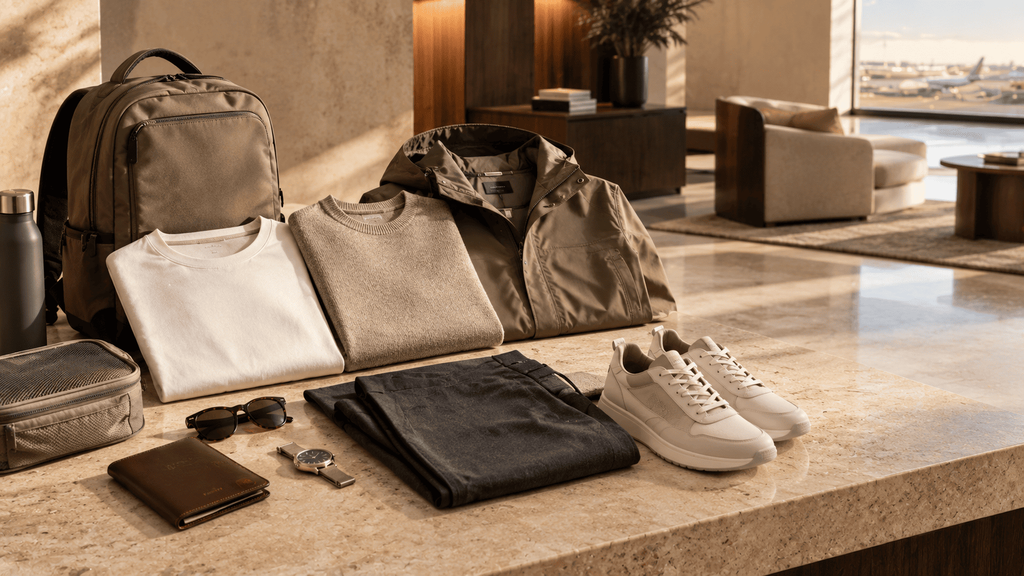
A practical layering system is built around three functions:
Base layer: manages moisture and sits closest to your skin.
Mid layer: adds warmth and provides the main insulation.
Outer layer: protects you from wind, rain, snow, or other weather.
This three-part structure is widely used in outdoor clothing because each layer has a different role. The same concept works beautifully for ordinary travel when you choose pieces that also look appropriate in cities and social settings.
You do not always need all three layers. In warm weather, your base layer may be all you need. During mild conditions, a shirt and lightweight jacket may be enough. In colder weather, you can combine the complete system.
The advantage is control rather than simply adding thickness.
Layer 1: Choose a Comfortable Travel Base Layer
The base layer is the foundation of the outfit. It should be comfortable against your skin, easy to live in, and suited to the amount of activity you expect.
For travel, useful base-layer options include lightweight T-shirts, long-sleeve tops, merino shirts, moisture-managing synthetic tops, thermal tops, tanks, and lightweight leggings.
Merino Wool
Merino wool is especially popular in travel clothing because it combines breathability, moisture management, softness, temperature regulation, and natural odor resistance.
That makes it useful for travelers who expect to re-wear garments or have limited laundry access. Woolmark also highlights Merino’s suitability for travel because it can be used across changing conditions and layered easily.
However, Merino is not automatically the right choice for everyone. It can cost more than basic synthetics, and some travelers prefer synthetic fabrics for high-sweat activities or easier care.
Synthetic Base Layers
Synthetic fabrics can make excellent travel base layers when quick drying is a priority. They are especially practical for active itineraries, humid conditions, workouts, hiking, or trips where garments may need to be washed and dried quickly.
The tradeoff is that odor management varies considerably between fabrics and finishes, so a synthetic shirt that performs brilliantly for one traveler may not be ideal for another.
Cotton
Cotton remains perfectly useful for casual city travel, especially in dry, warm conditions when you are not dealing with heavy exertion.
Its main limitation appears when you need rapid moisture management or fast drying. For a hiking-heavy itinerary or humid environment, a technical synthetic or suitable Merino garment can be more practical.
How a Travel Base Layer Should Fit
A base layer does not need to feel restrictive. Look for a close but comfortable fit that allows your mid layer to sit smoothly over it.
Avoid extremely loose shirts underneath multiple layers because excess fabric can bunch around the shoulders, waist, and underarms.
The simplest test is movement: raise your arms, bend forward, sit down, and walk around while wearing the complete combination.
Layer 2: Pick a Versatile Mid Layer
The mid layer provides warmth while also giving your outfit visual structure.
This is often the most versatile piece in a travel wardrobe because you can wear it alone when conditions are mild and underneath an outer layer when it gets colder.
Useful choices include:
- Lightweight sweaters
- Cardigans
- Fleece pullovers
- Merino sweaters
- Overshirts
- Lightweight down jackets
- Synthetic insulated jackets
- Knit jackets
- Travel blazers
The best mid layer depends on your destination and travel style.
A fleece may be ideal for outdoor activity but feel overly casual for a restaurant-focused city trip. A fine-knit sweater may look more polished but offer less protection during wet or highly active conditions.
For many urban trips, an understated sweater, overshirt, or lightweight insulated jacket gives you a better balance between warmth and appearance.
Fit Matters More Than Thickness
A mid layer should leave enough room for the base layer underneath without creating unnecessary volume.
One common mistake is buying progressively oversized pieces simply because they are intended to be layered. The result is often a stiff, bulky silhouette.
Instead, think in terms of compatible proportions.
A slim-to-regular base layer can support a relaxed mid layer, while a structured outer layer can finish the outfit without feeling oversized.
Layer 3: Choose an Outer Layer for Protection
The outer layer is different from the mid layer because its primary role is protection.
Depending on the destination, this might be a:
- Lightweight rain shell
- Windbreaker
- Waterproof jacket
- Packable insulated jacket
- Wool coat
- Trench coat
- Technical shell
- Winter parka
Ask what the destination is actually likely to throw at you.
A warm insulated jacket is not a substitute for rain protection. Likewise, a lightweight rain shell may stop wind and precipitation but provide almost no insulation by itself.
The right outer layer often completes a modular system rather than doing everything alone.
Down vs. Synthetic Insulation
Down is valued for its warmth-to-weight ratio and compressibility, making it attractive for travelers who care about luggage space. Its major weakness is moisture: down loses insulating performance when it becomes wet and takes longer to dry.
Synthetic insulation generally performs better in damp conditions and dries more quickly, although it is typically heavier and less compressible than comparable down insulation.
That creates a straightforward decision:
Cold and relatively dry: down can be an excellent lightweight option.
Cold and frequently wet: synthetic insulation may be more forgiving.
Mixed conditions: an insulated layer combined with a suitable weatherproof shell can give you greater flexibility.
How to Layer Without Looking Bulky
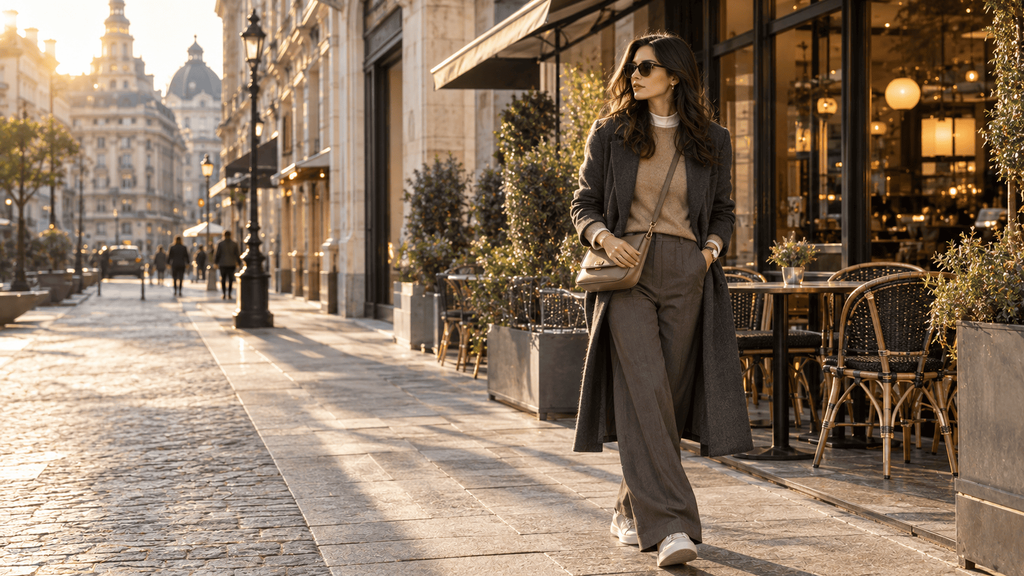
Good travel layering should not make you look like you are wearing every item you packed.
The goal is controlled proportion.
Keep the Inner Layer Light
Thick base layers create problems quickly. A lightweight shirt or thermal layer gives you more room for the pieces that actually provide visible insulation and weather protection.
Avoid Too Many Heavy Pieces
Three medium-heavy garments are not automatically better than three strategically selected lightweight layers.
For many trips, one light base layer, one useful mid layer, and one protective outer layer will provide more flexibility than several bulky sweaters.
Coordinate Your Colors
Neutral colors make layering easier.
Black, navy, charcoal, cream, taupe, olive, camel, denim, and brown can work across multiple combinations. This does not mean your wardrobe has to be monochromatic; it simply makes each piece more likely to work with the others.
Consider Layer Length
A very long shirt beneath a cropped sweater and bulky jacket can create an awkward silhouette. Similarly, several long garments can feel heavy.
Check the finished outfit rather than judging each item separately.
Use Texture Strategically
Fine knitwear, smooth technical fabrics, wool, denim, and structured outerwear can create visual variation without requiring many garments.
A polished travel capsule often looks richer when the difference comes from texture rather than excessive color.
How Many Layers Should You Pack?
There is no universal number because the right amount depends on climate, trip length, laundry access, activity, and personal cold tolerance.
For a typical mixed-weather trip, a practical starting system might include:
2–4 versatile tops
1–2 lightweight long-sleeve layers
1 warm mid layer
1 weather-resistant outer layer
2 bottoms that work across multiple outfits
Underwear and socks based on laundry frequency
Appropriate footwear for the itinerary
This is not a rigid packing formula. A winter trip may require substantially more insulation, while a tropical city trip may need only one lightweight layer for transportation and air-conditioned interiors.
The important principle is repeatability. Each garment should work with several others instead of existing for one specific outfit.
How to Layer for Different Climates
The best travel layering system changes with weather rather than following one fixed formula.
Hot and Humid Destinations
Start with lightweight, breathable clothing.
A T-shirt, tank, lightweight shirt, or breathable dress may be enough outdoors. Bring one thin additional layer for airplanes, trains, restaurants, shopping centers, and hotels where air conditioning may make temperatures unexpectedly cool.
Heavy sweaters and thick jackets are rarely useful here unless your itinerary includes colder regions.
Mild Spring or Fall Weather
This is where layering becomes especially effective.
A lightweight base layer plus a sweater or overshirt can work during cooler mornings. Add a light jacket if rain or wind is expected.
The advantage is that the outfit can change throughout the day without requiring a complete wardrobe switch.
Cold Urban Travel
A useful combination is:
Base layer + insulating mid layer + protective outer layer
The exact thickness depends on the weather and how much time you will spend outside.
For sightseeing-heavy days, think beyond temperature. Wind, rain, walking speed, sun exposure, and time spent standing outside can all influence how warm you actually feel.
Wet Weather
Rain creates a different problem from cold.
A warm sweater can become uncomfortable when exposed to persistent rain, while a rain shell may protect you without creating enough warmth.
For damp, cool destinations, consider a moisture-managing base, insulating mid layer, and weather-resistant shell.
Multi-Climate Trips
This is one of the strongest reasons to build a layering system.
Rather than packing a warm-weather wardrobe and a cold-weather wardrobe, create a core wardrobe that works almost everywhere and add one or two climate-specific pieces.
For example, your core could include versatile trousers, shirts, a lightweight knit, comfortable shoes, and a compact outer layer. A colder destination may then require only a thermal base or warmer insulated piece rather than an entirely separate collection of clothing.
Layering for the Airplane
The airplane is one of the easiest places to use your travel layering system.
Cabin temperatures can feel uncomfortable in either direction, and your clothing needs may change again when you reach the airport or destination.
A practical flight outfit might combine:
Breathable base + lightweight mid layer + easy-to-remove outer layer
Avoid relying on one extremely thick garment when several lighter pieces would give you more control.
Layering can also keep bulky garments out of your luggage. Wearing your heavier sweater or jacket during transit can leave more space in your bag, provided the clothing is comfortable enough for a long journey.
For U.S. airport security, remember that screening procedures can vary, and TSA guidance changes by screening program and airport. TSA says PreCheck travelers generally do not need to remove light jackets, while standard screening may involve different requirements.
Build a Travel Capsule Around Your Layers
Layering becomes much easier when the rest of your clothing already works together.
Start with a small neutral palette and add limited accent colors.
A useful urban travel capsule could look like:
Tops
One lightweight T-shirt, one long-sleeve top, one polished shirt or blouse, and one versatile knit.
Bottoms
One comfortable everyday trouser plus a second option such as jeans, a skirt, shorts, or another travel pant depending on destination and season.
Warm Layer
One cardigan, sweater, fleece, or lightweight insulated jacket.
Outer Layer
One coat, shell, rain jacket, trench, or weather-resistant jacket suited to the forecast.
Shoes
Choose according to the itinerary rather than bringing footwear for hypothetical situations.
The goal is not a minimalist wardrobe for its own sake. The goal is reducing dead-weight clothing—items that only work with one outfit or one narrow temperature range.
Layering for Women
Women have particularly broad options for creating adaptable travel outfits without carrying excessive clothing.
A dress can work with bare legs in warm weather, tights in cooler conditions, and a cardigan or jacket when temperatures drop.
Wide-leg trousers can pair with lightweight tops, knits, blazers, or coats. Leggings can function independently for casual travel or beneath dresses and oversized shirts in colder conditions.
The key is choosing pieces with compatible silhouettes.
A slim base layer beneath a relaxed blazer can look polished. A fitted thermal beneath a sweater can provide warmth without adding obvious bulk.
Layering for Men
A versatile men’s travel wardrobe can be built around combinations such as:
T-shirt + overshirt + shell
Merino tee + sweater + coat
Button-down + lightweight knit + jacket
Thermal top + fleece + weatherproof shell
The same principle applies: prioritize pieces that work alone, under another layer, and across multiple settings.
A lightweight overshirt can be particularly useful because it can function as a casual outer layer in mild weather and an additional insulating layer underneath a coat.
Layering and Laundry: Pack for Your Washing Schedule
Your laundry plan should influence your clothing count.
A traveler who expects to wash clothes every few days can comfortably pack fewer garments than someone taking a long trip without reliable laundry access.
Quick-drying pieces can be valuable because they reduce the gap between washing and wearing.
Merino is also attractive for travelers who want to re-wear suitable garments between washes because its fibers naturally resist odor.
Still, no fabric eliminates the need for sensible hygiene. Sweat, stains, weather, and activity level should determine when a garment needs cleaning.
Common Travel Layering Mistakes
Packing for the Worst Possible Weather
Preparing for every imaginable condition usually creates an overloaded bag.
Check the actual forecast close to departure and build around realistic conditions.
Bringing Too Many Mid Layers
Three sweaters may feel reassuring while packing, but one or two carefully chosen pieces are often much more useful.
Ignoring Wind and Rain
Temperature is only one part of comfort. A lightweight jacket can feel insufficient when strong wind or persistent rain is involved.
Choosing Pieces That Only Match One Outfit
A beautiful but highly specific sweater has less value in a small travel wardrobe than a simpler piece that works with several bottoms.
Layering Without Testing
Try the full system before departure.
Wear the base, mid, and outer layers together. Sit down. Walk. Carry your bag. Raise your arms. See whether the sleeves ride up, the shoulders become tight, or the whole outfit becomes unnecessarily bulky.
Confusing Warmth With Thickness
A thicker garment is not automatically the best travel garment.
Weight, insulation, wind protection, moisture handling, breathability, and packability all contribute to real-world performance.
A Practical Pre-Trip Layering Checklist
Before leaving home, check:
Weather: What are the expected daytime and nighttime conditions?
Rain: Is the destination likely to be wet enough to justify a shell or waterproof layer?
Wind: Will exposed areas, coastlines, or elevated locations make conditions feel colder?
Activity: Will you walk all day, hike, commute, attend meetings, or mostly move between transportation and hotels?
Indoor temperatures: Will strong heating or air conditioning create a need for an additional light layer?
Laundry: How often can you realistically wash clothing?
Style: Can your layers work for both daytime activities and your planned restaurants or events?
Luggage: Can everything fit comfortably without relying on last-minute squeezing?
Fit: Have you tested the complete combination together?
This final test is often more valuable than adding another item to your bag.
Who Benefits Most From a Travel Layering System?
One-Bag Travelers
Layering is particularly valuable when luggage volume is limited.
City Travelers
Urban travelers can choose layers that transition naturally from sightseeing to cafés, restaurants, museums, and evening activities.
Multi-Destination Travelers
Moving between climates is one of the clearest reasons to build a modular wardrobe.
Business Travelers
A lightweight base, polished mid layer, and smart outer layer can provide several levels of formality without requiring numerous complete outfits.
Outdoor Travelers
Hikers and active travelers need to place even greater emphasis on moisture management, insulation, ventilation, and weather protection.
Slow Travelers
Travelers staying longer in one place can benefit from versatile pieces that work repeatedly and can be washed and reworn.
FAQs
1. What are the three layers for travel?
The three basic layers are the base layer, mid layer, and outer layer. The base manages moisture and provides next-to-skin comfort, the mid layer provides insulation, and the outer layer protects against wind and precipitation.
2. What is the best fabric for travel layering?
There is no single best fabric for every traveler. Merino wool is highly useful for temperature regulation, moisture management, softness, and odor resistance, while synthetics can be particularly practical when quick drying and active use are priorities.
3. How many layers should I wear when traveling in cold weather?
A good starting point is a moisture-managing base layer, an insulating mid layer, and a weather-protective outer layer. Adjust the thickness of those layers according to the actual conditions, activity level, wind, and rain rather than relying on a fixed number of garments.
4. Is down or synthetic insulation better for travel?
Down is typically lighter and more compressible, making it attractive when luggage space matters, especially in cold and dry conditions. Synthetic insulation generally handles damp conditions better and dries faster, although it is usually heavier and less compressible.
5. How do I layer clothes for a trip with different climates?
Create a versatile core wardrobe that works in moderate conditions, then add a small number of climate-specific layers. Lightweight base pieces, a versatile mid layer, and a compact protective outer layer can usually adapt more easily than carrying separate wardrobes for each destination.
Conclusion
The smartest approach to travel clothing is not packing more—it is making each layer useful.
Start with a comfortable base, add insulation only when necessary, and use an outer layer to handle the weather. Choose fabrics according to your destination and activity, keep colors and proportions compatible, and test your complete combinations before leaving home.
For changing-weather trips, layering 101 for travel provides a simple way to stay comfortable without turning your luggage into a portable closet. The best travel wardrobe is one that adapts with you: light when conditions are warm, warmer when they are cold, protected when the weather turns, and polished enough for the places you actually plan to visit.
1 comment