
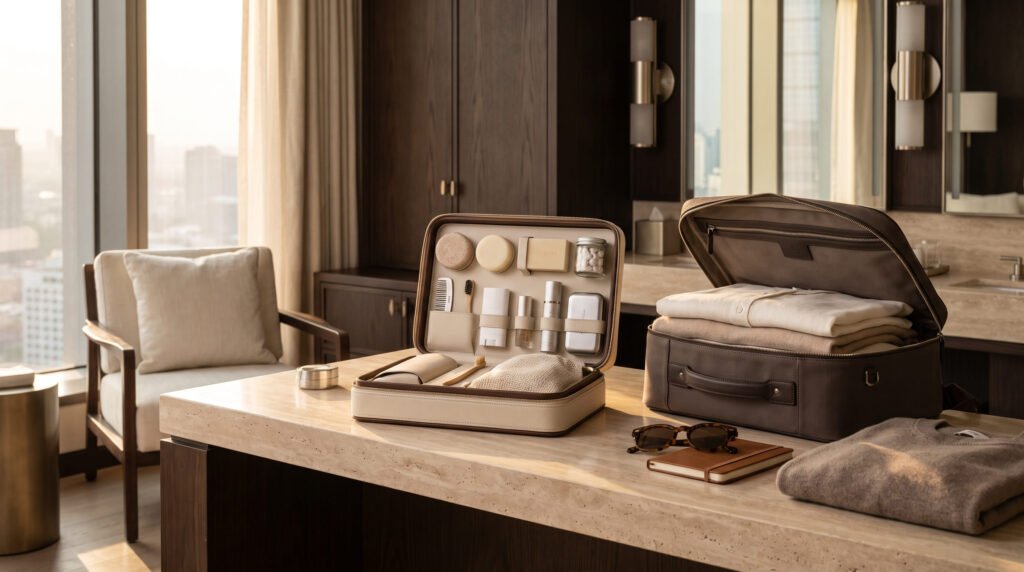
Packing toiletries for a carry-on can become surprisingly complicated once shampoo, conditioner, skincare, toothpaste, deodorant, and other liquids compete for limited space. Solid toiletries for travel offer a practical alternative: they can reduce the number of liquid containers you need while making your toiletry kit easier to organize.
From shampoo and conditioner bars to solid soap, deodorant, toothpaste tablets, and sunscreen sticks, there are now solid versions of many everyday essentials. But replacing everything with a solid product is not necessarily the smartest approach.
The better strategy is selective. Choose solid alternatives that work well for your routine, keep genuinely necessary liquids in your kit, and pack everything so it stays clean and dry throughout the trip. Here is how to build a streamlined solid-toiletry system for carry-on and one-bag travel.
Why Solid Toiletries Make Travel Packing Easier
The biggest advantage of solid toiletries is simple: they can reduce your dependence on liquid containers.
For U.S. airport screening, TSA’s current travel checklist states that liquids, gels, and aerosols in carry-on baggage must follow the 3-1-1 liquids rule: containers of 3.4 ounces or less, placed in one quart-size clear bag, with one such bag per passenger.
That limited space can disappear quickly when you pack several bottles.
Switching suitable products to solid formats can therefore help you:
- Reduce the number of liquid containers in your bag
- Keep your liquids bag less crowded
- Simplify toiletry organization
- Avoid carrying large bottles
- Make a compact one-bag toiletry kit easier to manage
- Reserve liquid space for products that genuinely need it
The goal is not to create a completely liquid-free suitcase. It is to make the limited liquid space work harder.
Do Solid Toiletries Count as Liquids When Flying?
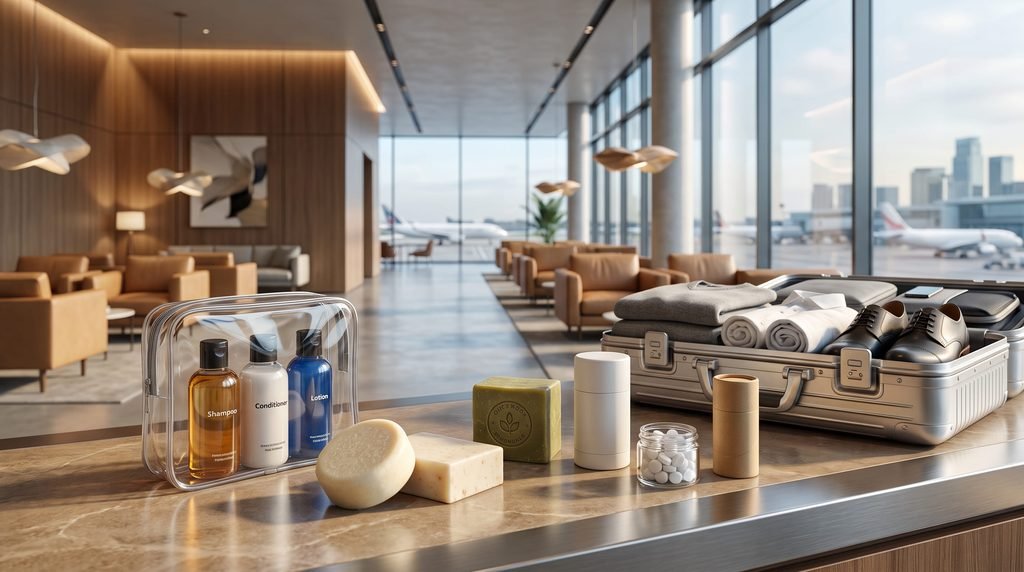
A genuinely solid product is generally different from a liquid, gel, aerosol, cream, or paste for airport-screening purposes. However, the physical consistency and formulation of a product matter, and security procedures can vary by airport and jurisdiction.
For flights departing from the United States, TSA’s current guidance specifically addresses liquids, gels, and aerosols under the 3-1-1 framework.
That means travelers should not assume that every product marketed as a “solid” automatically receives identical treatment.
A practical rule is:
Check the product’s actual consistency, then verify the current rules for the airport where you will depart.
This matters particularly for products such as:
- Toothpaste
- Cleansing balms
- Moisturizers
- Sunscreen
- Hair products
- Semi-solid cosmetics
- Deodorant formulas
International travel requires the same caution. Your departure airport, connection airport, and destination may operate under different screening procedures, so checking the relevant official airport or aviation-security guidance before departure is sensible.
Which Toiletries Can Be Replaced With Solid Alternatives?
You do not have to replace your entire bathroom cabinet. Start with products that have reliable solid formats and that you use frequently.
| Liquid or conventional product | Solid alternative | Best reason to switch |
| Shampoo | Shampoo bar | Reduces a bulky bottle |
| Conditioner | Conditioner bar | Compact and long-lasting |
| Body wash | Bar soap or body bar | Simple, lightweight swap |
| Facial cleanser | Cleansing bar | Convenient for minimalist kits |
| Deodorant | Solid deodorant | Easy everyday replacement |
| Toothpaste | Toothpaste tablets or solid toothpaste | Reduces liquid/gel packaging |
| Perfume | Solid fragrance | Small and travel-friendly |
| Sunscreen | Sunscreen stick | Useful for targeted application |
| Laundry detergent | Laundry soap sheets or solid detergent | Convenient for hand washing |
| Shaving product | Solid shaving bar | Can reduce toiletry volume |
Not every traveler needs every option. Your ideal combination depends on trip length, destination, personal preferences, and whether you are comfortable changing products you already know work.
The Best Solid Toiletries to Switch First
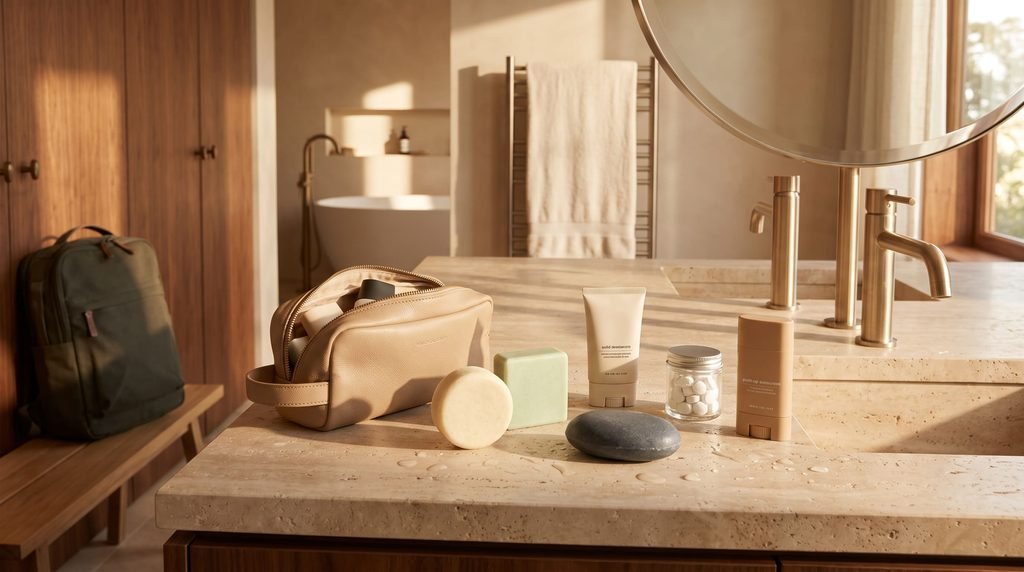
If you are new to solid toiletries for travel, avoid changing everything at once.
Start with the easiest swaps.
1. Solid Soap or Body Wash
Body soap is one of the simplest liquid-free changes.
A properly stored bar can replace a bottle of body wash without requiring a major adjustment to your routine. Choose a formula that suits your skin and use a container that allows the bar to dry between uses.
2. Shampoo Bar
Shampoo is often one of the most useful products to convert because bottles can take up considerable space.
But shampoo bars are not interchangeable. Hair texture, scalp needs, formulation, and personal preference all influence whether a particular bar works well.
If you have dry, curly, color-treated, or otherwise specialized hair, choosing a formula designed for your needs is more important than simply choosing the smallest product.
3. Conditioner Bar
Conditioner bars can be especially useful for travelers who normally carry a large conditioner bottle.
They also pair naturally with shampoo bars, although you do not necessarily need both. Some travelers may prefer to keep a small amount of their familiar conditioner while switching only shampoo to a solid format.
4. Solid Deodorant
A solid deodorant can be a convenient way to simplify your toiletry kit without changing much about your routine.
The important consideration is performance. Test it at home before relying on it during a long trip or in a hot climate.
5. Toothpaste Tablets
Toothpaste tablets are compact and easy to portion for travel.
They are particularly useful for minimalist packing because you can carry only the number you need instead of bringing an entire tube.
However, taste, texture, fluoride content, and personal dental preferences vary, so test them before departure.
How to Choose a Shampoo Bar That Actually Works
A shampoo bar should be chosen for your hair—not simply because it is compact.
Some bars are formulated more like conventional shampoo using surfactants, while traditional soap-based bars can behave differently on hair. The difference can become noticeable depending on hair texture, water conditions, and individual tolerance.
Before buying one for a major trip, consider:
Your Hair Type
Look for a formulation appropriate for your hair’s needs.
Someone with oily hair may want a different formula from someone with dry or highly textured hair. Travelers with chemically treated or color-treated hair should also consider whether the product is suitable for their routine.
Water Conditions
The water at your destination can affect how a shampoo bar performs.
Hard water may interact differently with some cleansing formulations than the water you use at home. If you are uncertain, test the product before departure rather than discovering the problem halfway through your trip.
Ingredient Preferences
Read the ingredient list instead of relying only on marketing terms such as “natural,” “clean,” or “eco-friendly.”
The best bar is the one whose formulation works for your hair and scalp while fitting your preferences.
Test Before You Travel
This is one of the most important rules for solid toiletries.
Never make a completely unfamiliar shampoo, conditioner, cleanser, or deodorant your only option immediately before an important trip.
Use it at home first. That gives you time to determine whether the texture, scent, performance, and skin or hair response are acceptable.
How to Pack Solid Toiletries Without Making a Mess
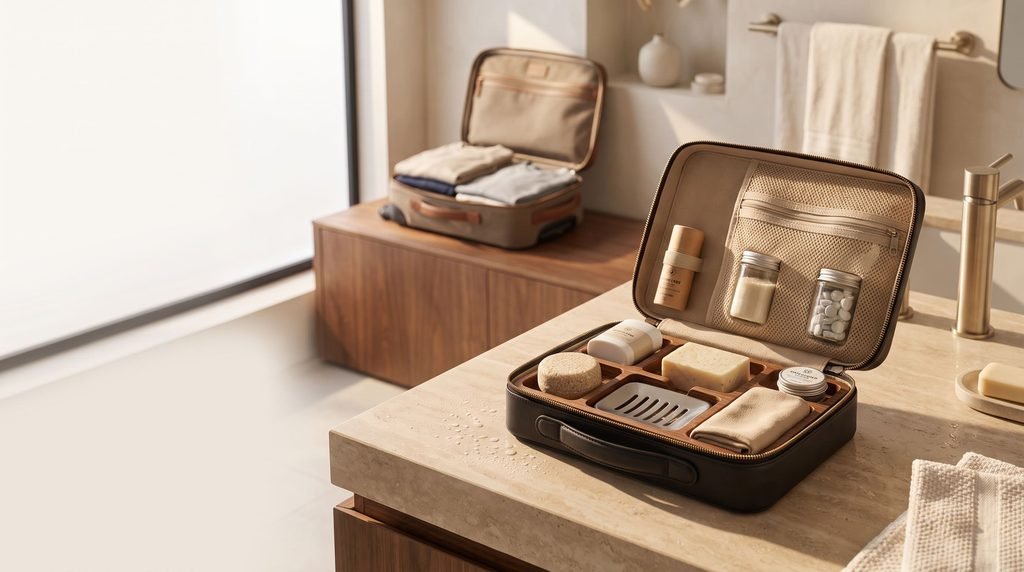
Solid toiletries are compact, but they still require smart packing.
The biggest mistake is putting a wet bar directly into a closed container.
Instead, use a simple drying routine:
- Rinse the product after use.
- Shake or gently wipe away excess water.
- Let the bar air-dry whenever possible.
- Store it in a case that protects the rest of your luggage.
- Keep different products separated when practical.
- Reopen the container periodically if the product remains damp.
A breathable soap case can be useful because it allows moisture to escape while protecting clothing and other items.
For a longer trip, consider carrying smaller portions rather than an entire oversized bar. This reduces bulk and means you are not transporting more product than necessary.
Keep Wet and Dry Toiletries Separate
Your toiletry kit works better when you think about moisture as part of the packing system.
A bar that is dry when packed is easier to manage than one that remains damp for days.
A useful setup is to divide your toiletries into three categories:
Dry Solids
Keep these together:
- Shampoo bar
- Conditioner bar
- Soap
- Deodorant
- Toothpaste tablets
- Solid fragrance
Liquids and Gels
Keep these together in the appropriate liquids bag when required:
- Liquid skincare
- Contact-lens products
- Liquid medication
- Specialized hair products
- Other necessary liquids
Wet-Use Items
These are products that may be damp immediately after use.
Give them their own protective space until they can dry properly.
This small organizational distinction can make a big difference during multi-day travel.
Which Liquids Should You Still Pack?
Going solid does not mean you need to eliminate every liquid.
In fact, forcing every product into a solid format can make travel less comfortable.
Keep a liquid when:
- You already know a solid alternative does not work for you
- The product is medically or personally important
- A specialized formula is unavailable in solid form
- The solid version performs noticeably worse
- You only need a very small amount anyway
- Changing the product would create unnecessary inconvenience
For U.S. carry-on travel, TSA’s current guidance continues to require liquids, gels, and aerosols to comply with the applicable 3-1-1 limits, subject to specific exceptions and screening procedures.
The smarter goal is therefore fewer unnecessary liquids, not zero liquids at any cost.
A Practical Solid Toiletry Kit for Carry-On Travel
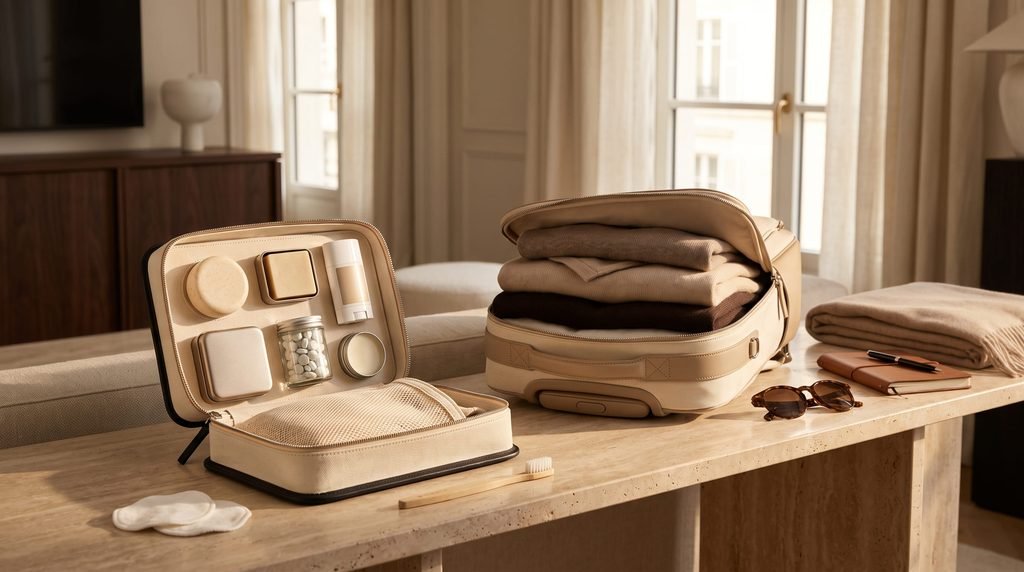
A compact travel kit could look like this:
Hair
- Shampoo bar
- Conditioner bar, if needed
- Small comb or brush
Body
- Solid soap or body bar
- Solid deodorant
- Small towel or washcloth
Oral Care
- Toothbrush
- Toothpaste tablets or another suitable toothpaste format
- Floss
Face and Skin
- Solid or stick cleanser, if suitable
- Sunscreen stick
- Minimal moisturizer
- Lip balm
Personal Care
- Solid fragrance
- Razor, where permitted
- Small grooming tools
- Any required personal or medical products
You do not need to carry every category. Build the smallest kit that supports your actual routine.
Solid Toiletries for Different Trip Lengths
The right toiletry strategy changes with the length of your trip.
Weekend Trip
A short trip is ideal for a highly edited kit.
You may need only:
- Small shampoo bar
- Soap
- Deodorant
- Toothbrush and toothpaste
- Sunscreen
- Essential skincare
There is little reason to bring full-size products for a few days.
One-Week Trip
A week-long trip gives solid toiletries more practical value because reducing bottle volume becomes more noticeable.
This is a good point to consider shampoo and conditioner bars, especially if your usual bottles take significant space.
Long-Term or One-Bag Travel
For extended travel, durability and storage become more important than simply saving liquid-bag space.
Choose products that:
- Work consistently
- Are easy to replace
- Store cleanly
- Tolerate repeated use
- Do not require complicated maintenance
For long trips, the ability to purchase a replacement locally can also matter.
Solid Toiletries for Hot-Weather Travel
Heat can change how certain solid products behave.
Some bars may soften in high temperatures, while others can become more fragile or sticky when exposed to humidity.
For warm destinations:
- Avoid leaving toiletries in direct sunlight.
- Do not store them against hot surfaces for long periods.
- Allow wet products to dry before closing them.
- Use protective containers that will not become difficult to open.
- Keep your toiletry kit away from unnecessary moisture.
If you are traveling through several climates, check your products after major temperature changes.
Common Solid-Toiletry Packing Mistakes
Packing Bars While They Are Still Wet
This is one of the fastest ways to turn an organized toiletry kit into a sticky mess.
Trying Everything for the First Time
A vacation is a poor place to discover that your new shampoo or deodorant does not suit you.
Assuming Every “Solid” Product Is Treated the Same
Product consistency matters. When in doubt, verify the current security guidance for your departure airport.
Overpacking Because Products Are Small
Compact products can create a different problem: carrying too many of them.
Small does not automatically mean necessary.
Mixing All Bars Together
Different products can transfer scent, residue, or moisture to one another. Individual storage is often cleaner.
Ignoring Destination Conditions
Humidity, heat, water quality, and access to replacement products can all influence which toiletries make sense.
A Simple Packing Method for Solid Toiletries
Use this five-step system before every trip.
Step 1: Start With Your Normal Routine
Write down what you actually use during a typical week.
Do not begin with a shopping list.
Step 2: Identify the Easy Solid Swaps
Look first at shampoo, soap, deodorant, toothpaste, fragrance, and other products that have practical solid alternatives.
Step 3: Keep Essential Liquids
Do not replace a product merely because a solid version exists.
Keep anything important to your comfort, health, or established routine.
Step 4: Separate Wet and Dry Products
Plan where each product will go after use—not just where it will go when you pack your bag at home.
Step 5: Test the Complete System
Before departure, pack everything into your actual toiletry pouch.
If the kit feels unnecessarily complicated at home, it will probably feel even more inconvenient on the road.
Are Solid Toiletries Worth It?
For many carry-on and one-bag travelers, solid toiletries can make packing simpler, especially when several everyday products have suitable solid alternatives.
But the real benefit is not simply saving space.
A well-designed solid-toiletry kit can make your packing system more predictable: fewer bottles, fewer containers to organize, and less pressure on the limited liquid allowance.
The best approach is selective rather than extreme.
Use solid products where they genuinely perform well, keep essential liquids where they make more sense, and prioritize products you have already tested.
That creates a travel toiletry kit that is compact without becoming inconvenient.
Frequently Asked Questions
1. Are solid toiletries allowed in carry-on luggage?
Genuinely solid toiletries are generally handled differently from liquids, gels, and aerosols, but travelers should check the current rules of their departure airport. In the United States, TSA’s 3-1-1 rule applies to liquids, gels, and aerosols in carry-on baggage.
2. Do solid shampoo bars count as liquids when flying?
A genuinely solid shampoo bar is not the same type of product as liquid shampoo, but the product’s actual formulation and consistency matter. Check current security guidance for your departure airport, particularly when traveling internationally.
3. What solid toiletries are most useful for travel?
Shampoo bars, conditioner bars, soap, solid deodorant, toothpaste tablets, solid fragrance, and sunscreen sticks are among the common options. The most useful choices depend on your normal routine and whether you have already tested the products.
4. How do you keep solid toiletries dry while traveling?
Let bars dry after use before sealing them inside a container. Breathable or ventilated cases can help, and separating individual products can reduce moisture and residue transfer.
5. Should you replace every liquid toiletry with a solid?
No. A better strategy is to replace only products for which a solid alternative works well for you. Keep necessary or specialized liquids rather than sacrificing comfort simply to create a completely liquid-free toiletry kit.
Conclusion
Solid toiletries for travel can turn a crowded toiletry pouch into a much more efficient carry-on system. Shampoo, soap, deodorant, toothpaste, fragrance, and other products can often be converted to compact formats, leaving more room for the liquids you genuinely need.
The key is not to chase a completely liquid-free bag. Choose reliable solid alternatives, test them before your trip, store them properly, and check the current security requirements for your departure airport.
For minimalist and one-bag travelers, that balanced approach delivers the real advantage: a smaller, cleaner, easier-to-manage toiletry kit without making travel unnecessarily complicated.
1 comment