
One-bag travel sounds simple until your backpack is too heavy, your clothes barely fit, or you discover at the airport that your bag does not meet the airline’s requirements. The biggest one bag packing mistakes usually happen before the journey even begins: choosing the wrong bag, packing for imaginary situations, bringing too many shoes, and failing to test the finished setup.
The solution is not simply to own a smaller backpack. Successful one-bag travel comes from matching what you pack to your itinerary, weather, activities, airline allowance, and actual daily needs. This guide explains the most common mistakes, how to fix them, and how to build a lighter, more practical setup without sacrificing essentials.
1. Choosing a Bag Before Checking Your Airline’s Rules
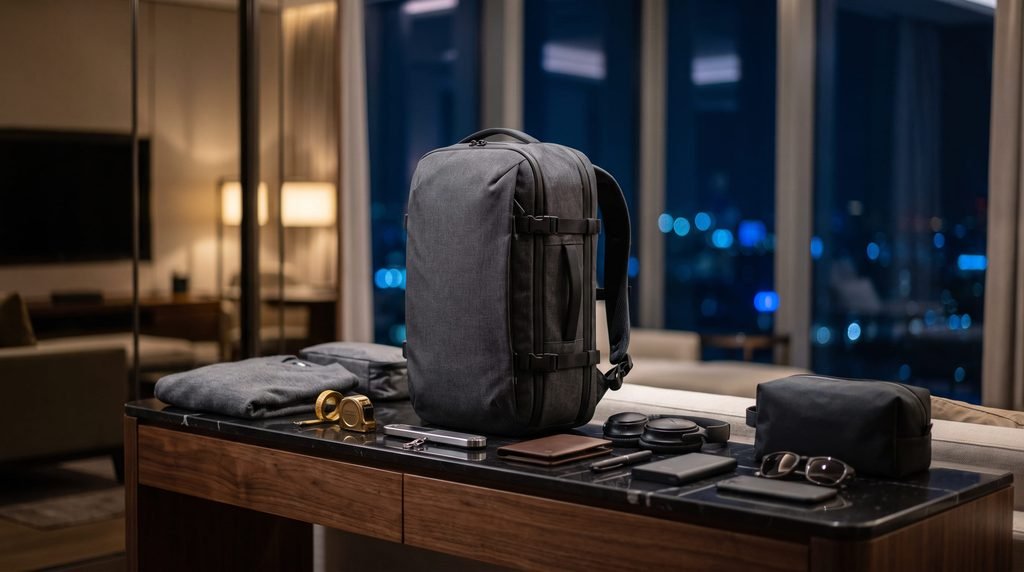
One of the most expensive one-bag packing mistakes is buying or packing a backpack based on a generic “carry-on size” and assuming it will work everywhere.
Airlines can set different requirements for carry-on dimensions, weight, number of bags, and personal items. The same backpack can be perfectly acceptable on one itinerary and problematic on another.
How to fix it
Before finalizing your bag, check the baggage allowance attached to your actual booking.
Pay attention to:
- Maximum dimensions
- Maximum weight
- Number of cabin bags permitted
- Personal-item allowance
- Whether the allowance changes with your fare
- Rules for every airline on a multi-airline itinerary
If you regularly fly different carriers, choose a bag that gives you some flexibility rather than relying on a single “standard” carry-on measurement.
2. Packing for Every Possible Scenario
The “what if?” mindset is one of the fastest ways to turn a minimalist trip into an overloaded one.
You may pack an extra outfit for an unexpected dinner, several backup shirts, multiple weather options, duplicate toiletries, and equipment for activities you have not actually planned.
The problem is that hypothetical needs compete with things you know you will use.
How to fix it
Build your packing list around the trip you are actually taking.
Ask:
- What will I definitely do?
- What weather should I realistically expect?
- How many complete outfits do I need between washes?
- Which items serve more than one purpose?
- Can something be rented, purchased locally, or skipped?
A useful rule is to pack for your planned itinerary first, then add only a small number of genuinely important contingencies.
3. Packing Too Many Clothes Instead of Planning Laundry
Many travelers think a longer trip requires proportionally more clothing. That approach quickly defeats the purpose of one-bag travel.
A 10-day trip does not necessarily require 10 complete outfits. If you can wash clothing during the trip, your packing volume can remain much closer to that of a shorter journey.
How to fix it
Build a small interchangeable wardrobe.
Prioritize:
- Tops that work with multiple bottoms
- Neutral or coordinated colors
- Lightweight layers
- Quick-drying or easy-care fabrics when appropriate
- Comfortable travel-day clothing
- Pieces suitable for more than one activity
Think in terms of outfit combinations, not individual days.
For longer trips, decide in advance when and where you can do laundry. This turns clothing quantity from a guess into a planned part of the itinerary.
4. Bringing Too Many Shoes
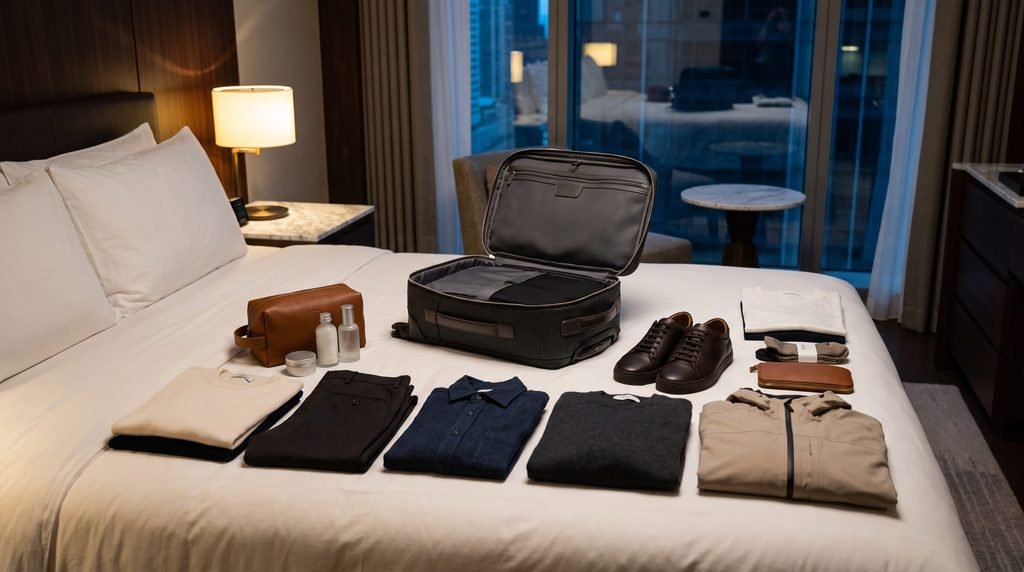
Shoes are among the least efficient items in a one-bag setup because they are bulky, difficult to compress, and often heavier than travelers expect.
Packing a different pair for every possible occasion can consume a surprising amount of valuable space.
How to fix it
Choose footwear according to your actual activities.
A simple trip might need:
- One versatile pair worn during transit
- One compact secondary pair if genuinely necessary
For hiking, formal events, beaches, winter travel, or specialized sports, additional footwear may be justified. But every extra pair should have a defined purpose.
Before packing another pair, ask:
Will I use these enough to justify the space and weight?
If the answer is uncertain, leave them behind.
5. Ignoring the Weight of Small Items
One-bag travelers often focus on large items while overlooking dozens of small additions.
A charger here, a second power adapter there, an extra cosmetic, another cable, a larger toiletry bottle, and several miscellaneous accessories can gradually push the bag from comfortable to cumbersome.
How to fix it
Do a category-by-category weight audit.
Look closely at:
- Electronics
- Chargers and cables
- Toiletries
- Shoes
- Outerwear
- Camera equipment
- Bottles and containers
- Travel accessories
Then remove duplicates.
For electronics, ask whether each item has a distinct purpose. A smaller charging system can often replace several individual accessories.
The goal is not to eliminate useful equipment. It is to eliminate overlapping equipment.
6. Forgetting That Bulky Clothing Counts Even When You Wear It
Wearing your heaviest clothing on the plane can save bag space, but it does not make those items disappear.
A heavy jacket, boots, thick sweater, and multiple layers may make airport movement uncomfortable even if your backpack is relatively light.
How to fix it
Treat your travel-day outfit as part of your packing strategy.
For colder destinations, consider:
- Wearing the bulkiest practical outer layer
- Using lightweight layers underneath
- Choosing footwear that works for both transit and the destination
- Carrying removable layers rather than wearing everything at once
The objective is to move weight between your bag and your body without creating an uncomfortable travel outfit.
7. Packing Toiletries in Full-Size Containers
Toiletries are another category where small decisions can create unnecessary bulk.
A full-size bottle may contain far more product than you need for a short trip. Several such bottles can occupy a substantial amount of space while adding unnecessary weight.
How to fix it
Match toiletry quantities to trip length.
Consider:
- Smaller containers
- Solid alternatives where practical
- Multi-use products
- Hotel-provided products when appropriate
- Items you already know you can purchase at your destination
Keep liquids organized and easily accessible for security screening when required.
Do not decant a product into an unlabeled container if doing so could create confusion about what it contains. Organization should never come at the expense of safety or compliance.
8. Packing Without Considering Accessibility
A bag can be perfectly organized internally and still be frustrating to use.
If your passport, headphones, charger, jacket, or toiletries are buried underneath everything else, every airport transition becomes slower.
How to fix it
Pack according to frequency of access, not just available space.
Keep frequently needed items near accessible compartments.
A practical arrangement might look like:
Easy access:
Passport, wallet, phone, headphones, charging cable, travel documents.
Middle layer:
Daily clothing, lightweight accessories, toiletries.
Bottom or protected areas:
Less frequently needed clothing and backup items.
Separate protected area:
Fragile electronics or other items requiring additional protection.
TSA’s travel checklist also recommends arranging a carry-on so items needed for screening can be accessed easily, including large electronics and the liquids bag.
9. Ignoring Weight Distribution
Total weight is only part of the equation.
Two backpacks can weigh exactly the same but feel very different when carried. If dense items sit too far away from your back, the bag can feel heavier and less balanced.
How to fix it
Place dense items close to your back where the bag’s design allows it.
Think about:
- Laptop placement
- Camera equipment
- Shoes
- Toiletries
- Water bottles
- Chargers and electronics
Keep frequently accessed items toward the exterior or top while avoiding an arrangement that makes the backpack top-heavy.
If the bag feels uncomfortable during a 10-minute walk around your home, it is worth reorganizing before your trip.
10. Forgetting Your Personal Item Strategy
A one-bag travel setup often becomes much more functional when the traveler understands how the main cabin bag and personal item work together.
The mistake is treating the personal item as a second suitcase.
Instead, it should often function as an in-flight essentials kit.
How to fix it
Depending on your airline’s allowance, your accessible personal item can hold things such as:
- Passport and travel documents
- Wallet
- Phone
- Headphones
- Charger
- Essential medication
- Small travel accessories
- Items you need during the flight
Keep valuable, critical, and fragile items with you rather than placing them in checked baggage. The U.S. Department of Transportation specifically advises travelers to keep valuables and critical items such as passports, keys, and essential documents in their possession or in carry-on baggage.
Always confirm that your airline permits the particular personal-item setup you plan to use.
11. Never Test-Packing the Bag Before Departure
This may be the most important mistake to eliminate.
Many travelers pack their bag for the first time on the night before departure. That is when problems become difficult to solve.
You may discover that:
- The zipper barely closes
- The backpack is uncomfortable
- The weight is excessive
- Your shoes consume too much space
- Your toiletries do not fit properly
- Important items are inaccessible
- The bag is difficult to carry
How to fix it
Do a complete test pack before travel day.
Put everything inside that you intend to bring.
Then:
- Close every compartment.
- Measure the packed bag if dimensions matter.
- Weigh it.
- Put it on and walk around.
- Check whether the weight feels balanced.
- Remove anything you cannot justify.
- Repack the remaining items logically.
- Repeat the process if necessary.
A test pack transforms packing from guesswork into a practical experiment.
The One-Bag Packing System That Prevents Most Mistakes
Instead of starting with a pile of belongings, start with the trip.
Use this sequence:
Step 1: Check the airline
Confirm the current baggage allowance for every airline on your itinerary.
Step 2: Review the destination
Consider weather, cultural expectations, activities, terrain, and access to laundry.
Step 3: Build outfits
Create combinations rather than packing isolated clothing pieces.
Step 4: Select footwear
Choose shoes based on activities and versatility.
Step 5: Build your toiletries
Reduce quantities and remove products that have no clear purpose.
Step 6: Audit electronics
Remove duplicate cables, chargers and devices.
Step 7: Pack by accessibility
Keep frequently used items easy to reach.
Step 8: Weigh the bag
Do this before leaving home, not at the airport.
Step 9: Test the carry
Walk with the fully packed bag.
Step 10: Remove the last unnecessary items
If you are still debating whether something is necessary, reconsider whether it belongs in a one-bag setup.
How to Tell If You Are Overpacking
Your bag may need another edit if:
- You packed multiple outfits that cannot be mixed.
- You have more shoes than planned activities require.
- Several items exist only for hypothetical situations.
- Your toiletries are mostly full-size.
- You have duplicate electronics.
- Your bag is close to the airline’s maximum weight.
- You cannot easily access your flight essentials.
- The backpack feels uncomfortable when fully loaded.
- You are using every pocket simply because it exists.
A good one-bag setup should feel intentional rather than compressed.
The objective is not to make the bag as empty as possible. It is to make every item earn its place.
One-Bag Packing Mistakes by Trip Length
Your packing strategy should change depending on the journey.
2–3 Days
The biggest risk is usually overpacking. A compact wardrobe and minimal toiletries can be enough for most simple trips.
4–7 Days
The challenge becomes clothing variety. Build combinations rather than packing a separate outfit for every day.
7–14 Days
Laundry becomes increasingly valuable. Planning one or two washing opportunities can prevent a large increase in luggage volume.
Longer Trips
The focus should shift from packing more to creating a repeatable travel system. Laundry, versatile clothing, replaceable consumables and multifunctional gear become more important.
What Should You Remove First When Your Bag Is Too Full?
If the backpack is full before you have finished editing, do not immediately buy compression bags or a larger backpack.
Start removing items in this order:
- Duplicate clothing
- Extra shoes
- Hypothetical items
- Oversized toiletries
- Duplicate electronics
- Bulky items with limited use
- Accessories you can easily live without
Only after editing your contents should you consider changing your packing equipment.
A larger bag often solves the immediate space problem while creating a new incentive to bring more.
A Simple Pre-Flight One-Bag Checklist
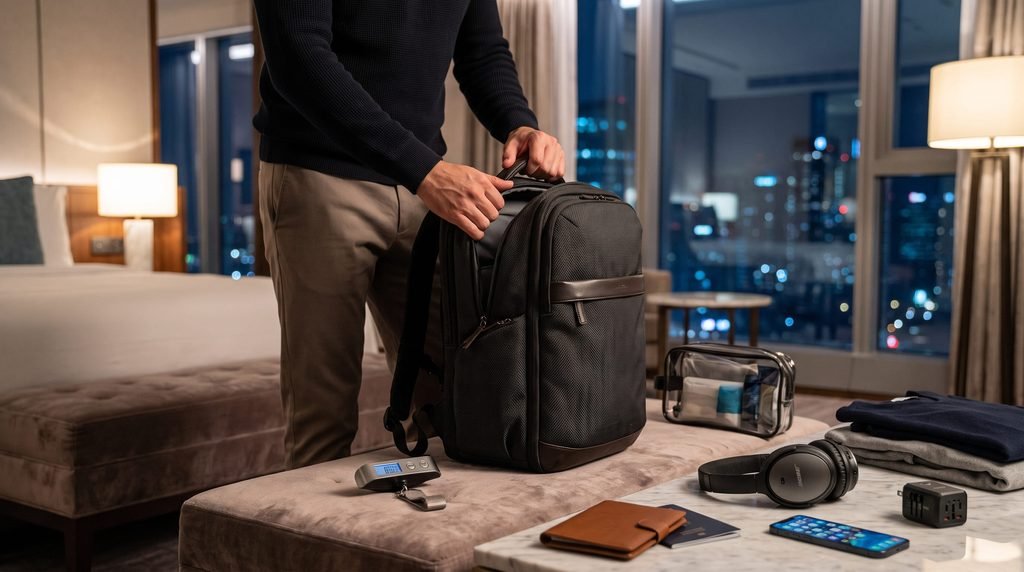
Before leaving home, verify:
- Airline carry-on allowance checked
- Personal-item allowance checked
- Bag dimensions confirmed
- Packed bag weighed
- Important documents accessible
- Liquids organized according to applicable screening rules
- Electronics easy to remove if required
- Valuables kept with you
- Clothing matched to the itinerary
- Shoes limited to genuine needs
- Laundry plan considered
- Weather checked
- Bag fully test-packed
- Backpack comfortable when carried
This final check takes only a few minutes but can prevent many avoidable packing problems.
Who Benefits Most From One-Bag Travel?
One-bag travel can work particularly well for:
Weekend Travelers
A smaller bag can simplify short trips where there is little reason to bring a large wardrobe.
Business Travelers
A carefully planned capsule wardrobe can reduce the need to manage multiple pieces of luggage.
Slow Travelers
Travelers staying several nights in each location can take advantage of laundry and avoid repeatedly unpacking large bags.
Minimalist Travelers
One-bag travel naturally encourages travelers to distinguish essentials from convenience items.
Multi-City Travelers
Moving frequently between hotels, trains, airports and cities can be easier when everything you need is contained in one manageable setup.
The approach is less about a particular travel personality and more about whether your itinerary supports traveling with a limited amount of gear.
FAQs
1. What are the most common one-bag packing mistakes?
The most common mistakes include choosing a bag without checking airline limits, packing for hypothetical situations, bringing too many clothes or shoes, carrying excessive toiletries and electronics, ignoring weight distribution, and failing to test the finished bag before departure.
2. How do I avoid overpacking for one-bag travel?
Start with your itinerary, weather and activities rather than your wardrobe. Build interchangeable outfits, limit footwear, plan laundry for longer trips, reduce toiletries and eliminate duplicate electronics. Every item should have a clear purpose.
3. How many pairs of shoes should I pack for one-bag travel?
There is no universal number. For a simple trip, one versatile pair may be enough; more specialized trips may justify a second pair. Additional footwear should be based on actual activities rather than hypothetical occasions.
4. Should I weigh my carry-on before flying?
Yes. Airline baggage limits vary, so weighing the fully packed bag at home gives you an opportunity to remove unnecessary items before reaching the airport. The U.S. Department of Transportation advises travelers to check their specific airline’s size and weight requirements rather than assuming a universal standard.
5. What should I do if my one-bag backpack is too full?
Edit before upgrading the bag. Remove duplicate clothing, extra footwear, oversized toiletries, unnecessary accessories and hypothetical items. Then reorganize the remaining essentials and weigh the bag again.
Conclusion
One-bag travel becomes much easier when packing is treated as a planning process rather than a race to fit everything into a backpack. The most useful approach is to start with your airline rules and itinerary, build a versatile wardrobe, control shoes and toiletries, organize the bag for accessibility, and test the complete setup before departure.
The goal is not to pack the absolute minimum. It is to carry everything you genuinely need and very little that you do not. When every item has a purpose, one-bag travel becomes lighter, simpler, and far easier to manage.
1 comment