
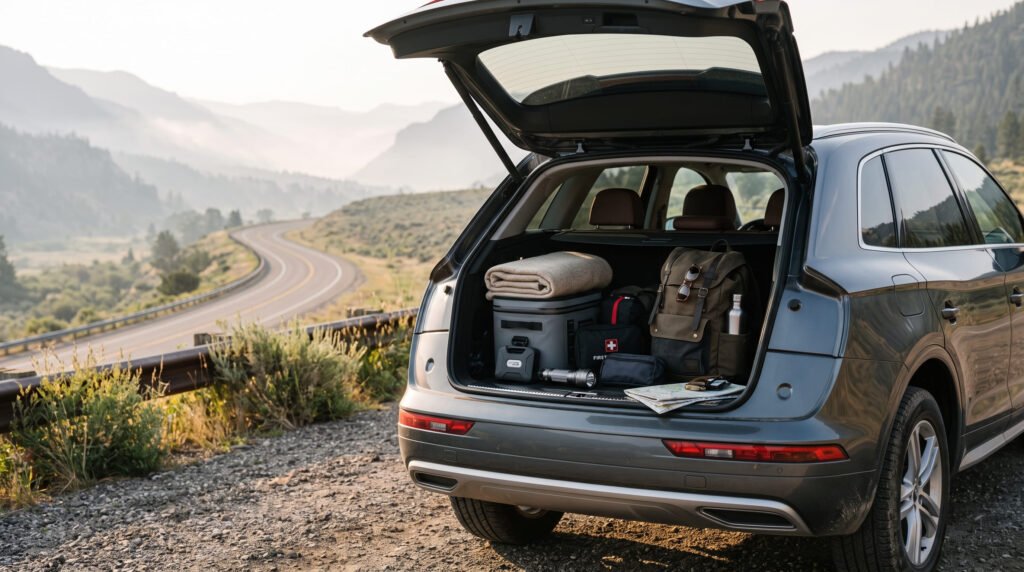
Preparing the right road trip car essentials for long drives can make the difference between a comfortable journey and a stressful one. From emergency equipment and navigation tools to practical snacks, comfort items, and overnight supplies, every item should serve a purpose without cluttering your vehicle.
A well-prepared car helps you handle unexpected delays, changing weather, tired passengers, and minor roadside problems more confidently. This guide covers what to pack, where to store it, which safety items deserve priority, and how to organize your vehicle for a smooth, enjoyable road trip.
Quick Answer: What Should You Pack for a Long Road Trip?
The most important road trip car essentials include a first-aid kit, spare tire or approved tire-repair equipment, tire pressure gauge, phone charger, drinking water, snacks, navigation tools, flashlight, jumper cables or a compatible jump starter, and emergency roadside supplies.
Use this quick checklist before leaving:
- Valid driver’s license, registration, insurance, and required travel documents
- First-aid kit and essential personal medications
- Spare tire, jack, lug wrench, or vehicle-compatible tire-repair equipment
- Tire pressure gauge and portable inflator
- Jumper cables or a compatible jump starter
- Reflective warning triangle or other locally required roadside warning equipment
- Flashlight or headlamp with spare batteries
- Phone charger, charging cable, and power bank
- Offline maps or a reliable navigation app
- Drinking water and nonperishable snacks
- Sunglasses, tissues, wet wipes, and hand sanitizer
- Weather-appropriate clothing and blankets
- Trash bags and reusable shopping bags
- Paper towels, microfiber cloth, and basic cleaning supplies
- Emergency contact information and roadside assistance details
Your exact packing list depends on the route, weather, vehicle, trip length, and number of passengers. Prioritize safety and vehicle readiness before adding entertainment or convenience items.
1. Essential Car Safety Equipment
Safety equipment deserves the most accessible storage space in your vehicle. These items can help you respond to common problems, from a flat tire to an unexpected stop on a busy road.
Check your owner’s manual before using vehicle-specific tools or attempting roadside repairs.
Tire Repair and Inflation Supplies
Tire problems can interrupt a long drive, particularly on remote highways where repair services may be far away.
Pack these essentials:
- Spare tire: Check that your vehicle has one, if designed to carry it, and confirm it is properly inflated.
- Tire jack and lug wrench: Make sure they fit your vehicle and that you know how to use them safely.
- Portable tire inflator: Useful for correcting low tire pressure when it is safe to do so.
- Tire pressure gauge: Helps you check pressure against the manufacturer’s recommended specifications.
- Tire repair kit: A temporary plug kit may help with certain punctures, but it cannot repair every type of tire damage.
Some vehicles have run-flat tires or manufacturer-supplied tire mobility kits instead of spare tires. Understand your particular setup before departure.
Never attempt to change a tire beside fast-moving traffic or under a vehicle supported only by a jack. If the location is unsafe, move to a safer place if possible and contact roadside assistance.
Jumper Cables or a Portable Jump Starter
A weak or discharged 12-volt battery can prevent a car from starting. Jumper cables are useful when another suitable vehicle is available, while a portable jump starter can provide more independence.
Choose equipment compatible with your vehicle and follow the manufacturer’s connection instructions. Hybrid and electric vehicles may have specific jump-start procedures for their low-voltage systems.
If you carry a portable jump starter, keep it charged and check its condition before leaving. Do not attempt to jump-start a damaged, leaking, frozen, or visibly swollen battery.
First-Aid Kit
A compact first-aid kit is useful for minor cuts, blisters, headaches, and other small problems that can arise during travel.
Include:
- Adhesive bandages in several sizes
- Sterile gauze pads and medical tape
- Antiseptic wipes
- Disposable gloves
- Small scissors and tweezers
- Blister dressings
- Any regularly required personal medication
- A compact first-aid guide
Check expiry dates and replace supplies after use. If anyone in the vehicle has a known medical need, pack the appropriate medication in its original packaging and keep it accessible rather than buried in the trunk.
Emergency Warning and Visibility Equipment
A breakdown can be especially dangerous at night, in rain, or on an unfamiliar highway.
Useful items include:
- Reflective vest
- Reflective warning triangle, where permitted and appropriate
- Flashlight or headlamp
- Spare batteries
- Emergency whistle
- Work gloves
Keep reflective equipment easy to reach. Only place warning devices where it is safe and lawful to do so; never walk into traffic to position them.
Basic Roadside Tool Kit
A small, vehicle-appropriate tool kit can help with simple tasks without taking up much space.
Consider packing:
- Multi-tool or basic screwdriver set
- Duct tape
- Cable ties
- Work gloves
- Microfiber cloth
- Small roll of electrical tape
- Vehicle-specific spare fuses, if appropriate and understood
These supplies are intended for minor, safe tasks—not complex roadside repairs. Avoid carrying tools you do not know how to use.
2. Vehicle Documents and Pre-Trip Maintenance
Even the best-packed car cannot compensate for poor vehicle preparation. Before a long drive, review the documents and mechanical checks that are relevant to your route.
Documents to Keep in the Car
Use a secure document pouch for:
- Driver’s license
- Vehicle registration
- Proof of insurance
- Roadside assistance membership or contact information
- Rental agreement, if applicable
- Relevant permits, toll information, or border-crossing documents
- Emergency contacts
- Hotel reservations and important itinerary details
Requirements vary by country, state, and vehicle type. Confirm which documents must be carried and whether original documents or digital versions are accepted.
Avoid leaving unnecessary sensitive documents visible inside a parked vehicle.
Complete a Basic Vehicle Check
Before departure, inspect the following:
| Component | What to check |
|---|---|
| Tires | Pressure, tread, visible damage, and spare tire condition |
| Brakes | Unusual noises, warning lights, or changes in braking performance |
| Engine oil | Level and condition according to the owner’s manual |
| Coolant | Level when the engine is cool |
| Lights | Headlights, brake lights, indicators, and hazard lights |
| Windshield | Cracks, visibility, and wiper condition |
| Washer fluid | Adequate fluid for the expected conditions |
| Battery | Warning signs, corrosion, and starting performance |
| Fuel or charge | Sufficient range for the planned route |
| Belts and hoses | Visible damage or leaks, where accessible |
If your vehicle is overdue for maintenance or shows a warning light, arrange an inspection before starting a demanding journey.
For electric vehicles, check charging stops, charger compatibility, expected range, and alternative charging options. Cold weather, high speeds, heavy loads, and air-conditioning or heating use can affect range.
3. Navigation, Communication, and Electronics
A long road trip often involves changing routes, patchy mobile coverage, and long periods between charging opportunities. Reliable navigation and communication equipment help you stay prepared.
Phone Mount and Charging Accessories
Pack a secure phone mount, a suitable charging cable, and a vehicle charger that supports your device.
A dedicated mount makes navigation easier to follow without holding the phone. Set the destination and route before driving, and let a passenger manage changes whenever possible.
Never handle your phone while driving where prohibited or when doing so would distract you.
Offline Maps and Backup Navigation
Download offline maps before entering areas with limited reception. Save important destinations such as hotels, fuel stops, hospitals, charging stations, and roadside service providers.
A paper map can also be useful on remote routes or when electronic devices fail. It does not need to replace digital navigation; it simply provides a backup.
Power Bank and Charging Cables
A power bank helps keep a phone charged during stops, outdoor activities, or overnight stays away from the vehicle.
Consider packing:
- A fully charged power bank
- Charging cables for each device
- A compatible car charger
- A spare cable
- A small cable organizer
Store power banks according to the manufacturer’s instructions, away from excessive heat. Do not leave lithium-ion batteries in a hot parked car for extended periods.
Emergency Communication
Save essential contacts offline, including roadside assistance, accommodation providers, and emergency services for your destination.
If you are traveling through remote areas, consider whether your route requires a satellite communicator or another emergency communication device. Such equipment is most relevant when mobile coverage is unreliable and help may be far away.
4. Food, Water, and Snacks for Long Drives
Hunger and dehydration can make a long journey less comfortable. A modest supply of food and water helps reduce unnecessary stops and makes delays easier to manage.
Best Snacks to Pack for a Road Trip
Choose foods that are easy to store, relatively mess-free, and suitable for the expected temperature.
| Snack | Why it works | Storage advice |
|---|---|---|
| Nuts and trail mix | Compact and energy-dense | Keep sealed; check for allergies |
| Whole fruit | Convenient and refreshing | Wash before packing |
| Crackers and pretzels | Easy to portion | Use airtight containers |
| Granola or protein bars | Portable and low-mess | Check ingredients and heat sensitivity |
| Roasted chickpeas | Crunchy, shelf-stable option | Store in a sealed container |
| Sandwiches and wraps | More substantial meal | Keep at safe temperatures |
| Dried fruit | Lightweight and easy to portion | Pack in resealable bags |
Choose snacks that match your dietary needs and avoid foods that crumble excessively, melt easily, or require complicated preparation while the vehicle is moving.
The driver should eat during a stop rather than reaching for food while driving.
Drinking Water and a Cooler
Bring enough drinking water for the planned journey, with additional supplies for hot weather, remote routes, and unexpected delays.
A reusable bottle makes refilling easier. A small cooler is useful for sandwiches, fruit, yogurt, and other foods that need refrigeration.
Perishable foods should be kept at safe temperatures. As a general food-safety guideline, keep a cooler at or below 40°F (4°C) and replenish ice or cooling packs as needed. Do not assume that a parked car is a safe place to store food, even if the air outside feels mild.
Coffee and Energy Drinks: Use Them Carefully
Caffeine may temporarily improve alertness, but it cannot replace adequate sleep. Avoid relying on coffee or energy drinks to push through serious fatigue.
If you feel drowsy, pull over at a safe location and rest. If necessary, arrange another driver or find a safe place to sleep.
5. Comfort Essentials for Long Hours in the Car
Comfort items are especially useful on journeys that last several hours or include overnight stops. The goal is to make the cabin pleasant without filling it with unnecessary belongings.
Clothing and Temperature Control
Pack clothing suited to the route and the expected temperature changes.
Useful options include:
- Lightweight jacket or hoodie
- Extra socks
- Comfortable travel outfit
- Weather-appropriate outer layer
- Hat or cap
- Compact blanket
Keep one extra layer within reach instead of packing it beneath heavy luggage. Air-conditioning may make the cabin cold even during warm weather, while mountain routes can experience rapid changes in temperature.
Neck Pillow and Lumbar Support
A travel pillow may help passengers rest during breaks or as passengers on long journeys. A small lumbar cushion can improve comfort for people who find their car seat uncomfortable.
However, do not use loose cushions in a way that interferes with seat belts, airbags, or proper driving posture. Drivers should remain upright, alert, and properly positioned rather than trying to sleep in the driver’s seat while the vehicle is moving.
Sunglasses and Sun Protection
Sun glare can make driving tiring, particularly during early morning or late afternoon hours.
Pack:
- Polarized or otherwise suitable sunglasses
- A sun visor, if fitted
- Sunscreen for outdoor stops
- A cap or hat
- Lip balm with sun protection, if desired
Keep the windshield clean inside and out. Avoid placing objects on the dashboard where they can obstruct visibility or become dangerous projectiles during sudden braking.
Personal Care and Hygiene Supplies
A compact hygiene pouch makes rest stops and overnight stays easier.
Include:
- Tissues
- Wet wipes
- Hand sanitizer
- Toothbrush and toothpaste
- Deodorant
- Lip balm
- Small towel
- Toilet paper for remote routes, where appropriate
- Menstrual products, if needed
Pack liquids in leak-resistant containers and keep them away from electronics and important documents.
6. Emergency Supplies for Unexpected Delays
A reliable emergency kit should support you through a breakdown, severe weather, a road closure, or a delay that lasts longer than expected.
Essential Emergency Kit Checklist
- Drinking water
- Nonperishable food
- First-aid kit
- Flashlight or headlamp
- Spare batteries or a charged light
- Reflective vest and appropriate warning equipment
- Warm blanket or emergency blanket
- Rain poncho
- Work gloves
- Basic roadside tool kit
- Portable phone charger
- Paper map
- Emergency contact details
- Spare prescription medication, when appropriate
- Cash for locations that do not accept cards
Adjust the contents to your route. A desert drive may require more water and sun protection, while a winter journey may call for additional warm clothing and cold-weather equipment.
Roadside Assistance Information
Keep your roadside assistance number and membership details accessible without needing an internet connection.
Check what the service covers before departure. Towing distance limits, flat-tire assistance, lockout services, battery assistance, and geographic coverage may vary.
If you are renting a vehicle, confirm the rental company’s breakdown procedure and emergency contact number.
What to Do During a Breakdown
If your car develops a serious problem:
- Move away from traffic if you can do so safely.
- Turn on hazard lights when appropriate.
- Stop in a safe location and follow the vehicle manufacturer’s guidance.
- Exit the vehicle only if it is safer to do so, and keep away from moving traffic.
- Contact roadside assistance or local emergency services as appropriate.
- Share your location, vehicle details, and the nature of the problem.
Do not attempt roadside repairs in an exposed or dangerous location. In severe weather, consider the safest available shelter and follow instructions from local authorities.
7. Entertainment and Items for Passengers
Entertainment makes long drives more enjoyable, particularly for families and groups. Keep it organized so it does not distract the driver or clutter the cabin.
For Adults and Couples
Consider bringing:
- Downloaded playlists and podcasts
- Audiobooks
- Headphones for passenger use
- A travel journal
- A camera
- A compact card game for rest stops
Download media before leaving if you expect weak mobile coverage. Drivers should use audio entertainment at a comfortable volume and avoid wearing headphones that interfere with hearing traffic or emergency signals.
For Families Traveling With Children
Children often need more frequent breaks and easy access to snacks and activities.
Useful items include:
- Age-appropriate books
- Coloring books and washable crayons
- Small travel games
- Reusable water bottles
- Extra clothing
- Familiar comfort items
- Snacks suitable for the children’s ages
- Motion-sickness supplies recommended by a healthcare professional, if needed
Make sure child safety seats are correctly installed and appropriate for each child’s size and age under local requirements. Keep toys and other loose objects secured, as they can become projectiles during sudden braking.
Pet Travel Essentials
If your pet is joining the journey, prepare a separate travel kit.
Include:
- Water and a suitable bowl
- Regular food and treats
- Leash and harness
- Waste bags
- Towels
- Cleaning supplies
- Required health or travel documents
- Familiar bedding, if space allows
Use a suitable pet restraint or carrier. Never allow a pet to roam freely around the driver, and never leave an animal unattended in a hot vehicle.
8. How to Organize Your Car for a Long Road Trip
Packing efficiently is about accessibility as much as capacity. Frequently used items should be easy to reach, while heavy and rarely needed equipment should be stored securely.
Use a Three-Zone Packing System

Zone 1: Within Reach
Front cabin and passenger area
Keep water bottles, sunglasses, phone cables, tissues, snacks, and navigation accessories accessible. Avoid blocking airbags, pedals, mirrors, or the driver’s field of view.

Zone 2: Main Cargo Area
Trunk or rear cargo compartment
Store luggage, the cooler, spare clothing, and larger supplies here. Secure heavier objects low and prevent luggage from shifting during turns or sudden braking.

Zone 3: Emergency Storage
Dedicated, accessible compartment
Store roadside equipment, first aid, warning gear, and emergency supplies in a clearly identified bag. Do not bury critical equipment under heavy suitcases.
Use Packing Cubes and Small Pouches
Packing cubes and pouches help keep clothing, electronics, toiletries, and miscellaneous items separate.
A practical arrangement might include one pouch for electronics, another for hygiene supplies, and a small organizer for documents and charging cables. Use transparent or labeled bags when you need to identify contents quickly.
Avoid over-organizing every small object. A simple system is more useful than one that takes several minutes to unpack whenever you need something.
Keep the Cabin Free of Loose Objects
Loose objects can roll under seats, interfere with controls, or injure occupants during sudden braking.
Before departure:
- Secure water bottles and heavy accessories.
- Store sharp tools in closed compartments.
- Keep the dashboard and windshield clear.
- Secure luggage and equipment.
- Ensure the rear window and mirrors remain unobstructed.
- Check that emergency equipment remains accessible.
Do not overload the vehicle or exceed its permitted cargo capacity. Refer to the owner’s manual and vehicle load information when packing heavy luggage.
9. Road Trip Essentials by Season and Destination
The best packing list changes with the weather, terrain, and distance between services.
| Travel conditions | Additional essentials | Preparation priority |
|---|---|---|
| Summer and hot weather | Extra water, sun protection, cooler, lightweight clothing | Heat management and hydration |
| Winter and snow | Warm layers, gloves, winter-rated emergency equipment, suitable tires | Traction, warmth, and weather forecasts |
| Mountain routes | Extra layers, water, offline maps, route-specific equipment | Weather changes and limited services |
| Remote highways | Extra food and water, spare tire equipment, emergency communication where needed | Long gaps between services |
| Rainy conditions | Working wipers, suitable tires, rain jacket, waterproof bag | Visibility and safe stopping |
| Desert routes | Additional water, sun protection, navigation backup, emergency supplies | Heat, distance, and limited assistance |
Winter Road Trips
Check weather forecasts, road closures, and local winter-driving requirements before leaving. Depending on the destination, you may need winter tires, approved traction devices, or additional cold-weather equipment.
A blanket and warm clothing are useful if a breakdown leaves you waiting for help. Keep essential cold-weather supplies accessible instead of storing everything under luggage.
Summer Road Trips
Hot weather can affect passengers, pets, food, tires, batteries, and electronics.
Inspect tire pressure according to the manufacturer’s recommendations and check the cooling system before a demanding journey. Never remove a hot radiator cap. Park in shade when possible, but remember that the interior of a vehicle can become dangerously hot even when outdoor temperatures seem moderate.
Remote and Rural Routes
On roads with few fuel stations or mobile coverage, plan more conservatively.
Refuel or recharge before reaching a low range, identify service points in advance, download offline maps, and tell someone your itinerary when traveling through isolated areas.
A satellite communicator may be worth considering for particularly remote trips. For ordinary highway journeys, a charged phone, offline maps, roadside assistance details, and a well-maintained vehicle may be sufficient.
10. What Not to Pack for a Long Drive
Packing too much can reduce cargo space, create safety hazards, and make essential items harder to find.
Avoid these common mistakes:
- Too many snacks: Pack manageable portions rather than filling every available compartment.
- Unsecured electronics: Place devices and accessories in padded pouches or secure compartments.
- Excessive loose tools: Carry useful equipment that matches your vehicle rather than a heavy collection of unnecessary tools.
- Perishable food without cooling: Avoid storing temperature-sensitive food in a warm car.
- Unnecessary valuables: Leave expensive items at home when they are not needed.
- Poorly stored medication: Protect medicines from temperature extremes and follow their storage instructions.
- Unsecured luggage: Keep bags and heavy objects from shifting into the passenger area.
- Unnecessary dashboard accessories: Avoid anything that blocks visibility or interferes with airbags.
Also avoid placing essential items in locations that require you to unload the trunk or stop in an unsafe area just to retrieve them.
11. A Practical Road Trip Packing Plan
A simple packing sequence helps you prepare without forgetting essential equipment.
The Day Before Departure
- Check tires, lights, fluid levels, and the spare tire or repair kit.
- Confirm insurance, registration, and any required travel documents.
- Review the route, weather, fuel stops, and charging locations.
- Download offline maps and important travel information.
- Charge your phone, power bank, and jump starter.
- Prepare snacks and drinking water.
- Assemble the first-aid and emergency kits.
- Pack clothing, hygiene supplies, and passenger entertainment.
Just Before Leaving
- Adjust seats, mirrors, and the steering wheel.
- Confirm seat belts and child restraints are properly fitted.
- Secure luggage and loose objects.
- Set up navigation before moving.
- Put water, sunglasses, and essential supplies within safe reach.
- Check fuel or battery range.
- Make sure all passengers know the planned stops.
During the Journey
Plan regular breaks rather than waiting until you feel exhausted. On long highway drives, many drivers find a stop approximately every two hours helpful, but the right interval depends on road conditions, individual needs, and fatigue.
Stop sooner if you feel sleepy, distracted, uncomfortable, or unwell. Switch drivers when appropriate, stretch during breaks, and never rely on a rigid schedule when conditions call for rest.
The most effective road trip routine combines sensible preparation with the flexibility to change plans when necessary.
FAQs
What are the most important road trip car essentials for long drives?
The highest-priority items are vehicle documents, a first-aid kit, drinking water, a phone charger, navigation backup, tire equipment, a flashlight, and roadside warning supplies. Add food, appropriate clothing, and emergency equipment based on the route and weather.
What should I keep in my car for a long road trip emergency?
Keep a first-aid kit, flashlight, reflective vest, appropriate warning equipment, water, nonperishable food, a blanket, a phone charger, and vehicle-compatible tire and battery equipment. Save roadside assistance details and emergency contacts offline.
How much water and food should I pack for a long drive?
Bring enough for the planned journey and extra supplies for heat, remote roads, and unexpected delays. Pack nonperishable snacks and use a properly cooled container for perishable foods. Requirements vary with passenger numbers, trip length, weather, and access to services.
How can I keep my car organized during a long road trip?
Divide supplies into three groups: items you need within reach, luggage and food for the main cargo area, and emergency equipment in a dedicated accessible compartment. Secure heavy objects, use small pouches for loose accessories, and keep the driver’s view unobstructed.
What should I check on my car before a long road trip?
Inspect tire pressure and condition, brakes, lights, fluid levels, wipers, battery condition, and fuel or battery range. Check the spare tire or repair equipment and confirm your documents and roadside assistance details. Arrange professional maintenance if the vehicle has warning lights or unresolved mechanical issues.
Conclusion
The best road trip car essentials for long drives are the items that improve safety, reduce unnecessary stress, and help you manage unexpected situations. Start with vehicle maintenance, emergency equipment, documents, navigation, and water before adding comfort accessories, entertainment, and personal extras.
Organize supplies so that everyday items are easy to reach and critical safety equipment remains accessible. Adjust your checklist for the season, route, vehicle, and passengers, and leave enough room for luggage to be secured properly.
Most importantly, prepare for the journey without overpacking. A well-maintained vehicle, a thoughtful emergency kit, reliable navigation, and regular rest stops provide a stronger foundation for a successful road trip than a car filled with unnecessary gear.
1 comment