
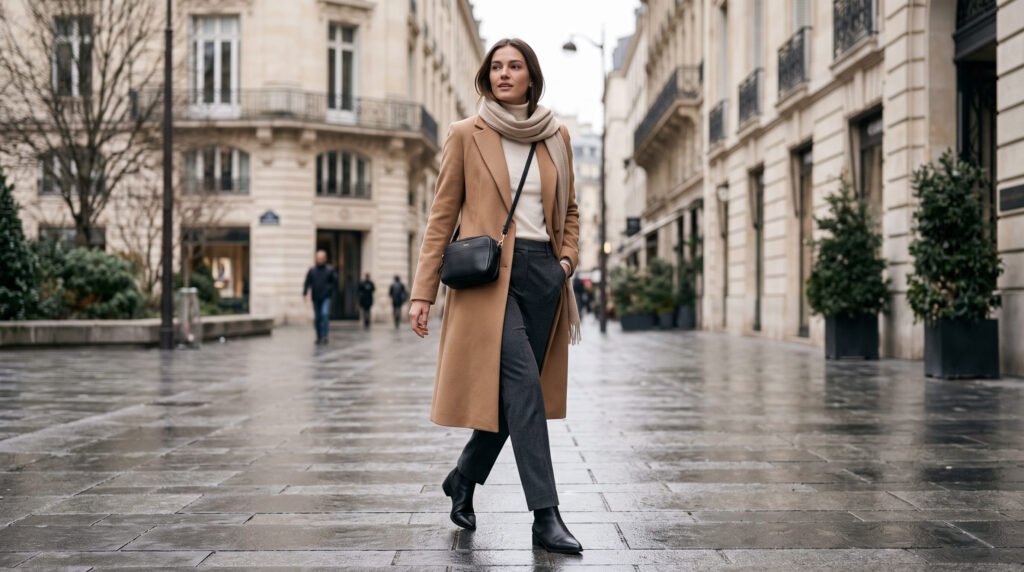
Winter travel outfits that aren’t bulky make it easier to stay warm, look polished, and move comfortably through airports, city streets, and cold-weather destinations. The secret is not wearing more clothes; it is choosing lightweight insulating layers, streamlined outerwear, and versatile pieces that work together without adding unnecessary volume.
A thick sweater, oversized puffer, heavy jeans, and multiple layers might seem like the safest way to dress for winter, but they can quickly become uncomfortable when navigating airport security, sitting on a long-haul flight, or fitting everything into a carry-on. A better approach combines thermal base layers, fine-gauge knitwear, weather-appropriate coats, and accessories that provide warmth without overwhelming your silhouette.
This guide explores nine stylish winter travel outfit ideas, the best fabrics for lightweight warmth, practical layering techniques, and a compact packing strategy for building a winter wardrobe that feels comfortable, looks sophisticated, and takes up less space.
Quick Answer: How to Dress Warmly for Winter Without Looking Bulky
The easiest way to create slim, warm winter travel outfits is to wear three lightweight layers instead of relying on one thick garment. Start with a close-fitting thermal or merino wool base, add a thin insulating layer, and finish with a wind-resistant or weatherproof coat appropriate for your destination.

1. Base layer
Merino wool, silk, or lightweight thermal fabric
Keeps warmth close to your body without the thickness of a heavy undershirt.

2. Insulating layer
Fine-gauge merino, cashmere, or lightweight fleece
Adds insulation while remaining easy to wear under a tailored coat.

3. Protective outer layer
Tailored wool coat, insulated jacket, or shell
Helps manage wind, rain, or snow, depending on the conditions.
Keep the remaining outfit simple with straight-leg trousers, comfortable walking shoes or boots, and a scarf, gloves, and warm socks when needed.
1. Nine Winter Travel Outfits That Aren’t Bulky
The most versatile winter travel outfits rely on clean silhouettes, coordinating colors, and layers that can be removed independently. These nine combinations cover airport journeys, sightseeing, casual city breaks, and colder destinations.
1. Tailored Wool Coat, Fine-Knit Sweater, and Straight-Leg Trousers

A tailored wool coat creates an elegant winter silhouette without requiring an oversized puffer or multiple thick sweaters. Pair it with a fine-knit merino or cashmere sweater, straight-leg trousers, and sleek leather ankle boots.
Choose a coat with enough room for a base layer and sweater underneath. A slightly relaxed cut is more practical than an extremely fitted coat, which can restrict movement when layered.
Best for: City breaks, museum visits, restaurant outings, and destinations with cold but relatively dry weather.
Styling tip: Keep the palette to camel, ivory, charcoal, or black. Similar tones create a streamlined appearance, even when the outfit contains several layers.
2. Thermal Top, Lightweight Puffer, and Slim Straight Jeans

For colder outdoor days, a lightweight insulated puffer offers practical warmth without the weight of a thick winter jacket. Wear it over a thermal top and a thin fleece or sweater, then finish with straight-leg jeans and weather-appropriate sneakers or boots.
Look for a puffer with useful insulation, a close-fitting collar, and a shape that does not restrict your arms. Synthetic insulation can be particularly useful in damp conditions, although performance varies by construction and design.
Best for: Airport transfers, casual sightseeing, outdoor markets, and everyday winter exploration.
Styling tip: A jacket that finishes around the hip often pairs well with straight-leg jeans. For colder conditions, prioritize adequate insulation and coverage over achieving the slimmest possible fit.
3. Merino Turtleneck, Tailored Trousers, and a Long Coat

A lightweight turtleneck is one of the most useful pieces in a winter travel capsule wardrobe. It provides neck coverage, layers neatly beneath outerwear, and looks polished enough for both daytime sightseeing and evening plans.
Combine a charcoal or black turtleneck with tailored trousers and a long coat. Add leather loafers in mild conditions or insulated ankle boots when temperatures demand more protection.
Best for: Business travel, sophisticated city breaks, and travelers who prefer understated outfits.
Styling tip: Choose a smooth, fine-knit turtleneck rather than a thick cable-knit design. The smaller knit structure makes it easier to layer without creating excess volume around the shoulders and neckline.
4. Lightweight Fleece, Technical Shell, and Travel Leggings

For active winter travel, a lightweight fleece paired with a weather-resistant shell offers more flexibility than a heavy fashion coat. The fleece provides insulation, while the outer shell helps block wind and precipitation when designed for those conditions.
Wear thermal leggings or flexible travel trousers, moisture-managing socks, and supportive footwear suitable for the terrain. If the weather changes, you can remove or add layers without changing your entire outfit.
Best for: Mountain towns, winter hikes, outdoor excursions, and destinations with variable weather.
Styling tip: Avoid treating every shell jacket as a warm coat. Many waterproof shells provide little insulation on their own, so the warmth must come from the layers underneath.
5. Fine-Knit Sweater, Midi Skirt, and Tall Boots

Winter travel outfits do not have to revolve around trousers. A fine-knit sweater with a midi skirt and tall boots creates a feminine, polished combination without stacking several thick garments around the waist.
For additional warmth, wear opaque thermal tights beneath the skirt. Choose a skirt with enough room to move comfortably and boots that accommodate the socks you intend to wear.
Best for: Shopping trips, city sightseeing, casual dinners, and stylish weekend getaways.
Styling tip: Keep the upper layers relatively fitted and the skirt fluid rather than heavily pleated. This balances the silhouette while leaving room for a thin thermal layer.
6. Monochrome Knitwear, Dark Trousers, and Minimalist Boots

A monochrome outfit creates a cohesive look with very few pieces. Combine an oatmeal sweater, taupe trousers, and a beige coat, or choose a darker palette of charcoal, black, and deep grey.
The advantage is versatility: each piece can coordinate with other items in your suitcase, reducing the need to pack several separate outfits.
Best for: One-bag travel, minimalist wardrobes, and travelers who want photographs to look coordinated without carrying extra clothing.
Styling tip: Introduce visual interest through texture rather than additional layers. A smooth wool coat, ribbed knit, and structured trousers provide contrast without adding significant bulk.
7. Long-Sleeve Base Layer, Cardigan, and Relaxed Tailored Pants

Airports and aircraft cabins can feel cool, warm, or inconsistent throughout a journey. A lightweight long-sleeve top under a thin cardigan or merino sweater gives you more control than a single heavy sweatshirt.
Relaxed tailored trousers provide room to sit for long periods, while slip-on or easy-to-remove shoes simplify airport security where applicable.
Best for: Long-haul flights, train journeys, airport transfers, and travel days involving multiple connections.
Styling tip: Keep your warmest layer accessible rather than packing it at the bottom of your bag. A scarf can also provide extra comfort during a cold flight or drafty transfer.
8. Insulated Vest, Thermal Top, and Slim Travel Trousers

An insulated vest provides warmth around the torso while leaving the arms relatively unrestricted. It can be a useful middle layer when temperatures are cool but a full insulated jacket feels excessive.
Wear it over a thermal or merino top with travel trousers and comfortable walking shoes. If the weather becomes colder or windier, add an appropriate outer shell or coat.
Best for: Transitional winter weather, active sightseeing, and layering under a roomy shell.
Styling tip: Choose a vest with low-profile insulation and avoid wearing it beneath an outer layer that is too tight. Compression can reduce comfort and interfere with layering.
9. Fine-Knit Sweater, Dark Jeans, and a Packable Down Jacket

A packable down jacket is a useful alternative to bulky outerwear when warmth-to-weight ratio and suitcase space matter. Many down jackets compress into a small pouch, although their packed size and insulation vary considerably.
Pair the jacket with a fine-knit sweater, dark jeans, and comfortable boots. This outfit works well for casual travel days when you need warmth without carrying a long, heavy coat.
Best for: Cold-weather sightseeing, weekend trips, and carry-on travelers.
Styling tip: Down generally performs best when kept dry. If you expect persistent rain or wet snow, consider a suitable water-resistant outer layer or an insulation option designed for damp conditions.
2. Which Fabrics Keep You Warm Without Adding Bulk?
The fabric you choose can make a significant difference to the comfort and weight of your winter wardrobe. Instead of automatically reaching for the thickest garment, consider insulation, moisture management, wind protection, and how easily the fabric layers beneath other pieces.
| Fabric or material | Main advantage | Best use | Important consideration |
|---|---|---|---|
| Merino wool | Warmth, breathability, odor management | Base layers and thin sweaters | Can be delicate and needs suitable care |
| Cashmere | Soft, lightweight warmth | Refined mid-layers | Requires gentle handling and may pill |
| Silk | Thin, comfortable base layer | Mild to moderately cold conditions | Limited insulation compared with substantial thermal layers |
| Synthetic thermal fabric | Lightweight moisture management | Active travel and base layers | Performance varies by fabric construction |
| Down insulation | Excellent warmth for its weight | Cold, dry conditions | Loses insulating performance when wet unless protected |
| Synthetic insulation | Practical warmth and often better damp-weather tolerance | Puffers and insulated jackets | Can be bulkier than comparable high-quality down |
| Fleece | Lightweight insulation and quick drying | Mid-layers and outdoor travel | Offers limited wind protection on its own |
| Wool-blend coating | Structure and a polished appearance | City coats | Warmth depends on fabric weight, lining, fit, and wind conditions |
No single material is best for every destination. A merino sweater may be ideal for a cold city, while a thermal base layer, fleece, and waterproof shell are more practical for wet or windy outdoor conditions.
Why Merino Wool Works Well for Winter Travel
Merino wool is particularly useful because it can provide comfortable insulation in relatively thin garments. It also helps manage moisture and tends to retain less odor than many conventional fabrics, making it attractive for travelers who want to pack fewer tops.
A lightweight merino base layer can sit beneath a shirt, sweater, or coat without creating the thick seams and folds associated with several cotton layers.
However, merino is not automatically warmer than every synthetic alternative, and fabric weight matters. Choose the garment based on expected temperatures, activity level, and whether you need a base layer or a substantial insulating piece.
Are Thin Layers Warmer Than One Thick Sweater?
Thin layers can be more adaptable than a single thick sweater because they let you combine insulation with wind protection and adjust your clothing to changing temperatures.
For example, a thermal top, fine-knit sweater, and wind-resistant jacket may be more useful across a full day than a heavy sweater alone. You can remove the jacket indoors, keep the sweater on during a cool transfer, and add a scarf when necessary.
The key is not to add unlimited layers. Too many tight garments restrict movement and may compress insulating materials. Aim for a comfortable fit that traps warmth without making you feel constrained.
3. How to Layer Winter Clothes Without Looking Bulky
The most effective winter layering strategy begins with the thinnest functional garment and builds outward.

Step 1: Start with a close-fitting base layer
Choose a smooth thermal top or merino layer that sits comfortably against your skin. Avoid excess fabric bunching at the waist, elbows, and underarms.

Step 2: Add lightweight insulation
Wear a fine-knit sweater, thin fleece, or compact insulated vest. Select one appropriate mid-layer instead of stacking multiple thick sweaters.

Step 3: Protect against the weather
Add a coat or shell suited to the temperature, wind, rain, and snow. Make sure the outer layer accommodates your mid-layer without pulling across the shoulders.
Choose the Right Fit for Each Layer
Your base layer should fit close to the body without feeling restrictive. The middle layer needs enough room to insulate comfortably, and the outer layer should allow you to move your arms freely.
An extremely fitted coat may look streamlined over a thin shirt but become uncomfortable with a sweater underneath. Conversely, a coat that is several sizes too large may allow excessive air movement and look shapeless.
Try your complete combination before traveling. Sit down, raise your arms, fasten the coat, and walk for several minutes. This simple check can reveal problems that are difficult to spot when trying on individual pieces.
Use Accessories Instead of Adding More Clothing
Small accessories can improve comfort without taking up much suitcase space.
- A merino or cashmere scarf adds warmth around the neck and can be removed indoors.
- Thin thermal gloves are easier to pack than bulky winter mittens.
- Warm socks help insulate your feet, particularly in cold footwear.
- A compact beanie reduces heat loss from an uncovered head in cold conditions.
- A lightweight neck gaiter can provide additional coverage in windy environments.
For extreme cold, exposed skin and extremities require more protection. Compact accessories should complement appropriate insulated clothing, not replace it.
4. Best Winter Travel Outfit Formulas by Destination
The ideal outfit depends on where you are going and what you plan to do. A stylish city outfit may be perfectly adequate for walking between cafés but unsuitable for standing outdoors in freezing wind.
| Destination or conditions | Recommended outfit | What to prioritize |
|---|---|---|
| Mild winter city, roughly 8–15°C (46–59°F) | Fine-knit sweater, tailored trousers, medium-weight coat | Breathability and easy layering |
| Cold city, roughly 0–8°C (32–46°F) | Thermal top, merino sweater, wool coat or insulated jacket | Insulation and wind protection |
| Freezing or subfreezing weather | Thermal base layer, insulating mid-layer, insulated outerwear | Adequate coverage and warmth |
| Wet winter destination | Moisture-managing base, adaptable mid-layer, waterproof outer shell | Staying dry and maintaining insulation |
| Snowy outdoor destination | Thermal layers, insulated waterproof outerwear, winter boots | Traction, waterproofing, and cold protection |
| Long airport or train journey | Comfortable trousers, breathable top, cardigan, accessible outerwear | Temperature flexibility and ease of movement |
These temperatures are approximate styling guides, not universal clothing thresholds. Wind chill, humidity, activity, exposure time, and individual sensitivity can change what feels comfortable.
For European City Breaks
A tailored wool coat, fine-knit sweater, straight-leg trousers, and leather ankle boots create a practical foundation for many urban winter trips. Add a compact scarf and gloves, and choose footwear with sufficient grip for wet pavements.
If your itinerary involves long walking days, prioritize cushioned footwear over shoes selected solely for photographs. You can still create an elegant outfit with weather-resistant boots and a coordinated coat.
For Very Cold Destinations
When temperatures fall below freezing, warmth must take priority over minimizing every layer. Choose a suitable thermal base, effective insulation, and an outer garment designed for the conditions.
A lightweight down jacket may be highly effective in dry cold, but prolonged outdoor exposure, strong winds, and wet snow may require a different layering system. Insulated waterproof boots and warm socks are particularly important when spending extended periods outside.
For Mild Winters and Frequent Indoor Stops
In destinations where outdoor temperatures are cool but shops, restaurants, and public transport are heated, removable layers are especially useful.
A thin sweater and medium-weight coat may be easier to manage than a thick insulated jacket. Wear breathable fabrics and choose trousers that remain comfortable during long periods of sitting and walking.
5. How to Pack a Non-Bulky Winter Travel Capsule Wardrobe
A capsule wardrobe reduces unnecessary clothing by ensuring that most pieces work with several others. For a short winter trip, you can often create multiple outfits using a compact collection of neutral layers and one or two distinctive accessories.
The right quantity depends on your trip length, laundry access, weather, and whether you need specialized clothing for snow sports or formal occasions.
A Practical Five-Day Winter Packing List
Use this list as a starting point for a five-day city trip with access to occasional laundry or the ability to rewear outer layers.
Winter capsule checklist
Carry-on friendly
Tops and base layers2 lightweight thermal or long-sleeve tops2 fine-knit sweaters1 versatile shirt or elevated top
Bottoms2 pairs of trousers or jeans1 optional skirt or alternate bottom
Outerwear and accessories1 suitable winter coat or insulated jacket1 compact scarf1 pair of gloves and 1 beanie if needed
Footwear and essentials1 pair of comfortable weather-appropriate walking shoes or boots5 pairs of underwear and socks, adjusted for activitySleepwear and any necessary thermal accessories
0 of 11 items checkedReset checklist
For a trip without laundry, increase underwear, socks, and base layers according to your needs. For a snowy destination, add dedicated thermal bottoms, heavier socks, and appropriate winter footwear rather than relying on a city-focused capsule.
Choose a Three-Color Palette
One of the easiest ways to reduce the number of clothes you pack is to choose three coordinating colors.
For example:
- Base colors: Black and charcoal trousers.
- Light neutral: Ivory or oatmeal tops.
- Accent color: Camel, burgundy, or deep olive outerwear or accessories.
A consistent palette allows one sweater to work with both pairs of trousers and helps you create different looks without bringing a separate outfit for every day.
You do not need to wear only neutrals. A burgundy sweater, patterned scarf, or colorful beanie can add personality without requiring an entirely new outfit.
Use Packing Cubes Strategically
Packing cubes can organize clothing by category, but they do not eliminate the volume of the clothes inside them. Their main advantage is making it easier to locate specific items without unpacking your entire bag.
Roll flexible knitwear and thermal tops if doing so helps fit them neatly into your luggage. Fold structured trousers and delicate sweaters according to their care requirements to reduce creasing or stretching.
Wear your bulkiest suitable shoes during transit and carry your coat rather than trying to compress a structured wool garment into a small packing cube. If your jacket is packable, follow its manufacturer’s storage instructions.
For more space-saving techniques, a related article on carry-on-only travel tips or a one-bag winter packing list would naturally complement this wardrobe strategy.
6. What to Wear on a Winter Flight Without Overheating
Winter airport outfits need to work across several environments: cold pavements, heated terminals, chilly aircraft cabins, and potentially warm transfer vehicles.
The best approach is to wear comfortable clothing with layers that can be removed quickly.

A reliable winter flight outfit includes:
- A breathable long-sleeve base layer.
- A fine-knit sweater or cardigan.
- Stretchy tailored trousers or comfortable straight-leg pants.
- Supportive shoes suitable for walking through terminals.
- A scarf or compact wrap for additional comfort.
- A coat that can be removed easily and kept accessible.
Avoid wearing several thick sweaters simply because the destination is cold. You may overheat while walking through a terminal, particularly when carrying luggage.
If your destination is significantly colder than your departure city, keep your insulated jacket accessible instead of packing it where it is difficult to retrieve after landing.
Should You Wear Your Bulkiest Clothes on the Plane?
Wearing your heavier coat, boots, or thickest sweater can save suitcase space, but it is not always the most comfortable strategy.
A heavy coat may be awkward in a crowded aircraft cabin, and thick boots can make a long journey uncomfortable if they are stiff or poorly fitted. Choose your travel-day clothing according to comfort first, then use it to save luggage space where practical.
If you wear your coat, remove it when you feel too warm and store it securely. Check your airline’s current cabin-baggage allowance rather than assuming that a coat, personal item, and carry-on bag will all be treated the same way.
7. Winter Travel Clothing Mistakes That Add Unnecessary Bulk
Avoiding bulky outfits is as much about what you leave out as what you wear.
Packing Too Many Thick Sweaters
Thick sweaters occupy substantial space and can be difficult to layer beneath fitted outerwear. Two lightweight sweaters with different styling options may be more versatile than several heavy knits.
Bring heavier knitwear when the weather genuinely requires it, but avoid packing multiple pieces that serve exactly the same purpose.
Wearing Cotton as Your Only Base Layer
Cotton can feel comfortable in everyday conditions, but it absorbs moisture and dries relatively slowly. If you sweat while walking briskly and then stand in cold weather, damp clothing can become uncomfortable.
For active cold-weather travel, consider merino wool or a synthetic moisture-managing base layer. Cotton remains suitable for many casual city trips, particularly when temperatures are mild and you are not undertaking strenuous outdoor activities.
Choosing Fashion Boots With No Weather Protection
Smooth-soled fashion boots can be slippery on wet or icy surfaces, while uninsulated boots may not provide enough warmth in freezing conditions.
Look for suitable tread, comfortable support, and enough room for the socks you intend to wear. If snow or ice is expected, choose footwear designed for those conditions.
Buying a Coat That Is Too Tight
A very fitted coat can compress the layers beneath it and restrict your movement. It may also be uncomfortable when you sit, lift your arms, or carry a backpack.
Try the coat with the actual sweater you plan to wear. The right fit should allow movement while keeping the layers comfortably arranged.
Forgetting Weather Protection
A warm garment is not necessarily windproof or waterproof. A thick knit sweater may provide insulation but offer little protection against wind-driven rain.
Check the forecast before departure and choose an outer layer suited to expected conditions. For wet winter destinations, staying dry is an important part of staying warm.
8. How to Make Winter Travel Outfits Look More Expensive
A sophisticated winter wardrobe does not require designer labels or a large number of pieces. Fit, fabric texture, color coordination, and condition often have a greater impact on the overall appearance.
Prioritize clean silhouettes. Straight-leg trousers, streamlined knitwear, and a coat with well-defined shoulders create a polished foundation. Avoid forcing a fitted silhouette when a relaxed cut is more comfortable or practical.
Mix textures carefully. Fine merino, smooth wool coating, leather accessories, and structured trousers create visual depth without adding excessive layers.
Keep accessories coordinated. Matching your belt, bag, and boots within a similar color family helps an outfit feel intentional. They do not need to match exactly.
Pay attention to garment care. Remove lint, brush wool coats when appropriate, and follow washing instructions for merino and cashmere. Clean, well-maintained basics can look more refined than expensive pieces in poor condition.
Use one statement piece. A camel coat, burgundy scarf, or elegant pair of boots can elevate several outfits. Repeating the same outerwear across multiple days is practical and visually consistent.
For travel photographs, tonal dressing can also simplify outfit planning. An ivory sweater and charcoal trousers work with a black puffer, camel coat, or dark wool jacket, reducing the number of separate combinations you need to pack.
FAQs
1. What are the warmest winter travel outfits that aren’t bulky?
A thermal base layer, fine-knit merino sweater, and suitable insulated or wind-resistant jacket provide a useful starting point. Add weather-appropriate trousers, warm socks, gloves, and a scarf as needed. The warmest combination depends on temperature, wind, moisture, activity level, and the insulation of each garment.
2. How can I dress warmly in winter without wearing a thick coat?
Use a lightweight thermal top, an insulating mid-layer, and a weather-resistant outer shell when conditions allow. This approach can reduce bulk while preserving flexibility. In severe cold, however, a properly insulated coat may be necessary; a thin shell alone does not provide sufficient warmth.
3. What is the best fabric for lightweight winter travel clothing?
Merino wool is a versatile option for base layers and thin sweaters because it offers insulation and moisture-management benefits. Down provides excellent warmth for its weight in suitable dry conditions, while synthetic insulation and fleece can be practical for active or damp-weather travel. Choose materials according to your destination and activities.
4. How many winter outfits should I pack for a five-day trip?
A practical starting point is two pairs of trousers, two lightweight sweaters, two base-layer tops, one additional versatile top, and one suitable coat, along with enough underwear and socks for your trip. Adjust the quantities for laundry access, activity, weather, and planned formal occasions. Coordinating colors helps create more combinations from fewer pieces.
5. Can I wear leggings for winter travel without feeling cold?
Yes. Thermal or fleece-lined leggings can work well for winter travel when paired with appropriate footwear and outerwear. For very cold conditions, choose leggings designed for insulation or wear a thermal base layer underneath suitable trousers. Regular lightweight leggings alone may not provide enough protection against freezing temperatures or strong winds.
Conclusion
Winter travel outfits that aren’t bulky are built around thoughtful layering, versatile fabrics, and clothing that suits the weather rather than simply adding more thickness. A lightweight thermal top, fine-knit sweater, and appropriate outer layer can create a comfortable foundation for many winter destinations, while tailored trousers, practical footwear, and compact accessories complete the look.
Start with a coordinated capsule wardrobe, choose pieces that can be worn in multiple combinations, and adapt your layers to the conditions you expect to encounter. Most importantly, do not sacrifice essential insulation or weather protection just to achieve a slimmer silhouette. The best winter travel wardrobe keeps you warm, comfortable, and confident while making every piece in your suitcase work harder.