
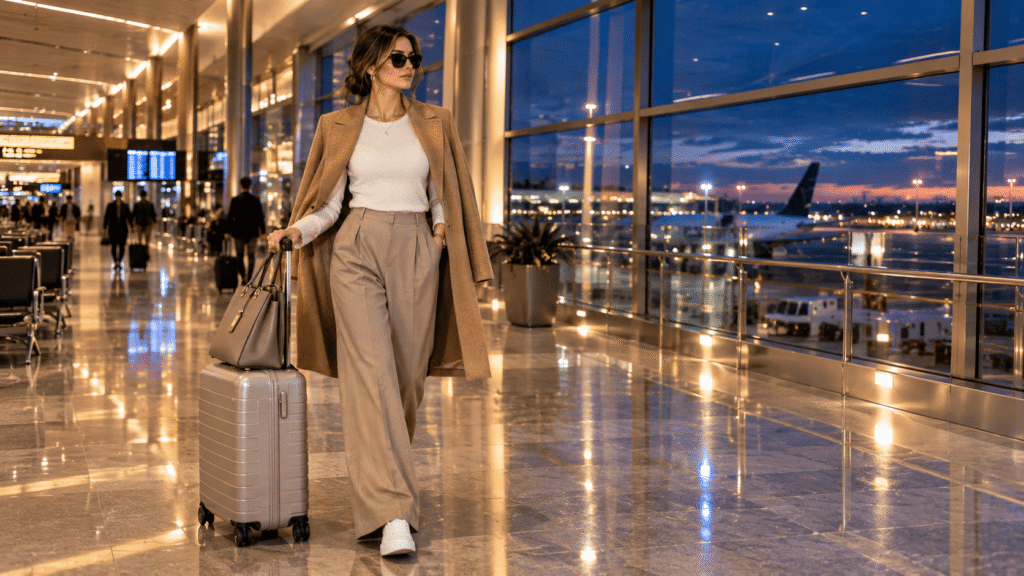
Traveling with only a carry-on can make airports easier, reduce waiting at baggage claim, and give you more flexibility when moving between hotels, trains, taxis, and flights. The challenge is knowing what deserves valuable space and what can stay home.
The best carry-on-only travel tips go beyond simply packing fewer clothes. A successful one-bag setup starts with your airline’s baggage rules, then considers the destination, weather, activities, laundry access, and your personal travel style. From there, you can build a compact wardrobe, control toiletries, organize electronics, and leave enough room to repack without turning your bag into a struggle.
This guide explains how to create a practical carry-on system for weekend trips, longer vacations, business travel, and journeys of 10 days or more.
What Is the Easiest Way to Travel Carry-On Only?
The easiest approach is to make your packing decisions in the right order:
- Check the airline’s current baggage allowance.
- Study your destination and itinerary.
- Choose a suitably sized bag.
- Build a versatile wardrobe.
- Limit shoes and bulky items.
- Reduce and organize toiletries.
- Separate essential items into your personal item.
- Plan for laundry on longer trips.
- Leave some space for repacking and souvenirs.
- Do a final size, weight, and security check before leaving.
This order matters. Choosing a bag first and then trying to force an itinerary into it often leads to overpacking.
Instead, work backward from what you actually need.
Check Your Airline’s Carry-On Rules First
One of the most important carry-on-only travel tips is also the easiest to overlook: your airline’s rules come before your packing list.
Carry-on dimensions and allowances vary by airline, aircraft, route, and fare. Some fares may also restrict whether a full-size carry-on is included.
For example, American Airlines currently lists a maximum carry-on size of 22 × 14 × 9 inches (56 × 36 × 23 cm), including wheels and handles, while its personal-item limit is 18 × 14 × 8 inches (45 × 35 × 20 cm). Other airlines may use different limits.
Before packing, check:
- Maximum carry-on dimensions
- Maximum personal-item dimensions
- Weight limits
- Whether your fare includes a full-size carry-on
- Whether your route has special restrictions
- Whether partner airlines apply different rules
- Whether the bag must fit a particular airport sizer
Do not assume that a bag marketed as “carry-on size” will automatically comply with every airline.
Why the Fare Matters
A major source of confusion is that baggage allowances can differ between fare types on the same airline.
Some basic fares may allow only an under-seat personal item, while other fares permit both a personal item and an overhead carry-on. American Airlines, for example, currently states that certain Basic Economy fares have restrictions on full-size carry-ons, depending on the itinerary and ticket conditions.
Best practice: check the baggage allowance attached to your actual booking, not merely the airline’s general baggage page.
Carry-On vs. Personal Item: Know the Difference
A carry-on bag generally goes in the overhead compartment.
A personal item generally needs to fit underneath the seat in front of you.
Think of them as two separate packing zones rather than two interchangeable bags.
Your Carry-On Should Hold
- Main clothing
- Shoes
- Larger toiletries
- Packing cubes
- Most nonessential electronics
- Bulkier travel items
Your Personal Item Should Hold
- Passport and travel documents
- Wallet
- Phone
- Laptop or tablet
- Chargers
- Medication
- Headphones
- Small valuables
- Flight essentials
- Anything you cannot afford to lose if the overhead bag is checked
The personal item can therefore act as your access and backup bag.
That is especially useful if your carry-on is unexpectedly checked at the gate.
Choose the Right Carry-On Bag
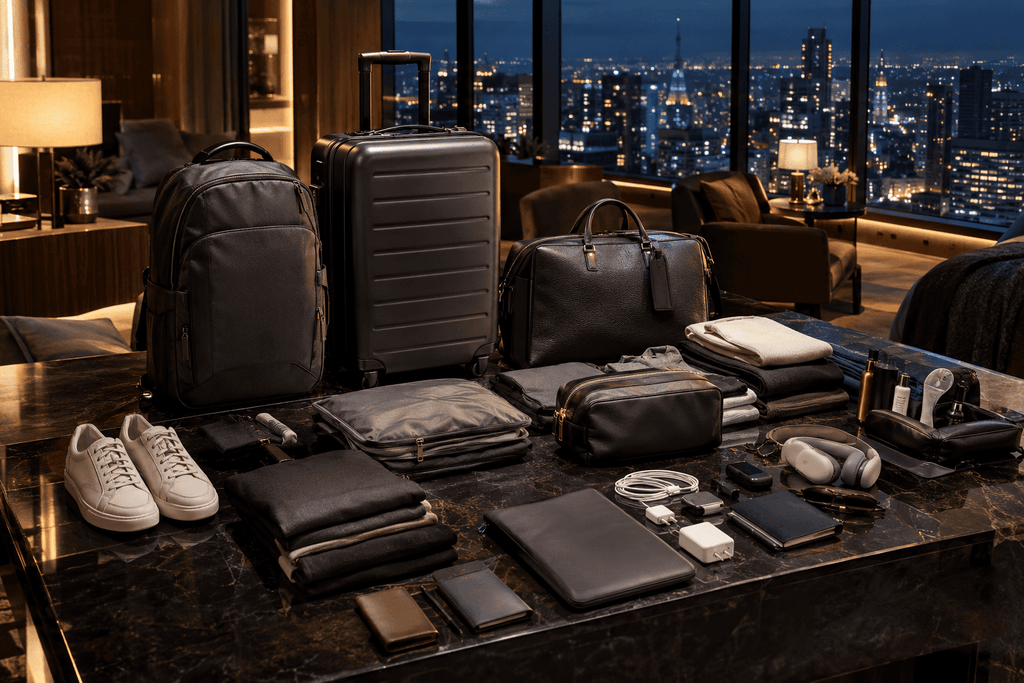
The best carry-on is not necessarily the largest one available. It is the bag that matches your itinerary and packing style.
Travel Backpack
A backpack works particularly well when your trip includes:
- Trains
- Public transportation
- Stairs
- Uneven streets
- Frequent hotel changes
- One-bag travel
- Walking between destinations
Its major advantage is mobility. You can keep both hands free and move through crowded stations more easily.
Wheeled Carry-On
A small rolling suitcase can be more comfortable when your trip involves:
- Airports
- Hotels
- Taxis
- Business travel
- Smooth sidewalks
- Formal clothing
- Heavier loads
It is particularly convenient when you spend more time rolling your luggage than carrying it.
Personal-Item-Only Travel
For short trips, a spacious under-seat bag may be enough.
This approach works best when you have:
- Warm-weather clothing
- Minimal toiletries
- Few shoes
- Laundry access
- A short itinerary
The key is not to treat personal-item-only travel as simply “carry-on travel with a smaller bag.” It requires a different packing strategy.
Build a Capsule Wardrobe That Creates More Outfits
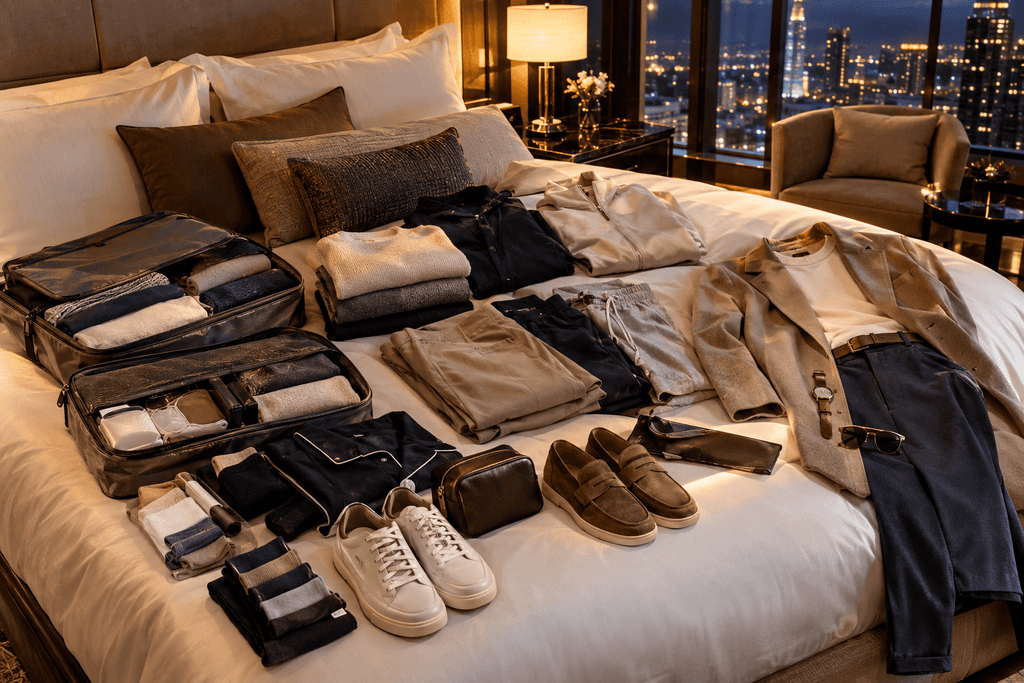
Clothing usually consumes more space than travelers expect.
The solution is not necessarily owning ultra-light travel clothing. It is choosing pieces that work together.
A practical travel wardrobe can include:
- 3–5 tops
- 2–3 bottoms
- 1 versatile outer layer
- Underwear and socks
- Sleepwear
- One comfortable travel outfit
- Optional activity-specific pieces
The exact quantity should depend on your trip.
A three-day city break does not need the same wardrobe as a two-week journey through changing climates.
Choose a Consistent Color Palette
A simple color palette makes a small wardrobe more versatile.
For example, you might build around:
- Black
- Navy
- White
- Gray
- Beige
- Denim
Then add one or two accent colors.
The objective is simple: most tops should work with most bottoms.
That gives you more combinations without adding more clothing.
Pack Layers Instead of Bulky Pieces
Layering is especially valuable when temperatures change throughout the day.
Instead of packing several heavy garments, consider:
- Lightweight base layer
- Shirt or knit layer
- Light jacket
- Weather-resistant outer layer when necessary
This gives you more control over changing temperatures while reducing unnecessary bulk.
Limit Your Shoes
Shoes are among the least space-efficient items in a carry-on.
For many trips, two pairs are enough:
- One pair that works for walking and transportation
- One pair for a specific need such as formal occasions, workouts, beaches, or evenings
Your exact combination depends on your itinerary.
If you are attending a wedding, hiking, or visiting a destination with a strict dress code, additional footwear may be justified.
Otherwise, ask yourself:
Can one pair perform two jobs?
Wear your bulkiest shoes during transit whenever practical rather than using valuable bag space for them.
Pack Toiletries Without Wasting Space
Toiletries can quietly consume an entire packing cube.
Start by separating what you need from what you simply prefer to bring from home.
Instead of full-size products, consider:
- Travel-size containers
- Solid toiletries
- Multipurpose products
- Minimal skincare
- Smaller cosmetics
- Hotel-provided essentials when appropriate
For flights departing from or traveling through U.S. TSA screening, the standard carry-on liquids, gels, and aerosols rule is commonly summarized as the 3-1-1 rule: containers of 3.4 ounces (100 mL) or less, placed in one quart-size clear bag, with one such bag per passenger.
However, security procedures can vary by country and airport, so international travelers should verify the rules that apply to their specific journey.
Make Your Liquids Easy to Reach
If your airport requires you to remove liquids during screening, putting them at the bottom of your suitcase creates unnecessary repacking.
TSA’s current travel checklist recommends keeping the liquids bag accessible, along with packing large electronics where they can be easily screened when required.
Use a Packing System That Keeps Everything Accessible
The goal of packing cubes is not to magically create more luggage capacity.
Their real value is organization and compression.
A simple system might be:
Cube 1: Tops
Cube 2: Bottoms and layers
Cube 3: Underwear and socks
Small pouch: Toiletries
Shoe bag: Footwear
Tech pouch: Chargers and electronics
You can also organize by activity rather than clothing category:
- Daytime
- Evening
- Workout
- Beach
- Business
Choose whichever system makes finding things easiest for you.
Roll or Fold?
Neither technique is universally superior.
Rolling can work well for:
- T-shirts
- Casual trousers
- Lightweight garments
- Soft fabrics
Folding may work better for:
- Structured shirts
- Blazers
- Delicate garments
- Clothing that wrinkles easily
The most important principle is consistency and avoiding empty pockets of wasted space.
Pack Heavy Items Strategically
Weight distribution matters almost as much as volume.
Place heavier items close to the bag’s center rather than allowing them to sit awkwardly at the top or outside edges.
Good candidates for the bottom or central area include:
- Shoes
- Chargers
- Compact electronics
- Dense accessories
Keep frequently accessed items toward the top or in external compartments.
If you are using a backpack, distribute weight so it remains comfortable rather than simply trying to maximize every cubic inch.
Keep Airport Essentials in Your Personal Item
Your personal item should be the bag you can access without opening your main luggage.
Keep together:
- Passport
- Identification
- Boarding information
- Wallet
- Phone
- Headphones
- Laptop
- Chargers
- Medication
- Glasses
- Essential documents
This creates a simple rule:
If you might need it during the flight or cannot replace it easily, keep it with you.
That includes important medication, valuable electronics, and critical travel documents.
Make Security Easier With Smart Packing
Efficient airport security begins before you leave home.
Keep potentially screenable items organized and easy to access.
Depending on the airport’s current screening procedures, you may be asked to remove certain electronics or liquids. Procedures can differ because screening equipment and airport programs vary.
TSA notes that newer screening technologies at some U.S. airports can reduce the need to remove certain items, but travelers should still follow the instructions at the checkpoint rather than assuming one procedure applies everywhere.
A good carry-on setup therefore uses accessible organization rather than relying on one universal security routine.
Leave Some Space in Your Carry-On
One of the most underrated carry-on-only travel tips is to avoid filling the bag to absolute capacity.
A completely full suitcase creates problems when:
- Clothing expands after unpacking
- Laundry needs to be stored
- You buy something during the trip
- You need to repack quickly
- Security requires you to rearrange your belongings
Leaving a modest amount of unused capacity makes the bag easier to manage.
You do not need to fill every available pocket simply because it exists.
How to Travel Carry-On Only for 10–14 Days
The secret to longer carry-on travel is not bringing 14 days of clothing.
Instead, pack for approximately one week or less and use laundry strategically.
For a typical 10–14-day trip, a flexible starting point might include:
- 4–6 tops
- 2–3 bottoms
- 1–2 outer layers depending on climate
- 7–10 sets of underwear and socks, or fewer with planned washing
- 1 sleep option
- 1–2 pairs of shoes
- Essential toiletries
- Electronics
- Destination-specific equipment
This is a framework, not a universal prescription.
A cold-weather trip may require more bulky layers. A tropical trip may require less clothing volume. A business trip may require additional formal pieces.
The Laundry Rule
Laundry changes the equation.
Instead of asking:
“How much clothing do I need for 14 days?”
Ask:
“How many days do I need to cover between laundry opportunities?”
That single change in thinking makes longer one-bag travel much more manageable.
Adapt Your Packing to the Weather
Your destination’s climate should influence the entire packing strategy.
Hot Weather
Prioritize:
- Lightweight breathable clothing
- Quick-drying fabrics
- Minimal layering
- Compact sandals or lightweight shoes
- Sun protection
Cold Weather
Prioritize:
- Layering
- Compact insulating pieces
- One versatile outer layer
- Warm accessories
- Clothing that can be worn repeatedly
Wear your bulkiest practical layers during transportation when comfortable.
Rainy Weather
Consider:
- Compact rain shell
- Quick-drying clothing
- Water-resistant bag protection
- Shoes appropriate for wet conditions
Avoid bringing several heavy weather-specific garments when one versatile layer can cover multiple situations.
Adapt Your Packing to the Type of Trip
Weekend City Trip
Focus on:
- One comfortable outfit
- A small interchangeable wardrobe
- Minimal toiletries
- One primary pair of shoes
Business Trip
Prioritize:
- Wrinkle-resistant clothing
- Versatile trousers
- Formal shoes
- Technology
- Work documents
- A compact grooming kit
Beach Vacation
Reduce bulky clothing and prioritize:
- Swimwear
- Lightweight tops
- Shorts or breathable bottoms
- Sun protection
- Sandals
- A compact evening outfit if required
Multi-City Trip
This is where carry-on-only travel becomes particularly useful.
Choose clothing that works across multiple destinations rather than building a separate wardrobe for each stop.
What to Do With Laundry
Laundry does not need to be complicated.
Possible options include:
- Hotel laundry service
- Self-service laundromats
- Sink washing
- Local laundry services
- Washing a few lightweight items during the trip
For sink washing, prioritize lightweight garments that dry reasonably quickly.
Do not wait until every item is dirty. Washing a small number of pieces periodically is usually easier than creating one enormous laundry session.
Common Carry-On-Only Travel Mistakes
1. Buying the Biggest Bag Available
More space often encourages more packing.
Choose your bag according to your airline and itinerary rather than shopping for maximum capacity.
2. Ignoring Airline-Specific Rules
A bag can meet a common carry-on standard and still fail a particular airline’s requirements.
Always verify the current rules for your ticket.
3. Packing for Every Possible Situation
Travelers often pack hypothetical outfits instead of outfits they are actually likely to wear.
Build around the itinerary.
4. Bringing Too Many Shoes
Shoes consume disproportionate space and weight.
Choose versatile footwear whenever possible.
5. Packing Full-Size Toiletries
Large bottles are often unnecessary for short and medium-length trips.
Decant, simplify, or use compact alternatives where practical.
6. Forgetting Laundry
If you refuse to wash anything, your clothing requirements increase dramatically.
Laundry is one of the most powerful tools in one-bag travel.
7. Filling Every Pocket
Unused space is not wasted space.
It gives you flexibility.
8. Putting Essential Items in the Overhead Bag
Do not place your passport, essential medication, valuable electronics, or irreplaceable documents somewhere you cannot access easily.
9. Ignoring Weight
A bag can fit within the dimensional limit and still exceed an airline’s weight restriction.
If your airline has a weight limit, check the packed bag before leaving.
10. Forgetting the Return Journey
Think about what happens after you buy souvenirs, collect laundry, or move between hotels.
The best carry-on setup works on day one and remains manageable on the final day.
A Simple Final Carry-On Packing Checklist
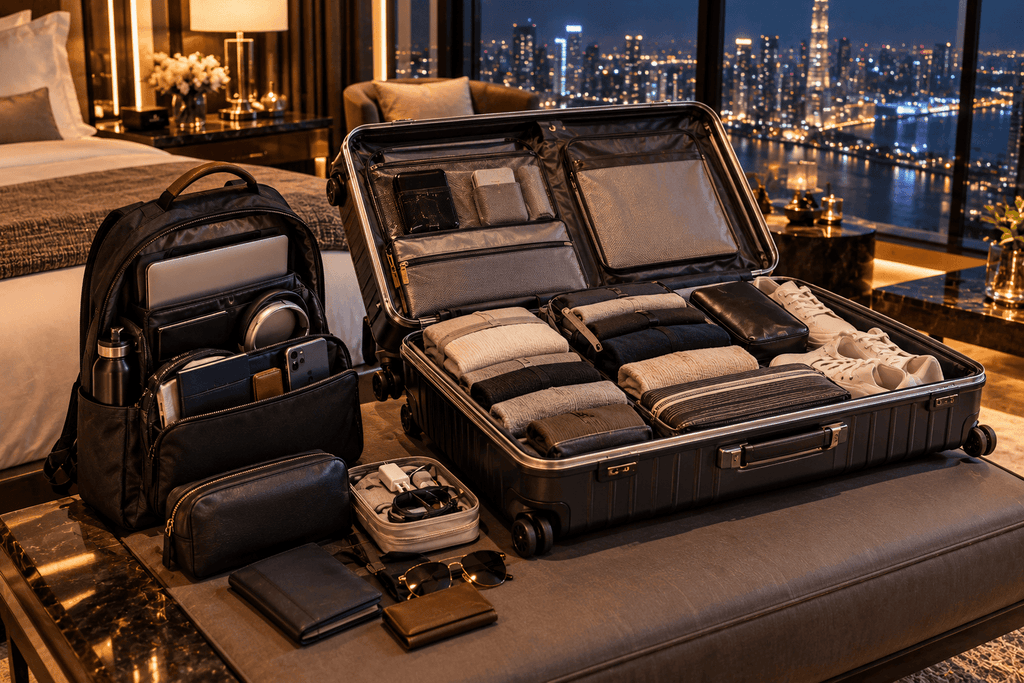
Before leaving home, check the following:
Documents
- Passport
- Visa or entry documents where applicable
- Identification
- Boarding information
- Travel insurance information
- Important reservations
Clothing
- Versatile tops
- Bottoms
- Underwear
- Socks
- Sleepwear
- Outer layer
- Activity-specific clothing
Shoes
- Primary walking shoes
- Optional second pair
Toiletries
- Toothbrush
- Toothpaste
- Skincare
- Deodorant
- Essential grooming items
- Necessary liquids within applicable limits
Technology
- Phone
- Chargers
- Power adapters
- Laptop or tablet if needed
- Headphones
- Essential accessories
Personal Item
- Passport
- Wallet
- Phone
- Medication
- Valuables
- Travel documents
- In-flight essentials
Final Checks
- Confirm airline baggage allowance
- Measure the packed bag if necessary
- Check weight if a limit applies
- Review destination weather
- Check current security requirements
- Remove unnecessary items
- Leave some space for the return journey
FAQs
1. How do you pack carry-on only for a long trip?
Pack for the time between laundry opportunities rather than the entire length of the trip. Build a versatile wardrobe, limit shoes, minimize toiletries, and plan to wash clothing during the journey.
2. How many clothes should you pack in a carry-on?
There is no universal number. A practical starting point for many trips is roughly 4–6 tops, 2–3 bottoms, underwear and socks, one sleep option, and layers appropriate to the weather. Adjust this according to your activities, climate, and laundry access.
3. Is a backpack or suitcase better for carry-on-only travel?
A backpack can be more convenient for multi-city trips, public transportation, stairs, and frequent walking. A wheeled suitcase can be more comfortable for airport-heavy or business trips. The better choice depends on how you will actually move through the destination.
4. Can you travel for two weeks with only a carry-on?
Yes, provided your itinerary and packing strategy support it. Two weeks does not require two weeks of clothing. A compact wardrobe combined with planned laundry can make a longer trip practical.
5. What is the biggest mistake when traveling carry-on only?
The biggest practical mistake is packing according to the bag’s capacity instead of the trip’s actual requirements. Start with airline rules, destination conditions, activities, and laundry access, then build the smallest practical packing list around them.
Conclusion
The most effective carry-on-only travel tips are less about owning specialized gear and more about making deliberate decisions. Check your airline’s current allowance, choose a bag that suits your route, build a coordinated wardrobe, limit footwear and toiletries, keep essentials in your personal item, and use laundry to extend your packing capacity.
For short trips, carry-on-only travel can be remarkably simple. For longer journeys, the key is not packing more efficiently at the last minute but planning differently from the beginning.
The goal is a bag that contains what you genuinely need, remains easy to carry, and still leaves you enough flexibility to enjoy the trip rather than constantly managing your luggage.
.