
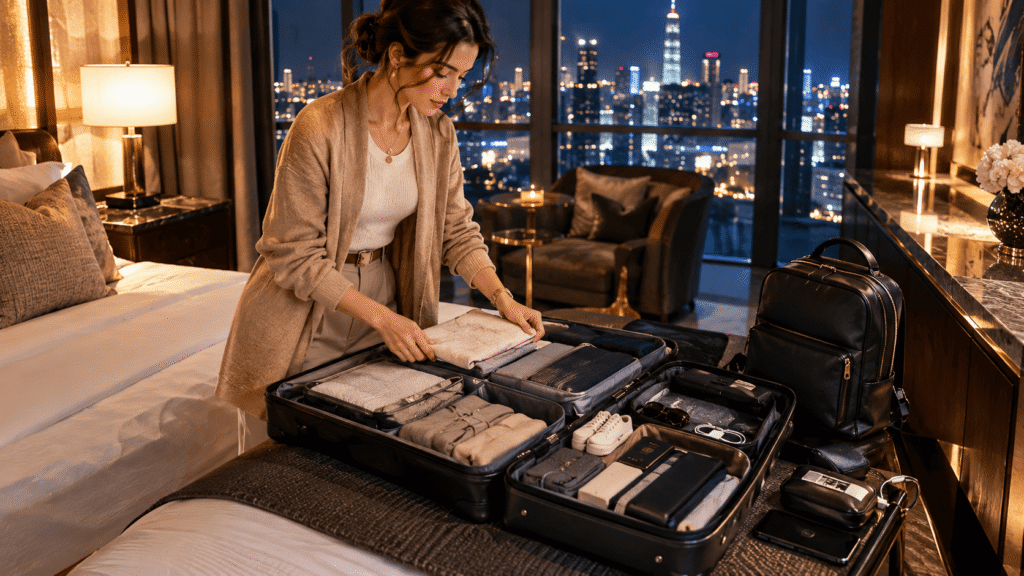
Travel packing can feel overwhelming, especially when you’re trying to fit everything you need into one suitcase without overpacking. Whether you’re planning a weekend getaway, a family vacation, a business trip, or a longer international adventure, the right packing strategy can make your entire journey easier.
For travelers in the USA, smart packing is especially useful when flying. A well-organized carry-on can help you move through airports faster, keep important belongings close, and reduce the stress associated with checked luggage. Current packing experts continue to recommend lightweight luggage, versatile clothing, compression packing cubes, and carefully planned toiletries for more efficient travel.
The goal isn’t to pack everything you might possibly need. It’s to pack the right things in the right way.
Start With a Travel Packing Plan
One of the biggest packing mistakes is opening your suitcase and immediately throwing clothes inside. Instead, start by thinking about your destination, trip length, weather, activities, and transportation.
Ask yourself a few simple questions:
- How many days will I be away?
- What will the weather be like?
- Will I need casual, business, or formal clothing?
- How many pairs of shoes will I realistically wear?
- Am I checking luggage or traveling with a carry-on?
- Will I have access to laundry?
- Are there special items I need for activities?
Creating a basic packing list before touching your suitcase helps prevent both overpacking and forgetting essentials.
A useful rule is to plan outfits rather than individual clothing pieces. For example, instead of packing five random shirts, choose shirts that work with the same pants, shorts, or skirts. This creates more combinations without adding unnecessary weight.
Choose the Right Luggage
Your luggage is the foundation of your packing strategy. A heavy suitcase can use up valuable weight before you’ve even added your clothes.
If you prefer carry-on travel, choose a durable suitcase that provides useful interior space while remaining easy to maneuver. Frequent travelers often favor lightweight hard-shell luggage because it offers structure and protection while making organization easier.
For longer vacations, a checked suitcase may make sense. However, don’t automatically choose the biggest bag available. Extra space can encourage you to pack things you don’t actually need.
A good suitcase should have:
- Smooth-rolling wheels
- A comfortable handle
- Durable zippers
- Useful interior compartments
- A reasonable empty weight
- A size appropriate for your airline and trip
Before flying, always check your airline’s current baggage dimensions and weight requirements because policies can vary.
Build a Versatile Travel Wardrobe
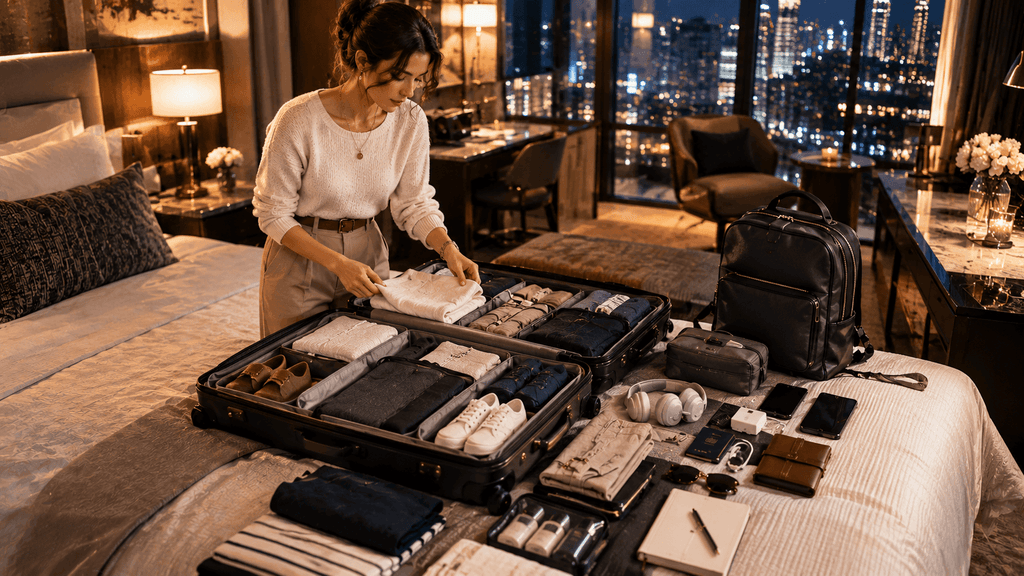
Clothing usually takes up the most space in a suitcase, so it deserves the most attention.
The easiest way to pack less is to create a small capsule wardrobe. Choose neutral colors and pieces that can be mixed and matched. A few versatile items can create considerably more outfits than a suitcase full of single-purpose clothing.
For example, you might pack:
- 3–5 tops
- 2–3 bottoms
- 1 versatile dress or jumpsuit
- 1 lightweight jacket
- Comfortable sleepwear
- Underwear and socks
- One outfit suitable for a nicer dinner
- Comfortable travel shoes
For colder destinations, focus on layers instead of bringing one enormous coat plus numerous bulky pieces. Lightweight sweaters, shirts, jackets, and thermal layers can often be combined according to the temperature.
Travel experts also recommend choosing clothing made from lightweight, versatile fabrics that can be worn repeatedly without creating excessive bulk.
Use Packing Cubes to Organize Everything
Packing cubes are one of the simplest ways to transform a messy suitcase into an organized travel system.
Instead of throwing everything together, separate your belongings into categories. You might use one cube for shirts, another for pants, another for underwear and socks, and another for workout or swimwear.
Compression packing cubes can go a step further by reducing the bulk of clothing. They’re particularly useful when you’re trying to fit several days of clothing into a carry-on.
Another advantage is organization. When you arrive at your hotel, you don’t have to unpack the entire suitcase. You can simply remove the cubes you need.
For longer trips, consider leaving one cube available for dirty clothes. This keeps worn clothing separated from clean items.
Pack Shoes Strategically
Shoes are often among the heaviest and bulkiest items in a suitcase. That makes them an easy place to save space.
For most trips, two or three pairs are enough. Choose shoes based on versatility rather than appearance alone.
A practical combination might include:
- Comfortable walking sneakers
- Sandals or casual shoes
- One dressier option
Wear your heaviest shoes while traveling whenever practical. This frees up suitcase space and reduces the weight of your luggage.
There’s another useful trick: use the inside of your shoes. Socks, underwear, swimsuits, and other small soft items can be placed inside footwear to make use of otherwise wasted space. This technique is also recommended by professional packing experts.
Place shoes inside shoe bags or reusable plastic bags to keep the soles away from clean clothing.
Pack Toiletries the Smart Way
Toiletries can quickly turn a small suitcase into an overloaded one.
Rather than carrying full-size bottles, transfer necessary products into appropriately sized travel containers. This reduces both weight and wasted space.
Think carefully about what you actually use every day. You probably don’t need your entire bathroom cabinet for a seven-day vacation.
A basic travel toiletry kit may include:
- Toothbrush and toothpaste
- Face cleanser
- Moisturizer
- Sunscreen
- Deodorant
- Shampoo and conditioner
- Hairbrush or comb
- Minimal makeup
- Razor
- Personal hygiene products
- Essential medications
If you’re flying from a U.S. airport, remember that TSA’s current carry-on liquids guidance follows the 3-1-1 rule: containers must generally be 3.4 ounces or less, liquids must fit into one quart-size clear bag, and each passenger is generally limited to one such bag.
Keep your liquids bag somewhere accessible. TSA specifically recommends making liquids and large electronics easy to remove during screening.
Keep Important Items in Your Carry-On
Even if you’re checking a suitcase, certain belongings should stay with you.
Your personal item or carry-on should contain anything you would need if your checked bag were delayed.
Consider keeping these items with you:
- Passport or government ID
- Wallet
- Credit cards
- Phone
- Chargers
- Prescription medications
- Essential toiletries
- Travel documents
- Laptop or tablet
- Headphones
- A change of clothes
- Valuable jewelry or electronics
For international travel, keep important travel documents together in a secure, easily accessible location.
A small travel organizer can prevent you from searching through multiple pockets every time you need your passport or boarding information.
Create a Practical Personal Item
Your personal item shouldn’t become a second suitcase filled with random belongings.
A structured backpack or tote can be more useful because it keeps important items accessible during the journey. Look for compartments for electronics, documents, water bottles, and smaller accessories.
Keep the things you’re most likely to use during transit near the top.
For example, your airport essentials might include headphones, a charger, reading material, hand sanitizer, snacks, and a lightweight layer.
A well-organized personal item can also make airport transfers easier because you won’t need to repeatedly open your main suitcase.
Don’t Pack for Every Possible Situation
One of the hardest packing habits to break is preparing for every imaginary scenario.
You probably don’t need three extra outfits “just in case,” multiple jackets for a warm destination, or five pairs of shoes because you might suddenly attend different events.
Before adding an item, ask:
“Will I realistically use this?”
If the answer is uncertain, leave it behind.
Remember that many destinations have stores, pharmacies, supermarkets, and laundry services. You don’t have to bring your entire life with you.
Packing fewer items also gives you flexibility. You’ll have more room for souvenirs, local purchases, and unexpected finds.
Use the Right Packing Method
There are several ways to arrange clothing, but the best method depends on your luggage and wardrobe.
Rolling softer clothing can help create compact bundles, while folding structured pieces may prevent unnecessary wrinkles. Packing cubes can combine organization with either method.
A simple suitcase layout works well:
Bottom: shoes and heavier items
Middle: packing cubes and folded clothing
Top: jacket, frequently needed clothing, and toiletries
Easy-access pocket: documents and travel essentials
TSA recommends packing belongings in layers, such as separating shoes, clothes, and electronics, and placing large electronics near the top of your carry-on for easier screening.
The key is not to fill every available space. Leave a little room so your suitcase remains easy to close.
Prepare Your Electronics
Modern travel often involves several electronic devices, which means cables can become surprisingly difficult to manage.
Before leaving, identify exactly which devices you’ll use.
You might need:
- Smartphone
- Laptop or tablet
- Charging cables
- Wall charger
- Power bank
- Headphones
- Travel adapter for international destinations
A compact electronics organizer can keep cables from becoming tangled throughout your bag.
Avoid bringing multiple cables that serve no purpose. If one charger can safely support several devices, it may be the better option.
Keep valuable electronics and important devices in your carry-on rather than checked luggage.
Do a Final Packing Check
Don’t wait until you’re rushing to the airport to discover that you forgot something important.
The night before departure, perform a final check.
Confirm that you have:
- Identification
- Travel documents
- Wallet
- Phone
- Chargers
- Medications
- Toiletries
- Weather-appropriate clothing
- Comfortable shoes
- Necessary electronics
- House keys
- Any destination-specific essentials
Check your luggage one final time for prohibited or restricted items if you’re flying.
TSA also recommends reviewing its prohibited-items guidance before packing, especially when you’re uncertain about an item.
The Best Travel Packing Strategy Is Simple
Great travel packing isn’t about owning the most sophisticated luggage or buying every travel accessory available.
It’s about making thoughtful decisions.
Choose versatile clothing. Limit your shoes. Use packing cubes. Downsize toiletries. Keep important items accessible. Wear your heaviest practical clothing during transit. And most importantly, avoid packing things simply because you have room.
For many travelers, carry-on-only packing can make a trip feel dramatically easier because there’s less luggage to maneuver and less dependence on baggage claim.
The perfect suitcase isn’t the one packed to the limit. It’s the one containing everything you actually need—with enough organization and flexibility to make your journey comfortable.
Once you develop a reliable packing system, every trip becomes easier. Instead of starting from scratch before every vacation, you’ll know what works, what doesn’t, and exactly what deserves a place in your bag.
1 comment