
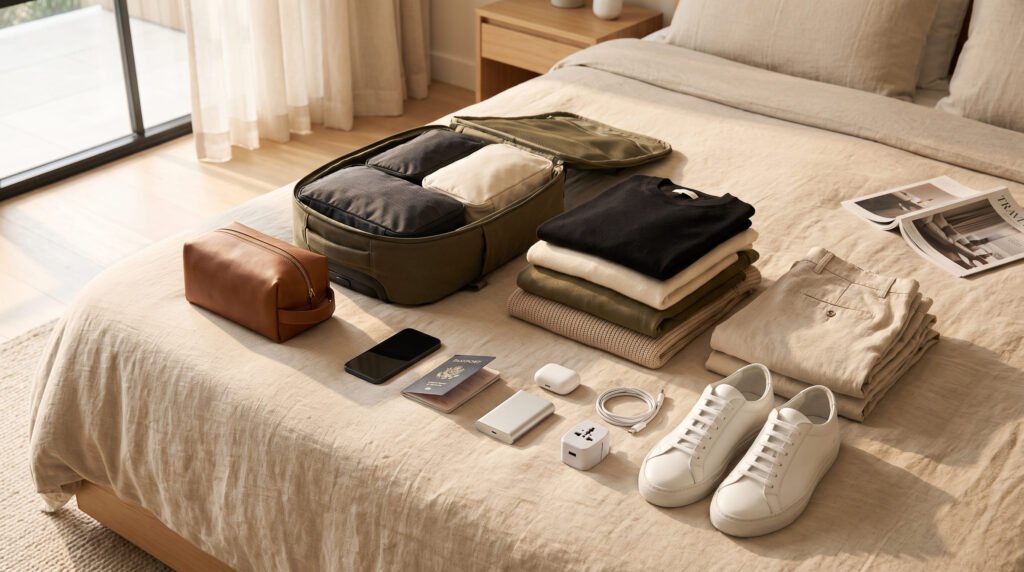
The best minimalist travel gear is not about owning the smallest number of things possible. It is about carrying the right things for your actual trip—and leaving behind the products that add weight, take up space, and solve problems you are unlikely to have.
A lightweight, well-planned travel setup can make airports easier, reduce the risk of lost luggage, simplify hotel changes, and help you move comfortably from one place to another. The goal is not to become a hardcore one-bag traveler overnight. It is to build a travel gear system that works for your destination, climate, trip length, airline, and personal travel style.
This guide explains how to choose minimalist travel gear, what you genuinely need, what is usually optional, and how to pack smarter without sacrificing comfort.
What Does Minimalist Travel Gear Actually Mean?
Minimalist travel gear means choosing fewer, more versatile, and more useful items.
It does not necessarily mean:
- Traveling with only one tiny backpack
- Owning expensive specialist gear
- Wearing the same outfit every day
- Refusing to check a bag
- Eliminating everything except the absolute basics
A practical minimalist setup focuses on three questions:
- Will I realistically use this?
- Can another item already do the same job?
- Is it worth the weight and space it requires?
If the answer is no, the item probably does not need to come.
The best travel setups are usually built around a small number of dependable categories: a suitable bag, versatile clothing, comfortable shoes, basic organization, necessary toiletries, and only the technology you will genuinely use.
Start With Your Trip, Not a Shopping List
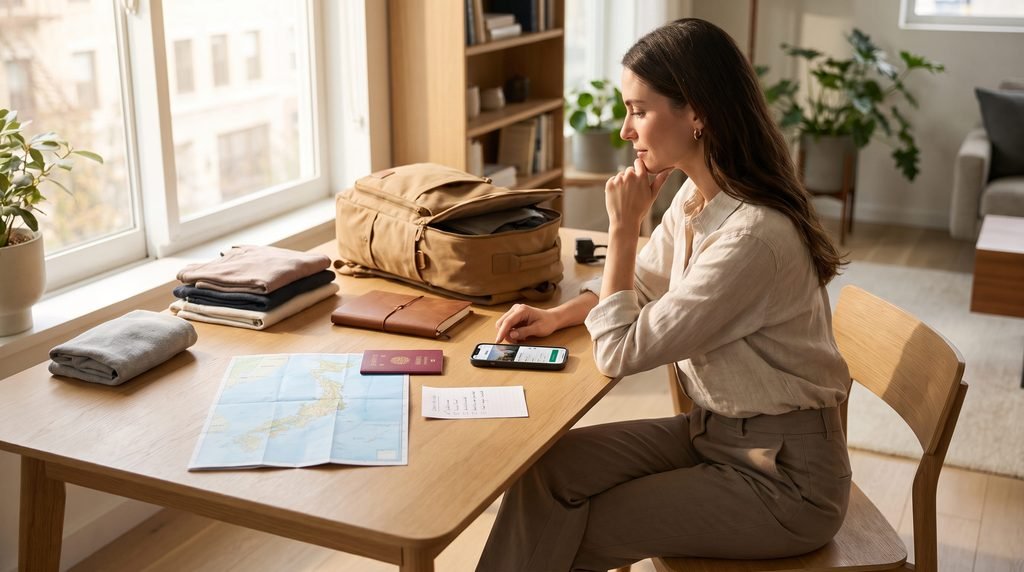
One of the biggest travel gear mistakes happens before packing even begins: buying products before understanding the trip.
The same gear setup will not work equally well for a weekend in New York, a winter trip across Europe, a beach holiday, a business trip, or a month of remote work.
Before choosing your travel gear, consider:
- Trip length
- Destination climate
- Number of hotel changes
- Airline baggage rules
- Planned activities
- Laundry access
- Whether you will work while traveling
- How much walking you expect to do
- Whether you prefer mobility or maximum comfort
For example, a traveler moving between five cities by train may benefit from a comfortable backpack and fewer belongings. Someone taking a road trip and staying in one hotel may find a larger suitcase completely practical.
Minimalism should make travel easier—not force you into a system that does not suit the journey.
The Essential Minimalist Travel Gear System
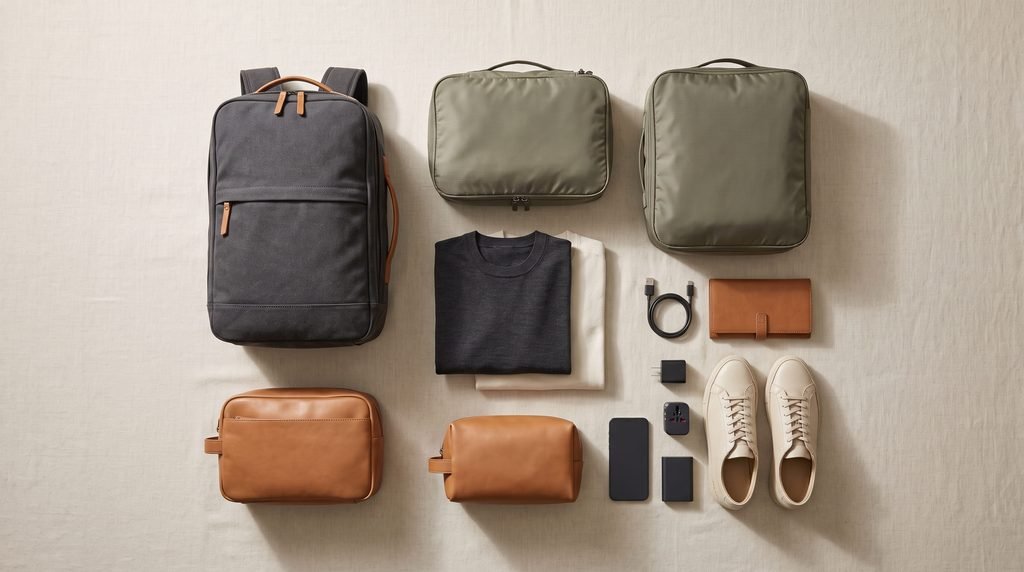
A useful travel setup can usually be organized into six main categories.
1. A Main Travel Bag
Your main bag determines how much you can physically bring, so choose it before filling it.
The best option depends on how you travel.
A backpack is best for:
- Multi-city trips
- Frequent train travel
- Uneven streets or stairs
- Carrying your bag for longer distances
- Travelers who value mobility
A wheeled carry-on is best for:
- Business travel
- Airport-to-hotel trips
- Smooth urban environments
- Travelers who prefer not to carry weight on their back
An underseat bag is best for:
- Short trips
- Personal-item-only fares
- Travelers who pack very lightly
- Quick weekend travel
There is no universally perfect bag size. A compact personal-item setup may work for a short trip, while a larger carry-on may be more realistic for cold weather or longer journeys.
The important rule is simple: check the current size and weight allowance for your specific airline before buying or packing a bag. Airline rules can differ significantly.
2. Simple Organization
Good organization is useful. Too many organizers are not.
A practical setup might include:
- One or two packing cubes
- A small pouch for toiletries
- A compact pouch for cables and electronics
- A secure pocket or pouch for documents
Packing cubes can help separate categories and make hotel changes easier. However, you do not need a different cube for every type of clothing.
The goal is to create a system that helps you find things quickly.
3. A Versatile Clothing System
Clothing is where most overpacking happens.
Instead of packing for every possible situation, build a small group of pieces that work together. Choose clothing that can be:
- Layered
- Repeated
- Mixed into different outfits
- Worn in different temperatures
- Dressed up or down when needed
A travel capsule might include:
- Several interchangeable tops
- One or two versatile bottoms
- A layer for warmth
- A lightweight outer layer when needed
- Underwear and socks
- Sleepwear
- Clothing required for specific activities
The exact number depends on your trip, but packing for laundry is usually smarter than packing for every day of a long journey.
For example, a 14-day trip does not automatically require 14 complete outfits.
4. Comfortable Shoes
Shoes are among the bulkiest travel items, which is why a minimalist approach matters.
For many city trips, one pair of comfortable walking shoes may be enough. A second pair should earn its place by serving a clearly different purpose.
Consider bringing another pair when you need:
- Formal shoes
- Hiking footwear
- Sandals for hot weather
- Water-friendly footwear
- Shoes suitable for a specific activity
A useful rule is:
Wear the bulkiest pair during travel and pack only the additional pair you will realistically use.
New shoes are also a poor travel experiment. Break them in before departure.
5. A Minimal Toiletry Kit
Toiletries should be based on what you actually need, not what might be useful in theory.
A practical kit may include:
- Toothbrush and toothpaste
- Deodorant
- Basic skincare
- Hair essentials
- Prescription medication
- Glasses or contact-lens supplies
- Any destination-specific health items
Transfer only what is practical into smaller containers rather than carrying full-size products for a short trip.
For U.S. airport security, carry-on liquids, aerosols, gels, creams, and pastes generally remain subject to TSA liquid restrictions, although exceptions and screening procedures can apply. Check the official rules for your airport and itinerary before flying.
6. Technology You Will Actually Use
The best minimalist travel tech is usually less complicated than a shopping guide suggests.
For a basic trip, you may need only:
- Smartphone
- Charging cable
- Wall charger
- Plug adapter when traveling internationally
- Power bank, if useful for your trip
A laptop may be essential for remote work but unnecessary for a short holiday. A camera may be worthwhile for a photographer but redundant for someone happy with their phone.
Pack technology according to your real needs—not according to the possibility that you might use it.
For U.S. air travel, spare lithium batteries and power banks must generally remain in carry-on baggage rather than checked luggage, and battery capacity limits can apply. If a carry-on is checked at the gate, these items should be removed and kept in the cabin. Individual airlines and international routes may have additional restrictions.
Backpack vs Carry-On Suitcase vs Underseat Bag
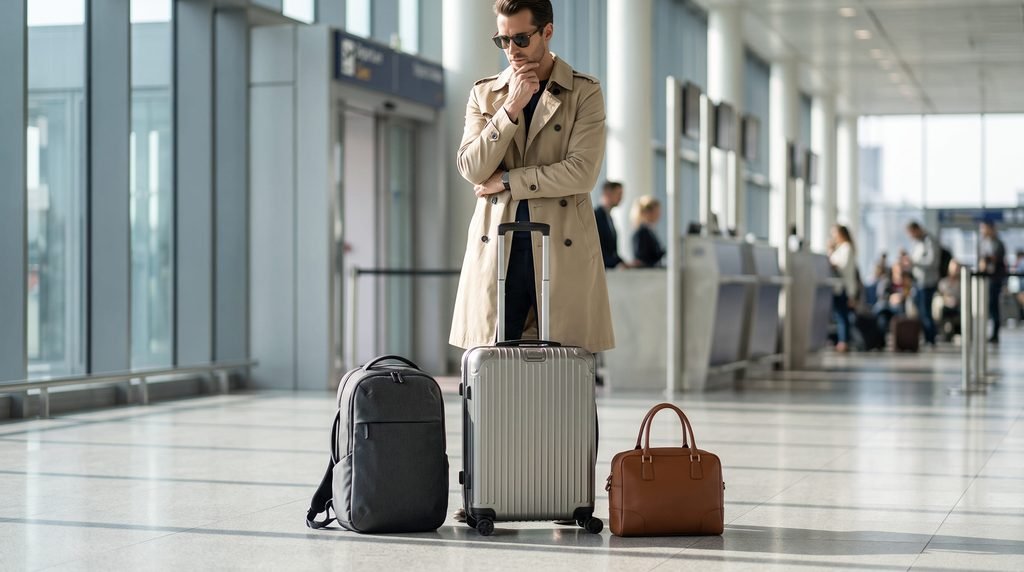
Choosing the right luggage matters more than buying lots of accessories.
Backpack
Best for: Multi-city travel, public transportation, stairs, frequent movement.
Advantages:
- Easy to carry over rough ground
- Hands remain relatively free
- Convenient for moving quickly
- Often better for one-bag travel
Potential drawbacks:
- Can become uncomfortable when overloaded
- Heavy bags strain your shoulders and back
- Organization may be less convenient than a suitcase
Carry-On Suitcase
Best for: Urban trips, business travel, airport-heavy itineraries.
Advantages:
- Easy access to belongings
- No weight on your back
- Often more structured and organized
Potential drawbacks:
- Less convenient on stairs and rough streets
- Wheels and handles add weight
- Carry-on size can vary by airline
Underseat Bag
Best for: Short trips and strict low-cost airline fares.
Advantages:
- Compact
- Can avoid overhead-bin competition
- Often useful as a personal item
Potential drawbacks:
- Requires more disciplined packing
- May be insufficient for winter or equipment-heavy travel
The best choice
Choose a backpack if mobility matters most.
Choose a wheeled carry-on if comfort and easy access matter more.
Choose an underseat bag if your trip is short and you are comfortable traveling with fewer belongings.
What Travel Gear Do You Actually Need?
A useful way to avoid overbuying is to divide gear into three groups.
Essential
These items usually deserve priority:
- Main travel bag
- Travel documents
- Weather-appropriate clothing
- Comfortable footwear
- Toiletries
- Medication
- Phone
- Charger
- Required plug adapter
- Payment methods
Useful, Depending on the Trip
Consider these based on your itinerary:
- Packing cubes
- Power bank
- Daypack
- Reusable water bottle
- Laundry pouch
- Travel towel
- Compact umbrella
- Camera
- Laptop
- Noise-reducing headphones
Often Unnecessary
These are not always useless, but many travelers buy them without a genuine need:
- Multiple duplicate bags
- Large collections of travel organizers
- Single-purpose gadgets
- Too many backup chargers
- Full-size toiletries for short trips
- More than one or two unnecessary pairs of shoes
- Clothing packed for unlikely situations
- Heavy “just in case” equipment
The more specialized an accessory is, the more carefully you should consider whether it belongs in your bag.
Clothing and Shoes: Where Most Overpacking Happens
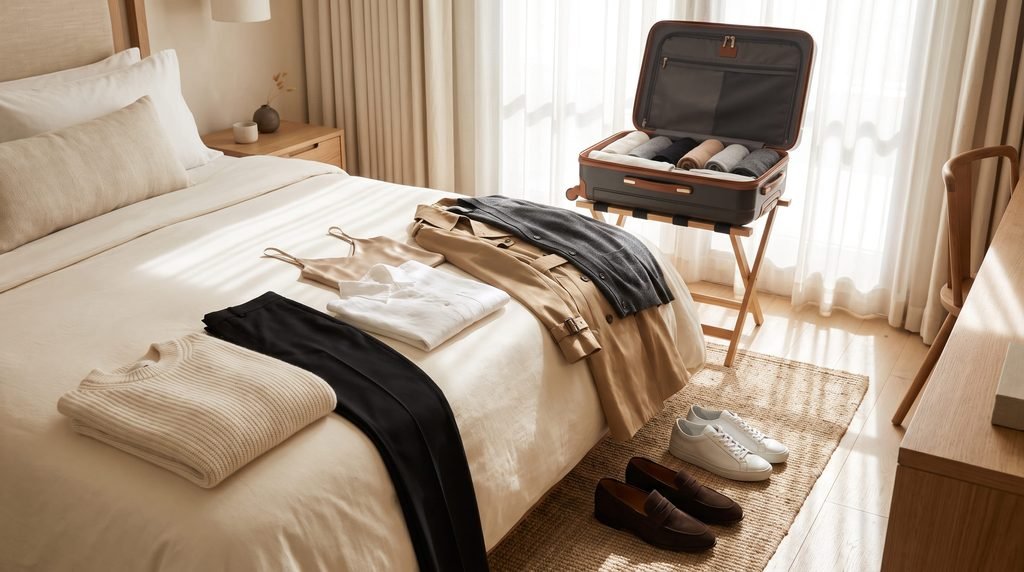
The easiest way to pack lighter is often not buying a lighter suitcase. It is reducing the number of clothing combinations you believe you need.
Build around a small color palette
Choose colors that combine easily. You do not need a perfectly coordinated wardrobe, but it should be easy to wear one piece with several others.
Layer instead of packing separate outfits for every temperature
A flexible layering system can adapt more effectively than multiple bulky outfits.
For example:
- Base layer
- Everyday top
- Light insulating layer
- Weather-appropriate outer layer
This approach is especially useful when traveling between destinations with different temperatures.
Pack for repetition
Most travelers do not need completely unique outfits every day.
If a piece is comfortable, versatile, and appropriate for the destination, wear it again.
Pack for your actual activities
A glamorous evening outfit is unnecessary if your itinerary consists entirely of hiking. Multiple hiking outfits may be unnecessary for a city break.
Your activities—not your imagination—should determine your packing list.
Travel Tech: Pack for Your Real Travel Style
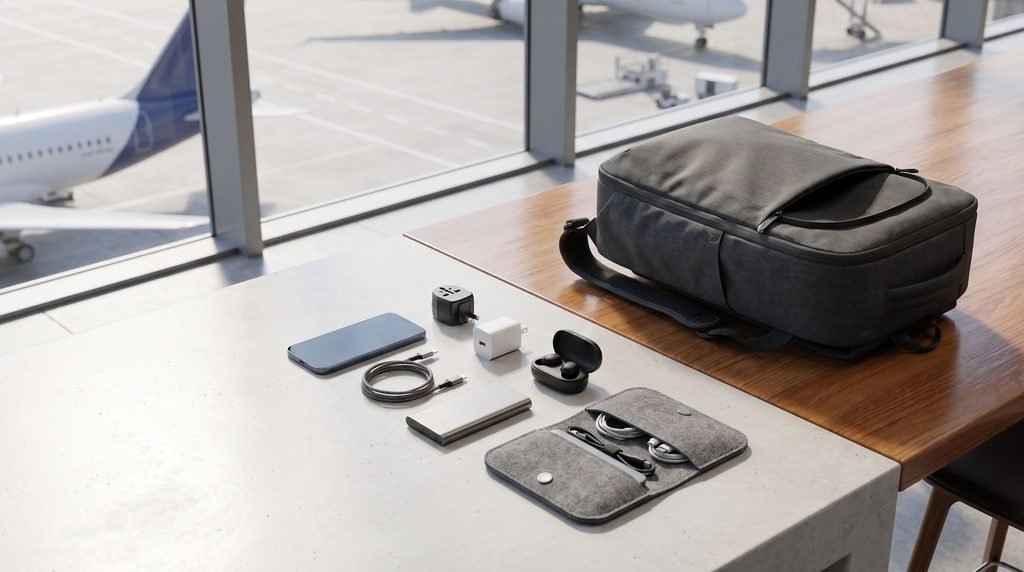
The basic traveler
Usually needs:
- Phone
- Charger
- Power bank if needed
- Earbuds or headphones
- Adapter for international travel
The remote worker
May additionally need:
- Laptop
- Laptop charger
- Essential work accessories
- Secure storage for important equipment
Avoid carrying an office in your backpack unless you genuinely need it.
The photographer or creator
May need:
- Camera
- Necessary lenses
- Spare batteries
- Storage
- Charging equipment
This is one situation where minimalist travel does not necessarily mean owning fewer items. It means carrying the smallest amount of equipment necessary for the work you intend to do.
How to Pack for Different Trip Lengths
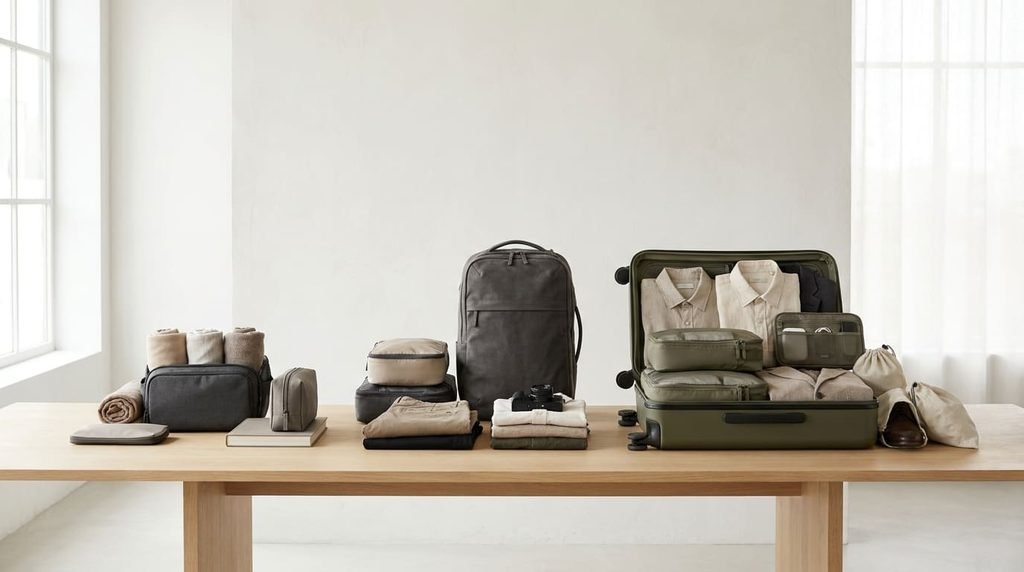
A 3–5 Day Trip
Focus on simplicity.
One compact bag may be enough, especially in warm weather. Avoid packing “just in case” outfits.
A One-Week Trip
This is often the easiest length for carry-on-only travel.
Choose a flexible clothing capsule and repeat key pieces.
A Two-Week Trip
You usually do not need twice as much clothing as a one-week trip.
Plan for:
- Rewearing suitable clothing
- Washing essentials
- A realistic laundry stop
Long-Term Travel
Long-term travel requires an even more disciplined approach.
Pack for the next climate and the next stage of your trip, not every season you may encounter months later.
Buy or replace certain items on the road if your itinerary changes.
Minimalist Travel Gear for Different Types of Trips
Weekend City Break
Prioritize:
- Compact bag
- Comfortable shoes
- Small clothing capsule
- Minimal toiletries
- Phone and charger
Multi-City Europe Trip
Prioritize:
- Easy-to-carry luggage
- Comfortable walking shoes
- Layering pieces
- Organization for frequent hotel changes
- Lightweight day bag if genuinely useful
Beach Vacation
Prioritize:
- Lightweight clothing
- Swimwear
- Sun protection
- Sandals
- Compact beach items
Avoid bringing large quantities of outfits you will not wear.
Cold-Weather Trip
Prioritize:
- Layering
- Warm socks
- Weather-appropriate footwear
- One excellent outer layer rather than several bulky alternatives
Business Trip
Prioritize:
- Carry-on organization
- Wrinkle-resistant clothing
- Work technology
- Shoes suitable for professional settings
Digital Nomad Trip
Prioritize:
- Work equipment
- Charging strategy
- Comfortable bag
- Clothing suitable for repeated use
This is one of the situations where a slightly larger or more structured bag may be worth the additional weight.
How to Build a Minimalist Travel Gear Setup Without Buying Everything at Once
You do not need to replace your existing luggage immediately.
Start by using what you already own.
Then identify the items that create the biggest problems:
- An uncomfortable bag
- Shoes that hurt after long walks
- Clothing that is difficult to rewear
- Poor organization
- Too much unnecessary technology
Upgrade one problem at a time.
A good priority order is:
1. Improve the bag only if your current bag is genuinely limiting you
2. Improve your footwear
Comfortable shoes can have a bigger effect on a trip than many popular accessories.
3. Build a better travel clothing system
Focus on versatility rather than buying “travel clothes” for everything.
4. Improve organization only where necessary
5. Add specialized gear only when a specific trip requires it
This approach saves money and reduces unnecessary purchases.
Common Minimalist Travel Gear Mistakes
Buying gear before planning the trip
Your destination should influence your gear.
Packing for every possible situation
This creates heavy bags filled with items you never touch.
Carrying too many shoes
Unless each pair serves a genuinely different purpose, reduce them.
Packing too much technology
Every device creates more cables, chargers, batteries, and weight.
Ignoring bag weight
A bag can meet size requirements but still be too heavy for a particular airline.
Forgetting about laundry
Laundry access can dramatically reduce how much clothing you need.
Using too many organizers
Organization should simplify your bag—not turn it into a complicated filing cabinet.
Buying travel products because they are marketed as essentials
A product can be popular without being necessary for your travel style.
A Final Checklist Before You Buy Any Travel Gear
Before adding another product to your travel setup, ask:
- What specific problem does this solve?
- Do I already own something that solves the same problem?
- Will I use it on most trips or only rarely?
- Is it comfortable and durable?
- How much weight does it add?
- Can I use it for more than one purpose?
- Is it compatible with my airline and travel style?
- Could I buy, borrow, or replace it later if necessary?
If you cannot clearly answer those questions, wait before buying.
Who Is Minimalist Travel Gear Best For?
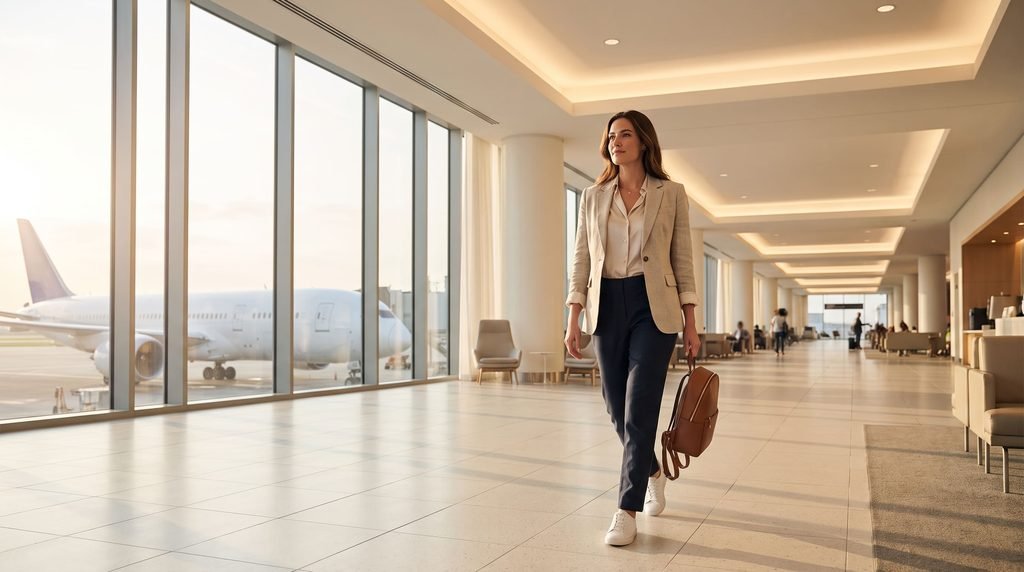
This approach is particularly useful for:
- Carry-on travelers
- Frequent travelers
- Solo travelers
- Multi-city travelers
- Budget-conscious travelers
- Digital nomads willing to pack selectively
- Travelers who dislike managing large suitcases
It may be less practical when you are:
- Traveling with specialized sports equipment
- Carrying professional production gear
- Traveling with extensive medical equipment
- Taking a destination-specific trip that requires bulky gear
Minimalism should be adapted to your needs, not treated as a competition.
Frequently Asked Questions
1. What is the best minimalist travel gear?
The best minimalist travel gear usually includes a suitable main bag, versatile clothing, comfortable shoes, basic toiletries, essential technology, and only the accessories that solve a real problem for your trip.
2. How many bags should I travel with?
For many trips, one carry-on or a carry-on plus a small personal item is enough. However, the best setup depends on your airline, trip length, destination, climate, and the equipment you need to carry.
3. How do I avoid overpacking?
Start with your itinerary, choose interchangeable clothing, limit shoes, remove duplicate items, and pack for laundry rather than packing a completely different outfit for every day.
4. Is a backpack or suitcase better for travel?
A backpack is usually better for multi-city trips, stairs, trains, and uneven streets. A wheeled suitcase can be more comfortable for airport-to-hotel travel and urban or business trips.
5. Do I need special travel gear to pack light?
No. Start with the gear you already own. Most travelers can pack lighter by improving their clothing choices, removing unnecessary duplicates, and choosing the right bag for the trip before buying specialist accessories.
Conclusion
The best minimalist travel gear setup is not the smallest, most expensive, or most extreme one. It is the setup that gives you enough flexibility without giving you unnecessary weight.
Start with your actual trip. Choose the right bag, pack versatile clothing, limit shoes and duplicate accessories, and carry technology only when you know you will use it. Upgrade your travel gear gradually as you discover genuine problems with your current setup.
Pack less—but pack with a clear reason for every item.