

Learning how to pack makeup in a carry-on TSA approved way helps you keep your beauty routine intact without worrying about delays at airport security. The key is knowing which products count as liquids, how to organize them within the permitted limits, and which makeup essentials can travel in your personal item or carry-on bag.
From liquid foundation and mascara to powder blush, lipstick, setting spray, and skincare-infused makeup, different products can fall under different screening rules. This guide explains how to pack your makeup efficiently, avoid common security mistakes, and keep your cosmetics protected throughout your journey.
Quick Answer: TSA-Approved Makeup Packing at a Glance
The Transportation Security Administration (TSA) generally permits makeup in carry-on bags, but liquid, cream, gel, paste, and aerosol products must follow the liquids rule.
| Makeup product | Carry-on packing guidance |
| Liquid foundation | Container must hold 3.4 oz (100 ml) or less |
| Concealer | Liquid or creamy formulas follow the liquids rule |
| Mascara | Treat as a liquid |
| Liquid eyeliner | Treat as a liquid |
| Powder blush and eyeshadow | Generally not subject to the liquids rule |
| Lipstick | Traditional solid lipstick is generally exempt |
| Liquid lipstick and lip gloss | Treat as liquids |
| Cream blush and cream contour | Follow the liquids rule |
| Setting spray | Must meet the applicable liquid or aerosol restrictions |
| Makeup remover | Liquid or gel products must meet the liquids rule |
| Makeup brushes and sponges | Generally permitted; pack them clean and protected |
| Makeup wipes | Generally permitted in carry-on bags |
For most U.S. airport checkpoints, follow the 3-1-1 liquids rule:
- 3.4 ounces (100 ml): Each liquid, cream, gel, paste, or aerosol container must be no larger than this capacity.
- 1 quart-sized bag: Place your qualifying liquids in one clear, resealable quart-sized bag.
- 1 bag per passenger: The standard rule allows one such bag per passenger.
A crucial detail: the container’s capacity matters, not how much product remains inside. A half-empty 6-ounce foundation bottle can still be rejected at the checkpoint.
These are general TSA guidelines. Check current official TSA guidance and your departure airport’s instructions before flying, particularly if your route involves international connections or different security authorities.
1. Understand Which Makeup Counts as a Liquid
The most important step in packing makeup for airport security is identifying products that fall under the liquids, aerosols, gels, creams, and pastes restrictions.
A product does not have to pour like water to qualify as a liquid. Its consistency and formulation matter, so creamy or gel-based cosmetics should not automatically be packed with unrestricted powder products.
Makeup products that generally count as liquids
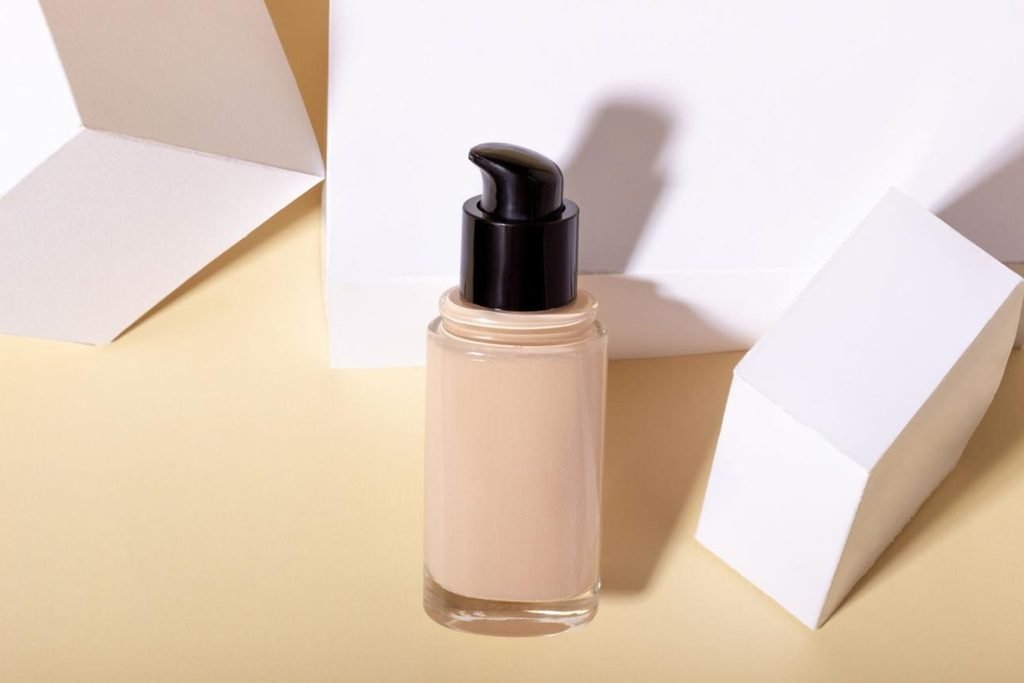
Foundation and concealer
Liquid foundation, serum foundation, tinted moisturizer, and liquid concealer should go in your clear liquids bag. Creamy concealers should be treated similarly.
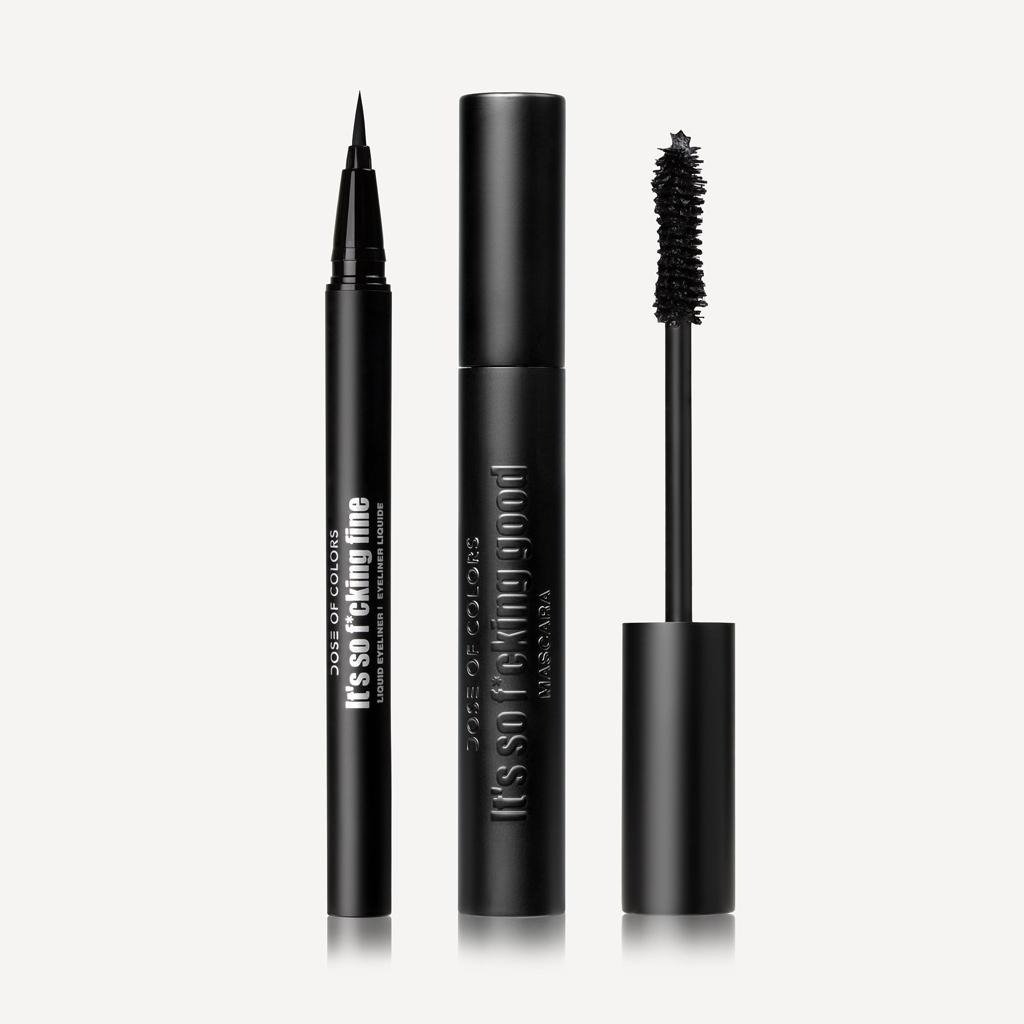
Mascara and liquid eyeliner
Pack mascara, liquid eyeliner, and similar wet formulas in your liquids bag, even when their tubes are small.
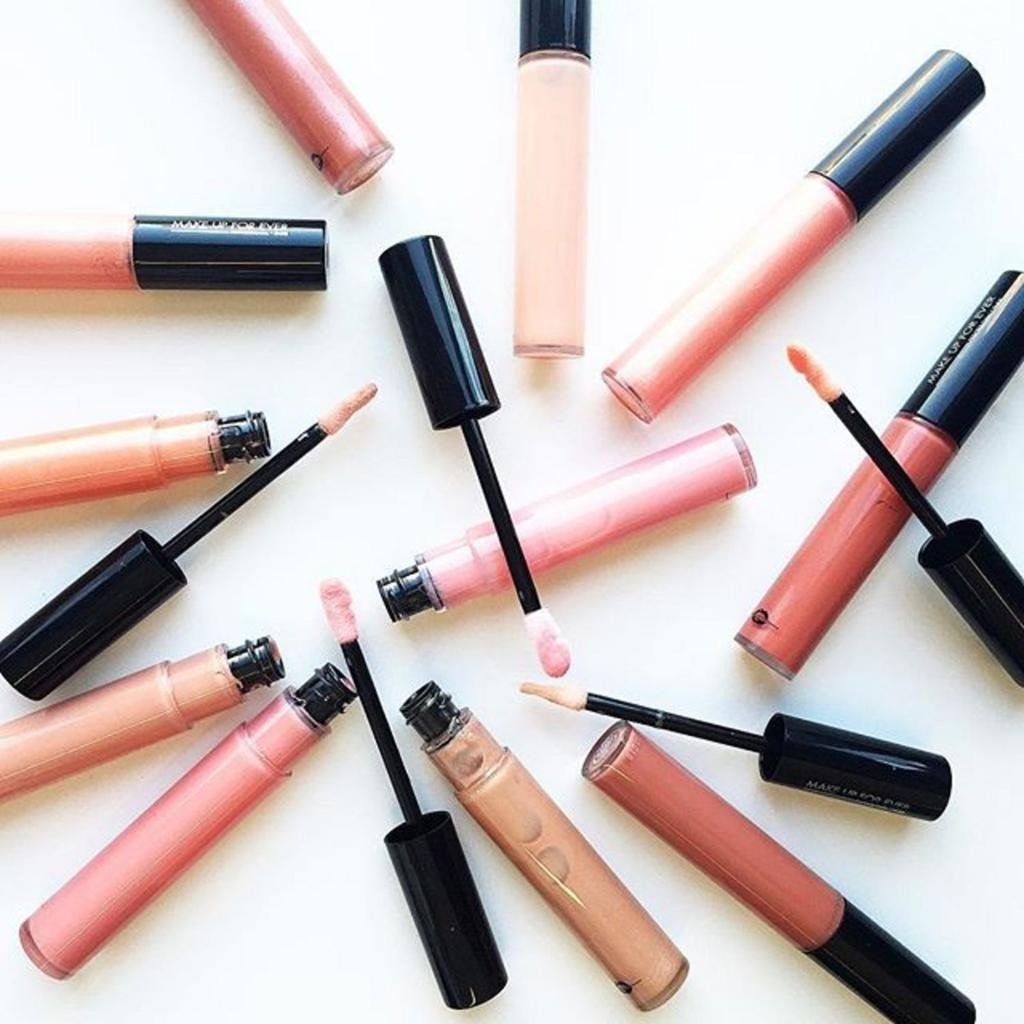
Lip gloss and liquid lipstick
Glosses, liquid lip colors, and other creamy or fluid lip products should be counted toward your liquid allowance.
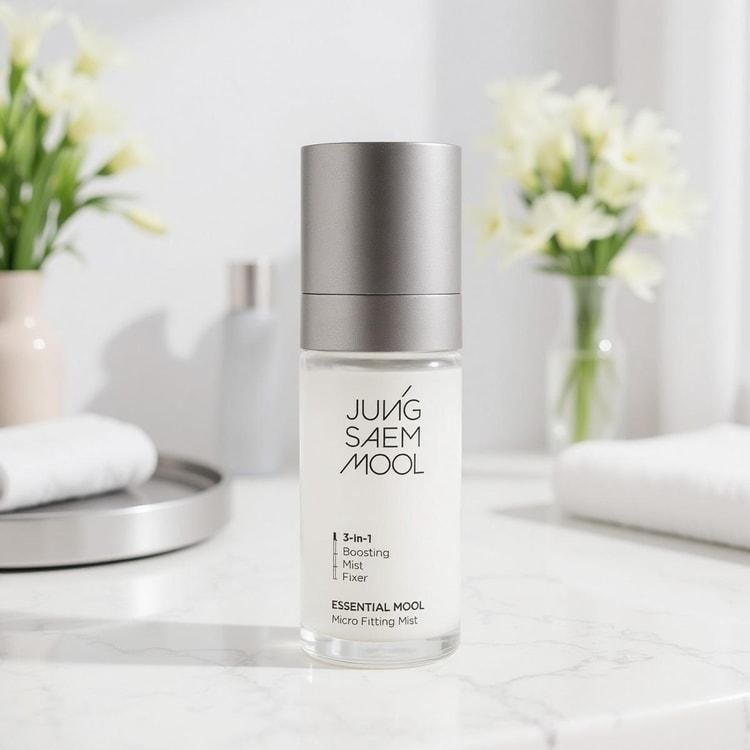
Setting spray and liquid primers
Setting sprays, liquid primers, and cream-based complexion products need to comply with the relevant container-size restrictions.
TSA’s official What Can I Bring? database lists items individually, including foundation, mascara, concealer, and liquid eyeliner. Check it if you are uncertain about a particular product.
Transportation Security Administration
+1
Makeup products that are generally solid
Traditional pressed powder blush, powder foundation, eyeshadow palettes, loose setting powder, and solid lipstick generally do not need to go in your liquids bag.
However, powder products have a separate screening consideration: TSA may require powders exceeding 12 ounces (350 ml) to be screened separately, and additional inspection may be necessary. This is particularly relevant when carrying a large tub of loose setting powder.
Transportation Security Administration
Remember that these categories are practical guidelines, not a guarantee that every item will pass without inspection. Security officers make the final screening decision.
2. Follow the TSA 3-1-1 Liquids Rule
If you are flying from a U.S. airport, organize your liquid makeup around the TSA 3-1-1 rule.
What the rule means for your makeup bag
- Each container must have a capacity of 3.4 ounces (100 ml) or less.
- Your qualifying liquids, gels, creams, pastes, and aerosols must fit in one clear, quart-sized resealable bag.
- Each passenger is generally permitted one such bag under the standard rule.
The rule applies to the container’s labeled capacity, not the quantity remaining inside it. A 150 ml foundation bottle containing only 20 ml of product is still too large for standard carry-on screening.
Transportation Security Administration
+1
How to fit makeup into your liquids bag
- Gather every liquid or cream cosmetic, including mascara, primer, foundation, concealer, lip gloss, and setting spray.
- Remove products you can comfortably leave at home.
- Check the capacity printed on each container.
- Transfer suitable products into smaller, properly labeled travel containers when practical.
- Place the products in one clear, resealable quart-sized bag and make sure it closes completely.
Do not assume that several small cosmetic bags can be combined to bypass the one-bag allowance. Nor should you assume that a large makeup pouch is acceptable simply because it contains only cosmetics.
International travel note: The TSA rules apply to U.S. security screening. Other countries and airports may use different screening procedures, and some airports have updated liquid-screening technology. Check the rules for your departure airport and any connecting airports instead of assuming the same allowance applies everywhere.
3. Choose the Right Makeup Bag for Your Carry-On
A good travel makeup bag should protect fragile cosmetics, prevent leaks, and let you access your liquid products quickly at security.
You do not need an elaborate organizer. For most travelers, a simple two-part system is more practical than putting everything into one oversized pouch.
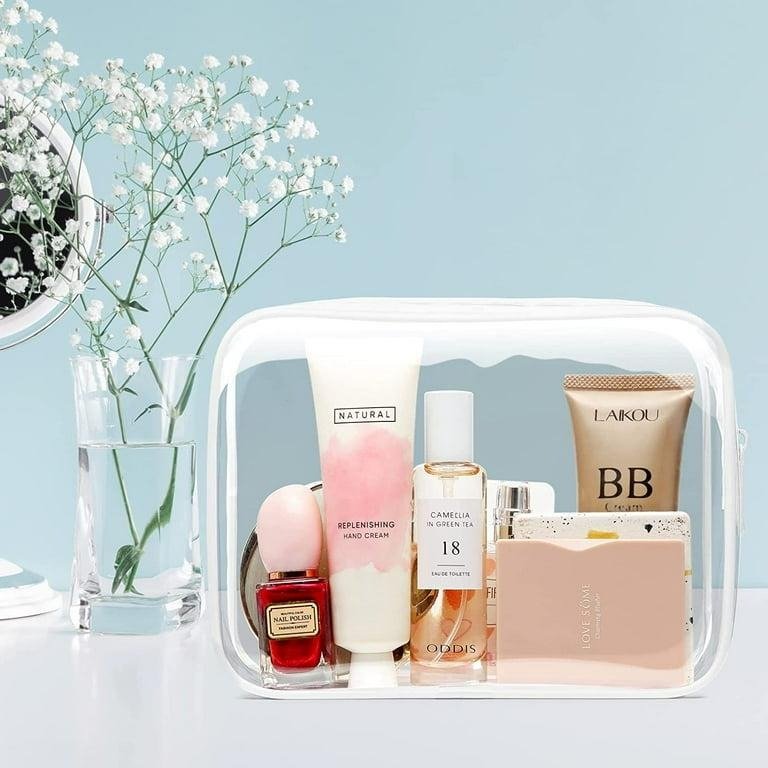
Bag 1: Clear liquids bag
Reserve this for products subject to the liquid restrictions. A transparent bag makes it easier to check container sizes, identify leaks, and remove the bag quickly when required.
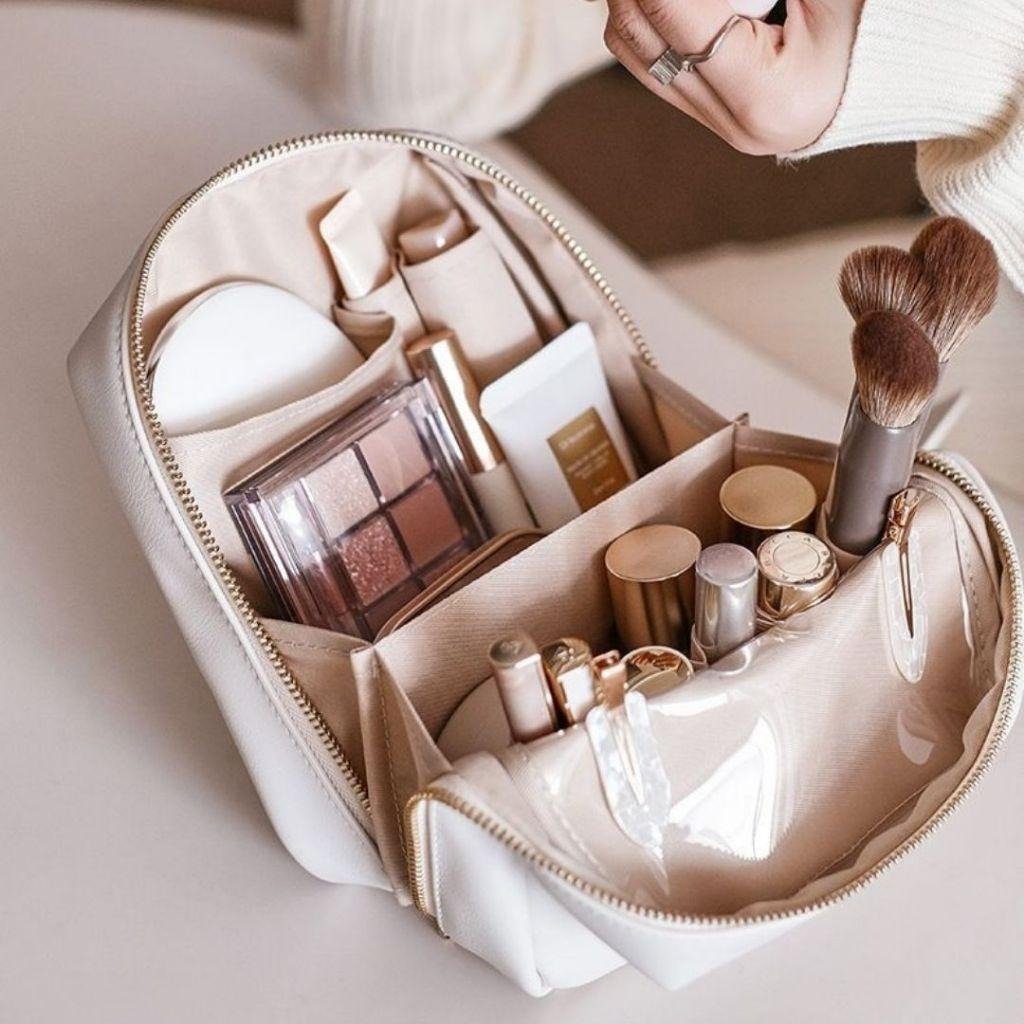
Bag 2: Solid makeup organizer
Store powder palettes, solid lipstick, brushes, pencils, sponges, and other permitted solid essentials in a separate pouch. A padded or structured design can help protect palettes and pressed powders.
What to look for in a travel makeup bag
- Leak-resistant construction: Useful for protecting clothes and electronics if a product opens during transit.
- Easy-to-clean lining: Helps contain powder spills and cosmetic residue.
- Compact dimensions: Prevents your beauty kit from consuming valuable personal-item space.
- Secure closures: Reduces the chance of loose products escaping inside your bag.
- Protective compartments: Keeps sharp pencil tips, brushes, and fragile palettes from damaging other cosmetics.
The clear liquids bag and your regular makeup organizer serve different purposes. A clear bag is not automatically required for every solid cosmetic, while a decorative makeup pouch does not replace the required liquids bag.
4. Pack Makeup Without Leaks, Spills, or Broken Palettes
Even makeup that passes security can become messy during a flight. Changes in handling, pressure, and movement can expose weak closures and poorly packed products.
Use these methods to protect your cosmetics without adding unnecessary bulk.
Prevent liquid foundation and concealer from leaking
- Tighten every cap before packing.
- Wipe the outside of each bottle to remove residue.
- Check that pumps and spray mechanisms are locked when the design allows it.
- Keep products in their original packaging when possible.
- Place particularly leak-prone products inside a small secondary protective sleeve, provided the liquids remain organized in accordance with screening requirements.
Avoid filling containers beyond their intended capacity. If you decant a product, use a clean, compatible travel container designed for that cosmetic.
Protect pressed powders and eyeshadow palettes
Pressed powders can crack when a palette is dropped or compressed under heavier items.
- Close the palette securely.
- Place a thin, clean protective insert over the powder pans if the palette design permits.
- Store the palette in a padded compartment.
- Keep shoes, chargers, and other heavy items away from it.
- Avoid placing a heavy toiletry kit directly on top of your makeup.
For a long-haul flight or a multi-stop itinerary, a small padded sleeve can be especially helpful.
Stop makeup brushes and sponges from making a mess
Clean brushes before departure and allow them to dry completely. Use a brush roll or protective sleeve to keep bristles from bending and collecting lint.
Place a clean, dry makeup sponge in a breathable compartment rather than sealing a damp sponge in an airtight container for an extended period.
Keep used applicators separate from clean brushes, especially during longer trips when you may not have convenient access to a sink.
Keep your makeup bag organized throughout the journey
Use small dividers or a compact pouch for pencils, cotton swabs, and other accessories. Avoid loose powders or unsealed products that can scatter throughout your bag.
The goal is to make each item easy to locate without unpacking your entire carry-on at the airport or hotel.
5. Build a TSA-Friendly Carry-On Makeup Checklist
The best travel makeup kit is not necessarily the smallest one. It is the one that gives you enough options for your itinerary without filling your liquids bag with products you rarely use.
Use this checklist to create a practical everyday kit.
Essential makeup checklist
- Foundation or tinted moisturizer
- Concealer
- Powder foundation or setting powder
- Blush or bronzer
- Small eyeshadow palette
- Mascara
- Eyeliner or eyebrow pencil
- Lipstick or lip gloss
- One versatile makeup brush
- Makeup sponge, if needed
- Compact mirror
- Makeup remover wipes
- Setting spray, if needed
- Small makeup remover or cleansing product
Before adding everything, consider which products serve more than one purpose. A lip-and-cheek tint, for example, can replace two separate items if it suits your routine and is packed according to its formula.
A minimalist makeup kit for one-bag travelers
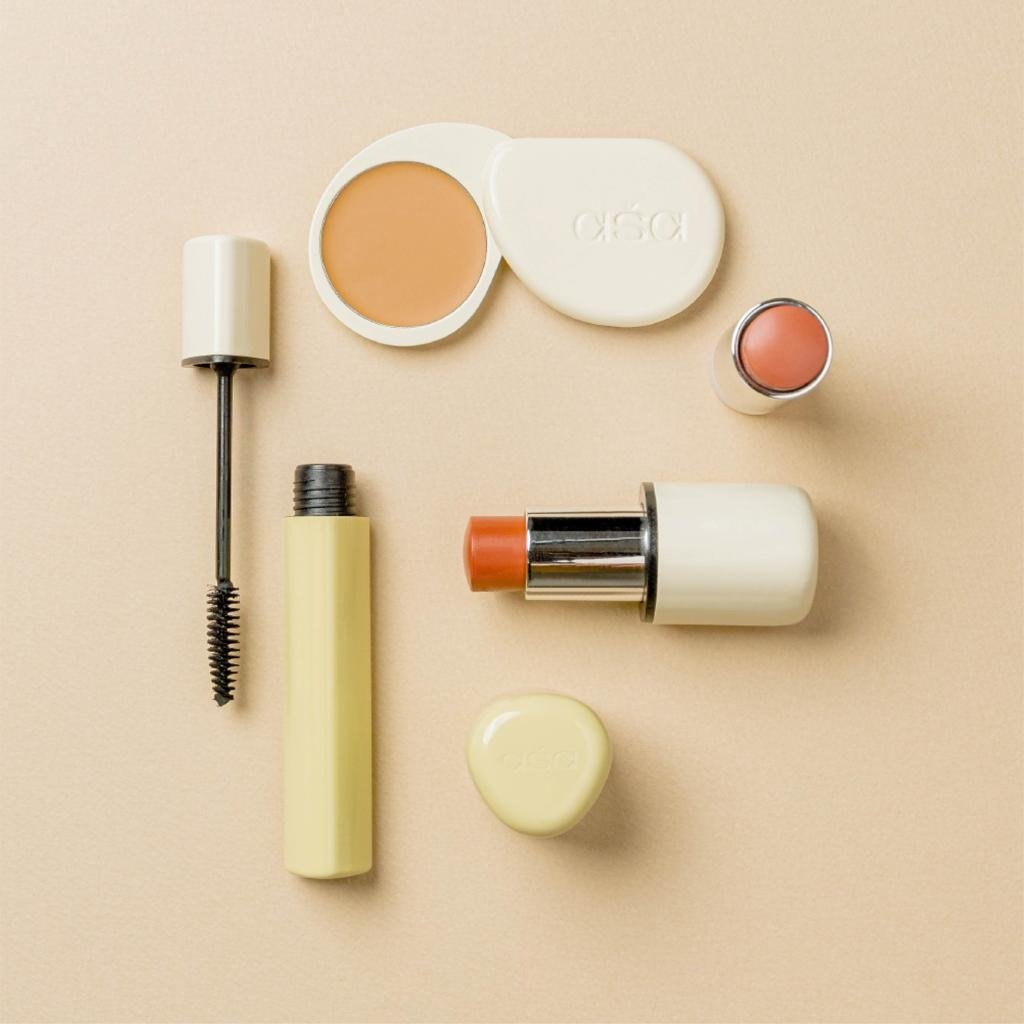
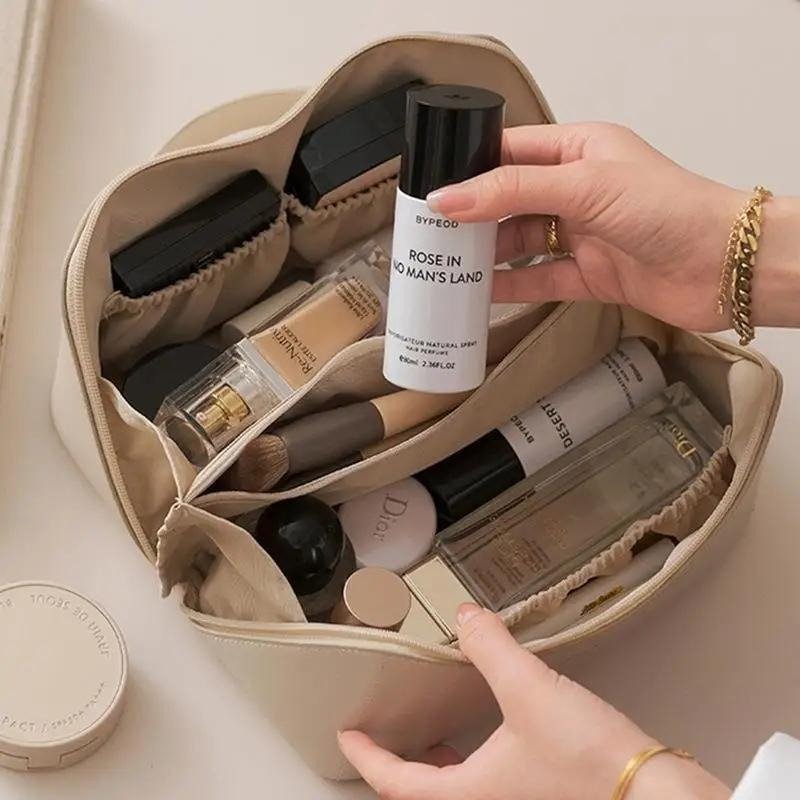
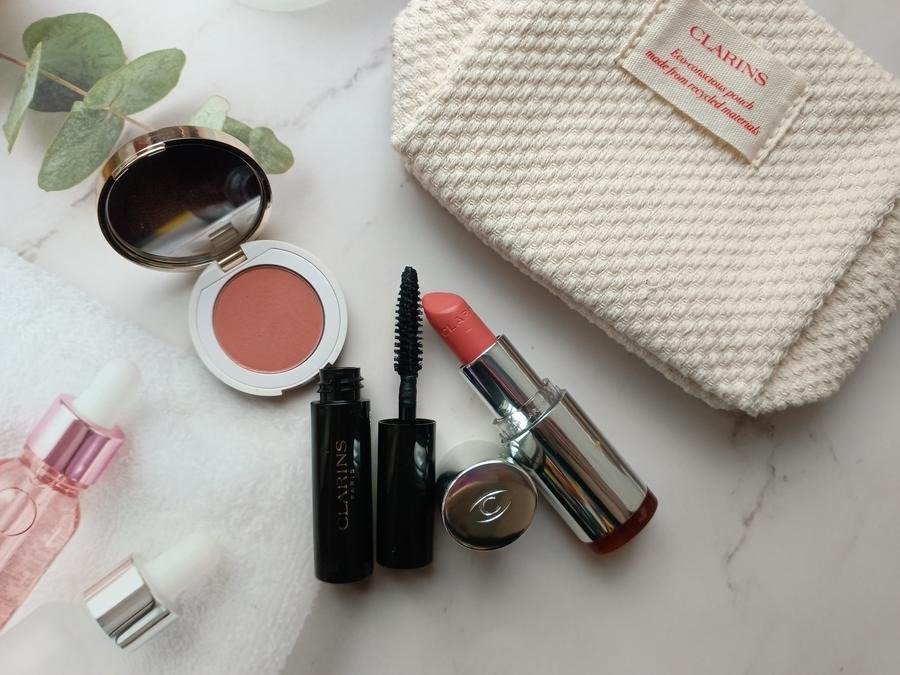
If you travel with a single carry-on and a personal item, choose products that work together rather than packing several versions of the same cosmetic.
8
A practical minimalist kit might include:
- One complexion product
- One concealer
- One multipurpose blush or tint
- One compact eyeshadow palette
- One mascara
- One brow pencil
- One solid lipstick
- One small brush or multipurpose applicator
If most of these products are solid, you will have fewer items competing for space in your liquids bag.
For more efficient packing, pair this approach with a broader carry-on packing strategy and choose toiletries based on the length of your trip rather than packing your entire bathroom routine.
6. Save Space by Choosing Travel-Friendly Makeup Formulas
Switching selected products to solid or powder formats can make packing easier, particularly when you also need room for skincare, sunscreen, hair products, and personal toiletries.
However, a product’s marketing label does not determine its screening category. Check the actual formula.
| Product category | Space-saving option | Packing consideration |
| Foundation | Powder foundation or compact | Generally avoids the liquid allowance |
| Blush | Pressed powder blush | Protect from cracking |
| Eyeshadow | Small pressed palette | Choose shades that work for day and evening |
| Lip color | Traditional solid lipstick | Generally exempt from the liquids rule |
| Eyeliner | Pencil eyeliner | Protect the tip and cap |
| Makeup remover | Individually packaged wipes | Generally permitted as wipes |
| Setting product | Pressed setting powder | Avoid oversized powder containers that may require additional screening |
| Primer | Solid-format product, if available | Confirm the actual consistency and applicable rules |
Solid alternatives are not automatically better for everyone. Powder foundation may not provide the finish you prefer, and a solid product can still take up considerable space.
Choose alternatives that genuinely fit your routine instead of buying travel-sized products you will use only once.
7. Common Makeup Packing Mistakes to Avoid
Small packing mistakes can create unnecessary delays or leave you without an essential product after screening.
Mistake 1: Packing an oversized foundation bottle
A large bottle does not qualify simply because it is nearly empty. Use a container within the permitted capacity or leave the product behind.
Mistake 2: Forgetting mascara counts as a liquid
Mascara looks like a small solid tube, but TSA classifies it under the liquid allowance. Leave space for it in your clear bag.
Mistake 3: Treating every lipstick or tint the same way
Traditional solid lipstick is generally exempt from the liquids rule, whereas liquid lipstick, gloss, and many creamy tints should be treated as liquids. Check unusual formulas individually.
Mistake 4: Packing too many skincare products with makeup
Foundation, primer, moisturizer, sunscreen, cleanser, and makeup remover may all compete for the same limited liquids-bag space. Select multipurpose products where appropriate and remove anything you will not need.
Mistake 5: Putting loose powder in an oversized container
Powders are generally allowed, but large powder-like substances can require additional screening. Keep your travel quantities reasonable and accessible.
Mistake 6: Assuming every airport follows identical procedures
TSA rules govern U.S. screening, not every airport worldwide. International connections may introduce different liquid limits or screening requirements.
Mistake 7: Packing makeup where you cannot reach it
If you must remove your liquids bag at security, burying it under clothes and electronics wastes time. Keep it near the top of your carry-on until screening is complete.
TSA also notes that officers can inspect items and may decline an item at the checkpoint even when it is generally listed as permitted. Review the official TSA travel tips before departure.
Transportation Security Administration
+1
8. How to Pack Makeup for Different Types of Trips
Your makeup needs depend on the length of your journey, the occasions you are dressing for, and how much luggage you plan to carry.
Weekend getaway
Pack a small complexion product, concealer, mascara, one blush, one lip color, and a compact palette. A few versatile products should cover everyday sightseeing and a simple evening look.
Business trip
Prioritize products that create a consistent, polished look with minimal effort. Choose a reliable base product, concealer, neutral eyeshadow, mascara, brow pencil, and one or two lip colors.
Pack fragile items in a structured pouch so you can find everything quickly when getting ready in a hotel room.
Beach vacation
Consider the climate and your planned activities. Choose makeup suited to heat and humidity, and keep sunscreen accessible as a separate essential.
Remember that sunscreen is generally subject to the liquids rule when packed in liquid, lotion, cream, gel, or spray form. A solid sunscreen stick may be a useful alternative, depending on the formulation.
Do not rely on makeup labeled waterproof or long-wearing as a substitute for sun protection.
Long-haul flight
Pack only the cosmetics you expect to use during the journey, such as lip balm, a compact powder, and a small number of touch-up products. Keep any liquid items within the applicable restrictions.
Avoid spreading your entire makeup collection across your personal item and carry-on. A small, accessible pouch is usually more convenient during the flight.
9. What to Do If TSA Questions Your Makeup
If an item needs additional screening, stay calm and follow the officer’s instructions.
- Explain what the product is if its purpose or packaging is unclear.
- Allow the officer to inspect the item if requested.
- Be prepared for a product to be refused if it does not meet the applicable rules.
- Do not assume you can return to the check-in area to place a rejected item in checked luggage once you have reached the security checkpoint.
If you are uncertain about a specific cosmetic before traveling, consult the TSA What Can I Bring? tool. The database includes individual product entries and their carry-on guidance.
Transportation Security Administration
+1
For international travel, also review the rules published by the relevant airport or aviation security authority.
FAQs
1. Can you bring a full makeup bag in your carry-on?
Yes. You can generally bring a makeup bag in your carry-on, provided its contents comply with the applicable security rules. Liquid, cream, gel, paste, and aerosol cosmetics must follow the relevant liquid restrictions, while most solid makeup is permitted.
2. Does mascara count as a liquid for TSA?
Yes. TSA treats mascara as a liquid for carry-on screening. Its container must hold no more than 3.4 ounces (100 ml), and it must fit in your quart-sized liquids bag under the standard 3-1-1 rule.
3. Does powder makeup need to go in the clear liquids bag?
No. Powder makeup generally does not need to go in the liquids bag. However, powder-like substances exceeding 12 ounces (350 ml) may require separate screening and additional inspection. Smaller pressed powders and eyeshadow palettes can generally remain in your regular makeup organizer.
4. Can I bring liquid foundation in my carry-on if the bottle is half empty?
Only if the container itself has a capacity of 3.4 ounces (100 ml) or less under the standard TSA liquids rule. A larger bottle is not permitted simply because it contains less than 100 ml of foundation.
5. Can I bring makeup setting spray on a plane?
Generally, yes. Setting spray must meet the applicable restrictions for liquids and aerosols. For standard TSA carry-on screening, its container must hold no more than 3.4 ounces (100 ml) and fit in your quart-sized liquids bag. Aerosol products may also be subject to additional safety restrictions.
Conclusion
Knowing how to pack makeup in a carry-on TSA approved way comes down to three essentials: identify which products count as liquids, keep qualifying containers within the permitted size, and organize your cosmetics so they are easy to inspect and protected during travel.
Use a clear quart-sized bag for your liquid and cream makeup, keep powder products and traditional solid cosmetics in a separate organizer, and choose multipurpose products to save space. Before leaving, double-check your departure airport’s security rules and any international connections.
With a little planning, you can bring the makeup you actually need, reduce the risk of spills and screening delays, and keep your carry-on organized without sacrificing your everyday beauty routine.
2 comments