
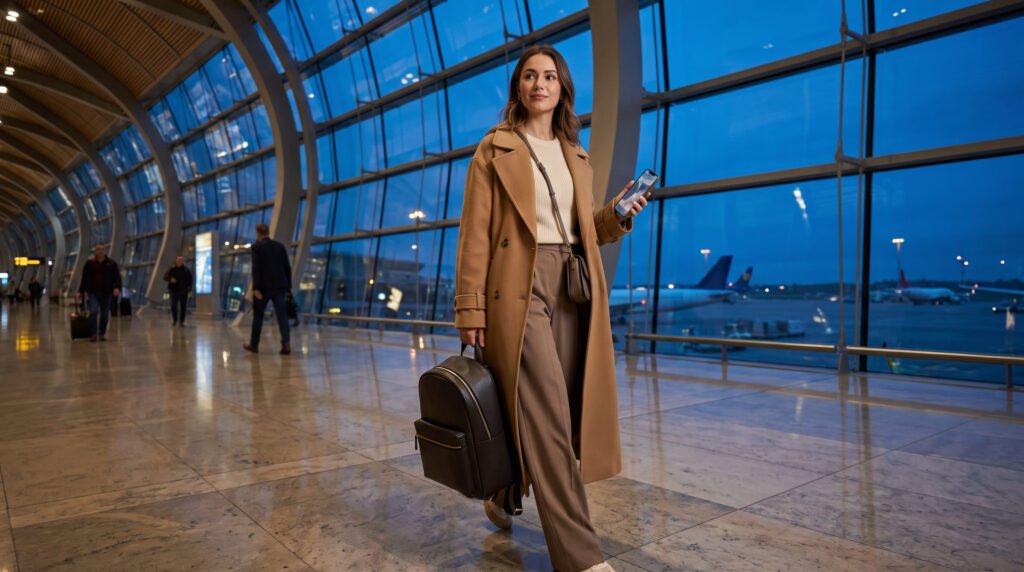
Traveling alone for the first time can feel exciting and intimidating at the same time. A first time solo female travel safety guide should go beyond generic advice like “stay aware” and give you a practical system for choosing destinations, planning arrivals, protecting your belongings, using transportation, selecting accommodation, handling nightlife, and responding when something feels wrong.
The good news is that solo travel does not require you to be fearless. It requires preparation, situational awareness, sensible boundaries, and a plan for the moments when your itinerary does not go as expected.
This guide explains how to prepare for your first solo trip, what safety habits matter most, what mistakes to avoid, and how to build confidence without turning your entire vacation into a risk-management exercise.
Quick Answer: How Can a First-Time Solo Female Traveler Stay Safe?
The most effective approach is to research the destination before booking, choose accommodation carefully, arrange your first arrival in advance, keep trusted people informed of your plans, protect your documents and money, use reputable transportation, stay aware of your surroundings, and trust your instincts when a situation feels uncomfortable.
Official travel guidance also recommends researching local laws and customs, transportation options, accommodation, emergency services, and destination-specific security conditions before departure.
You do not need to avoid every unfamiliar situation. Instead, reduce avoidable risks and make sure you have options if something goes wrong.
Solo Female Travel Safety at a Glance
| Safety area | What to do |
| Destination | Research current safety conditions, local laws and customs |
| Accommodation | Choose a well-reviewed property in a practical location |
| Airport arrival | Arrange your first transfer before departure |
| Transportation | Use reputable, licensed providers |
| Communication | Keep your phone charged and maintain a backup contact method |
| Documents | Carry secure copies of essential documents |
| Money | Keep cards and cash in separate locations |
| Daily plans | Share your itinerary or general movements with someone you trust |
| Nighttime | Prefer populated, familiar routes and reputable transportation |
| Socializing | Set clear boundaries and protect your drink |
| Emergencies | Know local emergency numbers and nearby medical facilities |
| Intuition | Leave situations that feel wrong—even if you cannot explain why |
Why Solo Female Travel Safety Starts Before You Leave
Many travel problems can be prevented before you ever board the plane.
Research is not about finding a destination with zero risk. No destination can guarantee that. Instead, research helps you understand which risks are relevant to your specific trip and how to prepare for them.
Before booking, investigate:
- Local crime patterns
- Political demonstrations or civil unrest
- Transportation reliability
- Areas travelers are advised to avoid
- Local laws and customs
- Cultural expectations around clothing and behavior
- Emergency services
- Healthcare availability
- Common scams
- Transportation from the airport
- Weather and seasonal conditions
- Entry and visa requirements
- Current government travel advisories
The U.S. Department of State recommends checking destination-specific travel advisories, entry requirements, local laws and customs, and embassy guidance before international travel.
The UK government similarly recommends researching local culture, safety conditions, and potential difficulties that women traveling alone may encounter.
Research the Destination Beyond Tourist Attractions
A destination can look completely different on a travel itinerary than it does after dark.
When researching a city, do not only search for:
“Best things to do in [destination]”
Also search for:
- “[destination] solo female travel safety”
- “[destination] women travelers”
- “[destination] transportation safety”
- “[destination] common tourist scams”
- “[destination] areas to avoid”
- “[destination] public transportation safety”
- “[destination] local laws and customs”
- “[destination] emergency numbers”
Look for information from government travel advisories, local tourism authorities, established travel publications, and recent traveler discussions.
Pay particular attention to information that is recent and destination-specific, because security conditions and transportation arrangements can change.
Choose Your First Solo Destination Strategically
Your first solo destination does not need to be the most adventurous place on your bucket list.
A destination that matches your comfort level can make the first experience significantly easier.
Look for places with:
- Reliable public transportation
- Easy airport connections
- Accommodation in central or well-connected areas
- Strong tourism infrastructure
- Accessible communication
- Convenient mobile connectivity
- Plenty of daytime activities
- Clear transportation options
- Healthcare facilities within reasonable reach
- A culture where you can comfortably navigate daily life
This does not mean every traveler should choose the same destinations. Your experience, language ability, budget, travel style, and familiarity with different cultures all affect what will feel manageable.
Consider the Arrival Experience, Not Just the Destination
One of the most overlooked parts of solo travel planning is arrival day.
You are likely to be tired, carrying luggage, navigating unfamiliar signs, dealing with immigration or customs, and making decisions in an unfamiliar environment.
For your first solo trip, make arrival as simple as possible.
Before departure, know:
- Which airport or station you are arriving at.
- How you will reach your accommodation.
- Approximately how long the journey should take.
- Which transportation provider you will use.
- Where the pickup point is.
- What you should do if the original transportation fails.
- How you will contact your accommodation.
The U.S. Department of State specifically recommends arranging airport transportation in advance through reputable providers and researching transportation companies before traveling.
Book Safe Accommodation

Your accommodation becomes your base during the trip, so location and security matter as much as price.
What to Look for in a Solo-Friendly Hotel or Rental
Prioritize:
- Strong recent reviews
- A practical location
- Good access to transportation
- A staffed reception or reliable host communication
- Secure entry
- Well-maintained common areas
- Clear check-in instructions
- Nearby restaurants, shops, or essential services
- A route that does not require walking through isolated areas late at night
Official lodging guidance recommends researching accommodations carefully, checking reviews, booking before arrival, and considering properties near transportation and important services.
Do Not Broadcast Your Room Number
Avoid casually telling strangers your hotel name and room number.
When checking in, you can also keep conversations about your accommodation discreet. The U.S. Department of State specifically advises women travelers not to tell strangers where they are staying.
If someone you meet asks where you are staying, you do not owe them an exact answer.
A simple response such as:
“I’m staying near the city center.”
is enough.
Create a Simple Safety Communication System
Solo travel does not mean nobody should know where you are.
Before leaving, choose one or two trusted people who can serve as your emergency contacts.
Share:
- Your flight details
- Accommodation information
- General itinerary
- Travel insurance details
- Emergency contact information
- Passport information or secure copies
- Expected arrival times
You do not necessarily need to send your location every hour.
A better system is to establish a reasonable check-in routine.
For example:
- “I’ll message you when I arrive.”
- “I’ll check in after I reach the hotel tonight.”
- “If you don’t hear from me by tomorrow morning, message me.”
The UK government recommends leaving an itinerary with someone at home and agreeing how regularly you will communicate.
Use Your Phone as a Safety Tool
Before leaving your accommodation each day:
- Charge your phone
- Carry a portable power bank
- Keep important numbers accessible offline
- Download offline maps
- Save your accommodation address
- Know how to contact local emergency services
- Keep transportation apps updated
- Have a backup payment method
Your phone should make you more independent, not become your only safety system.
Protect Your Passport, Money and Important Documents
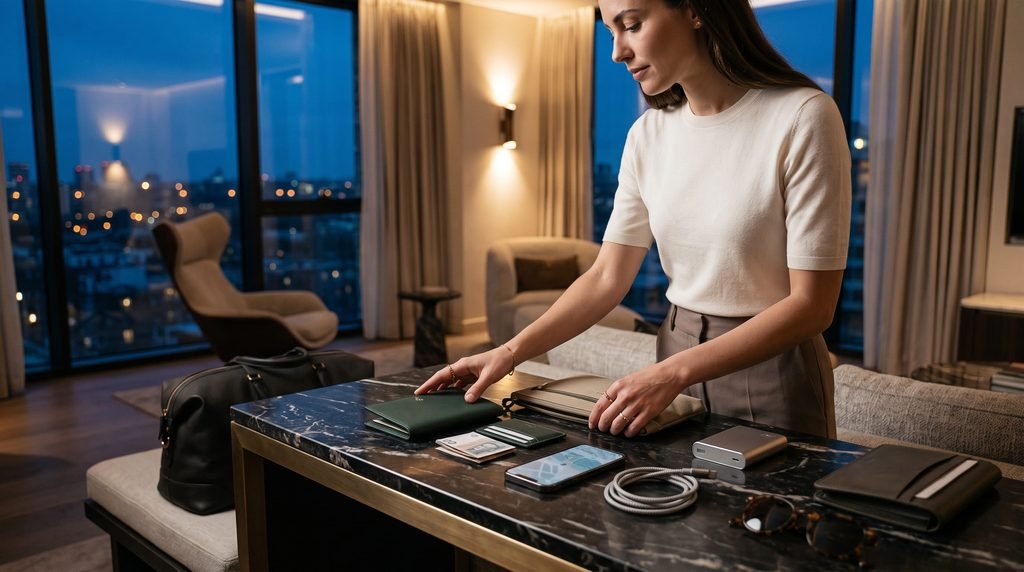
Your passport is one of the most important items you carry.
Create secure digital and physical backups of:
- Passport identification page
- Visa or entry documentation
- Travel insurance information
- Flight confirmations
- Hotel reservations
- Emergency contacts
- Prescription information, if applicable
- Important transportation bookings
Do not keep every payment card, cash reserve, and document in one place.
A practical approach is to divide important resources between secure locations.
For example:
Daily wallet
- One payment card
- Limited cash
- Identification you may need during the day
Secure backup
- Second payment card
- Emergency cash
- Copies of important documents
This gives you a recovery option if your everyday wallet disappears.
Use Transportation More Carefully When Traveling Alone
Transportation is one of the situations where a solo traveler may need to make quick decisions.
Before Using a Taxi or Ride-Hailing Service
Check:
- Company name
- Vehicle details
- Driver information
- Pickup location
- Expected destination
- Estimated route
- Payment method
When available, app-based transportation can provide a useful digital record of the driver and journey. Some services also provide ride-sharing or driver-verification features.
Do not automatically assume that every informal taxi or street-hail option is equivalent to a licensed service.
When Using Public Transportation
Research the system before your first journey.
Know:
- Which line or route you need
- Where you are getting off
- Whether you need a ticket or transit card
- What time the service stops
- Which areas or routes may be less suitable late at night
Official guidance notes that public transportation safety varies by destination and recommends checking trusted local sources for transportation advice.
If a train carriage or bus becomes extremely crowded and you feel uncomfortable, move to a different area when practical.
What to Do When You Arrive Somewhere Alone at Night
If possible, schedule your first arrival during daylight.
But flights and transport do not always cooperate.
If you arrive after dark:
- Use your pre-arranged transportation.
- Avoid improvising an unfamiliar route.
- Keep your phone accessible but secure.
- Go directly to your accommodation.
- Check in and settle before exploring.
- Avoid announcing your arrival publicly on social media in real time.
- If transportation changes unexpectedly, contact the hotel or trusted contact.
The objective is not to be afraid of nighttime. It is to avoid making several unfamiliar decisions while tired and carrying luggage.
Learn to Recognize Common Travel Scams
You do not need to memorize every scam in the world.
Instead, learn the patterns.
Be cautious when someone:
- Creates unnecessary urgency
- Insists they must help you immediately
- Claims your transportation is unavailable without verification
- Pressures you to hand over money
- Tries to separate you from your belongings
- Wants to take you somewhere unexpected
- Asks you to reveal personal information unnecessarily
- Becomes aggressive when you say no
A useful rule is:
You are allowed to pause.
If someone says you need to make a decision immediately, step away if you can and verify the situation independently.
Trust Your Instincts Without Becoming Paranoid
One of the most valuable solo travel skills is recognizing discomfort early.
You might notice:
- Someone repeatedly following your movements
- A driver taking an unexpected route
- Someone becoming unusually intrusive
- A person refusing to respect a boundary
- A location becoming isolated
- A social situation changing unexpectedly
You do not need courtroom-level evidence before leaving.
If something feels wrong, you can:
- Enter a hotel or busy business
- Move toward a populated area
- Call someone you trust
- Request another driver
- Change your route
- Leave an event
- Ask staff for assistance
- Contact local emergency services when necessary
Official guidance for women travelers emphasizes planning ahead, staying aware, and using firm communication when dealing with unwanted attention. It also notes that being safe is more important than being polite.
Set Boundaries Clearly
Solo travel can create situations where strangers feel unusually comfortable approaching you.
You do not need to provide elaborate explanations when you are uncomfortable.
Useful responses include:
- “No, thank you.”
- “I’m meeting someone.”
- “I need to leave.”
- “Please give me some space.”
- “I don’t want to go there.”
- “I’m not interested.”
You can also change your body language, move away, enter a public place, or ask staff for assistance.
Being friendly does not require being accessible.
Be Smart About Nightlife and Alcohol
If you choose to drink while traveling, moderation becomes a practical safety consideration.
You should:
- Keep your drink with you
- Avoid accepting drinks from strangers
- Know how much you have consumed
- Stay with people you trust when possible
- Arrange your return transportation before drinking
- Avoid leaving a venue alone with someone you barely know
- Pay attention to unusual physical symptoms
The U.S. Department of State advises travelers to watch their drinks, avoid accepting drinks from strangers, and seek help quickly if they experience unusual symptoms.
You do not have to avoid nightlife simply because you are traveling alone. The goal is to maintain enough awareness to make good decisions.
Dress for the Destination, Not for the Internet
Clothing is not a guarantee of safety, and responsibility for harassment or assault always belongs to the person committing it.
However, understanding local expectations can make navigating some destinations easier and help you avoid unintentionally violating local norms.
Research:
- Religious customs
- Dress expectations
- Beachwear rules
- Rules around religious sites
- Local laws affecting clothing
- Expectations in conservative neighborhoods
The U.S. Department of State recommends researching local customs and norms because expectations around women’s clothing and behavior can differ substantially between destinations.
Pack clothing that allows you to adapt without sacrificing your comfort.
Keep Your Travel Gear Simple and Secure
A solo traveler benefits from gear that reduces decisions rather than creating more of them.
Useful categories include:
Everyday Carry
- Secure crossbody or small day bag
- Phone
- Portable charger
- Payment card
- Small amount of cash
- Identification
- Water bottle
- Sunglasses
- Basic personal items
Emergency Essentials
- Copies of important documents
- Backup payment method
- Emergency contact information
- Necessary medication
- Basic first-aid supplies
- Personal safety alarm where legal
If you bring a personal safety device, check destination laws before packing it. Regulations for items such as pepper spray can vary, and the U.S. Department of State specifically recommends confirming legality before traveling with such items.
Know What to Do in an Emergency
You do not need to expect an emergency. You simply need to know what you would do if one occurred.
Before your trip, save:
- Local emergency number
- Police contact
- Ambulance/medical emergency number
- Accommodation contact
- Nearest hospital or clinic
- Your country’s embassy or consulate information
- Travel insurance emergency assistance number
For international travel, destination-specific government guidance can also explain how to seek consular assistance when a serious incident occurs.
If You Lose Your Passport
Do not panic.
Your first steps are generally to:
- Report the loss or theft to the appropriate local authority when required.
- Contact your embassy or consulate.
- Follow the instructions for replacement or emergency travel documentation.
- Contact your travel insurer if the policy provides relevant assistance.
- Keep records of the incident and replacement process.
Exact procedures vary by nationality and destination, so verify them before departure.
What If Someone Is Harassing You?
Your response should depend on the situation.
For lower-level unwanted attention, you can:
- Ignore it
- Move away
- Enter a business
- Join a more populated area
- Give a clear verbal boundary
If someone is actively threatening you:
- Prioritize getting away
- Attract attention if appropriate
- Move toward staff, security, police, or other trusted people
- Contact emergency services
- Contact someone you trust
You do not need to remain in a conversation simply because leaving feels socially awkward.
What If Your Taxi Driver Takes the Wrong Route?
Do not wait until you are completely certain something is wrong.
First:
- Check your navigation.
- Ask the driver where you are going.
- Compare the route with the expected destination.
- Contact the transportation service if necessary.
- Share the trip information with your trusted contact.
- If you believe you are in danger, ask to stop in a populated and safe location where appropriate and seek assistance.
Using reputable transportation providers and services that provide journey records can make this process easier.
Solo Travel Safety Mistakes First-Time Travelers Should Avoid
Some mistakes are less dramatic than they sound but can make a trip unnecessarily difficult.
1. Arriving Without a Plan
Do not land in a new city without knowing how you will reach your accommodation.
2. Booking the Cheapest Accommodation Without Checking Location
A low room rate can become less attractive if getting there requires expensive or inconvenient transportation.
3. Sharing Too Much Information
You do not need to tell new acquaintances:
- Your exact hotel
- Your room number
- Your full itinerary
- How long you will be alone
- Where you will be tomorrow
4. Ignoring Your Own Discomfort
If something feels wrong, you can leave.
5. Carrying Everything in One Bag
Losing your only wallet, payment card, passport, or phone can create a much larger problem.
6. Depending Entirely on Your Phone
Download important information before leaving Wi-Fi and keep essential details accessible offline.
7. Overplanning Every Minute
A rigid schedule can make solo travel stressful.
Leave enough flexibility to change plans when weather, transportation, fatigue, or local conditions make another option more sensible.
A Practical First-Time Solo Female Travel Safety Checklist
Before Booking
- ☐ Research destination-specific safety conditions
- ☐ Check current government travel advice
- ☐ Research local laws and customs
- ☐ Check transportation options
- ☐ Compare accommodation locations
- ☐ Understand entry requirements
- ☐ Review travel insurance
Before Departure
- ☐ Share your itinerary with someone you trust
- ☐ Save accommodation details
- ☐ Save emergency numbers
- ☐ Make secure document copies
- ☐ Prepare backup payment options
- ☐ Download offline maps
- ☐ Charge your phone
- ☐ Pack a portable charger
- ☐ Check the legality of personal safety items
- ☐ Confirm your airport transfer
Every Day
- ☐ Keep your phone charged
- ☐ Know how you are getting back
- ☐ Keep valuables secure
- ☐ Stay aware of your surroundings
- ☐ Avoid unnecessarily revealing personal information
- ☐ Keep someone informed when appropriate
- ☐ Trust your instincts
Before Going Out at Night
- ☐ Plan transportation
- ☐ Know your route back
- ☐ Carry only what you need
- ☐ Keep your drink under your control
- ☐ Maintain enough awareness to make decisions
- ☐ Have a backup plan
How to Build Confidence Before Your First Solo Trip
Confidence usually comes from preparation rather than simply telling yourself not to be nervous.
Start by practicing small independent experiences.
You might:
- Take yourself to a restaurant.
- Spend a day exploring your own city.
- Take a short domestic trip.
- Navigate public transportation alone.
- Stay overnight somewhere familiar but independently.
- Take a weekend trip before attempting a longer international journey.
This allows you to discover how you respond to unfamiliar situations without putting every new travel challenge into one trip.
Create Your Personal Safety Plan
Before departure, answer these questions:
Where am I staying?
Have the address saved offline.
How am I getting there?
Know the transportation method and backup.
Who knows where I am?
Choose at least one trusted contact.
What happens if my phone dies?
Carry a power bank and keep critical information available offline.
What happens if I lose my wallet?
Keep backup payment resources separately.
What happens if I lose my passport?
Know where your embassy or consulate is and how to contact it.
What happens if I feel unsafe?
Know the nearest public place, hotel, police station, or other appropriate source of help.
Once these questions have answers, many first-trip anxieties become much easier to manage.
Travel Insurance Is Part of Your Safety Plan
Travel insurance cannot prevent an incident, but appropriate coverage can help with certain financial consequences of unexpected events.
Depending on the policy, coverage may address areas such as:
- Emergency medical care
- Trip interruption
- Trip cancellation
- Lost or delayed baggage
- Emergency assistance
Coverage differs significantly between policies, destinations, activities, and circumstances.
Read the policy rather than assuming a purchase automatically covers every possible situation.
Government travel guidance also recommends considering appropriate travel insurance when planning international trips.
Safety Changes by Destination
There is no universal “solo female travel rule” that works identically everywhere.
Your strategy should change according to the destination.
Large Cities
Focus on:
- Transportation
- Pickpocketing
- Crowded areas
- Nighttime routes
- Neighborhood differences
- Accommodation location
Rural Areas
Focus more heavily on:
- Transportation availability
- Mobile connectivity
- Medical access
- Weather
- Road conditions
- Distance between services
Beach Destinations
Pay attention to:
- Water safety
- Sun exposure
- Alcohol consumption
- Boat operators
- Remote beaches
- Transportation after dark
Adventure Destinations
Consider:
- Weather
- Terrain
- Local guides
- Equipment
- Emergency evacuation
- Communication coverage
- Travel insurance exclusions
The more remote the activity, the more important it becomes to understand what happens if something goes wrong.
A Better Way to Think About Solo Travel Safety
The goal is not to eliminate uncertainty.
The goal is to create layers of protection.
Think of your safety system like this:
Research → Planning → Secure accommodation → Reliable transportation → Communication → Situational awareness → Clear boundaries → Emergency backup
No single measure is perfect.
But several sensible measures working together can significantly improve your ability to handle ordinary travel problems and unexpected situations.
Internal Link Opportunities
If this guide becomes part of a broader travel content hub, natural related resources could include:
- International travel checklist
- Carry-on packing list
- One-bag travel packing list
- Travel tech essentials
- Airport security guide
- Travel insurance guide
- Best travel backpacks for women
- How to organize important travel documents
- What to pack for a first international trip
- Airport arrival and transportation guide
These topics can create a useful internal-link structure around solo travel, travel preparation, packing, airport safety, and international travel planning.
Final Takeaway
A first time solo female travel safety guide should not make you afraid to travel. It should make you better prepared to travel independently.
Research your destination carefully, choose accommodation with intention, arrange your first arrival before you leave, protect your documents and money, use reputable transportation, communicate your plans to someone you trust, and give yourself permission to walk away from situations that feel wrong.
The most useful solo travel skill is not knowing how to handle every possible emergency. It is learning how to reduce avoidable risks, recognize changing circumstances early, and make calm decisions when plans change.
With that foundation in place, your first solo trip can be both independent and thoughtfully prepared.
FAQs
1. Is solo female travel safe for first-time travelers?
Solo female travel can be approached safely when you choose a destination appropriate to your experience, research current conditions, plan transportation and accommodation carefully, protect your belongings, and maintain sensible situational awareness. Risk varies significantly by destination.
2. What should a woman do before her first solo trip?
Research the destination, check current travel advisories, understand local laws and customs, book suitable accommodation, plan airport transportation, purchase appropriate travel insurance, share your itinerary with a trusted person, and save emergency information.
3. How can I stay safe when traveling alone at night?
Plan your transportation before going out, stay in populated and familiar areas when practical, use reputable transportation, limit alcohol if you need to travel afterward, keep your phone accessible, and leave any situation that makes you uncomfortable.
4. What should I do if I feel unsafe while traveling alone?
Move toward a populated or secure location such as a hotel, restaurant, shop, security desk, or police facility. Contact someone you trust and use local emergency services if there is an immediate threat. You do not need to stay somewhere simply to avoid appearing rude.
5. Should I tell people that I am traveling alone?
You do not need to advertise that you are alone to strangers. You can remain friendly while keeping details such as your hotel, room number, full itinerary, and daily schedule private. Share those details with trusted contacts instead.
2 comments