
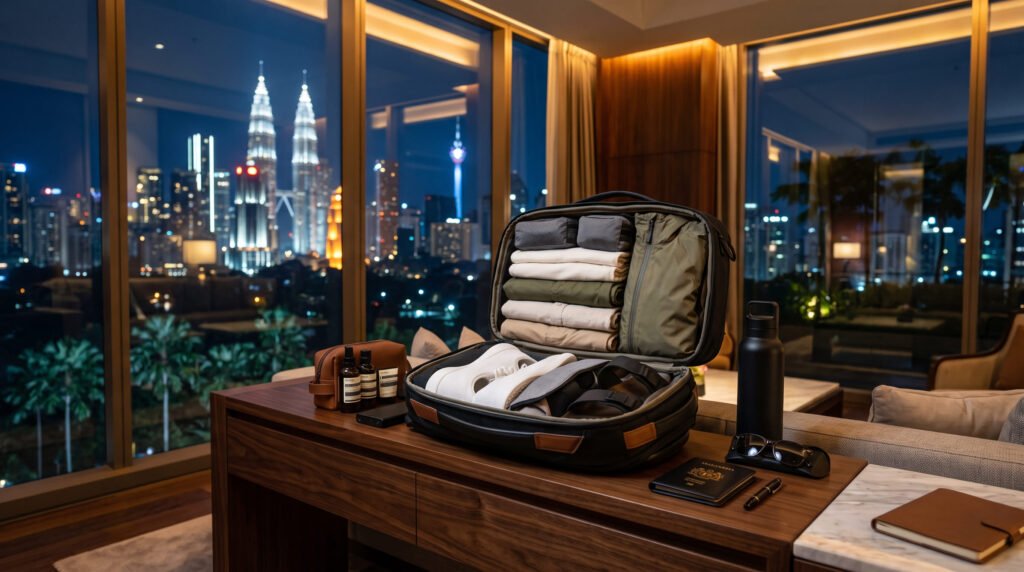
Packing for Southeast Asia is less about bringing more and more about bringing the right combination of lightweight, versatile, quick-drying essentials. A trip through Thailand, Vietnam, Indonesia, Malaysia, Cambodia, the Philippines, Singapore, or several countries at once can expose you to intense heat, humidity, sudden rain, beaches, cities, temples, long transport days, and very different dress expectations.
The smartest approach is to build a flexible Southeast Asia packing list around a small capsule wardrobe, comfortable footwear, weather protection, compact toiletries, essential electronics, and a laundry routine. That lets you travel for a week or several weeks without filling a large suitcase.
This guide breaks down exactly what to pack, what to leave behind, how to adapt your bag for different activities and seasons, and how to make a one-bag setup work without sacrificing comfort.
The Quick Southeast Asia Packing List
For a typical warm-weather trip with regular access to laundry, start with:
- 4–5 lightweight tops
- 2–3 pairs of shorts or lightweight trousers
- 1 modest long-sleeve shirt
- 1 lightweight long trouser
- 5–7 pairs of underwear
- 3–5 pairs of socks
- 1 lightweight sleep outfit
- 1 swimsuit
- 1 light rain layer or compact umbrella
- 1 versatile walking shoe
- 1 pair of sandals or flip-flops
- 1 small day bag
- 1 travel backpack or carry-on
- Lightweight packing cubes
- Compact toiletry kit
- Sunscreen
- Insect repellent
- Basic personal medication and first-aid supplies
- Phone and charging cable
- Compact charger
- Power bank where appropriate
- Universal travel adapter
- Reusable water bottle
- Passport and required travel documents
- Payment cards and emergency backup
- Copies of important documents
You do not need enough clothing for every day of the trip. Laundry is the key to keeping a Southeast Asia packing list compact.
How Much Should You Pack for Southeast Asia?
The length of your trip does not need to determine the amount of clothing you bring.
For a one-week trip, you might pack roughly the same clothing capsule as you would for three weeks if you are comfortable doing laundry once or twice.
| Trip length | Clothing approach | Laundry |
| 3–5 days | Small capsule | Optional |
| 7–10 days | Standard capsule | Once |
| 2 weeks | Standard capsule | 1–2 times |
| 3–4+ weeks | Standard capsule | Every few days as needed |
The advantage of one-bag travel is that you pack for a washing cycle, not for the entire calendar.
A useful rule is to ask whether an item can serve more than one purpose. A lightweight button-up, for example, can work as a casual shirt, sun layer, restaurant layer, or modest cover-up for certain settings.
Choose the Right Bag
For many travelers, a 30–40 liter travel backpack is a practical range for one-bag Southeast Asia travel. The exact size should depend on your airline’s cabin allowance, your packing habits, and whether you need specialized equipment.
Look for:
- Comfortable shoulder straps
- A supportive hip belt if carrying heavier loads
- Full-zip or clamshell access
- Separate laptop compartment if required
- Water-resistant exterior or included rain cover
- Lockable zippers
- Good internal organization
- A relatively lightweight empty bag
- A size that fits the airlines you expect to use
Backpack vs Suitcase
A backpack is often convenient if your itinerary includes frequent hotel changes, ferries, trains, buses, stairs, or uneven streets.
A small rolling suitcase can be better if your trip is mostly city-based and you prefer not to carry weight on your back.
The best choice is the one that matches your route. A sophisticated packing system should make transportation easier, not turn luggage into another travel challenge.
Build a Lightweight Southeast Asia Capsule Wardrobe
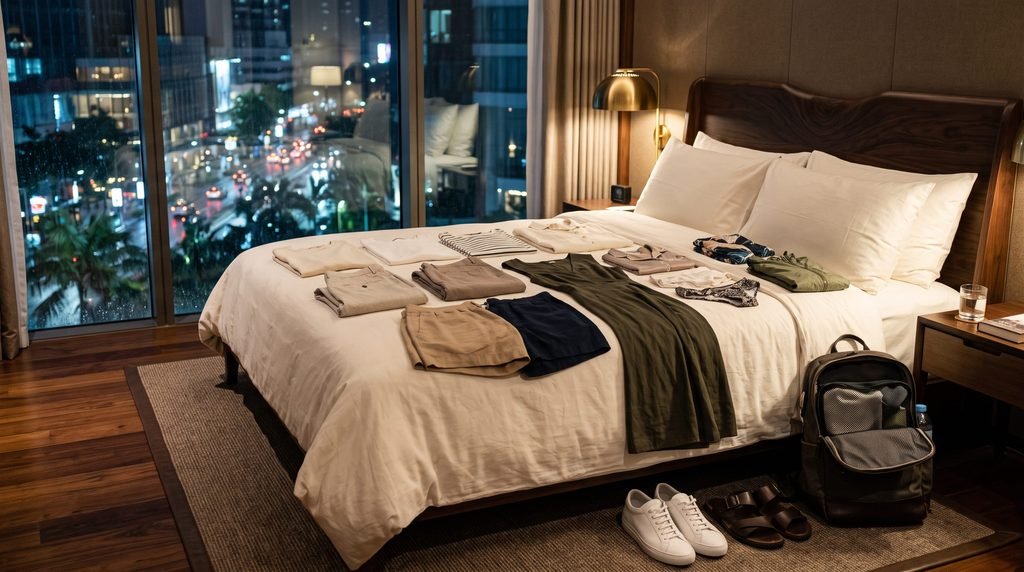
Clothing is where most travelers overpack.
Instead of packing separate outfits, choose pieces that work together and can be worn in different combinations.
4–5 Lightweight Tops
Prioritize:
- Breathable T-shirts
- Lightweight button-up shirts
- Quick-drying athletic or travel tops
- Simple neutral colors
- Fabrics that do not take up much space
Avoid building your wardrobe around heavy cotton pieces that become bulky when wet.
Synthetic technical fabrics can be useful for humid conditions because many are designed to dry quickly. Lightweight natural fabrics can also be comfortable, so the best choice is ultimately the combination of comfort, drying performance, odor management, and personal preference.
2–3 Bottoms
A practical combination might include:
- 1 pair of lightweight shorts
- 1 second pair of shorts or travel trousers
- 1 lightweight long trouser
Choose pieces that can move between sightseeing, casual restaurants, transport days, and relaxed evenings.
One pair of trousers should ideally be comfortable enough for long travel days but polished enough for places where shorts are inappropriate.
One Modest Outfit
A modest clothing option is particularly useful when visiting temples, religious sites, or other places with dress expectations.
Consider:
- Lightweight trousers or a longer skirt
- A shirt that covers the shoulders
- A lightweight scarf or cover-up
Do not assume that beachwear is acceptable everywhere simply because the destination is tropical.
Underwear and Socks
Pack approximately:
- 5–7 pairs of underwear
- 3–5 pairs of socks
You can adjust this according to how frequently you plan to wash.
For travelers who expect to wear sandals most days, fewer socks may be necessary.
Sleepwear
One lightweight sleep outfit is usually enough.
It does not need to be a dedicated pajama set if you have comfortable travel clothing that can double as sleepwear.
Swimwear
One swimsuit is enough for most travelers.
It can be used for:
- Beaches
- Hotel pools
- Island trips
- Water activities
A quick-drying swimsuit is especially convenient when moving between destinations.
What Shoes Should You Pack?
Shoes are one of the fastest ways to make a carry-on unnecessarily heavy.
For a typical Southeast Asia itinerary, two pairs are often enough:
1. Versatile Walking Shoes
Choose a lightweight pair that can handle:
- City sightseeing
- Airports
- Long walking days
- Public transportation
- Casual restaurants
- Light outdoor activities
Comfort matters more than fashion when you are walking several hours a day.
2. Sandals or Flip-Flops
A compact pair is useful for:
- Beaches
- Pools
- Hostels
- Hotel rooms
- Short walks
- Casual tropical evenings
If your itinerary includes serious hiking, cycling, diving, or other specialized activities, add footwear only when the activity genuinely requires it.
Avoid packing several pairs simply because they look good with different outfits.
Pack for Heat and Humidity
Hot weather changes what makes clothing practical.
Loose, lightweight clothing can improve comfort in hot conditions, while sun protection and hydration become more important during long outdoor days. The CDC recommends loose, lightweight clothing in hot climates and advises planning strenuous outdoor activities around cooler periods when possible.
Look for:
- Breathable materials
- Lightweight construction
- Loose silhouettes
- Quick-drying fabrics
- Sun-protective layers
- Clothing that can be washed easily
Be Careful With Heavy Fabrics
Bulky denim, thick sweatshirts, heavy jackets, and substantial cotton garments can consume valuable bag space.
That does not mean you must eliminate cotton completely. It simply means that heavy, slow-drying pieces are usually less useful in a warm, humid itinerary.
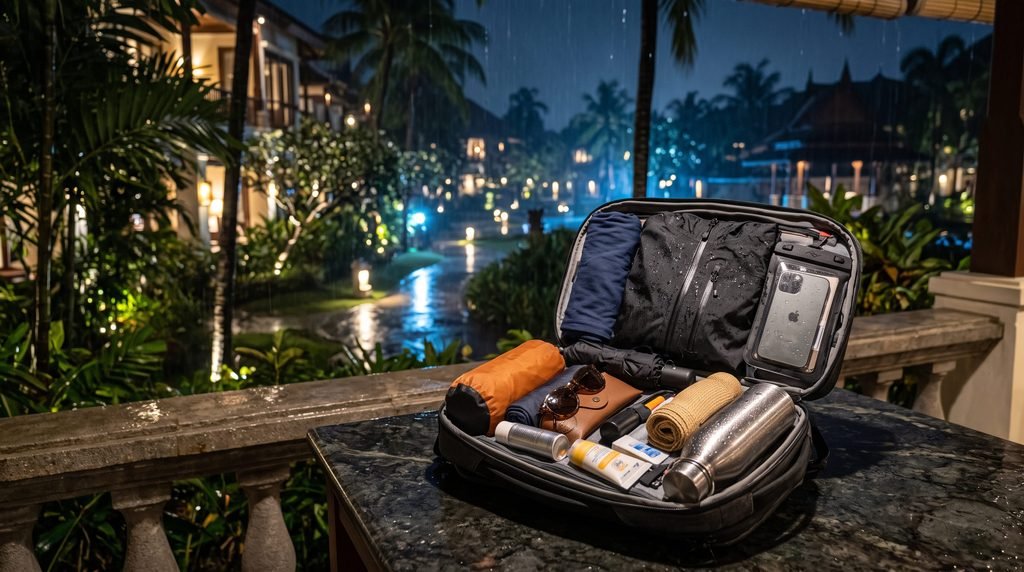
Rain Gear: Prepare Without Overpacking
Rain can be part of travel in many parts of Southeast Asia, but the right rain strategy depends on your destination and season.
A lightweight option could be:
- Compact rain jacket
- Small umbrella
- Water-resistant daypack
- Pack liner or dry bag
You do not necessarily need a large waterproof shell for a city-focused trip.
For hiking, island travel, or destinations where you expect prolonged exposure to rain, stronger waterproof protection becomes more worthwhile.
Protect the Inside of Your Backpack
A simple waterproof liner or dry bag can be more useful than trying to make every item in your backpack individually waterproof.
Keep:
- Passport
- Electronics
- Spare clothes
- Camera equipment
- Important documents
protected from unexpected rain.
Toiletries: Keep the Kit Small
You can buy many ordinary toiletries locally, so there is little reason to carry oversized bottles.
A compact kit can include:
- Toothbrush
- Toothpaste
- Deodorant
- Face cleanser
- Moisturizer
- Sunscreen
- Lip balm
- Razor
- Hairbrush or comb
- Minimal makeup if needed
- Small personal-care items
- Hand sanitizer
- Any essential medication
Use travel-sized containers where practical.
For flights, always check the current liquid and security requirements of your departure and transit airports rather than assuming that one country’s rules apply everywhere.
Sun Protection Belongs in Your Main Packing List
Do not treat sunscreen as an optional beach accessory.
You may spend hours walking outdoors in cities, visiting temples, exploring islands, hiking, or traveling by boat.
Consider packing:
- Sunscreen
- Sunglasses
- Lightweight hat
- Lip balm with sun protection
- Lightweight long-sleeve shirt
The CDC recommends sun protection during travel and notes that UV exposure can be significant in tropical environments and around reflective surfaces such as water and sand.
Insect Protection
Mosquito protection deserves space in your Southeast Asia packing list, particularly if your itinerary includes rural areas, forests, outdoor evenings, or destinations where mosquito-borne illnesses are a concern.
Useful options include:
- Insect repellent
- Lightweight long-sleeve clothing
- Long trousers
- Accommodation with screens or air conditioning where practical
- Mosquito net for appropriate remote or outdoor trips
Effective repellents can contain ingredients such as DEET, picaridin, IR3535, oil of lemon eucalyptus/PMD, or 2-undecanone. Destination-specific health guidance should determine what protection makes sense for your itinerary.
Do not assume that one health recommendation applies equally to every Southeast Asian destination.
Electronics: Bring What You Actually Use
A minimalist electronics kit can usually include:
- Smartphone
- Charging cable
- Compact wall charger
- Power bank if useful for your itinerary
- Universal travel adapter
- Earbuds
- E-reader or tablet if genuinely useful
- Camera and spare battery if photography is a priority
Do You Need a Laptop?
For a normal holiday, probably not.
For digital nomads, remote workers, photographers, or travelers who need to work regularly, a lightweight laptop may be justified.
The key question is simple:
Will I use this enough to justify carrying it?
If not, leave it home.
Documents and Travel Essentials
Some of the most important things in your bag are not physical travel gear.
Keep secure access to:
- Passport
- Required visas or entry documentation
- Flight and accommodation information
- Travel insurance details
- Emergency contacts
- Payment cards
- Some backup payment method
- Copies of important documents
- Prescription information where applicable
Store digital copies securely, but do not rely exclusively on your phone.
CDC travel guidance also recommends carrying appropriate copies of important documentation and ensuring medications and prescriptions are properly prepared for international travel.
Your Southeast Asia Travel Health Kit
A small personal health kit can be useful, particularly when traveling between multiple countries.
Depending on your needs and destination, consider:
- Personal prescription medication
- Basic pain or fever medication
- Motion-sickness medication if needed
- Bandages
- Blister protection
- Antiseptic supplies
- Hand sanitizer
- Oral rehydration supplies
- Insect repellent
- Sunscreen
- Any personal medical supplies
Do not build a giant pharmacy. Pack what is appropriate for your own needs and itinerary.
The CDC recommends tailoring a travel health kit to destination, activities, duration, access to medical care, and the amount of space you have available.
Food and Water Considerations
You do not need to fill your backpack with snacks and bottled water.
Instead, carry a reusable bottle and refill it where safe and appropriate.
Food and water practices vary by destination. Travelers should follow local health guidance and take reasonable precautions with food, beverages and ice where water safety is uncertain. The CDC identifies contaminated food and drinks as a common source of travelers’ diarrhea and recommends choosing safer food and water options.
Temple and Cultural Clothing
This is an easy category to overlook.
Some religious and cultural sites may expect visitors to cover shoulders, knees, or other areas of the body.
A practical solution is not to pack an entirely separate wardrobe. Instead, bring pieces that can adapt.
For example:
- Lightweight trousers
- Longer skirt
- Loose button-up shirt
- Lightweight scarf
- Shoulder-covering top
This gives you cultural flexibility without adding much weight.
Always check the expectations of specific religious sites before visiting.
Packing for Beaches and Islands
For a beach-heavy itinerary, add:
- Swimsuit
- Lightweight cover-up
- Sandals
- Sunglasses
- Sun hat
- Waterproof phone pouch if useful
- Compact dry bag
- Reef-safe or locally appropriate sunscreen where relevant
Avoid taking multiple beach outfits.
One or two versatile pieces are usually enough.
Packing for Hiking and Adventure Travel
If your Southeast Asia trip includes substantial hiking, your packing list should change.
Consider:
- Lightweight hiking shoes
- Moisture-managing hiking socks
- Quick-drying hiking clothing
- Lightweight rain protection
- Headlamp
- Small first-aid kit
- Water treatment equipment if your route requires it
- Insect protection
- Sun protection
Do not carry specialized equipment simply because you might encounter a trail.
Check the actual requirements of your route before departure.
Packing for City-Hopping
For a route built around Bangkok, Singapore, Kuala Lumpur, Ho Chi Minh City, Hanoi, Manila, or other major cities, prioritize:
- Comfortable walking shoes
- Lightweight city clothes
- Small daypack
- Compact umbrella
- Portable charger
- Reusable bottle
- One polished casual outfit
- Secure document storage
You generally need less specialized equipment than you would for a hiking or island-heavy itinerary.
Laundry Is the Secret to One-Bag Travel

Laundry is what makes a compact Southeast Asia packing list practical.
You have several options.
Local Laundry Services
Drop-off laundry can be convenient when you are moving between destinations.
Ask about:
- Turnaround time
- Pricing method
- Drying
- Special-care clothing
- Whether items are washed together or separately
Sink Washing
For a few lightweight garments, hand washing can keep your clothing rotation moving.
A simple system:
- Wash clothing with suitable soap.
- Rinse thoroughly.
- Press out excess water rather than aggressively twisting delicate fabrics.
- Hang garments where there is airflow.
- Use a fan or air-conditioning when available.
- Avoid packing clothes while they are still damp.
Pack a Small Laundry Kit
Consider:
- Small laundry soap or detergent sheets
- Lightweight laundry bag
- A few reusable clips
- Optional universal sink stopper
You do not need a complicated washing system.
Packing Cubes: Useful, Not Mandatory
Packing cubes can make a backpack much easier to organize.
A simple arrangement could be:
- Cube 1: Tops
- Cube 2: Bottoms and underwear
- Cube 3: Sleepwear/swimwear
- Small pouch: Electronics
- Small pouch: Toiletries
Compression cubes can save space, but remember that they do not make heavy items lighter.
Organization is their biggest advantage.
What Not to Pack for Southeast Asia
Knowing what to leave home is just as important as knowing what to bring.
Skip or reconsider:
- Multiple pairs of heavy shoes
- Several pairs of jeans
- Large towels
- Full-size toiletries
- Multiple jackets
- Excessive “just in case” clothing
- Bulky hair tools
- Large books
- Duplicate chargers
- Too many electronics
- Full-size first-aid kits
- Clothes that only work with one outfit
- Expensive accessories you do not need
If something can easily be rented, bought locally, or replaced with a lighter alternative, think twice before giving it permanent space in your bag.
How to Adapt Your Packing List by Season
Do not create one universal Southeast Asia packing list and assume it will work perfectly everywhere.
Dry and Hot Conditions
Prioritize:
- Breathable tops
- Shorts
- Lightweight trousers
- Sandals
- Sun protection
- Refillable water bottle
- Insect repellent
Wet or Monsoon Conditions
Increase your emphasis on:
- Rain protection
- Waterproof storage
- Quick-drying clothing
- Extra protection for electronics
- Footwear that tolerates wet conditions
Cooler Northern or Higher-Elevation Areas
If your route includes cooler regions, add:
- Lightweight insulating layer
- Long trousers
- Long-sleeve base layer
- Compact outer layer
You do not necessarily need a heavy winter coat. Layering is usually more space-efficient.
Destination-Specific Adjustments
A multi-country Southeast Asia itinerary deserves a little planning before you zip the bag closed.
Thailand
For a mixture of cities, islands and temples, prioritize versatile clothing, modest temple-appropriate options, sandals, comfortable walking shoes, sun protection and rain protection appropriate to the season.
Vietnam
A north-to-south itinerary can expose you to considerably different conditions. Your packing list should reflect the actual regions and dates rather than assuming the entire country will be hot.
Indonesia
Beach and island travel may call for swimwear, sandals and rain protection, while inland or higher-elevation areas can require additional layers.
Malaysia
Expect your packing needs to change depending on whether you are combining cities, beaches, rainforest areas or higher elevations.
Philippines
Island-hopping itineraries favor lightweight clothing, swimwear, sun protection and water-resistant storage. More adventurous routes may require additional outdoor gear.
Singapore
A city-focused visit usually requires very little specialized equipment. Comfortable walking shoes, breathable clothes, rain protection and a polished casual outfit are more useful than bulky adventure gear.
What to Pack for Southeast Asia as a One-Bag Traveler
A practical master checklist looks like this:
Clothing
- 4–5 lightweight tops
- 2–3 bottoms
- 1 lightweight long trouser
- 1 modest long-sleeve layer
- 5–7 underwear
- 3–5 socks
- 1 sleep outfit
- 1 swimsuit
- 1 lightweight rain layer
Footwear
- Comfortable walking shoes
- Sandals or flip-flops
- Optional specialist footwear only if required
Toiletries
- Toothbrush
- Toothpaste
- Deodorant
- Sunscreen
- Insect repellent
- Razor
- Basic skincare
- Personal hygiene products
- Essential medications
Electronics
- Smartphone
- Charging cable
- Compact charger
- Power bank
- Universal adapter
- Earbuds
- Camera, if needed
Travel Essentials
- Passport
- Required entry documents
- Travel insurance information
- Payment cards
- Backup payment method
- Emergency contacts
- Copies of important documents
- Reusable water bottle
- Small day bag
- Packing cubes
- Laundry supplies
Weather & Outdoor
- Sunglasses
- Hat
- Rain protection
- Dry bag or waterproof pouch
- Lightweight long-sleeve layer
- Basic first-aid supplies
Common Southeast Asia Packing Mistakes
Packing for Every Possible Weather Scenario
Research your actual itinerary first.
A five-day beach holiday does not need the same clothing as a month-long journey through northern Vietnam, tropical islands and mountain regions.
Bringing Too Many Shoes
Two versatile pairs can often outperform four specialized pairs.
Ignoring Laundry
If you plan to travel for several weeks, laundry should be part of your itinerary rather than an afterthought.
Packing Heavy Cotton Clothing
Comfort matters, but heavy garments become inconvenient when they take up substantial space or dry slowly.
Forgetting Cultural Dress
A lightweight modest outfit can solve a surprisingly common travel problem.
Carrying Too Much Technology
Every device requires space, charging, protection and attention.
Overpacking Toiletries
Bring your essentials and replace ordinary consumables when practical.
Treating All of Southeast Asia the Same
This is perhaps the biggest mistake.
Check your specific countries, regions, dates, altitude, activities and weather patterns before finalizing the bag.
A Simple One-Bag Packing Formula
If you want a straightforward system, build your bag around five principles:
1. Pack for a week, not the whole trip.
Use laundry to extend the wardrobe.
2. Choose versatile clothing.
Every piece should work with multiple outfits.
3. Limit footwear.
Shoes are heavy and bulky.
4. Protect against the climate.
Prioritize heat, sun, rain and insects according to your destination.
5. Leave room for the unexpected.
A backpack packed completely full is difficult to manage. A little spare capacity makes the trip easier.
Who Is This Packing List Best For?
First-Time Southeast Asia Travelers
The checklist provides a reliable starting point without requiring specialist equipment.
Backpackers
The one-bag approach is particularly useful when changing destinations frequently.
Couples
Couples can reduce duplication by sharing items such as certain electronics or travel accessories where practical.
Solo Travelers
A compact bag is easier to manage on public transportation, during transfers and between accommodations.
Luxury Travelers
Even travelers staying in high-end hotels can benefit from a smaller wardrobe. The difference is usually in fabric quality and accessories rather than the number of pieces.
Digital Nomads
Add the technology required for your work, but resist turning a travel backpack into a portable office.
Final Packing Test
Before leaving, put everything you intend to bring on the floor.
Then ask:
Will I use this?
If yes, keep it.
Can another item perform the same job?
If yes, choose the more versatile option.
Can I buy it easily at the destination?
If yes, consider leaving it home.
Does it protect me from a genuine problem?
Keep essential health, document, weather and safety items.
Does it only exist because I am afraid I might need it?
That is often the first thing to remove.
A good Southeast Asia packing list should not feel like a checklist of everything you own. It should feel like a carefully edited travel system.
FAQs
1. What should I pack for Southeast Asia?
Pack lightweight, versatile clothing, comfortable walking shoes, sandals, swimwear, rain protection, sun protection, insect repellent, compact toiletries, essential electronics, travel documents and personal medication. The exact list should change according to your countries, season and activities.
2. Can I travel around Southeast Asia with only one carry-on?
Yes, many travelers can travel comfortably with one carry-on when they use a compact wardrobe and do laundry during the trip. The biggest variables are your airline’s baggage allowance, climate, activities and whether you need specialized equipment.
3. How many clothes should I pack for a two-week Southeast Asia trip?
A practical capsule can be similar to what you would pack for one week: roughly four or five tops, two or three bottoms, five to seven underwear, several pairs of socks, sleepwear, swimwear and a modest long-sleeve option. Plan to wash clothing during the trip rather than carrying fourteen days of outfits.
4. What shoes are best for Southeast Asia?
For many itineraries, comfortable walking shoes plus lightweight sandals are enough. Add hiking, water or specialist footwear only when your planned activities genuinely require it. Shoes should be chosen around your itinerary rather than packed for hypothetical activities.
5. Do I need a rain jacket for Southeast Asia?
Not necessarily, but some form of rain protection is useful. A lightweight rain jacket, compact umbrella or water-resistant layer can be appropriate depending on the destination and season. Travelers expecting extended outdoor exposure during wet conditions should choose more substantial waterproof protection.
Conclusion
The best Southeast Asia packing list is not the one with the most gear. It is the one that gives you enough versatility to handle heat, humidity, rain, cultural visits, city walks, beaches and transportation without making your luggage a burden.
Start with a compact clothing capsule, two useful pairs of shoes, a small toiletry kit, essential electronics, sun and insect protection, and a realistic laundry plan. Then adjust the system for your specific countries, season and activities.
Most importantly, pack for the trip you are actually taking—not every possible trip you might take once you arrive.
1 comment