
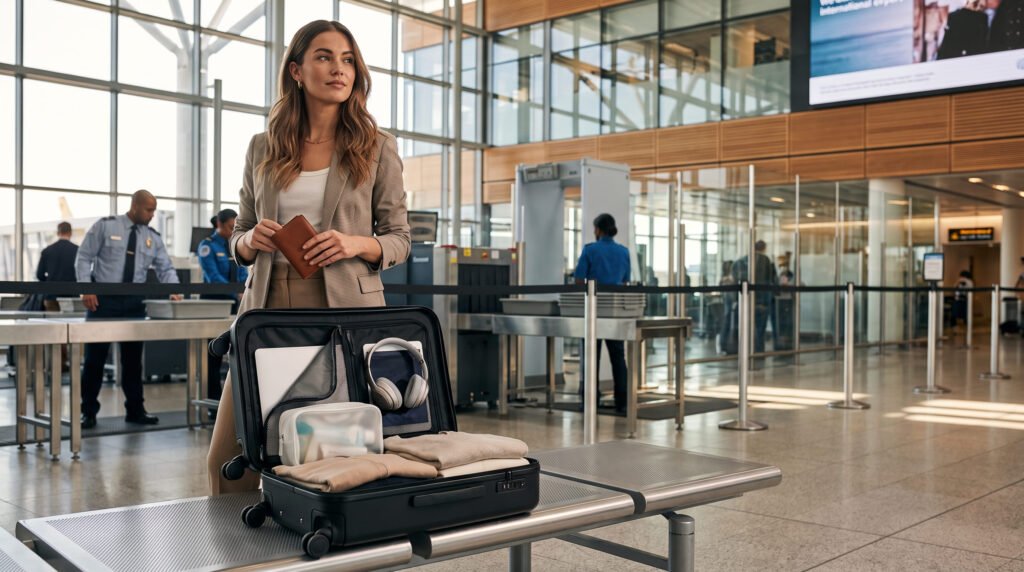
Airport security can make even experienced travelers pause before packing. Can you bring a full-size shampoo bottle? Does your laptop need to come out of the bag? Where should a power bank go? What about medication, snacks, perfume, or scissors?
The confusing part is that airport security rules aren’t one-size-fits-all. Requirements can differ depending on the country, airport, airline, item, and screening technology being used. If you’re departing from a U.S. airport, TSA rules are especially important, while international travelers also need to consider the rules of their departure airport and destination.
This guide breaks down the most important airport security rules for 2026 in simple terms. You’ll learn what can usually go in your carry-on, what may need to be checked, how the 100ml liquid rule works, where power banks belong, what happens at security, and which common packing mistakes can cause delays.
Important: Security, baggage, dangerous-goods, and customs rules are not always the same. Always verify your specific item with the relevant airport, airline, and official security authority before flying.
Quick Answer: What Can You Bring Through Airport Security?
In general, travelers can bring many everyday items through security, including clothing, books, phones, laptops, cameras, headphones, and many ordinary personal-care products.
The biggest areas that require attention are liquids, gels and aerosols, sharp objects, batteries, power banks, hazardous materials, medications, food, and special equipment.
For standard TSA screening in the United States, carry-on liquids, gels, aerosols, creams, and pastes generally need to follow the 3-1-1 liquids rule: each container must be 3.4 ounces (100 ml) or less, the containers must fit into one quart-size clear bag, and each passenger is limited to one such bag. Certain exceptions apply.
Power banks and spare lithium batteries are different: they belong in your carry-on baggage, not checked baggage, because of the fire risk associated with lithium batteries.
For a quick pre-flight check, think about these five categories:
- Everyday personal items: Usually permitted
- Liquids: Size and quantity restrictions apply
- Electronics: Usually permitted, but screening requirements can vary
- Power banks: Carry-on only
- Sharp or hazardous items: Restrictions can be strict
When you’re unsure about one particular item, don’t rely on a generic “allowed on planes” list. Check the official rule for that exact item and your specific journey.
What Happens at Airport Security?
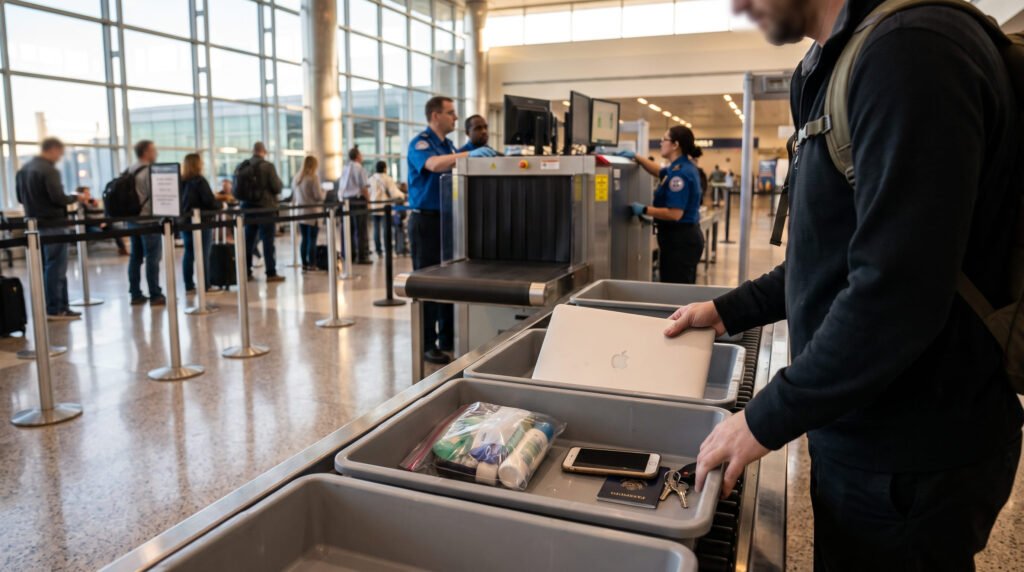
Understanding the screening process can make the airport feel much less stressful.
At a typical security checkpoint, you’ll first present the identification or travel documents required by that airport or security authority. Your carry-on then goes through screening equipment while you follow the instructions given by security officers.
Depending on the checkpoint and screening system, you may be asked to remove certain items from your bag.
Under standard TSA screening guidance, passengers may need to remove their 3-1-1 liquids bag and larger personal electronic devices such as laptops, tablets, e-readers, and handheld gaming devices. Shoes and other items may also need to be removed during standard screening.
However, don’t assume every checkpoint works exactly the same way. Screening procedures can vary with the technology installed at a particular airport or lane. The safest approach is to follow the instructions displayed at the checkpoint and those given by the security officer.
A Typical Security Process
1. Prepare your documents
Keep your passport, identification, and boarding information accessible rather than buried inside your luggage.
2. Empty your pockets
Remove items such as phones, keys, wallets, coins, and other belongings when instructed.
3. Prepare your carry-on
Place required items into screening bins according to the checkpoint’s instructions.
4. Follow electronics instructions
Some checkpoints require larger electronics to be removed from your bag. Others may use screening technology that changes what passengers need to remove.
5. Follow liquid instructions
Keep your compliant liquid bag accessible so you don’t have to dig through your suitcase.
6. Complete the screening
You may go through a walk-through detector, body scanner, or another screening procedure depending on the airport and checkpoint.
7. Recheck your belongings
Before leaving the screening area, make sure you have collected your passport, electronics, wallet, and every item placed in a bin.
A little organization before reaching the checkpoint can make this process much easier.
Carry-On vs. Checked Baggage: What’s the Difference?
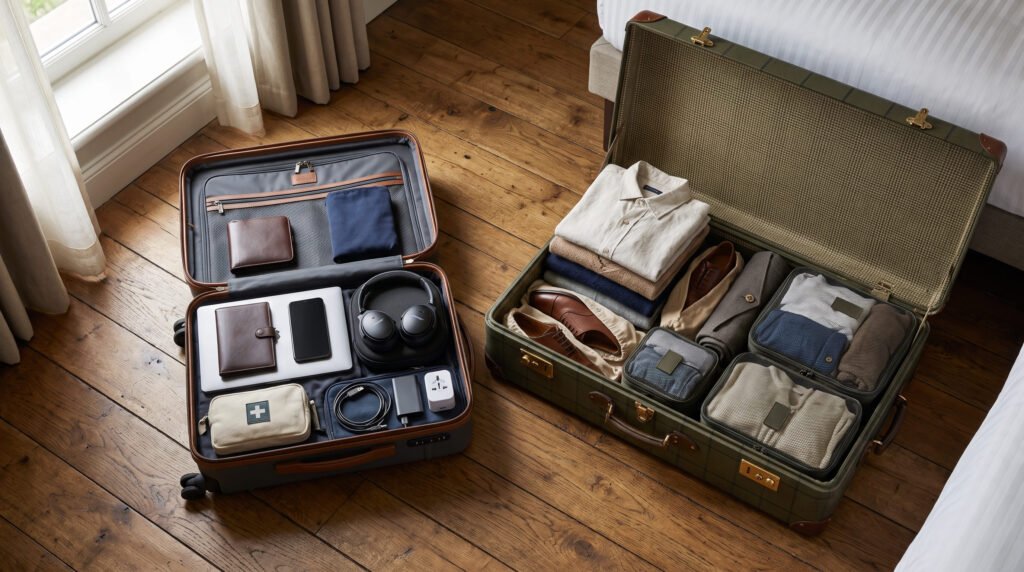
One of the most common airport mistakes is assuming that an item that’s not permitted in a carry-on can automatically be placed in checked baggage.
That’s not always true.
Some items are restricted in carry-on luggage but may be permitted under specific checked-baggage conditions. Other hazardous materials are prohibited from passenger baggage altogether.
TSA itself recommends reviewing prohibited-item information for both carry-on and checked baggage before traveling.
Carry-On Baggage
Your carry-on is generally the better place for items you need during the journey or cannot risk losing.
These commonly include:
- Passport and important documents
- Wallet and keys
- Phone
- Laptop or tablet
- Camera
- Headphones
- Essential personal items
- Necessary medication
- Power banks
- Spare lithium batteries
- Valuables
Spare lithium batteries and power banks must remain with the passenger in the aircraft cabin rather than being placed in checked baggage.
Checked Baggage
Checked luggage is generally intended for clothing, shoes, larger non-essential belongings, and other items that don’t need to remain with you during the flight.
But don’t use checked baggage as a “solution” for prohibited items.
For example, fireworks are not permitted in either checked or carry-on baggage, according to TSA guidance.
The safest rule is:
If you’re unsure about an item, check its specific baggage classification before packing it.
A Simple Packing Rule
Think of your luggage in three categories:
Keep with you: documents, valuables, essential medication, power banks, and important electronics.
Pack carefully: clothing, shoes, toiletries, and other ordinary travel belongings.
Verify before packing: batteries, sharp objects, tools, unusual equipment, hazardous products, and anything you’re uncertain about.
This approach is much safer than assuming that every item belongs in either a carry-on or checked suitcase.
TSA 3-1-1 Liquid Rule Explained
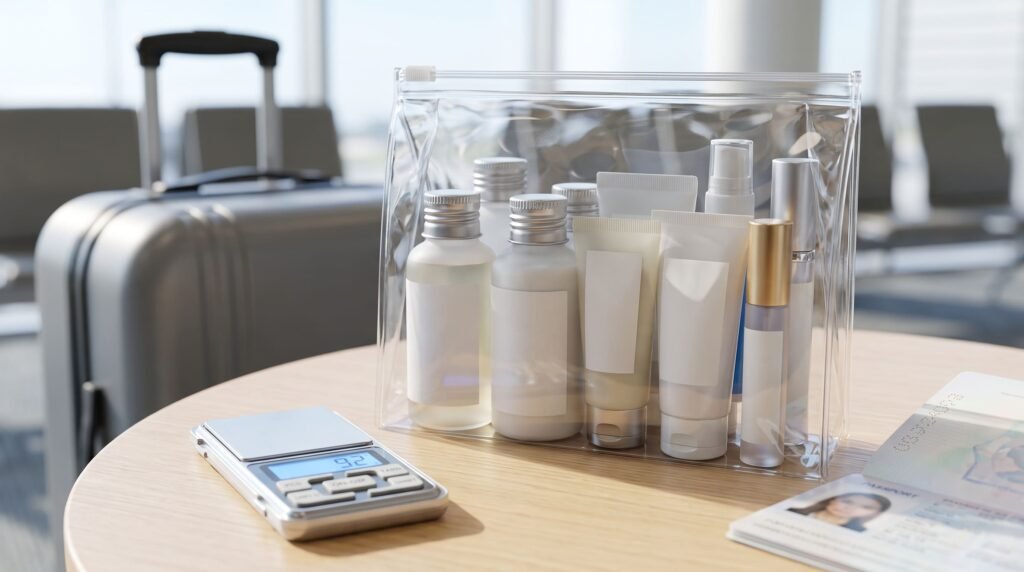
Liquids are one of the biggest sources of confusion at airport security.
For standard TSA screening in the United States, the familiar 3-1-1 rule generally applies to liquids, gels, aerosols, creams, and pastes in carry-on baggage.
Each container should be 3.4 ounces (100 ml) or less, and the containers should fit into one quart-size clear bag. Each passenger is generally allowed one such bag.
What Counts as a Liquid?
The rule isn’t limited to drinks.
It can also cover products such as:
- Shampoo
- Conditioner
- Lotion
- Sunscreen
- Toothpaste
- Liquid foundation
- Perfume
- Deodorant sprays
- Hair gel
- Liquid makeup
- Creams
- Certain food products with liquid or gel-like consistency
The important thing to remember is that a product doesn’t have to look like water to be treated as a liquid.
Does the Container Size Matter?
Yes.
A large bottle that contains only a small amount of product can still create a problem under the standard 3-1-1 rule because the container itself exceeds the usual 3.4-ounce/100-ml limit.
For example, don’t assume a 200-ml bottle containing only 50 ml of shampoo qualifies simply because there’s little product left.
Instead, transfer an appropriate amount into a compliant travel container when practical.
What About Larger Liquids?
Some liquids can qualify for exceptions, particularly certain medically necessary liquids and other specifically permitted items.
Don’t assume that every liquid over 100 ml is prohibited. Instead, check the current official guidance for the specific product and your airport.
A Simple Liquid-Packing Strategy
Before leaving home:
- Identify every liquid, gel, cream, and aerosol.
- Check the container size.
- Transfer suitable products into smaller containers.
- Put compliant liquids together in the required bag.
- Keep the bag accessible during screening.
- Separate items that may qualify for an exception.
This takes a few minutes at home and can save unnecessary repacking at the checkpoint.
Toiletries You Can Usually Bring
Most everyday personal-care products are manageable when packed according to the applicable liquid restrictions.
Common examples include:
- Toothbrush
- Toothpaste
- Small shampoo bottle
- Conditioner
- Face wash
- Moisturizer
- Sunscreen
- Makeup
- Deodorant
- Hair products
- Contact-lens supplies
For products that are not liquid, gel, cream, or aerosol, the 3-1-1 liquid rule may not apply in the same way. However, other security restrictions can still apply depending on the item.
Don’t Pack Your Entire Bathroom
A common packing mistake is bringing full-size toiletries for a short trip.
Instead, ask:
“How much will I realistically use?”
For a short vacation, a small amount of shampoo or skincare product may be enough.
Travel-size containers can reduce both luggage volume and weight while keeping your essentials accessible.
Can You Bring Medication Through Airport Security?
Medication deserves special attention because it may not follow the same restrictions as ordinary toiletries.
If you need medication during your journey, keep it accessible in your carry-on rather than placing essential medicine in checked luggage.
For liquid medication or other medically necessary liquids, don’t automatically assume the standard 100-ml rule applies exactly the same way. TSA provides exceptions for medically necessary liquids, but travelers should declare or present them according to the current screening instructions.
Smart Medication Strategy
Keep important medication:
- In your carry-on
- In clearly identifiable packaging where practical
- Accessible during screening
- Separate from ordinary toiletries when appropriate
- With supporting documentation when your circumstances or destination make it useful
For international travel, also check the medication rules of your destination country. Security approval at departure does not automatically mean a medication is legal to import into another country.
Can You Bring Food Through Airport Security?
Many ordinary solid foods can be carried through airport security, but food rules can become complicated when an item contains liquids, gels, sauces, or other restricted substances.
Common travel snacks may include:
- Sandwiches
- Crackers
- Cookies
- Granola bars
- Dry fruit
- Chocolate
- Solid snacks
The important distinction is:
Airport Security vs. Customs
An item passing through airport security does not automatically mean you can bring it into another country.
For international travel, destination-country customs and agricultural rules may restrict:
- Fresh fruit
- Vegetables
- Meat
- Dairy products
- Seeds
- Plants
- Animal products
- Certain packaged foods
So always separate these two questions:
“Can I take it through security?”
and
“Can I legally bring it into my destination country?”
They’re not necessarily the same question.
Laptop, Phone and Electronics Rules
Most everyday personal electronics can travel with you.
Examples include:
- Smartphones
- Laptops
- Tablets
- Cameras
- E-readers
- Headphones
- Handheld gaming devices
- Smartwatches
- Chargers
- Cables
The bigger question is often not whether you can bring the device, but how it must be screened.
Under standard TSA screening procedures, travelers may be asked to remove larger electronics such as laptops and tablets from their bags. However, screening procedures can differ by checkpoint and technology. Follow the instructions given at your specific security lane.
Keep Electronics Organized
Instead of placing every cable and charger loosely inside your suitcase, use a small electronics pouch.
Keep together:
- Charging cables
- Wall adapter
- Power bank
- Headphones
- Memory cards
- Travel adapter
This makes your bag easier to inspect and prevents small accessories from disappearing into clothing.
Power Bank Rules for Air Travel
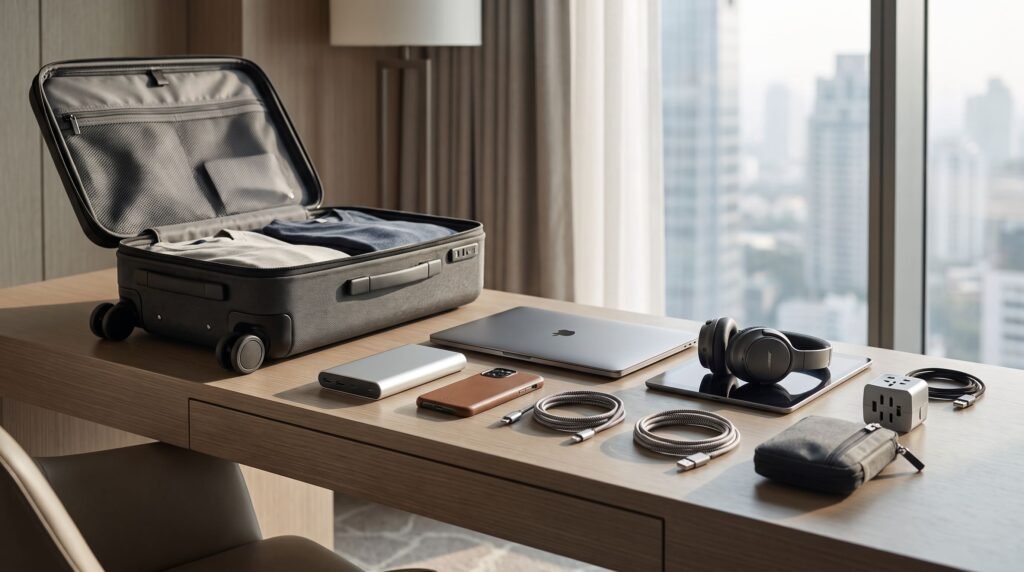
Power banks require extra attention because they contain lithium-ion batteries.
The basic rule is simple:
Spare lithium-ion batteries and power banks must be carried in carry-on baggage, not checked baggage.
This isn’t just an airport-security preference. Lithium batteries can experience thermal runaway and potentially overheat or catch fire, which is why spare batteries are kept in the aircraft cabin where a battery problem can be detected and addressed by the crew.
Power Bank Watt-Hour Limits
For lithium-ion batteries, FAA guidance currently uses watt-hours (Wh) to determine the applicable limit.
A useful general breakdown is:
0–100 Wh: Generally permitted for passenger use, subject to applicable rules.
101–160 Wh: May be permitted with airline approval, with limits on spare batteries.
Over 160 Wh: Not permitted on passenger aircraft as a passenger baggage item.
Airlines can impose stricter requirements, including limits on the number or capacity of power banks passengers may bring. Always check your airline before flying.
How to Calculate Power Bank Wh
If the watt-hour rating isn’t printed on your battery, you can calculate it.
Wh = Volts × Amp-hours
If the capacity is listed in milliamp-hours:
Wh = Volts × (mAh ÷ 1,000)
For example, a 20,000 mAh power bank rated at 3.7 volts would be approximately:
3.7 × 20 = 74 Wh
That falls below the 100-Wh threshold commonly used for lithium-ion batteries.
Protect Your Spare Batteries
Don’t allow battery terminals to contact metal objects such as keys, coins, or loose cables.
FAA guidance recommends protecting battery terminals against short circuits using appropriate packaging, a battery case, protective pouch, original retail packaging, or another suitable method.
If a battery is damaged, swollen, recalled, or showing signs of overheating, don’t simply place it in your luggage. FAA guidance says damaged or recalled batteries that could create dangerous heat or sparks should not be carried aboard an aircraft unless they have been made safe or the battery has been removed.
What About Electronics in Checked Baggage?
Portable electronic devices containing lithium batteries may sometimes be placed in checked baggage when they meet applicable requirements, but FAA guidance recommends carrying them in the cabin where practical.
If a lithium-battery-powered device is placed in checked baggage, it generally needs to be completely powered off and protected against accidental activation or damage. Spare lithium batteries remain prohibited in checked baggage.
For expensive or essential electronics, the practical choice is simple:
Keep them in your carry-on whenever possible.
That protects them from rough baggage handling and keeps important devices with you.
The Easiest Way to Organize Your Security Bag
Before leaving for the airport, create three accessible zones.
Zone 1: Security Essentials
Keep these easy to reach:
- Passport
- Identification
- Boarding information
- Liquid bag
Zone 2: Electronics
Keep together:
- Laptop
- Tablet
- Camera
- Power bank
- Chargers
Zone 3: Personal Essentials
Keep nearby:
- Medication
- Wallet
- Phone
- Headphones
- Small personal items
This organization means you aren’t digging through your suitcase while other passengers wait behind you.
The goal isn’t to bring less just for the sake of bringing less. The goal is to make every security-sensitive item easy to identify, remove, and repack.
What You Cannot Bring Through Airport Security
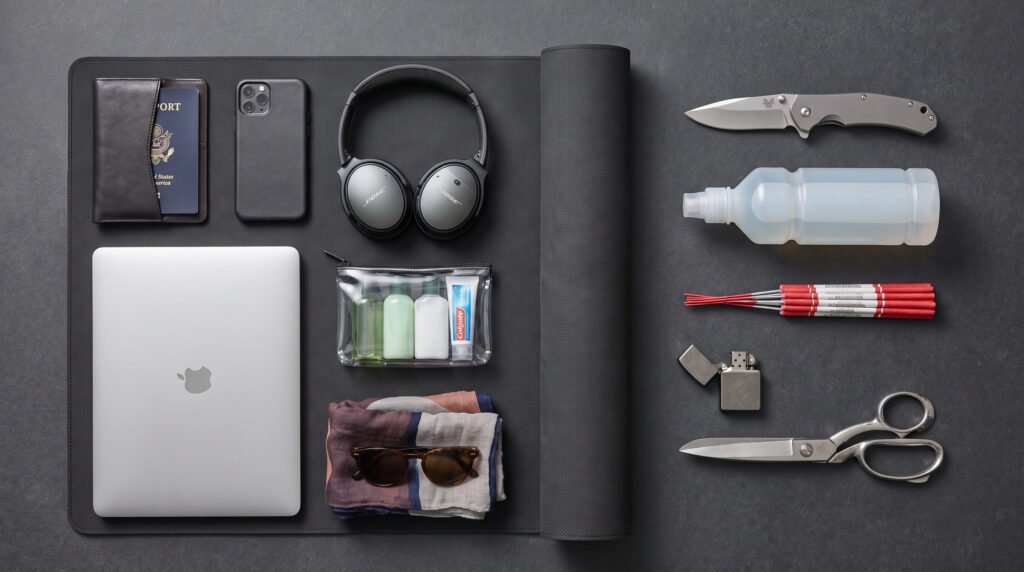
Knowing what isn’t allowed can be just as important as knowing what is.
Security restrictions generally focus on items that could create a safety risk onboard an aircraft. Depending on the item, restrictions may apply to carry-on baggage, checked baggage, or both.
Common examples of problematic items include:
- Explosives and fireworks
- Flammable materials
- Certain hazardous chemicals
- Weapons and weapon-like items
- Some sharp objects
- Certain tools
- Oversized liquids
- Certain self-defense items
- Damaged or unsafe lithium batteries
However, don’t assume that every item on a generic “prohibited items” list has exactly the same baggage restriction.
An item may be prohibited from your carry-on but permitted under specific conditions in checked baggage—or it may be prohibited altogether.
Always check the exact item rather than guessing.
Sharp Objects, Scissors and Tools
Sharp objects are another common source of confusion.
Items such as knives, blades, scissors, and tools can have different requirements depending on their type, size, and intended use.
Instead of asking:
“Are scissors allowed on a plane?”
ask:
“Are these specific scissors permitted in my carry-on on this journey?”
That distinction matters because security rules can depend on the exact object.
If you don’t need a potentially restricted tool or sharp item during the flight, checking the applicable baggage rules before packing it is the safest approach.
And remember:
If an item is prohibited in your carry-on, don’t automatically put it in checked luggage.
Some dangerous items are prohibited in passenger baggage altogether.
Common Airport Security Mistakes to Avoid
A little preparation can prevent many unnecessary delays.
1. Packing Full-Size Toiletries
A large shampoo or skincare bottle is one of the easiest mistakes to avoid.
Check your container sizes before leaving home and transfer suitable products into compliant travel containers.
2. Putting Your Power Bank in Checked Luggage
This is a particularly important mistake.
Spare lithium batteries and power banks belong in carry-on baggage, not checked baggage. (faa.gov)
3. Hiding Electronics at the Bottom of Your Bag
If your checkpoint requires electronics to be removed, you’ll waste time unpacking your entire carry-on.
Keep larger electronics somewhere accessible.
4. Mixing All Your Cables Together
Loose cables, chargers, memory cards, and small accessories can make your bag unnecessarily messy.
Use a small electronics organizer.
5. Assuming Every Airport Uses the Same Screening Process
Security technology varies.
Some checkpoints may require you to remove certain items, while others may use newer screening systems that change the process.
Follow the instructions at your specific lane rather than relying entirely on what happened at another airport.
6. Assuming “Allowed Through Security” Means “Allowed Into the Country”
This is especially important for international travelers.
A food product can pass security but still be restricted by destination customs.
The same principle can apply to medications, plants, agricultural products, and other regulated items.
7. Leaving Important Medication in Checked Luggage
Essential medication should generally remain accessible during your journey.
Don’t put something you absolutely need in a suitcase that could be delayed or lost.
TSA Rules vs. International Airport Security Rules
One of the biggest misconceptions about air travel is that every airport follows exactly the same security rules.
They don’t.
If you’re flying from the United States, TSA guidance is highly relevant to your departure screening.
But if you’re departing from another country, the security authority and airport rules may differ.
Even when many airports use similar principles—such as restrictions on large quantities of liquids—the exact procedures and permitted items can vary.
There Are Actually Four Sets of Rules to Consider
1. Departure airport security rules
These determine what you can take through the security checkpoint.
2. Airline baggage rules
These determine things such as baggage dimensions, weight limits, and airline-specific restrictions.
3. Dangerous-goods regulations
These apply to batteries, hazardous materials, chemicals, and other potentially dangerous items.
4. Destination customs and import rules
These determine what you’re legally allowed to bring into another country.
This distinction is extremely useful:
Airport security asks whether an item can pass the checkpoint. Customs asks whether you can legally bring it into the country.
Those are different questions.
How to Make Airport Security Faster
You can’t control how busy an airport will be, but you can control how prepared you are.
Pack Your Liquids Together
Keep your compliant liquid bag somewhere accessible.
Keep Electronics Organized
Use a dedicated electronics pouch and avoid burying chargers underneath clothing.
Empty Your Pockets Before Reaching the Checkpoint
Don’t wait until you’re standing at the screening area to discover keys, coins, or other items in your pockets.
Wear Simple Travel Clothing
Clothing with fewer complicated layers can make the screening process easier when you’re asked to remove specific items.
Keep Documents Accessible
Your passport or ID shouldn’t be buried beneath a jacket, book, and toiletry bag.
Listen to Security Officers
Even if you’ve traveled through the same airport before, procedures may have changed.
The fastest approach isn’t trying to predict what the officer will ask you to do.
It’s being organized enough to respond immediately to the instructions you receive.
Airport Security Checklist Before You Leave Home
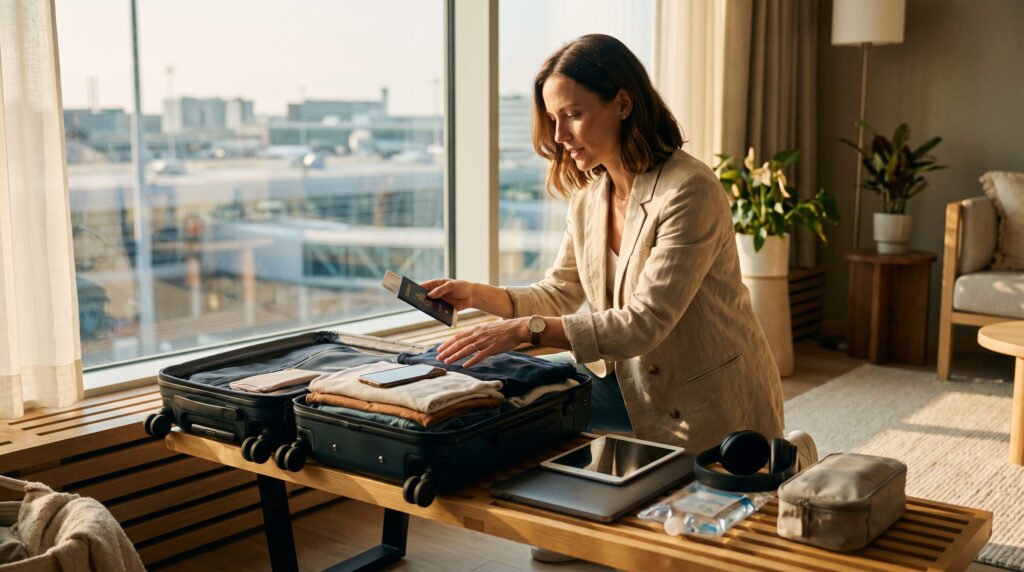
Use this quick checklist before heading to the airport.
Carry-On
☐ Passport or required identification
☐ Boarding information
☐ Phone
☐ Wallet
☐ Essential medication
☐ Laptop or tablet
☐ Chargers
☐ Power bank
☐ Important valuables
Liquids
☐ Check every container size
☐ Use appropriate travel-size containers
☐ Organize liquids together
☐ Keep the liquid bag accessible
☐ Separate applicable medical or other permitted exceptions
Batteries
☐ Keep power banks in carry-on baggage
☐ Check watt-hour ratings when necessary
☐ Protect spare battery terminals
☐ Don’t pack damaged or swollen batteries
Before Security
☐ Empty your pockets when instructed
☐ Follow the checkpoint’s electronics instructions
☐ Follow liquid-screening instructions
☐ Don’t assume another airport’s procedure is identical
Before Leaving Security
☐ Passport
☐ Phone
☐ Wallet
☐ Laptop
☐ Tablet
☐ Headphones
☐ Power bank
☐ All items collected from screening bins
That final check can save you from discovering five minutes later that your expensive headphones are still sitting in a security tray.
What Happens If Security Finds a Restricted Item?
Don’t panic.
If an officer identifies an item that isn’t permitted through the checkpoint, the exact response can depend on the item and circumstances.
You may be asked to:
- Remove the item from your carry-on
- Return it to a vehicle or companion
- Place it in checked baggage if permitted and practical
- Surrender or dispose of the item
- Follow additional instructions from security personnel
The important point is that you shouldn’t argue about an item’s classification based solely on something you read online.
Security officers at the checkpoint make the operational decision for that screening process.
If an item is important to you, verify the rule before arriving at the airport.
2026 Airport Security Rules: The Smart Traveler’s Approach
Airport security becomes much easier when you stop thinking of packing as simply:
“What can I take?”
Instead, ask four questions:
Can I bring it?
Where should I pack it?
Will I need to remove it at security?
Are there additional airline, battery, dangerous-goods, or customs rules?
This approach works far better than relying on a single generic prohibited-items list.
For U.S. travelers, check current TSA guidance. For lithium batteries and dangerous goods, consult FAA guidance as well. For international trips, check your departure airport, airline, and destination-country requirements.
Rules can change, so verify important items close to your travel date rather than relying on an old packing checklist.
FAQs
Can I bring liquids on a plane in 2026?
Yes. Under standard TSA screening, liquids, gels, aerosols, creams, and pastes in carry-on baggage generally follow the 3-1-1 rule: containers must be 3.4 oz (100 ml) or less and fit in one quart-size bag. Exceptions can apply. (tsa.gov)
Can I bring a power bank in my carry-on?
Yes. Power banks and spare lithium batteries must generally be carried in the cabin rather than checked baggage. Battery capacity and airline-specific restrictions can also apply. (faa.gov)
Can I put a power bank in checked luggage?
No. Spare lithium batteries and power banks should not be placed in checked baggage. Keep them in your carry-on. (faa.gov)
Can I bring medication through airport security?
Generally, yes. Certain medically necessary liquids and medications may qualify for security exceptions, so travelers should check the current requirements and follow screening instructions. International travelers should also check medication-import rules at their destination.
Can I bring food through airport security?
Many ordinary solid foods can be carried through security, but liquids, gels, and certain foods may have additional restrictions. International travelers must also check destination customs rules.
Do laptops have to come out of your bag?
It depends on the checkpoint and screening procedure. Standard TSA screening may require larger electronics to be removed, while some newer screening systems can change what passengers need to take out. Follow the instructions at your specific checkpoint. (tsa.gov)
Can I bring perfume in my carry-on?
Generally, yes, when the perfume container complies with the applicable liquid restrictions. Under standard TSA screening, a carry-on perfume container generally needs to be 3.4 oz (100 ml) or smaller and fit within your allowed liquids bag.
Can I bring scissors on a plane?
It depends on the scissors and the applicable security rules. Don’t rely on a generic yes-or-no answer; check the exact type and size against the current rules for your departure airport.
Are airport security rules the same worldwide?
No. TSA rules apply to U.S. security screening, while other countries and airports may have their own requirements. Airline baggage policies and destination customs rules can also differ.
What should I do if I’m unsure about an item?
Check the official security authority and airline before traveling. For U.S. departures, TSA is the appropriate starting point; for lithium batteries and dangerous goods, FAA guidance is also important. Never assume that an item prohibited in carry-on baggage is automatically safe in checked luggage.
Final Thoughts
Airport security doesn’t have to be stressful.
The easiest strategy is to prepare before you reach the checkpoint. Keep liquids organized, carry power banks and spare lithium batteries in your cabin baggage, make electronics accessible, keep essential medication with you, and check unusual or questionable items before packing.
Most importantly, remember that security rules, airline baggage policies, dangerous-goods regulations, and destination customs rules are different layers of travel requirements.
If you’re flying from the United States, use current TSA and FAA guidance as your primary reference. For international trips, also verify the rules of your departure airport, airline, and destination.
A few minutes of preparation at home can prevent unnecessary problems at the airport—and help you start your trip with much less stress.
Safe travels!