

A good travel packing list does more than help you remember your toothbrush. It helps you pack for your actual trip without filling your suitcase with “just in case” items you never use.
The best approach is to begin with your destination, weather, trip length, planned activities, and luggage allowance. Then choose versatile clothing, useful toiletries, essential documents, and the items you cannot easily replace on the road.
Use this guide as a flexible master packing list. You do not need everything on it. Choose what matches your itinerary, destination, season, and personal travel style.
Start With Your Trip, Not Your Suitcase

Before packing anything, answer these questions:
- How many days will you be away?
- What weather is expected?
- What activities have you planned?
- Will you have access to laundry?
- Are you traveling with a carry-on only or checked luggage?
- Do you need formal, business, beach, or outdoor clothing?
- Are there local dress codes or cultural considerations?
This simple planning step prevents one of the biggest travel mistakes: packing for imaginary situations instead of the trip you are actually taking.
Check the latest weather forecast shortly before departure, but prepare for reasonable temperature changes with layers rather than packing an entirely separate wardrobe.
The Essential Travel Packing List
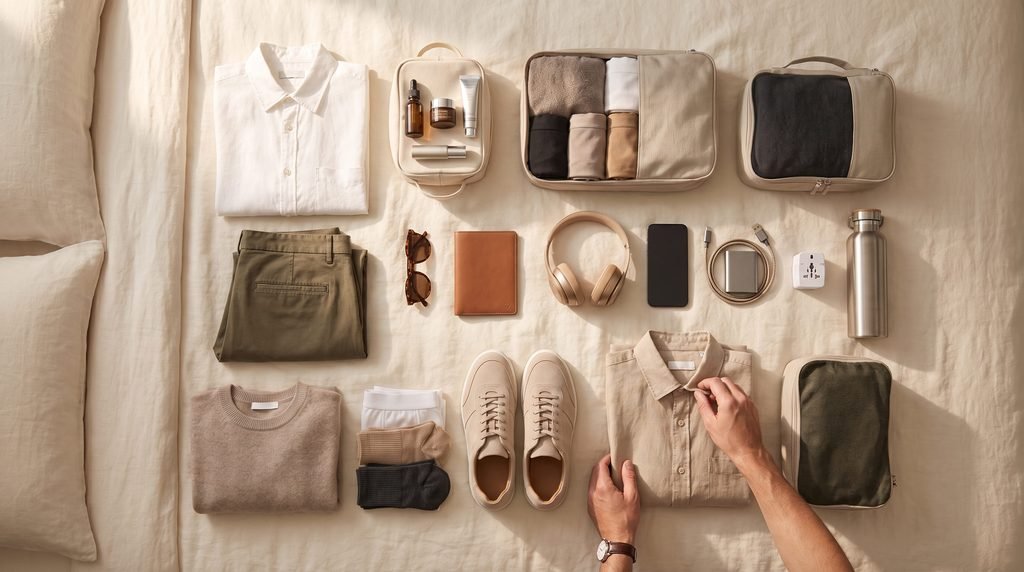
Travel Documents and Money
Keep essential documents together and easy to reach.
Pack:
- Passport, if required
- Visa, eTA, ESTA, or other entry authorization if applicable
- Government-issued identification
- Flight, train, or other transportation confirmations
- Hotel and accommodation details
- Travel insurance information
- Credit and debit cards
- A small amount of appropriate local currency, if useful
- Emergency contact information
- Copies of important documents
- Digital backups stored securely
For international travel, entry rules vary by destination and can change. Check your destination’s official immigration or government requirements rather than relying on a general rule.
Clothing Essentials
Your clothing should work as a small travel wardrobe rather than a collection of unrelated outfits.
Start with:
- Comfortable everyday tops
- Versatile bottoms
- Underwear and socks
- Sleepwear
- A light layer such as a cardigan, overshirt, or sweater
- A weather-appropriate outer layer
- Comfortable shoes
- One smarter outfit if your itinerary requires it
- Swimwear for beach, pool, or spa plans
Choose pieces that can be worn more than once and styled in different combinations.
A neutral color palette makes this easier. For example:
- Black + cream + beige
- Navy + white + camel
- Brown + ivory + olive
- Gray + black + soft blue
Add one or two accent pieces if you want more personality.
Shoes
Shoes take up significant space, so be selective.
For most trips, two pairs are enough:
- One pair of comfortable shoes for walking
- One pair suited to your destination or planned activities
Depending on your trip, the second pair could be:
- Sandals
- Boots
- Dress shoes
- Loafers
- Flats
- Trail shoes
Wear your bulkiest pair during transit when practical.
Toiletries
Pack only the products you regularly use.
Your basic toiletry kit may include:
- Toothbrush and toothpaste
- Deodorant
- Shampoo and conditioner
- Face cleanser
- Moisturizer
- Sunscreen
- Lip balm
- Razor
- Hairbrush or comb
- Makeup and skincare essentials
- Feminine hygiene products
- Prescription medication
- Basic personal care items
For air travel, verify current airport security and airline requirements before departure, especially for liquids and aerosol products.
Electronics and Travel Tech
Consider what you will genuinely use.
Useful items may include:
- Phone
- Charging cable
- Wall charger
- Power bank
- Headphones or earbuds
- Laptop or tablet, if needed
- Camera
- Travel adapter
- E-reader
- Smartwatch charger
For flights, current U.S. FAA guidance says spare lithium batteries and power banks must generally travel in carry-on baggage rather than checked baggage. Airline and international rules may be stricter, so always check the requirements for your specific carrier.
Health and Comfort Essentials
Depending on your needs, pack:
- Prescription medication
- Basic first-aid supplies
- Pain reliever
- Motion sickness remedies
- Rehydration supplies
- Glasses or contact lenses
- Hand sanitizer
- Tissues
- Reusable water bottle
- Eye mask
- Earplugs
- Neck pillow
Keep essential medication and anything difficult to replace in your personal item or carry-on whenever possible.
How Much Should You Pack?
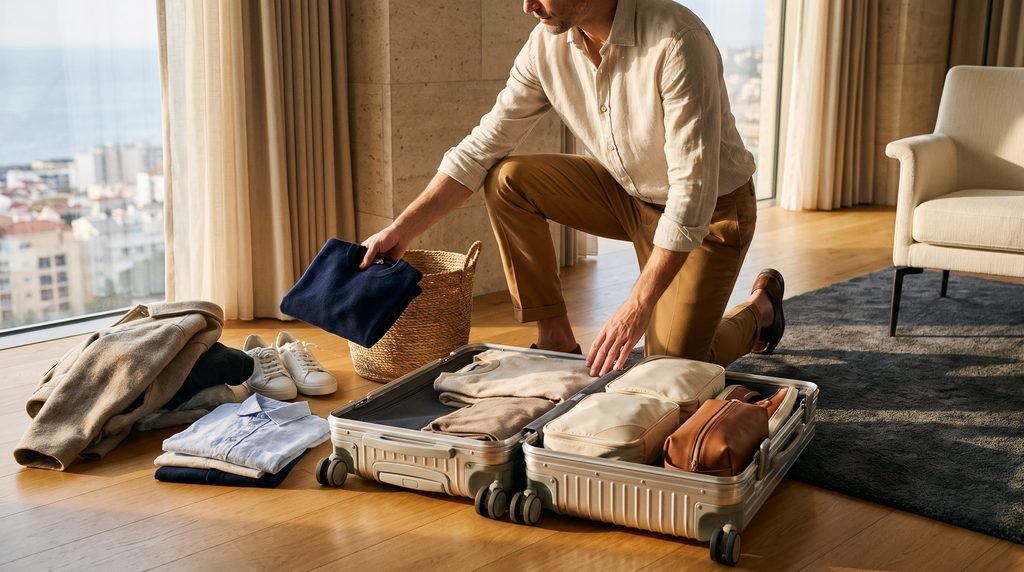
There is no perfect number of items for every traveler, but these guidelines can help you start.
For a Weekend Trip
You may need:
- 2–3 tops
- 1–2 bottoms
- Underwear and socks
- 1 sleepwear option
- 1 light layer
- 1–2 pairs of shoes
Choose items that create multiple outfits rather than packing something new for every activity.
For a One-Week Trip
A flexible starting point could include:
- 5–7 tops
- 3–4 bottoms
- 7–8 sets of underwear
- 5–7 pairs of socks
- 1–2 layers
- 2 pairs of shoes
- 1 occasion-specific outfit if necessary
Adjust these numbers according to your climate, activities, and laundry access.
For Two Weeks or Longer
You usually do not need to double everything.
Instead, plan for laundry and pack a versatile wardrobe that can be reworn. Seven to ten days of clothing is often enough for a much longer trip when washing facilities are available.
The goal is to pack for the time between laundry opportunities, not necessarily for every day you will be away.
Build a Simple Travel Capsule Wardrobe
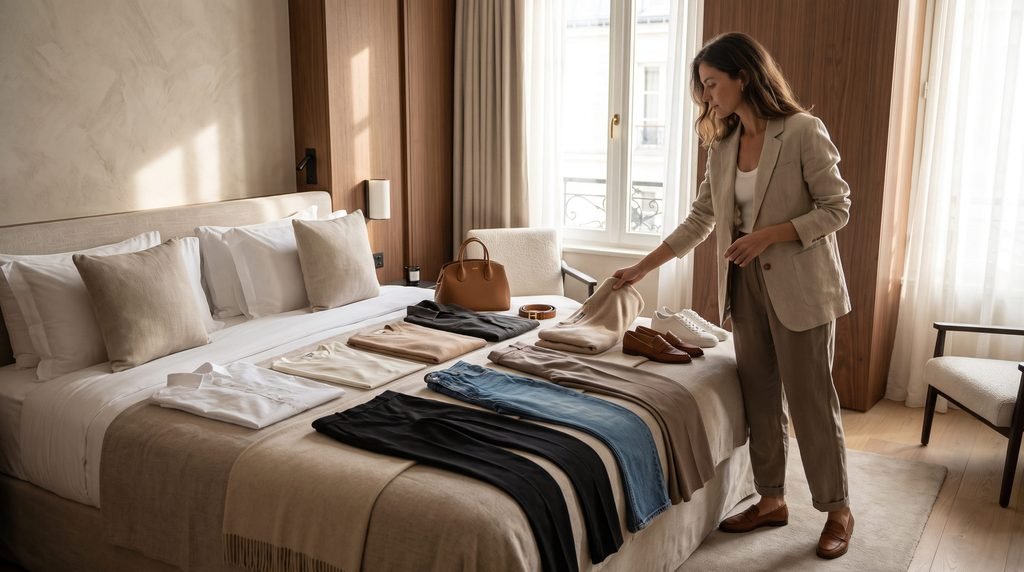
A travel capsule wardrobe is one of the easiest ways to pack less without having fewer outfit options.
Start with:
1. Two or Three Base Colors
Choose shades that work together.
For example:
- Black
- White
- Beige
2. One Accent Color
Add a color or print you enjoy wearing, such as:
- Burgundy
- Blue
- Green
- Red
- A subtle stripe or pattern
3. Flexible Pieces
Prioritize clothing that can move between different situations.
A simple outfit formula might be:
T-shirt or shirt + versatile bottoms + layer + accessories
Then change one or two elements to create a different look.
A neutral shirt with trousers may work for sightseeing, dinner, and travel days with different shoes or layers.
Travel Packing Lists by Trip Type
Beach Vacation Packing List
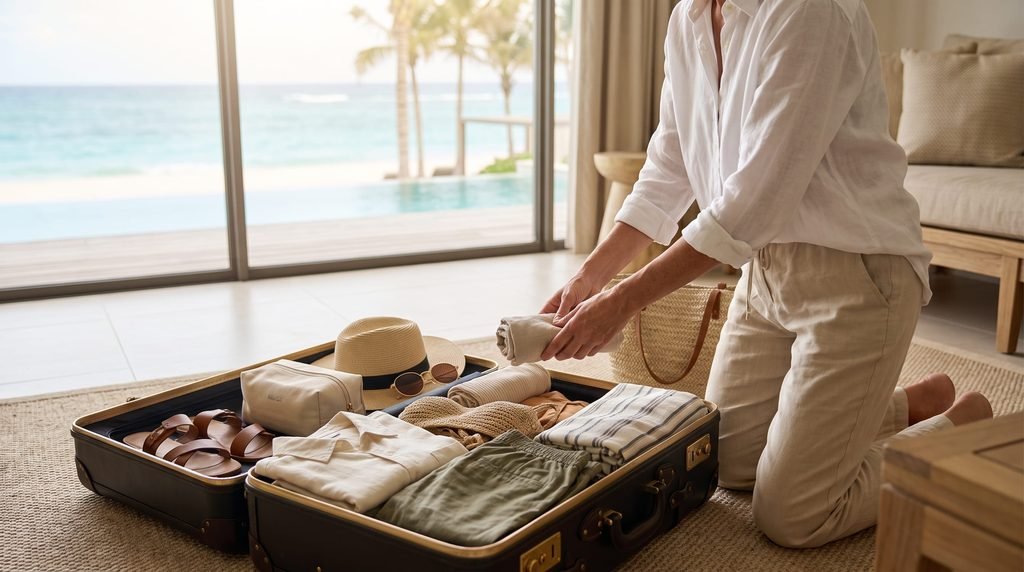
Add:
- 2–3 swimsuits
- Beach cover-up
- Sandals
- Beach bag
- Sunglasses
- Hat
- Sunscreen
- After-sun skincare
- Light evening layer
Do not pack your entire summer wardrobe. Choose lightweight fabrics that can transition from the beach to a casual lunch or evening walk.
City Break Packing List
Prioritize:
- Comfortable walking shoes
- Versatile day-to-night outfits
- A crossbody bag or practical day bag
- Portable charger
- Light layers
- Compact umbrella or rain layer when appropriate
- One slightly dressier look
Comfort matters more than packing the most options. A city trip may involve long walks, stairs, public transportation, museums, and changing temperatures.
International Travel Packing List
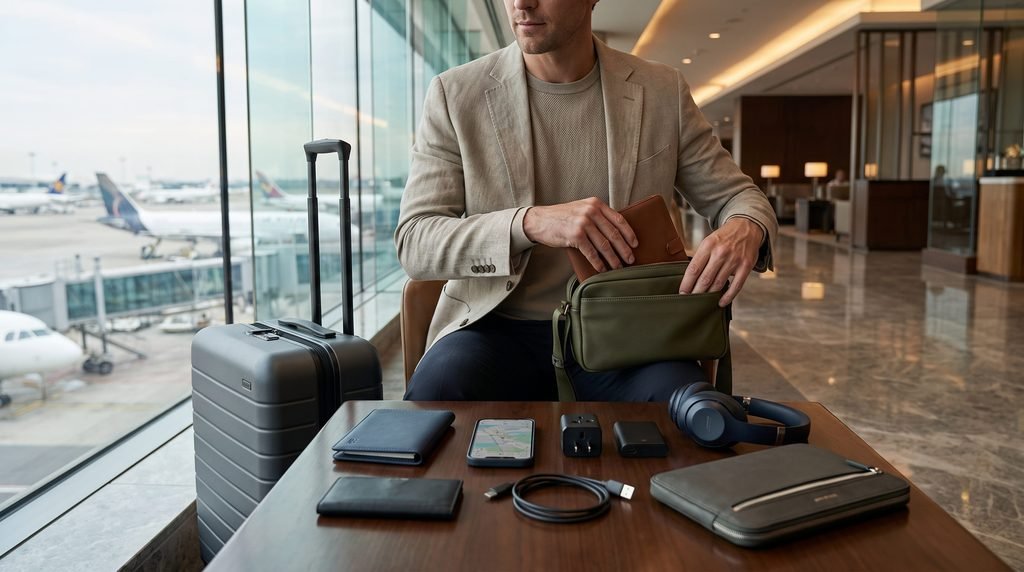
Add:
- Passport
- Required entry documents
- Travel insurance details
- Travel adapter
- Payment backup
- Secure digital document copies
- International phone or data plan
- Any destination-specific health or entry documentation
Verify passport validity, visa requirements, and other entry conditions directly with the relevant authorities because these requirements vary by destination and nationality.
Cold-Weather Packing List
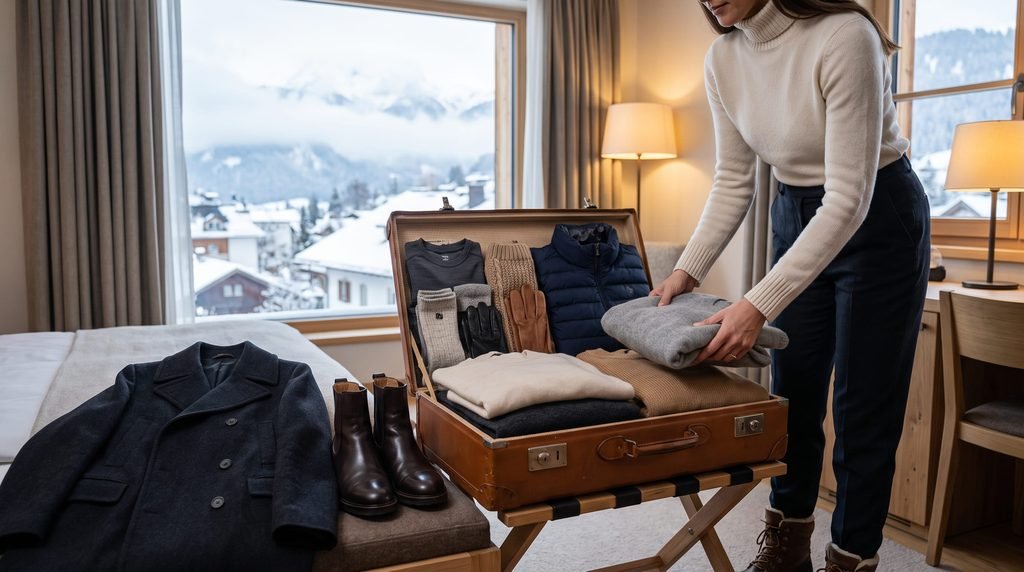
Focus on layering:
Base layer → insulating layer → outer layer
Pack:
- Thermal base layers when necessary
- Sweaters or fleece
- Weather-appropriate outerwear
- Warm socks
- Gloves
- Scarf
- Hat
- Suitable footwear
One well-chosen outer layer is usually more practical than several bulky jackets.
Business Travel Packing List
Add:
- Wrinkle-resistant clothing
- Meeting-appropriate shoes
- Professional bag
- Laptop and charger
- Presentation materials
- One backup outfit
- Small garment-care essentials
Choose a limited color palette so professional pieces can be repeated in different combinations.
Family Travel Packing List
Pack by person and category rather than filling one suitcase without a system.
Consider:
- Daily clothing
- Extra underwear
- Medication
- Comfort items
- Entertainment for transit
- Snacks
- Weather protection
- Important documents
Use packing cubes or separate compartments to make each person’s essentials easier to find.
What Should Always Stay in Your Carry-On?
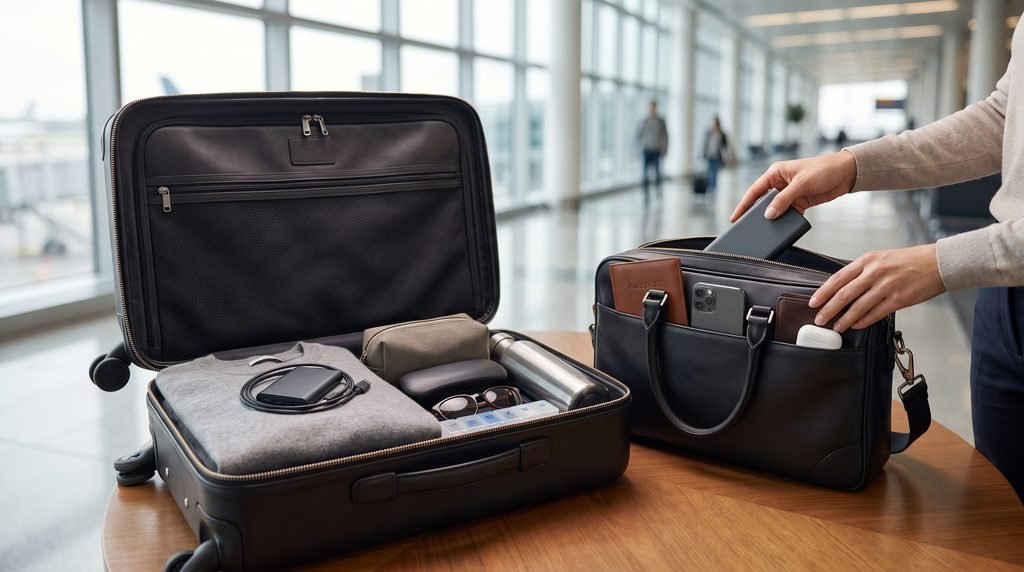
Your carry-on should contain anything valuable, essential, or difficult to replace.
Keep with you:
- Passport and identification
- Medication
- Wallet and cards
- Phone
- Charger
- Power bank
- Essential electronics
- Important documents
- One change of clothes when practical
- Basic toiletries
- Glasses or contact lenses
- Valuable items
If your checked luggage is delayed, you should still be able to manage the first part of your trip.
How to Pack Light Without Forgetting Essentials
Pack Multi-Use Clothing
Choose pieces that work in more than one situation.
Examples:
- A shirt suitable for sightseeing and dinner
- Trousers that work casually and for a nicer restaurant
- Shoes comfortable enough for walking but polished enough for evenings
Avoid Single-Use Items
Before packing something, ask:
Will I use this more than once?
If not, decide whether it is truly essential.
Do Not Pack for Every Possible Scenario
A minor “what if” does not always deserve suitcase space.
Most destinations have stores. Unless something is difficult to replace, highly personal, or essential, you may not need to bring it for every possible emergency.
Lay Everything Out First
Do not pack directly from your closet.
Place everything in one area and review it before putting it in your bag. Duplicate items become much easier to notice.
Use Packing Cubes Strategically
Packing cubes can help organize categories, compress soft clothing, and make it easier to unpack.
However, they do not eliminate the need to reduce the amount you bring.
Common Packing Mistakes to Avoid
Packing Too Many Clothes
More clothing does not automatically create more useful outfits.
Build combinations instead of packing individual items.
Ignoring the Weather
A destination’s general climate does not guarantee the weather during your specific travel dates.
Check the forecast close to departure.
Taking Too Many Shoes
Shoes are heavy and bulky. For many trips, one walking pair plus one alternative is enough.
Forgetting Laundry Access
For longer trips, laundry access can dramatically reduce the amount you need to pack.
Putting Essentials in Checked Luggage
Medication, documents, valuables, and critical electronics should generally stay with you.
Packing Without Checking Airline Rules
Baggage dimensions, weight limits, and restricted items can vary by airline and route. Confirm the current rules before departure.
Your Final Pre-Departure Packing Checklist

One Week Before
- Check passport and entry requirements
- Confirm transportation and accommodation
- Review weather expectations
- Check airline baggage rules
- Arrange required travel insurance
- Plan laundry access for longer trips
Two or Three Days Before
- Complete your packing list
- Charge electronics
- Download important documents
- Download offline maps
- Check that essential items fit your luggage allowance
- Prepare your carry-on essentials
The Day Before
- Finish packing
- Weigh your luggage
- Charge your phone and power bank
- Set out your travel-day outfit
- Recheck travel documents
- Confirm your transportation to the airport or station
Departure Day
- Carry your passport and essential documents
- Check that medication is accessible
- Keep chargers and electronics easy to reach
- Double-check your wallet, phone, and keys
- Leave with enough time for the journey
FAQs
1. What should be included in a travel packing list?
A complete travel packing list should include clothing, shoes, toiletries, documents, electronics, medication, and destination-specific items. Customize it based on weather, trip length, activities, and luggage restrictions.
2. How many outfits should I pack for a 7-day trip?
Most travelers do not need seven completely different outfits. A small capsule wardrobe with versatile tops, a few bottoms, layers, and accessories can create enough combinations for a week.
3. How do I pack for a two-week trip without overpacking?
Plan to do laundry and pack approximately one week’s worth of versatile clothing. Focus on pieces that can be reworn and mixed into different outfits.
4. What should always go in my carry-on bag?
Keep travel documents, medication, valuables, essential electronics, chargers, and items you would struggle to replace in your carry-on.
5. What is the easiest way to avoid overpacking?
Make a customized travel packing list, lay out everything before packing, remove duplicate or single-use items, and choose clothing that works in multiple outfits.
Conclusion
The best travel packing list is not the longest one. It is the one that fits your destination, itinerary, weather, and travel style.
Start with the essentials, build a small collection of versatile clothing, keep important items accessible, and avoid packing for situations that are unlikely to happen. With a little planning, you can travel with less while still feeling prepared for the journey ahead.
1 comment