
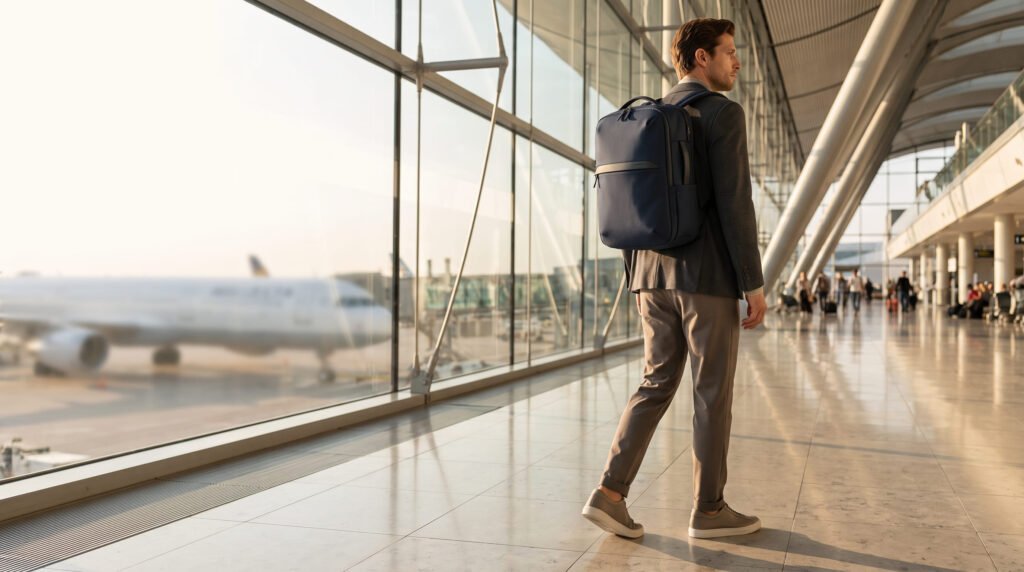
The best travel packs make it easier to move through airports, cities, trains, hotels, and unfamiliar streets without dragging more luggage than you need. But choosing the right one is not simply about finding the biggest backpack you can carry.
The right size depends on your airline, destination, trip length, climate, packing habits, and whether you need to carry a laptop, camera equipment, or specialized gear. A great travel pack should fit your body and your trip—not just hold the most possible items.
This guide explains what to look for, how to choose the right capacity, how to stay within airline baggage rules, and how to pack efficiently for anything from a weekend getaway to longer one-bag travel.
What Is a Travel Pack?
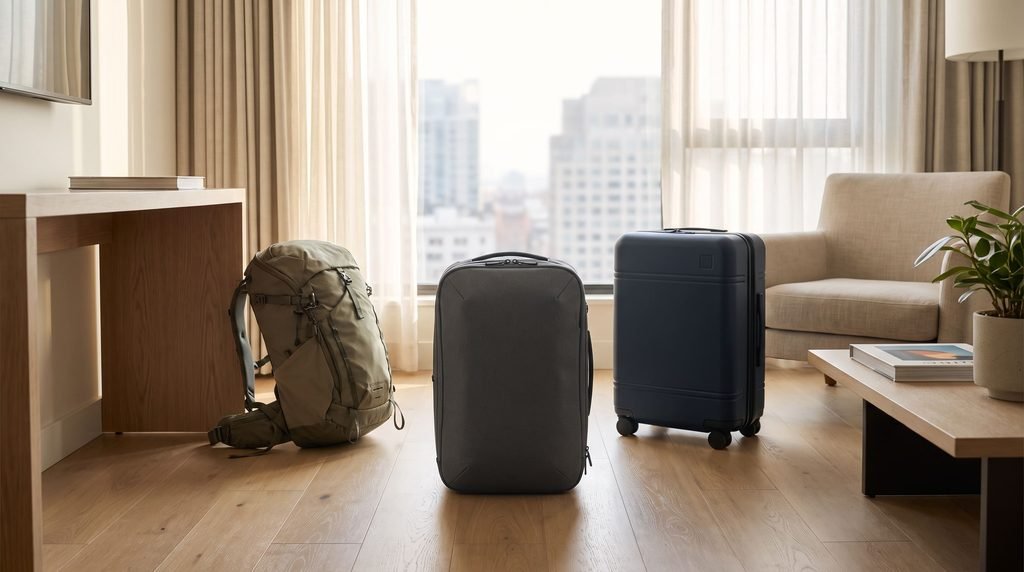
A travel pack is a backpack designed specifically for travel rather than daily commuting or technical outdoor hiking. The best travel packs usually prioritize easy access, organization, carrying comfort, and practical dimensions for flights.
Many travel-focused backpacks include features such as:
- A suitcase-style or clamshell opening
- Dedicated laptop and electronics storage
- Internal organization
- Compression straps
- Comfortable shoulder straps
- Lockable or secure zippers
- Stowable backpack straps
- A shape designed to work with carry-on restrictions
The key advantage is accessibility. Instead of digging through a deep, top-loading backpack to find a shirt at the bottom, you can often open the main compartment and see most of your belongings at once.
Travel Pack vs Regular Backpack
A regular backpack is often designed for commuting, school, or day-to-day use. It may work perfectly for a short trip, but it can become inconvenient when you need to carry several days of clothing and travel essentials.
A dedicated travel pack usually provides better access and organization for longer trips.
Best for: Travelers who want one versatile bag for flights and destinations.
Travel Pack vs Hiking Backpack
Hiking backpacks are built around trail comfort and outdoor gear. Their suspension systems can be excellent, especially for carrying heavier loads over long distances, but their tall shapes and top-loading designs are not always ideal for airports or urban travel.
A travel pack is usually easier to organize in a hotel room and may have a more compact profile.
Best choice: Hiking packs for trekking-focused trips; travel packs for flights, cities, and general travel.
Travel Pack vs Rolling Carry-On
A rolling suitcase is often easier on your back and works exceptionally well in airports, hotels, and destinations with smooth pavements.
A travel pack becomes more practical when you expect:
- Stairs
- Cobblestones
- Crowded public transport
- Uneven streets
- Frequent hotel changes
- Longer walks with your luggage
Neither is automatically better. The decision should reflect the trip rather than a particular travel philosophy.
Is a Travel Pack Right for You?
Travel packs work especially well for travelers who value mobility and want to keep their luggage compact.
A Travel Pack May Be a Good Choice If You:
- Want to travel carry-on only
- Move between multiple destinations
- Frequently use public transportation
- Expect to encounter stairs or uneven surfaces
- Prefer to keep your hands relatively free
- Want easier access than a traditional hiking backpack provides
- Are comfortable carrying your luggage on your back
Another Type of Luggage May Be Better If You:
- Have back or mobility concerns
- Are packing heavy professional equipment
- Need extensive formalwear
- Are traveling with a large amount of family or baby equipment
- Have specialized sporting gear
- Prefer never to carry significant weight
The goal is not to travel with the smallest possible bag. The goal is to travel with luggage that is practical for your actual itinerary.
What Size Travel Pack Should You Choose?
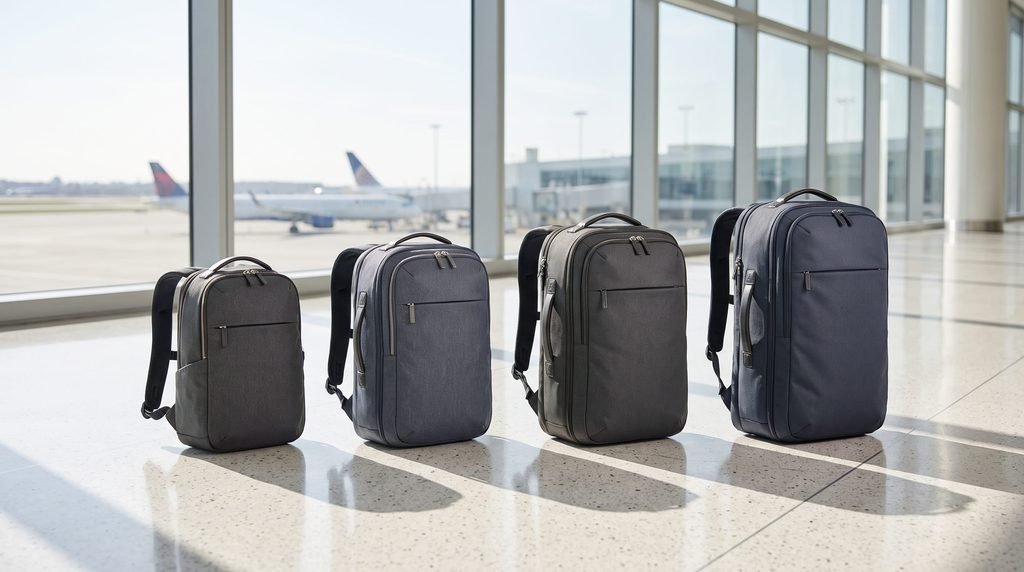
Capacity is one of the most important decisions when choosing a travel backpack. However, there is no universal “perfect” size.
20–25L: Best for Weekend and Personal-Item Travel
A 20–25L travel pack can work well for:
- Weekend trips
- Minimalist travelers
- Warm-weather destinations
- Travelers using only a personal-item allowance
- Very short business trips
The main advantage is a compact profile. The drawback is that you need to pack carefully, especially when carrying extra shoes, camera equipment, or cold-weather clothing.
28–32L: Best for Most Short Trips
This range offers a useful balance between capacity and portability.
A 28–32L travel pack can suit:
- Three- to seven-day trips
- Light packers
- Urban travel
- Travelers who can do laundry
- Trips with moderate climates
For many people, this range is easier to manage than a larger pack and naturally discourages unnecessary packing.
35–40L: Best for Versatile One-Bag Travel
This range can provide enough space for longer trips while remaining manageable for many travelers.
It may suit:
- Week-long trips
- Extended one-bag travel
- Travelers carrying a laptop
- Multi-destination itineraries
- Trips with changing weather
However, capacity in liters does not guarantee airline compliance. A 40L backpack with an unsuitable shape can exceed an airline’s limits, while another bag with the same stated capacity may fit comfortably.
Always check the packed external dimensions and weight.
40L+: Best for Gear-Heavy Travel
Larger travel packs can be useful for:
- Cold-weather travel
- Long trips with limited laundry access
- Camera gear
- Specialized equipment
The trade-off is greater weight and a higher risk of exceeding carry-on limits.
More space also creates an obvious temptation: filling it.
Check Airline Rules Before Buying a Travel Pack
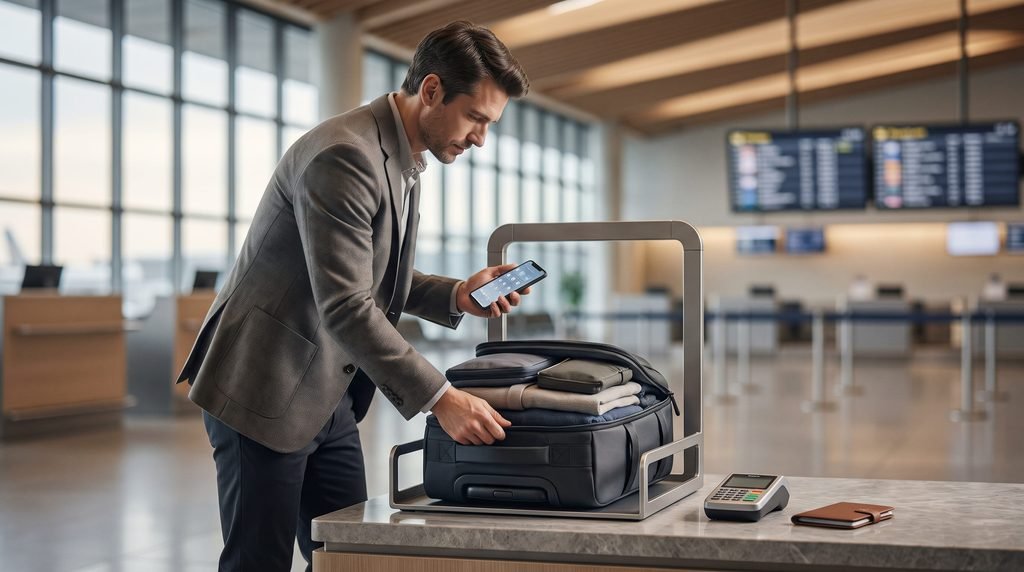
One of the most common mistakes is buying a backpack based entirely on its stated liter capacity.
Airlines do not usually measure bags by liters. They set limits based on external dimensions and, in many cases, weight.
A 35L backpack is not automatically a carry-on. A 28L backpack is not automatically a personal item.
Before buying or flying, check:
- The maximum external dimensions
- Whether your fare includes a full carry-on
- Whether a personal item is included
- Any weight restrictions
- The rules for every airline on your itinerary
This matters particularly on:
- Low-cost airlines
- Basic Economy fares
- International carriers
- Regional aircraft
Personal Item vs Carry-On
A personal item usually goes underneath the seat in front of you. A full carry-on normally goes into the overhead compartment.
The exact size rules vary significantly by airline and sometimes by fare. If your trip includes multiple carriers, do not assume one airline’s allowance applies to the entire journey.
Pack the Bag Before Measuring It
A backpack can expand significantly when fully loaded.
Measure it:
- Empty
- Packed normally
- Fully compressed
The packed dimensions are what matter when the bag needs to fit into an airline sizer.
How to Choose the Best Travel Pack
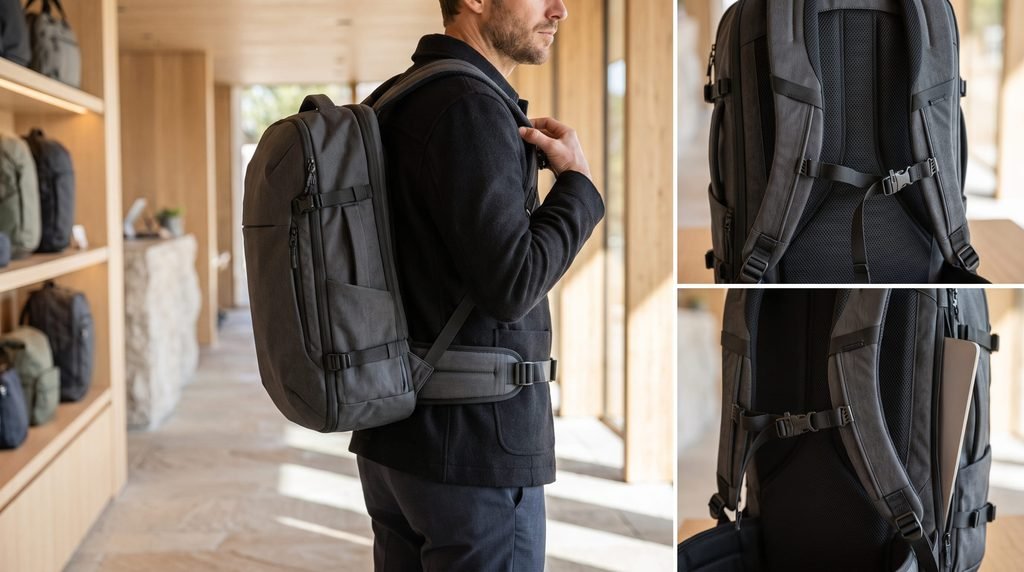
A good travel backpack should be evaluated as a complete system.
Fit and Carrying Comfort
A large bag that does not fit your torso can quickly become uncomfortable.
Look for:
- Adjustable shoulder straps
- A sternum strap
- A supportive back panel
- Good load distribution
- An adjustable or removable hip belt where appropriate
For heavier loads, fit matters even more than the number of pockets.
If possible, try the pack with weight inside it. An empty backpack can feel very different from one loaded for a week-long trip.
Easy Main-Compartment Access
Many travelers prefer a clamshell or suitcase-style opening because it allows the bag to open wide.
This makes it easier to:
- Find clothing
- Use packing cubes
- Repack in hotels
- Access items without emptying the entire bag
A top-loading design can still work, particularly for outdoor-focused travel, but organization becomes more important.
Backpack Weight
A heavy empty bag leaves less of your weight allowance for the things you actually need.
Consider the balance between:
- Durability
- Structure
- Padding
- Weight
An extremely lightweight bag may offer less structure, while an overbuilt bag can consume a surprising amount of your airline weight allowance.
Laptop and Electronics Protection
If you travel with technology, check:
- Laptop compartment size
- Padding
- Position of the laptop against your back
- Ease of access
- Protection from pressure inside the main compartment
A laptop sleeve is useful, but it should not compromise the overall balance of the bag.
Organization
Too many pockets can be almost as frustrating as too few.
Look for organization that supports the way you travel:
- Main clothing compartment
- Quick-access pocket
- Small pocket for documents or essentials
- Dedicated tech organization
- Water bottle storage, if important to you
Security
Useful security features may include:
- Lockable zipper pulls
- Hidden or less accessible pockets
- Covered zippers
These can add convenience, but they do not replace basic travel awareness. The most important documents and valuables should remain under your control.
Weather Resistance
A weather-resistant fabric is useful for everyday travel, but “water-resistant” does not mean waterproof.
If you expect sustained rain, consider how you will protect electronics and other moisture-sensitive items.
How to Pack a Travel Pack Efficiently
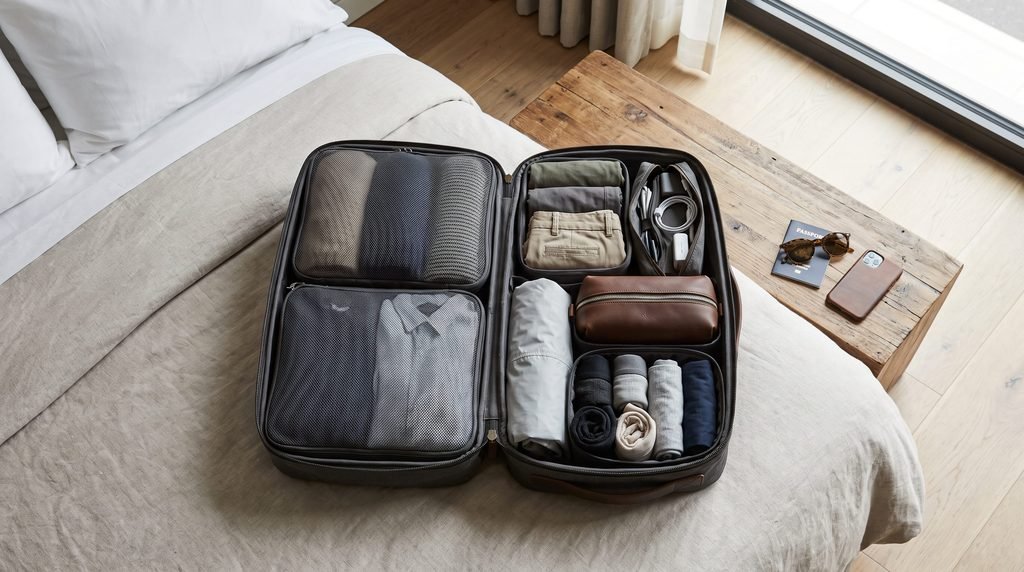
The most effective packing system begins before you put anything into the bag.
Start With the Trip, Not the Backpack
Ask yourself:
- What will the weather actually be?
- How many formal outfits do I need?
- Can I do laundry?
- What activities require specialized clothing?
- How much technology am I carrying?
- What can I realistically buy at the destination if needed?
This helps prevent “just in case” packing.
Build a Flexible Travel Wardrobe
Instead of packing a completely different outfit for every day, choose pieces that work together.
A useful approach is:
- Several interchangeable tops
- A small number of versatile bottoms
- One or two layers suited to the forecast
- Shoes chosen around actual activities
- Enough underwear and socks for your realistic laundry plan
The exact quantity should change according to your trip. A seven-day beach vacation and a seven-day winter city trip should not have identical packing lists.
Use Packing Cubes for Organization, Not Magic
Packing cubes can help keep categories separate and make unpacking easier.
They are especially useful for:
- Tops
- Underwear
- Laundry
- Accessories
- Different family members sharing luggage
Compression cubes can reduce volume for suitable clothing, but over-compressing can create a heavier, denser bag and increase wrinkles.
Pack by Accessibility
A practical order is:
Least frequently needed
- Spare clothing
- Backup items
Moderately needed
- Daily clothing
- Toiletry kit
Most frequently needed
- Documents
- Medication
- Charging essentials
- Headphones
- Security-check items
Keep airport essentials where you can reach them without unpacking everything.
Manage Weight Carefully
Heavy items should generally stay close to your body rather than hanging far from it.
Keep the overall load compact and balanced. If the bag repeatedly pulls you backward, feels unstable, or creates pressure points, reconsider both the contents and how they are packed.
A Practical 7-Day Travel Pack Strategy
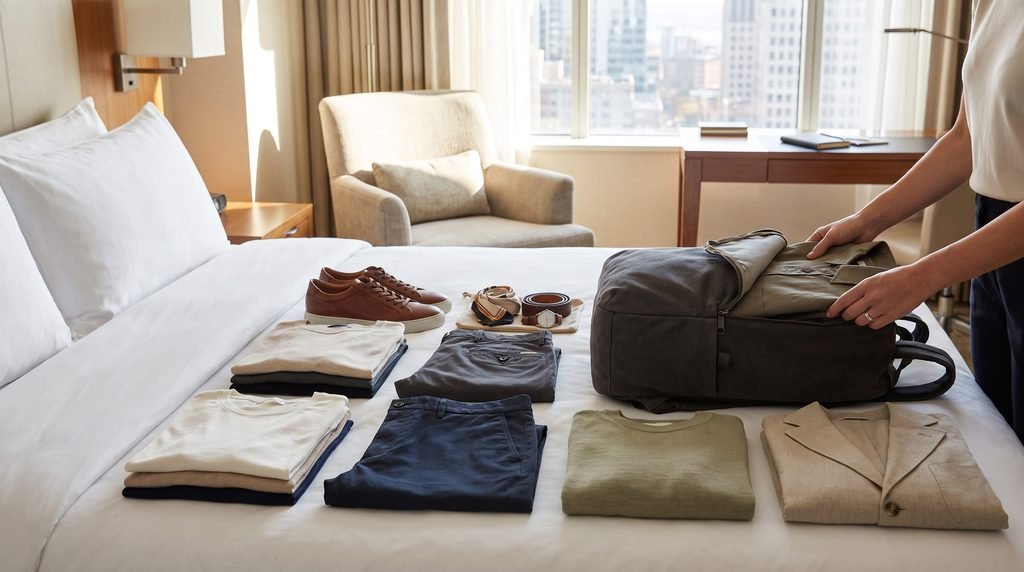
You do not need seven completely separate outfits for a seven-day trip.
A flexible setup might include:
- Four to six tops
- Two to three bottoms
- One versatile layer
- One weather-appropriate outer layer when necessary
- One or two pairs of shoes
- Underwear and socks based on laundry access
- Sleepwear if needed
The exact list should change according to:
- Climate
- Activities
- Dress code
- Laundry availability
If you can do laundry during a longer trip, your packing list does not necessarily need to grow with the number of travel days.
That is one of the central advantages of one-bag travel: pack for a repeatable cycle rather than for every calendar day.
How to Pack a Travel Pack for Cold Weather
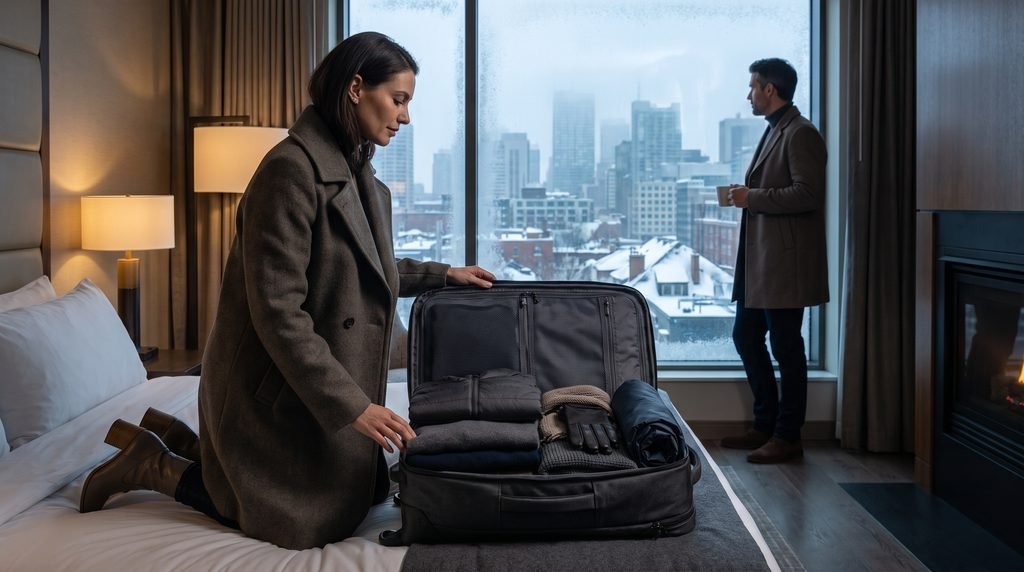
Cold-weather travel is difficult because bulky clothing takes up more space.
Prioritize:
- Layering
- Warmth-to-weight ratio
- Rewearable outer layers
- Versatile mid-layers
Rather than packing several bulky sweaters, it is often more practical to build a system around layers.
For example:
- Base layer
- Mid-layer
- Insulating layer
- Weather-appropriate outer layer
Wear your bulkiest items during transit when practical and comfortable.
Do not pack winter clothing based on the season alone. Check the actual forecast for the locations and dates of your trip.
Packing Electronics and Toiletries
Electronics can quickly become some of the heaviest items in a travel pack.
Bring only the devices that genuinely serve a purpose.
Consider:
- One multi-port charger instead of several adapters
- Short, necessary cables
- A compact tech pouch
- A destination-appropriate plug adapter
For carry-on toiletries in the United States, the TSA’s standard 3-1-1 rule generally requires liquids, aerosols, gels, creams, and pastes to be in containers of 3.4 ounces (100 mL) or less and placed in a single quart-sized bag, subject to applicable exceptions and screening rules. Check current regulations for your departure country and itinerary.
Medication and essential items should remain accessible rather than buried beneath clothing.
Travel Pack Mistakes to Avoid
Buying the Largest Bag You Can Find
More capacity often leads to more unnecessary packing.
Choose the smallest bag that comfortably supports your realistic needs.
Ignoring Fit
A highly rated backpack can still be wrong for your body.
Carrying comfort matters more than a fashionable appearance or an impressive feature list.
Assuming Liters Equal Airline Compliance
They do not.
Always check external dimensions and current airline rules.
Packing for Every Possible Scenario
A trip can generate endless hypothetical needs:
“What if it gets colder?”
“What if I need another pair of shoes?”
“What if I attend a formal event?”
Prepare for realistic needs, not every imaginable possibility.
Carrying Duplicate Technology
Duplicate chargers, cables, devices, and accessories can add substantial weight.
Audit your tech before every trip.
Using Compression to Solve Overpacking
Compression creates more room. It does not make unnecessary items necessary.
If the bag only works when every item is compressed to its maximum, reconsider the packing list.
Forgetting to Test-Pack
Do at least one complete test pack before departure.
Then:
- Carry the bag
- Adjust the straps
- Weigh it
- Measure it
- Walk with it for several minutes
This is far easier than discovering problems at the airport.
Who Should Choose a Travel Pack?
First-Time One-Bag Travelers
Start with a manageable size and avoid building an overly complicated gear system.
You do not need to replace every item you own before your first trip.
Digital Nomads
Prioritize:
- Laptop protection
- Comfortable suspension
- Tech organization
- Reliable access to documents and chargers
Budget Travelers
A compact pack can be particularly useful for avoiding unnecessary checked-baggage costs, but only if it meets the rules of the airlines you actually fly.
Couples and Families
A travel pack can work well for one person, but it does not always make sense for every member of a group. Shared items and children’s needs can change the ideal luggage strategy.
Adventure Travelers
Consider a travel pack with a more supportive suspension system if you expect to walk significant distances with your luggage.
How to Know If Your Travel Pack Is Packed Correctly
Before leaving for the airport, you should be able to answer “yes” to these questions:
- Does the bag meet my airline’s current rules?
- Have I measured its packed dimensions?
- Have I checked its weight?
- Can I carry it comfortably?
- Can I find my documents quickly?
- Are liquids accessible for security screening?
- Can I use most of my clothing in more than one outfit?
- Have I packed for realistic conditions?
- Is there anything in the bag I am taking only because of a vague “what if”?
If the final answer is no, remove it.
Frequently Asked Questions
1. What size travel pack is best for carry-on travel?
For many travelers, a pack in the roughly 28–40L range can work for carry-on travel, but there is no universal ideal size. Your airline’s dimensions, weight limits, climate, trip style, and packing habits matter more than the liter number alone.
2. Is a 35L travel pack big enough for a week?
For many travelers, yes. A 35L pack can be enough for a week if you choose versatile clothing and avoid unnecessary items. Cold climates, formal events, and specialized gear can require a larger setup.
3. Can a travel pack be used as a personal item?
Sometimes. It depends on the packed external dimensions and the specific airline’s rules. Do not rely on the bag’s stated capacity in liters; compare its actual packed size with the airline’s current personal-item allowance.
4. Are travel packs better than rolling suitcases?
Neither is always better. Travel packs are useful for stairs, uneven surfaces, public transportation, and frequent movement, while rolling suitcases can be more comfortable when you are navigating smooth airports and city streets.
5. Do I need packing cubes for a travel pack?
No. Packing cubes are useful for organization, but they are optional. They can help separate clothing and make unpacking easier, while compression cubes may help with suitable items when used without forcing you to overpack.
Conclusion
The best travel packs are not necessarily the biggest, lightest, or most expensive. They are the ones that match your body, your itinerary, and the baggage rules you actually need to follow.
For many trips, choosing a compact, comfortable pack and packing a small collection of versatile items can make travel easier from departure to arrival. Start with your destination and airline restrictions, choose the smallest capacity that realistically fits your needs, and test your fully packed bag before you leave.
The right travel pack should make you feel more mobile—not give you another piece of equipment to manage.
1 comment