
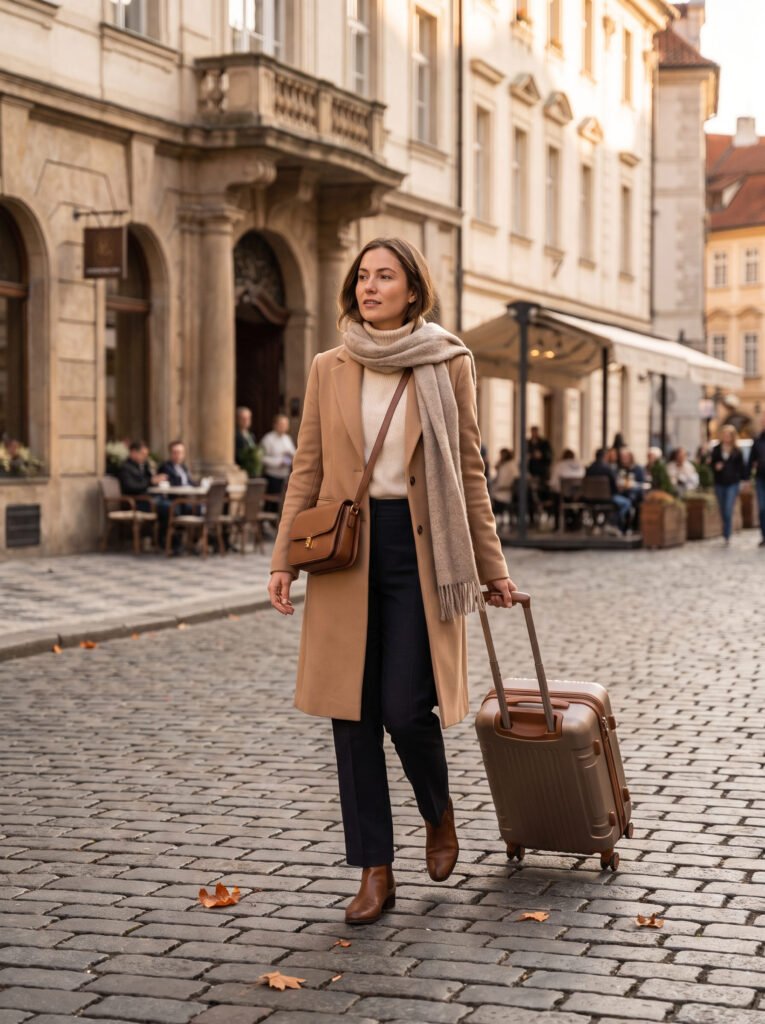
Packing for Europe in fall can be surprisingly complicated because September, October, and November can feel like three different seasons. Southern Europe may still be warm in September, while Northern and Central Europe can already feel distinctly chilly by October and much colder by November. The same trip may therefore require lightweight layers, rain protection, comfortable walking shoes, and a genuinely warm outer layer.
The smartest approach is not to pack for “Europe” as one destination. Instead, build your wardrobe around your exact itinerary, travel month, climate, activities, and the coldest stop on your trip.
This complete guide to what to pack for Europe in fall covers the clothing, shoes, outerwear, accessories, capsule-wardrobe strategy, and practical packing decisions that can make a September–November trip much easier.
Is Fall a Good Time to Visit Europe?
Yes, fall can be an excellent time to visit Europe, particularly if you prefer more moderate temperatures and the atmosphere of the shoulder season.
September can still feel summery in destinations around the Mediterranean, while October often brings classic autumn conditions and November moves much closer to winter in northern and central destinations. Recent travel coverage also shows that September and October are increasingly popular for European trips, partly because travelers are seeking milder conditions than peak summer.
But there is an important distinction:
Fall in Lisbon is not the same as fall in Berlin.
And:
September in Greece is not the same as November in Norway.
That difference should determine what goes into your suitcase.
What Is Fall Weather Like in Europe?
A useful starting point is to divide the season into three periods.
September: Warm-to-Mild Fall
September can still resemble summer in Southern Europe.
You may need:
- Lightweight tops
- Linen or breathable trousers
- Dresses
- Comfortable sneakers
- A light cardigan
- A lightweight jacket for evenings
Northern and Central Europe are generally more transitional, so layering becomes more important.
Best packing strategy
Light base layers + one versatile jacket + comfortable walking shoes.
October: Classic Autumn
October is often the easiest month to build a true fall wardrobe around.
Expect more variation between daytime and evening temperatures, with rain and cooler mornings becoming more relevant.
Pack:
- Long-sleeve tops
- Sweaters
- Jeans or trousers
- Lightweight-to-medium outerwear
- Waterproof layer
- Closed-toe shoes
- Comfortable boots or sneakers
Best packing strategy
Layering + rain protection + versatile footwear.
November: Cooler and More Winter-Like
By November, Northern and Central Europe can require much warmer clothing, while Southern Europe may remain relatively mild but wetter.
You may need:
- Warm sweater
- Thermal or base layer
- Heavier trousers
- Warm coat
- Scarf
- Gloves
- Waterproof footwear
- Rain protection
Best packing strategy
Warm outerwear + layers + waterproof protection.
The Most Important Rule: Pack for Your Itinerary, Not “Europe”
This is the single most useful rule for planning a European fall wardrobe.
Imagine an itinerary like:
Lisbon → Paris → Amsterdam → Berlin
You could encounter very different temperatures and weather across the same trip.
Instead of bringing separate wardrobes for every country, build a layered capsule wardrobe.
Start with lightweight pieces that work in warmer conditions.
Add:
- A sweater
- A versatile jacket
- A waterproof layer
- A warmer coat if the northern part of your itinerary requires it
This approach gives you flexibility without carrying an oversized suitcase.
What to Pack for Europe in Fall: The Essential Capsule Wardrobe
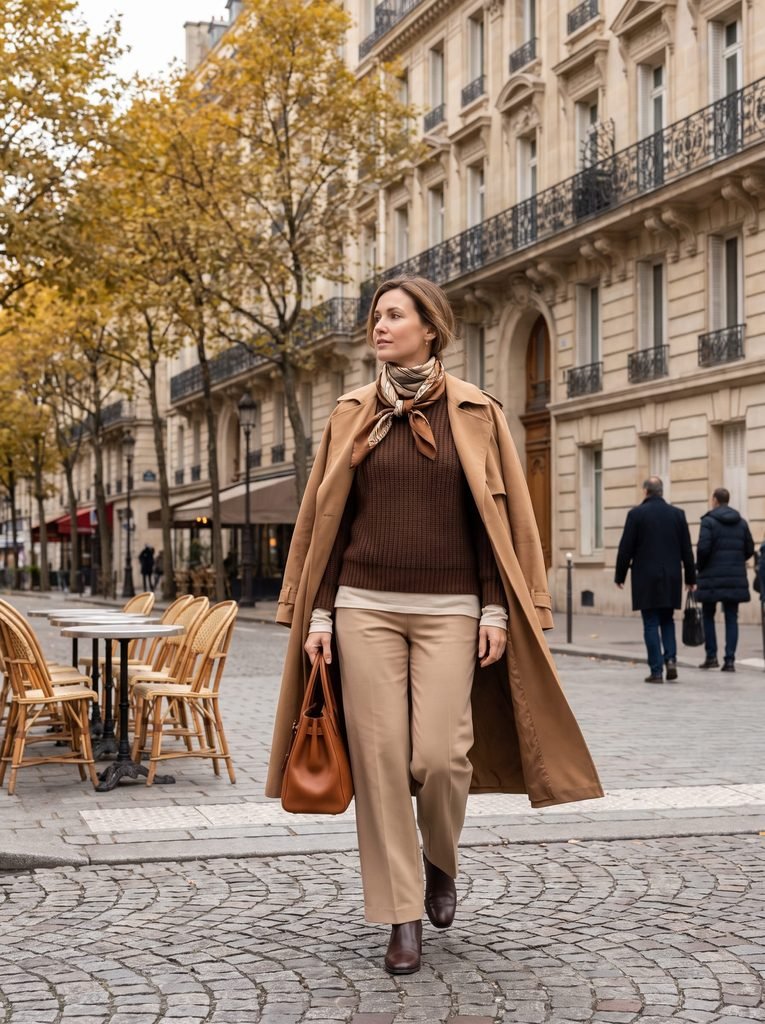
A practical fall capsule doesn’t need to contain dozens of clothing items.
For many travelers, a combination of approximately 3 bottoms, 4–5 versatile tops, 1–2 dresses, several layers, and carefully chosen outerwear can create a surprisingly large number of outfits.
The exact quantity should depend on trip length and laundry access.
1. Long-Sleeve Tops
Bring approximately 2–3 long-sleeve tops in different weights.
Choose neutral or coordinating colors so they can be worn with multiple bottoms.
Good choices include:
- Fine-gauge knit tops
- Merino wool tops
- Cotton long-sleeve shirts
- Ribbed tops
- Lightweight thermal tops for colder destinations
Why they matter
A long-sleeve top can be:
A standalone top → warm September day
A base layer → cool October morning
A thermal layer → cold November destination
That makes it far more valuable than a single-purpose item.
2. Short-Sleeve T-Shirts
Don’t completely eliminate T-shirts from a fall packing list.
They are useful for:
- Warm September days
- Southern Europe
- Layering underneath sweaters
- Wearing underneath jackets
- Sleeping or relaxing at your accommodation
One or two neutral T-shirts can provide plenty of flexibility without adding much bulk.
3. A Button-Down Shirt
A quality button-down shirt is one of the most useful pieces in a European fall capsule.
Wear it:
- Open over a T-shirt
- Under a sweater
- With trousers
- With jeans
- Tucked into a skirt
- Under a jacket
A white, ivory, pale blue, or subtle striped version is particularly versatile.
4. One Elevated Blouse or Evening Top
You don’t need a separate outfit for every evening.
Instead, bring one polished top that can transform a daytime outfit.
For example:
Dark trousers + T-shirt + sneakers
can become:
Dark trousers + elegant blouse + loafers
with only one clothing change.
This is exactly the kind of versatility that makes a small suitcase work.
5. Jeans
A pair of comfortable jeans can be one of the most practical pieces in a fall Europe wardrobe.
Choose a pair that:
- Allows comfortable walking
- Isn’t excessively heavy
- Works with sneakers and boots
- Can be dressed up
- Fits comfortably when sitting
Dark or medium washes are especially versatile.
When jeans aren’t ideal
If you’re visiting very warm Southern Europe in September, lightweight trousers may be more comfortable.
If you’re traveling extensively and washing clothing by hand, heavy denim can also take longer to dry.
6. Wide-Leg or Tailored Trousers
One pair of polished trousers can dramatically increase the versatility of your travel wardrobe.
Good choices include:
- Wide-leg trousers
- Straight-leg trousers
- Ponte trousers
- Wool-blend trousers
- Lightweight tailored pants
Choose a neutral shade such as:
- Black
- Charcoal
- Navy
- Chocolate brown
- Camel
- Taupe
They can work for sightseeing, transportation, cafés, museums, and dinners.
7. Leggings
Leggings can be surprisingly useful in a fall travel capsule.
They aren’t only for casual outfits.
They can also be used as:
- A base layer underneath trousers
- A layer underneath a dress
- Comfortable transportation clothing
- Lounge clothing
- Lightweight activewear
For colder destinations, this makes one pair considerably more useful.
8. One or Two Dresses
A dress can be one of the most efficient items in a women’s European fall wardrobe.
Choose a style that can work across temperatures.
Warm September
Dress + flats or sneakers
Cool October
Dress + cardigan + ankle boots
Cold November
Dress + tights/leggings + sweater + warm coat + boots
A neutral midi dress is particularly easy to style multiple ways.
What Outerwear Should You Pack for Europe in Fall?
Outerwear deserves more thought than almost any other item.
Your jacket or coat will affect your comfort every day, and it can also take up a significant amount of luggage space.
The right choice depends primarily on where and when you’re traveling.
For Southern Europe in September
Consider:
- Lightweight jacket
- Packable rain jacket
- Lightweight trench
- Cardigan
- Denim jacket
Destinations such as Portugal, Greece, Spain, and Southern Italy can still be warm in early fall.
For Southern Europe in October
A medium-weight jacket becomes more useful.
Consider:
- Waterproof trench
- Lightweight wool jacket
- Medium-weight leather jacket
- Packable waterproof jacket
Layer underneath depending on the forecast.
For Northern and Central Europe in October
You may need a warmer jacket.
Consider:
- Insulated mid-weight jacket
- Waterproof coat
- Wool-blend coat with weather protection
- Layering system with a warm sweater
For Northern and Central Europe in November
A proper warm coat may be necessary.
Don’t assume that several thin layers will always replace a warm outer layer.
For destinations where temperatures are approaching winter conditions, insulation and weather protection become more important than simply adding another lightweight shirt.
Waterproof or Water-Resistant: Which Do You Need?
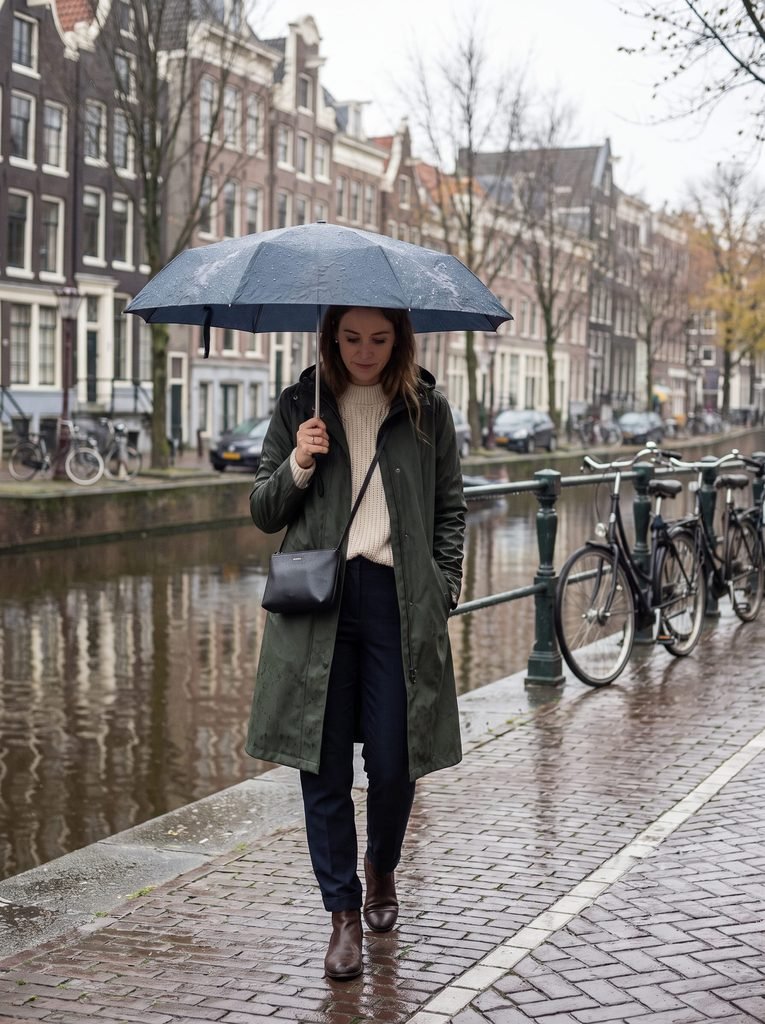
This distinction matters.
Water-resistant
Can handle light moisture or brief exposure to rain.
Waterproof
Designed to provide substantially stronger protection against rain, although performance depends on the garment’s construction and specifications.
For a rainy European fall itinerary, a genuinely waterproof outer layer can be much more useful than a fashionable jacket that only handles occasional drizzle.
Look for:
- Hood
- Reliable closures
- Waterproof fabric
- Comfortable layering room
- Packability
- Breathability where possible
Best Shoes for Europe in Fall
Shoes can make or break a European trip.
You may spend hours walking through:
- Cobblestone streets
- Train stations
- Museums
- Historic districts
- Hills
- Airports
- Pavements
- Parks
Choose footwear based on walking comfort first and style second—but ideally find shoes that provide both.
1. Comfortable Sneakers
A reliable pair of walking-friendly sneakers should be part of most European fall wardrobes.
They’re ideal for:
- City sightseeing
- Airports
- Train travel
- Casual restaurants
- Mild weather
Break them in before your trip.
A beautiful new shoe isn’t useful if it gives you blisters on day one.
2. Waterproof Ankle Boots
Ankle boots are particularly useful for October and November.
Choose a pair with:
- Comfortable cushioning
- Good grip
- Weather protection
- A walkable heel or flat sole
- Enough room for socks
They can work with:
Jeans + sweater
or:
Midi dress + coat
which makes them particularly valuable for a capsule wardrobe.
3. Loafers or Ballet Flats
These can be useful for:
- Dinner
- Museums
- Mild-weather days
- Dressier outfits
- Travelers who prefer not to wear sneakers everywhere
They are most practical when your itinerary is relatively mild and dry.
4. Should You Bring Three Pairs?
For many travelers, three pairs can provide enough variety:
Sneakers → everyday walking
Waterproof boots → rain/cold
Loafers or flats → dressier occasions
But don’t automatically pack three pairs.
If you’re traveling carry-on only, two carefully chosen pairs may be more efficient.
What to Pack for Europe in Fall by Region
Europe is too geographically diverse for a single universal packing list.
Here’s a simpler regional approach.
Southern Europe
Includes destinations such as:
- Spain
- Portugal
- Greece
- Southern Italy
September
Prioritize:
- Lightweight tops
- Dresses
- Linen-blend trousers
- Sneakers
- Light jacket
October
Add:
- Sweater
- Medium-weight jacket
- Closed-toe shoes
- Rain protection
November
Increase:
- Warm layers
- Waterproof outerwear
- Trousers
- Ankle boots
Southern Europe can still be relatively mild compared with the north, but rain becomes increasingly relevant later in the season.
Western Europe
Includes destinations such as:
- France
- United Kingdom
- Ireland
- Netherlands
The biggest consideration is changeable weather.
Pack:
- Long-sleeve tops
- Sweaters
- Waterproof outerwear
- Comfortable trousers
- Jeans
- Sneakers
- Waterproof boots
- Scarf
For cities such as Paris, a polished trench can be particularly versatile during milder fall weather, while colder November trips may require a warmer coat.
Central Europe
Includes:
- Germany
- Austria
- Switzerland
Fall can become noticeably colder as the season progresses.
For October and November, prioritize:
- Warm sweaters
- Layering tops
- Trousers
- Warm outerwear
- Waterproof shoes
- Scarf
- Gloves for colder itineraries
If your trip includes mountains, check the forecast for the specific elevation rather than relying only on the destination city’s forecast.
Northern Europe
Includes:
- Norway
- Sweden
- Denmark
- Northern parts of surrounding countries
By late fall, warmth and weather protection become much more important.
Consider:
- Thermal base layers
- Wool or merino sweaters
- Warm insulated coat
- Waterproof outer shell
- Warm socks
- Gloves
- Scarf
- Hat
- Waterproof boots
This is where a lightweight summer-oriented fall capsule can quickly become inadequate.
What to Wear in Europe in September
September is the easiest month to adapt because Southern Europe can remain warm while Northern Europe begins cooling down.
A versatile outfit might include:
Wide-leg trousers + lightweight top + cardigan + sneakers
Carry a lightweight jacket for evenings.
For Southern Europe, you may still wear:
- Dresses
- Linen pants
- T-shirts
- Sandals on warmer days
For Northern Europe, add:
- Sweater
- Waterproof jacket
- Closed-toe shoes
What to Wear in Europe in October
October is the classic layering month.
A reliable outfit formula is:
Jeans + long-sleeve top + sweater + trench + ankle boots
For warmer Southern destinations:
Wide-leg trousers + fitted top + lightweight jacket + sneakers
The most important items are layers that can be removed during warmer afternoons.
What to Wear in Europe in November
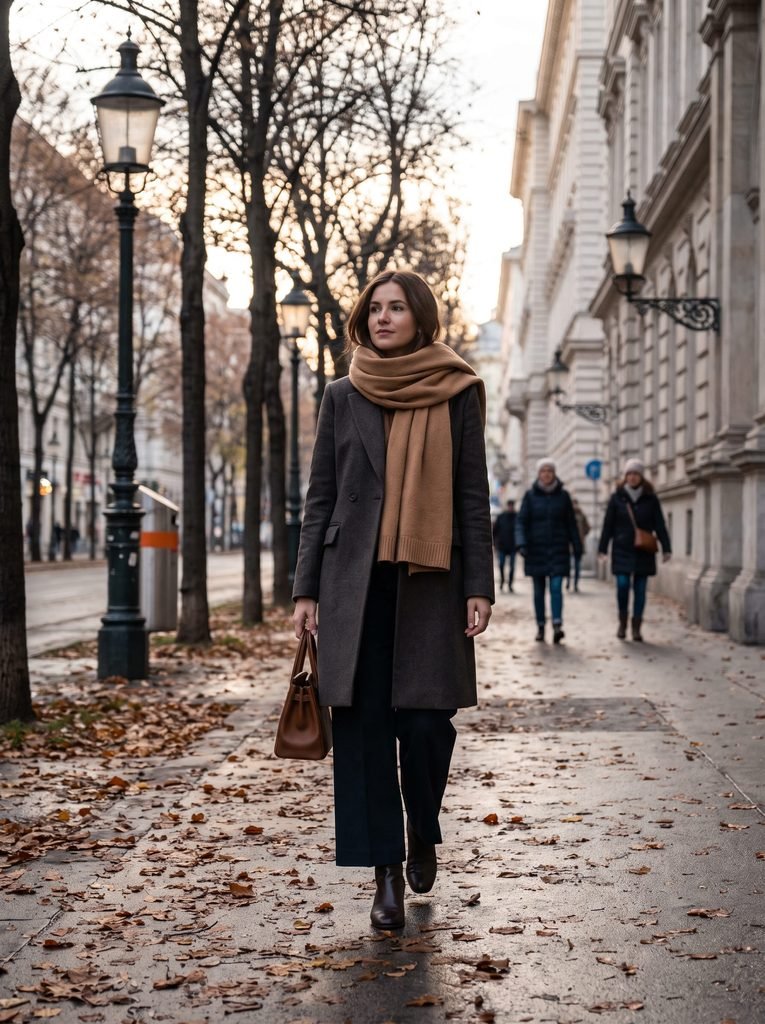
November generally requires a more substantial fall-to-winter wardrobe, especially in Northern and Central Europe.
Consider:
Trousers + thermal top + sweater + warm coat + waterproof boots
Add:
- Scarf
- Gloves
- Warm socks
- Hat if needed
For Southern Europe, you may be able to use a lighter version of the same formula.
Europe Fall Outfit Formulas
Packing becomes easier when you think in outfit formulas instead of individual pieces.
Outfit 1: Classic City Sightseeing
Dark jeans + striped long-sleeve top + trench + sneakers
Ideal for mild weather and long walking days.
Outfit 2: Elevated Dinner
Wide-leg trousers + elegant blouse + loafers + structured coat
Simple, polished, and easy to build from a capsule wardrobe.
Outfit 3: Rainy Day
Straight-leg trousers + merino sweater + waterproof coat + ankle boots
Practical without looking overly technical.
Outfit 4: Warm September Day
Midi dress + lightweight cardigan + sneakers
Easy to adapt as temperatures change.
Outfit 5: Cold November Day
Thermal base + wool sweater + trousers + insulated coat + boots + scarf
Designed for colder destinations.
How to Build a Fall Europe Capsule Wardrobe
The secret is coordination.
Instead of choosing each item independently, select a consistent color palette.
Base colors
Choose two or three:
- Black
- Navy
- Charcoal
- Camel
- Cream
- Chocolate brown
- Olive
Accent colors
Add one or two seasonal shades:
- Burgundy
- Forest green
- Rust
- Deep red
- Mustard
This allows most pieces to work together.
A Simple 10-Day Europe Fall Capsule
For a traveler with laundry access, a practical starting point could be:
Tops
- 2 long-sleeve tops
- 1 short-sleeve T-shirt
- 1 button-down
- 1 polished blouse
Bottoms
- 1 pair of jeans
- 1 tailored or wide-leg trouser
- 1 comfortable travel pant
Dress
- 1 versatile midi dress
Layers
- 1 cardigan or lightweight sweater
- 1 warmer sweater
Outerwear
- 1 weather-appropriate coat
- 1 packable rain layer if your main coat isn’t waterproof
Shoes
- 1 pair walking sneakers
- 1 pair waterproof boots
- Optional flats or loafers
The exact list should change according to the month and itinerary.
How Many Outfits Can You Create?
The goal isn’t to bring ten complete outfits.
Instead, create combinations.
For example:
3 bottoms × 5 tops = 15 basic combinations
Add:
- Different sweaters
- Jackets
- Shoes
- Accessories
- Dress
and the same small wardrobe can produce considerably more looks.
This is why neutral, interchangeable pieces are so valuable for European travel.
What to Pack in Your Personal Item
Keep important travel essentials accessible.
Consider carrying:
- Passport
- Wallet
- Phone
- Charging cable
- Power bank where permitted
- Medication you normally need
- Travel documents
- Earphones
- Small toiletries
- One lightweight layer
- Essential valuables
Avoid burying critical items in checked luggage.
Accessories to Pack for Fall Europe
Accessories take little space but can make a major difference.
Scarf
One of the most useful fall accessories.
It provides warmth and can also change the appearance of a basic outfit.
Sunglasses
Still useful in September and October, even when temperatures are cooler.
Compact Umbrella
Useful in destinations where rain is common, provided you aren’t already carrying a reliable waterproof hooded layer.
Crossbody Bag
A comfortable crossbody is useful for city sightseeing because it keeps essentials accessible while leaving your hands free.
Hat
A lightweight beanie or warm hat can become valuable in colder northern destinations.
What Toiletries Should You Pack?
Keep toiletries compact, particularly if you’re traveling with carry-on luggage.
Prioritize:
- Travel-size skincare
- Toothbrush and toothpaste
- Hair essentials
- Minimal makeup
- Sunscreen
- Personal hygiene products
- Any required medication
- Laundry detergent sheets or a small amount of suitable detergent
Don’t pack full-size products simply because you might use them.
If something is readily available at your destination and isn’t essential, consider leaving it behind.
Laundry Strategy for Europe
Laundry is one of the easiest ways to reduce overpacking.
For trips longer than a week, consider washing clothing during the journey rather than bringing a separate outfit for every day.
Quick-drying fabrics can be especially useful.
Better choices for travel laundry
- Merino
- Lightweight synthetic blends
- Thin performance fabrics
- Lightweight tops
Less convenient choices
- Heavy denim
- Thick sweaters
- Heavy cotton
- Bulky garments
Always follow the garment’s care instructions.
Carry-On Packing Strategy
If you’re traveling with a carry-on, prioritize items that perform multiple jobs.
Highest-value pieces
One excellent pair of trousers
One comfortable pair of jeans
One versatile sweater
One adaptable dress
One weatherproof jacket
One pair of walking shoes
These pieces can support a surprisingly large number of outfits.
Wear the bulkiest items
If possible, wear:
- Coat
- Boots
- Heavier sweater
- Larger trousers
during transportation rather than packing them.
This frees luggage space without reducing what you can bring.
What Not to Pack for Europe in Fall
Avoid packing based on hypothetical situations.
Don’t pack:
- Multiple heavy coats
- Several nearly identical sweaters
- Uncomfortable “fashion” shoes
- Too many jeans
- Clothing you don’t normally wear
- Extremely bulky accessories
- Separate outfits for every evening
- Shoes that haven’t been broken in
- Heavy items that only work with one outfit
Your suitcase should support your itinerary—not your fear of being unprepared.
Common Europe Fall Packing Mistakes
1. Packing for the average temperature
Averages don’t tell you everything.
Rain, wind, evenings, altitude, and regional differences can change how cold a day feels.
2. Bringing only summer clothing in September
Southern Europe may be warm, but evenings can still require a layer.
3. Bringing a heavy winter wardrobe too early
A November-ready suitcase can be excessive for a warm Southern European September trip.
4. Forgetting rain protection
Rain can quickly change a sightseeing day.
5. Packing uncomfortable shoes
Walking comfort should be a non-negotiable.
6. Ignoring the coldest destination
If your itinerary includes both Lisbon and Stockholm, pack for Stockholm’s requirements while building lighter layers for Lisbon.
7. Packing too many “just in case” outfits
Most travelers wear their favorite comfortable combinations repeatedly.
What to Pack for a Multi-Country Europe Trip
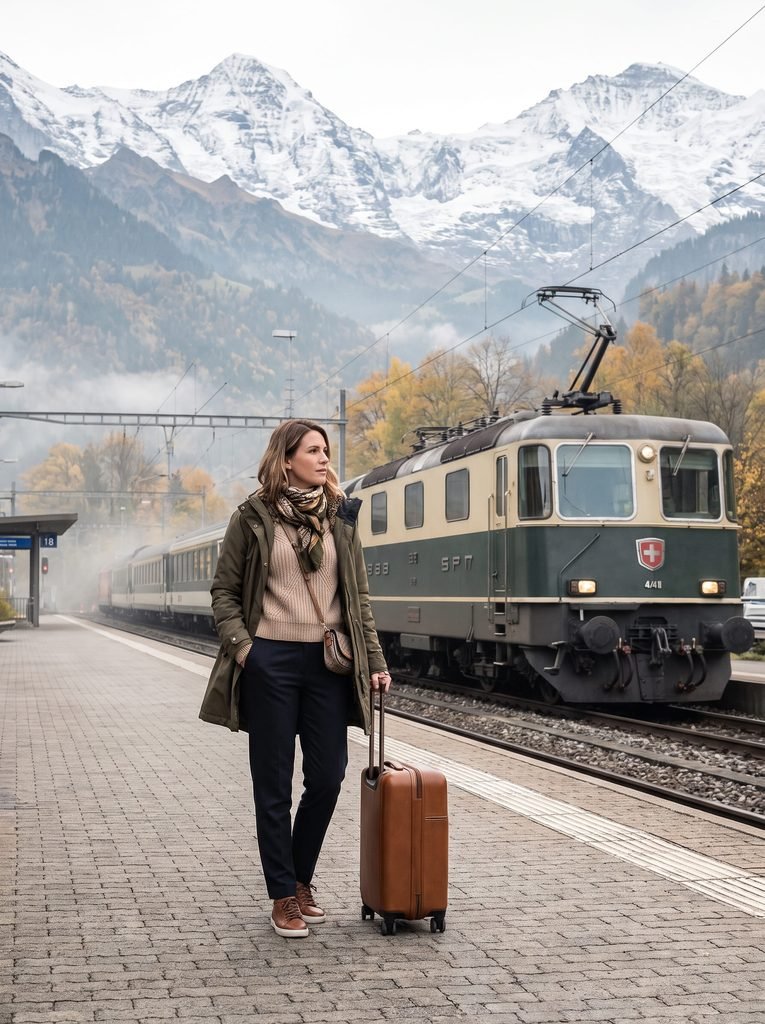
For a trip covering multiple climates, use the layering ladder.
Base
T-shirt or lightweight long sleeve
↓
Mid-layer
Cardigan or sweater
↓
Outer layer
Trench or lightweight jacket
↓
Weather layer
Waterproof shell
↓
Cold-weather layer
Insulated coat when necessary
This system allows you to adapt without packing a completely separate wardrobe for every destination.
What Should You Pack for Europe in Fall if You Travel Carry-On Only?
A carry-on traveler should focus on maximum outfit versatility with minimum bulk.
A practical starting point is:
- 3 bottoms
- 4–5 tops
- 1–2 dresses
- 2 sweaters/layers
- 1 main coat
- 1 waterproof layer if necessary
- 2 pairs of shoes
- Small accessories
- Compact toiletries
Then adjust based on climate.
The most important thing is not hitting an exact item count. It’s making sure every item can be worn multiple ways.
Who Needs a Different Packing Strategy?
First-Time Europe Travelers
Prioritize comfort and versatility.
Don’t try to create a completely new fashion identity for your trip.
Carry-On Travelers
Focus heavily on lightweight layers and coordinated colors.
Luxury Travelers
Choose polished pieces that can move from sightseeing to restaurants.
Budget Travelers
Prioritize durable, easy-care clothing and shoes because your itinerary may involve more public transportation and walking.
Adventure Travelers
Technical layers and weather protection should take priority over purely fashion-oriented pieces.
Slow Travelers
Invest in a small wardrobe that can be washed and reworn repeatedly.
Families
Comfort, washable clothing, and weather adaptability are usually more important than creating elaborate outfits.
A Complete Europe Fall Packing Checklist
Clothing
- 2–3 long-sleeve tops
- 1–2 short-sleeve tops
- 1 button-down shirt
- 1 polished blouse
- 1 pair of jeans
- 1 pair of tailored or wide-leg trousers
- 1 comfortable travel pant
- 1–2 versatile dresses
- 1 pair of leggings
- 1–2 sweaters
- 1 cardigan or lightweight layer
- Weather-appropriate coat
- Waterproof outer layer where necessary
Shoes
- Comfortable walking sneakers
- Waterproof ankle boots
- Optional loafers or flats
Accessories
- Scarf
- Sunglasses
- Compact umbrella if useful
- Crossbody bag
- Hat
- Gloves for colder destinations
Travel Essentials
- Passport
- Required travel documents
- Wallet
- Phone
- Chargers
- Power bank where appropriate
- Travel insurance information
- Copies or secure backups of important documents
Toiletries
- Toothbrush and toothpaste
- Skincare
- Sunscreen
- Personal hygiene items
- Minimal makeup
- Hair essentials
- Required medication
- Laundry detergent
Organization
- Packing cubes
- Toiletry bag
- Small laundry bag
- Reusable water bottle
- Compact day bag
The Final Rule for Packing Europe in Fall
Before putting anything into your suitcase, ask three questions:
Will I wear this more than once?
Does it work with at least two or three other pieces?
Does it suit the actual weather and activities on my itinerary?
If the answer is no to all three, it probably doesn’t deserve the luggage space.
The most successful European fall wardrobe isn’t the largest one. It’s the one where almost everything works together.
Frequently Asked Questions
1. What should I pack for Europe in fall?
Pack versatile layers rather than one fixed seasonal wardrobe. Start with long- and short-sleeve tops, jeans or trousers, a sweater, comfortable walking shoes, weather-appropriate outerwear, and a waterproof layer when needed. Adjust the heavier pieces according to your destination and month.
2. What should I wear in Europe in October?
October generally calls for layering. A practical outfit can include jeans or tailored trousers, a long-sleeve top, sweater, lightweight-to-medium jacket, and comfortable closed-toe shoes. Warmer Southern European destinations may require lighter layers than Northern or Central Europe.
3. Is Europe cold in November?
It depends heavily on location. Northern and Central Europe can be quite cold and may require a warm coat, while Southern Europe can remain considerably milder. Always check the forecast for each destination shortly before departure.
4. How many clothes should I pack for a 10-day Europe trip?
A compact capsule of around three bottoms, four to five versatile tops, one or two dresses, two layers, and suitable outerwear can be enough for many 10-day trips, particularly if you plan to do laundry. The exact quantity depends on climate, activities, and luggage limits.
5. What shoes should I bring to Europe in fall?
For many itineraries, comfortable walking sneakers plus waterproof ankle boots provide the most useful combination. Add loafers or flats only if you have enough luggage space and expect dressier occasions or mild weather.
Conclusion
Knowing what to pack for Europe in fall is less about following a rigid checklist and more about understanding how the season changes across the continent.
September can still feel warm in Southern Europe, October rewards a thoughtful layering system, and November can demand genuinely cold-weather clothing in Northern and Central destinations. The smartest strategy is therefore to build around your specific itinerary, not a generic idea of European fall.
Start with versatile basics, add layers, choose comfortable shoes, protect yourself from rain, and make your outerwear decision based on the coldest part of the trip. A coordinated capsule wardrobe can then take you from airport to sightseeing, cafés, museums, and dinner without filling your suitcase with unnecessary clothing.
For 2026 travel, the strongest approach remains simple: pack fewer pieces, make each one work harder, and check the forecast for every destination before you leave.
1 comment